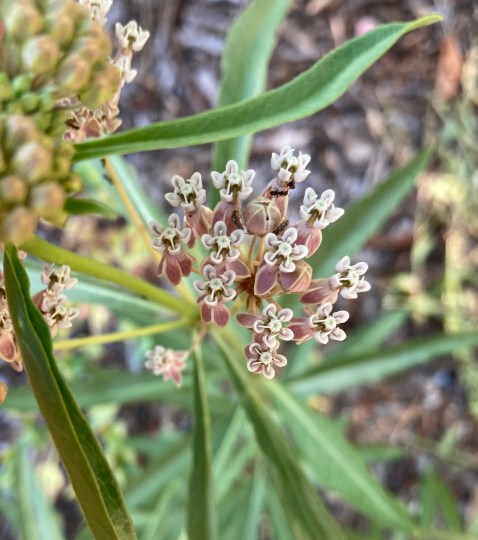
After seeing the beautiful zinnias that several of my fellow bloggers have showed on their sites, I was plotting through the winter how I could create my own display, featuring my favorite colors that I rarely find in the local nurseries anymore. Others have told me that they have had a similar experience to mine, of ending up with mostly magenta flowers, when they buy a mix of zinnia starts in a six-pack.
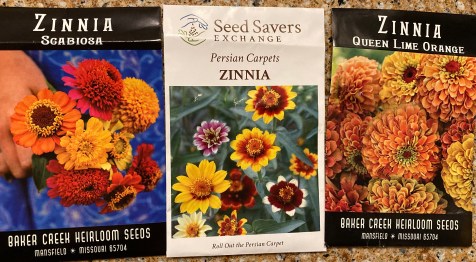
So I bought four packets of seeds, and started most of them in the greenhouse. When many of those seedlings mysteriously died, I bought single plants in the nurseries, 4-inch pots in which the buds were beginning to open, and didn’t appear to be magenta. Two coral colored to begin with, and later, true orange. And I planted seeds again, at the end of June, directly into the ground or pots.
The seeds I planted the most of were called Fruity Beauty mix. They came in a clear cellophane packet, but online they are advertised to look like this:

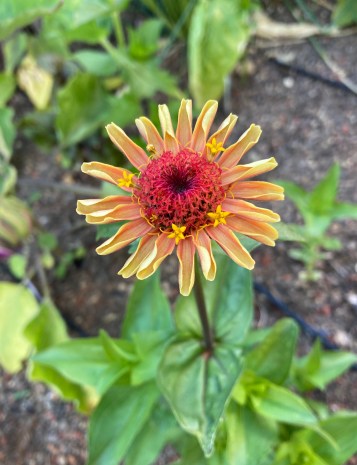
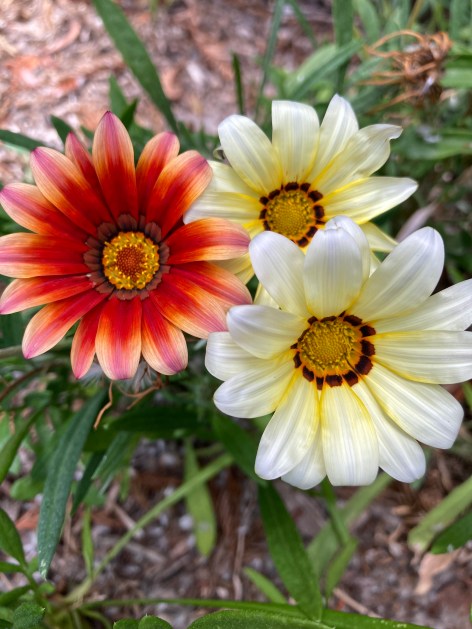
Now various of the seed-started are beginning to bloom. I’m not sure which are which, I think I got a little mixed up, and lost some tags. Maybe when they have fully opened and all bloomed I will be able to tell more. But I think I am still waiting for the Queen Lime Orange ones. Every day there is a new flower to look at and rejoice over.
I’m also thrilled to have eggplant this summer; and true Echinacea Purpurea, Purple Coneflower, which flourished for years and years in my old garden. The interesting subspecies of echinacea in various colors that were installed in my new landscape have mostly died out. It took me a few years to find good plants of the “regular” type at the right time, but now I those are in bloom, too.


The white echinacea are very enduring, too. They are in the front garden, and faithfully grow up tall and elegant every summer. They seem to make more flowers every season.
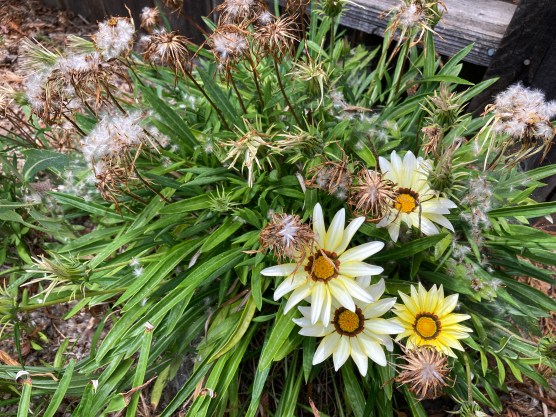
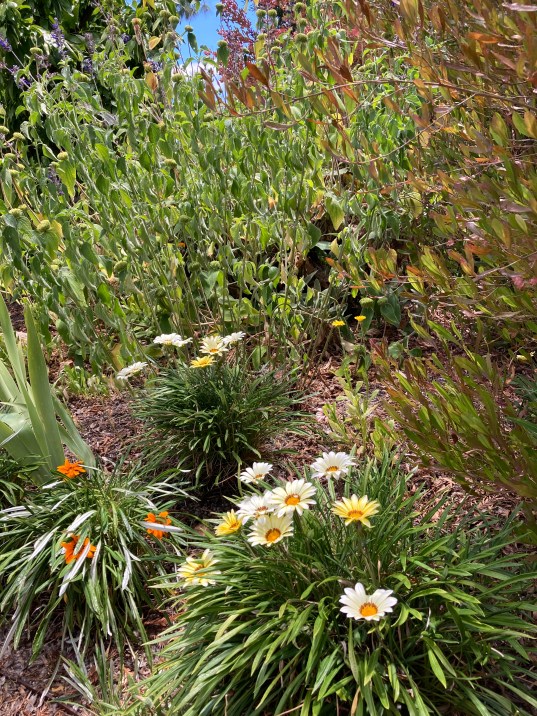
This last picture I think of as Lovely Layers. There is a whole community of plants at their peak here, from the echinacea on the right to the volunteer sunflower poking out from under the asparagus fronds on the left… yellow abutilon against the fence and golden marguerite in front of that, and even lamb’s ears and salvia sticking up. My cup runneth over with these sunny gifts of high summer.

 This morning I visited some church friends to see their vermiculture setup. Before I ever started my remodeling project almost four years ago, I knew that I wanted to raise worms, but I have put it off until such time as I could make mental and physical space for the project.

 Probably I should go back and read some of Elizabeth Von Arnim’s descriptions of gardens, to teach me how to convey the scene that makes me so happy. Not only in Elizabeth and Her German Garden but even more in The Enchanted April she expresses her love for this kind of overflowing, colorful and scented landscape, and gardens that are so prolific with blooms that bowls of them bless the rooms of the Italian castle in April (in April, too).
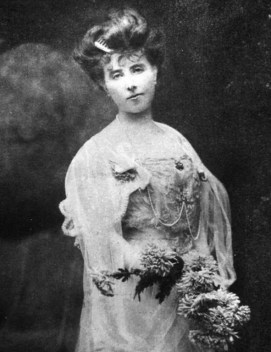 I just discovered that I have never once reviewed a book by Elizabeth von Arnim, or posted a quote by her, on my blog. I guess this is because my relationship with her as a person and writer is about much more than any one of her books; and isn’t it always somewhat of a mystery why we connect with particular authors? Mary Kathryn says it is the writer’s voice that she connects with, and it doesn’t matter what they write about, if one loves that particular voice.
 Today when I went out to try for a picture of the Lambs Ears, I discovered that the Narrow-Leaf Milkweed flowers have started to open. These are the plants from which I collected Monarch butterfly eggs to incubate indoors, a few years ago. Aphids always decimate the plants, and after that first year’s destruction I realized that any hatched caterpillars would run out of food fast, because the leaves are literally slim pickings to begin with, and then the aphids suck all the life out of them. (By the way, you don’t want to bring in ladybugs to eat the aphids on your milkweed plants because ladybugs also eat Monarch eggs!!) Back then I had to feed my Monarch caterpillars from my Showy Milkweed plants which have large leaves and which the aphids don’t bother so much.