In the Introduction to his book, Leon Kass writes of his purposes: “I hope to provide evidence that the modern corporealists — those who deprecate or deny the soul — and their modern rationalist or humanist opponents –those who deprecate or deny the body — are both mistaken, both about living nature and about man. I seek such evidence in an examination of eating.”
Here the author conveys an understanding of reality that is more in line with orthodox Christianity than that of many who profess Christ, for he sees that we are unified creatures; our bodies are essential to who we are, not just shells that we hope to escape. He even goes further than what I would assent to, stating that his meaning of “soul” is “primarily not a theological but a biological notion!” (Yes, he put that exclamation point there himself.)
“You should know at the outset, however, that I use the term [soul] advisedly and without apology, even though I know that it will cause most scientists to snicker and many others knowingly to smile. These skeptics need to learn that it is only because they in fact have a soul that they are able to find such (or any) speech intelligible, amusing, or absurd. Indeed, only the ensouled — the animate, the animal — can even experience hunger, can know appetite, desire, longing.”
It is not, then, only the scientists who are giving us only part of the picture, but also the teachers of humanities (I don’t want to call them humanists, as their vision is too stunted), whom Kass and his wife would call colleagues, as they both are themselves university professors in the humanities.
“…the humanities have long been in retreat from the pursuit of wisdom. Analytical clarity, logical consistency, demystification, and refutation; source criticism, philology, and the explication of thinkers solely in terms of their historical and cultural contexts; and the devotion to theoretical dogmas – formerly romanticism and historicism, nowadays Marxism, deconstructionism, multiculturalism, feminism, and many other “isms” – all these preoccupations keep humanists busy with everything but the pursuit of wisdom about our own humanity.”
 |
| James Le Fanu |
While I was in the middle of thinking about Kass’s book, I heard another writer on scientific topics interviewed on Mars Hill Audio. James Le Fanu is a physician and author whose book The Rise and Fall of Modern Medicine won the Los Angeles Prize Book Award in 2001. He was speaking in the interview about his recent book Why Us?: How Science Rediscovered the Mystery of Ourselves.
Le Fanu is also concerned about the reductionist and unsatisfying science that purports to tell us all there is to know. Before the notion of science appeared in the early 19th century the idea of the metaphysical was part of the common sense of mankind. Galileo and Newton and Kepler had an instinctive recognition that whatever science couldn’t explain, there was “something beyond.” Their study of Natural Philosophy was encompassed in the larger whole of the love of wisdom.
Nowadays, says Le Fanu, science is boring, and “to be a career scientist is to be in a very small hole,” as they are so specialized in their work, and in their education there is nothing like the older biology textbooks that were “full of awe and wonder and astonishment.” Le Fanu said that in the scientific journals he reads and in his talks with scientists, he has not noticed that any individual scientists are fully appreciating the mystery and glory of the human being.
But we assume that at least some of those scientists leave their holes each night and go home to prune the roses, eat a tasty dinner and play with their children, showing what Kass calls “the disquieting disjunction between the vibrant living world we live in and enjoy as human beings and the limited, artificial, lifeless, objectified, representation of that world we learn about from modern biology.”
As Kass is seeing the non-material aspects of our humanity demonstrated through the very material and natural activity of eating, so Le Fanu sees them revealed ever more obviously by the recent discoveries of science. Everything we learn seems to show how amazingly complex and unknowable by scientific study is “the most important part of the human experience…the nonmaterial thoughts and ideas and feelings and relationships..all the sorts of things we do the whole time….”
If we had a few more men like Kass and Le Fanu, true Natural Philosophers who don’t reduce life and reality to systems and ideologies, but who are willing to be open to that Something Beyond, the world would be a better place. Perhaps some of the upcoming homeschoolers who are getting a foundation in the kind of Poetic Knowledge that Charlotte Mason and James S. Taylor teach will have the ability to benefit from their scientific studies and to find them not boring but joyful.
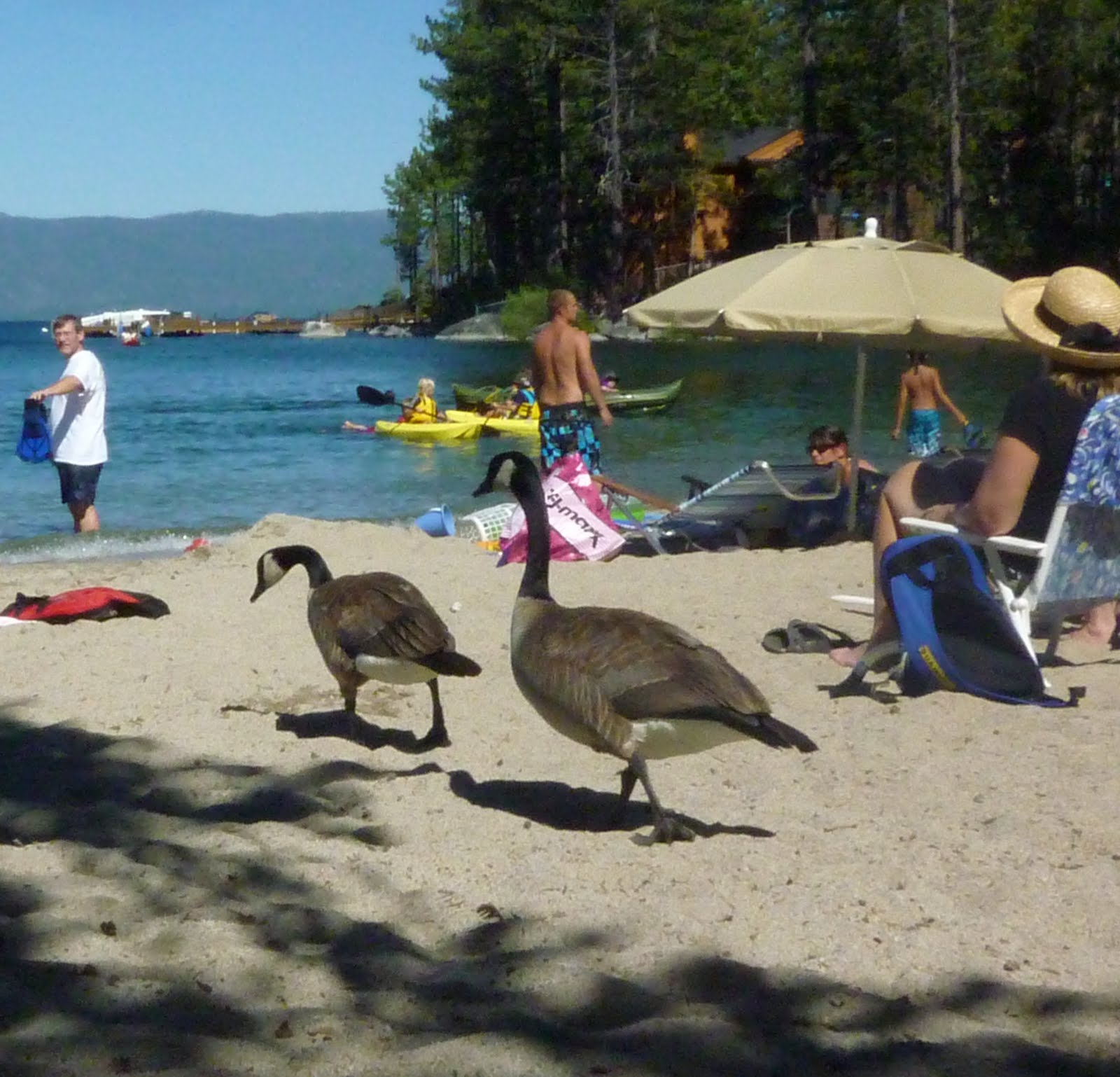 ( 2nd of many posts in a series. 1st post: Getting Over )


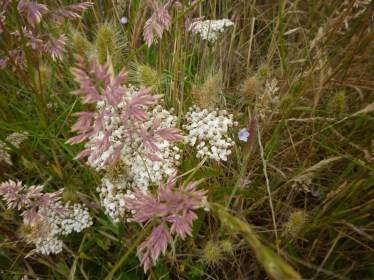
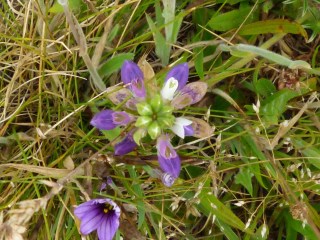
 We took a short hike to Eagle Lake, above Emerald Bay, and captured some wildflower images. The purpley one Pippin and I think is Bridges’ Gilia or Gilia leptalea, though it also seems to have a new and updated botanical name for some reason: Navarretia leptalea.


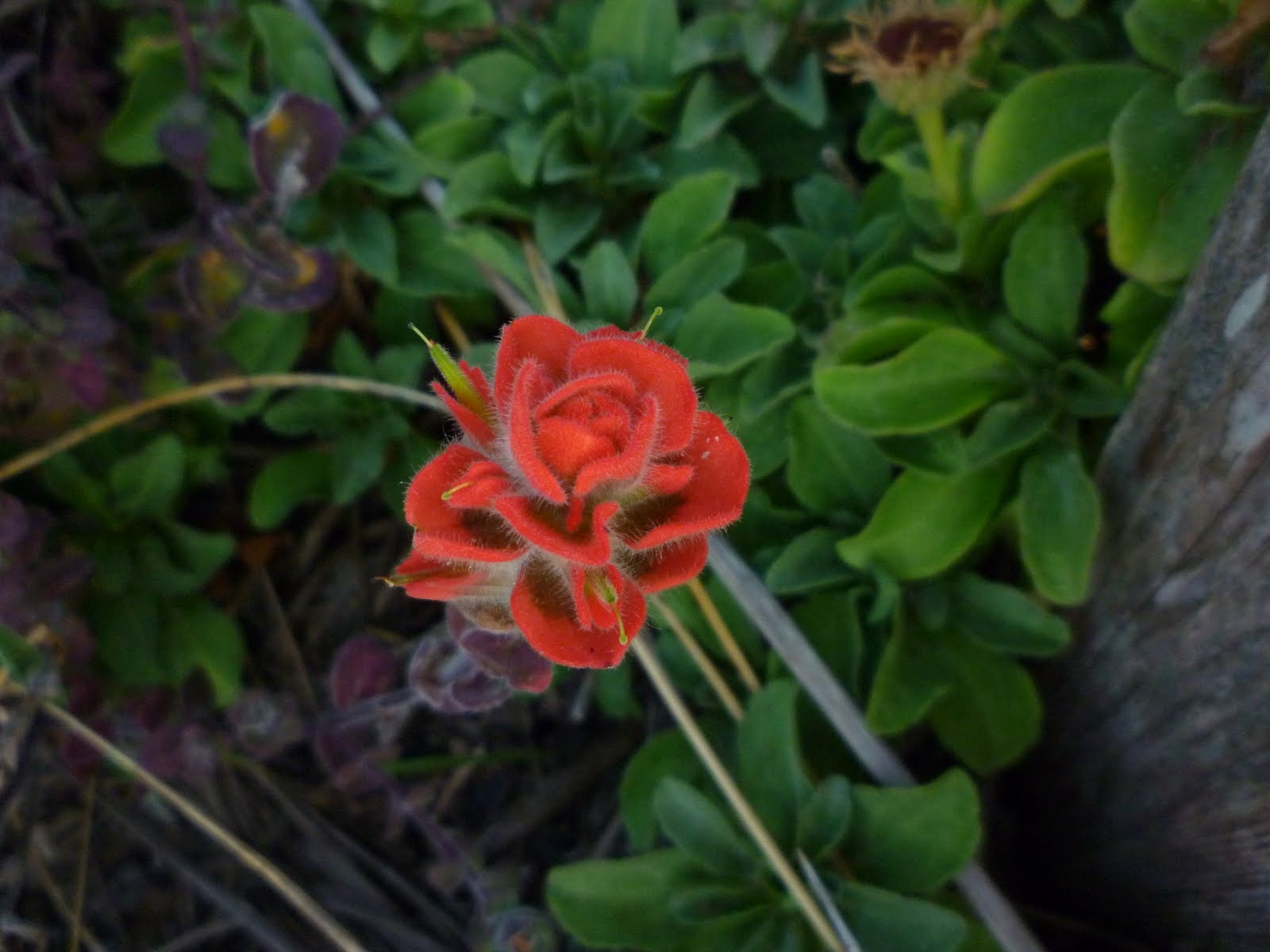
 The blooms of this unknown plant remind me of a bouquet of fat and curling pipecleaners. It liked to grow in the poison oak and brambles.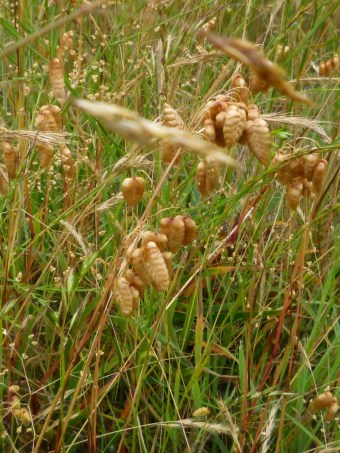


 Gladsome Lights