Sunday mornings I would reach high into his dark closet while standing on a chair and tiptoeing reach higher, touching, sometimes fumbling the soft crowns and imagine I was in a forest, wind hymning through pines, where the musky scent of rain clinging to damp earth was his scent I loved, lingering on bands, leather, and on the inner silk crowns where I would smell his hair and almost think I was being held, or climbing a tree, touching the yellow fruit, leaves whose scent was that of a clove in the godsome air, as now, thinking of his fabulous sleep, I stand on this canyon floor and watch light slowly close on water I’m not sure is there.
Yesterday we commemorated St. Columba. It was the Sunday of the Blind Man in the Orthodox Church, and I was getting ready to chant-read the prayers of the 3rd and 6th Hours before Liturgy. Usually on Sundays there are two changeable parts of those readings called troparia, always one for the Resurrection, and often another for the feast or saint of the day. There was another sort of hymn, a kontakion, for the Blind Man, but there was not a troparian hymn in the lectionary for that event.
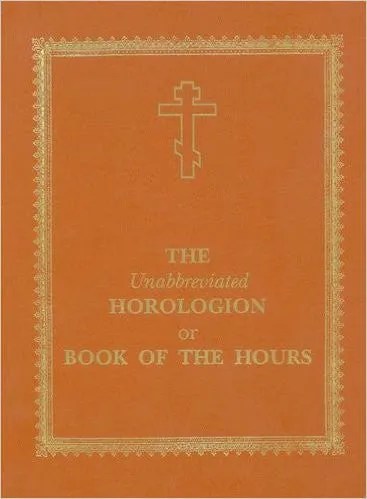
So our rector said I might read the troparion to St. Columba, which I did. I can’t find the text of it anywhere online now; I read it in the Horologion, or Book of the Hours, which is a big book of texts used, mostly by the reader or cantor, in liturgical services of the Orthodox Church, both the fixed and movable parts.
He also suggested that I take home a copy of that tome, to spend a while familiarizing myself with it. Occasionally over the years someone instructs me, in a very hit-and-miss fashion, on how to find what I need in the Horologion, but I seem to be dense when it comes to learning anything that I have to read standing, at a lectern, for example. So I’ll be glad to bring the book home and read at my leisure through the church calendar, with its treasures of saints and feasts.
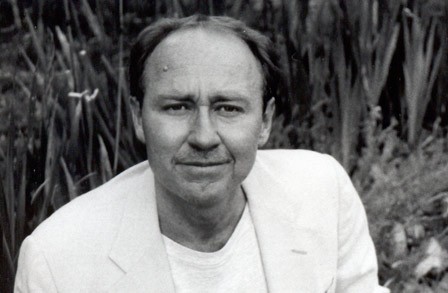
Fr. Malcolm Guite was remembering St. Columba yesterday, too, and tells the story of how his mystical connection to the saint was renewed in his youth, “Columba and My Calling,” on his blog. An excerpt:
“One evening, St. John’s Eve it was, right at the end of my journey, I came round a headland at sunset into a beautiful little bay and inlet on the west coast in Donegal, just as the fires were being lit around the headlands for St. John’s Eve, and there was drinking and fiddle playing and dancing round the fires that evening. And I asked where I was, and they said Glencolmcille, and I felt a sudden quickening and sense of connection, as though a memory stirred. And they asked me my name and I said ‘Malcolm’, and they said, ‘Ah that is why you have come, because he has called you’, and I said ‘who?’ and they said ‘Colm has called you, Malcolm, for this is the place he fought his battle and gathered his disciples and from here he left for the white martyrdom and Scotland.”
St Columba’s Church, Gartan, Donegal.
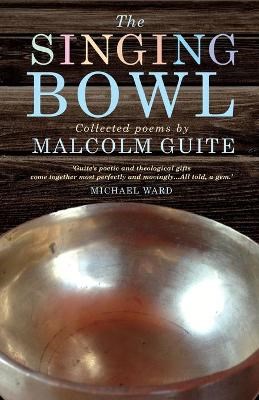
He has written a touching sonnet in honor of his saint and that “small epiphany,” from which I took the title of this blog post. You can read “Columba,” and/or listen to him read it: here. It’s one of the poems in his book, The Singing Bowl.
Today there have been lovely things I never saw before; sunlight through a jar of marmalade; a blue gate; a rainbow in soapsuds on dishwater; candlelight on butter; the crinkled smile of a little girl who had new shoes with tassels; a chickadee on a thorn-apple; empurpled mud under a willow, where white geese slept; white ruffled curtains sifting moonlight on the scrubbed kitchen floor; the under-side of a white-oak leaf; ruts in the road at sunset; an egg yolk in a blue bowl.
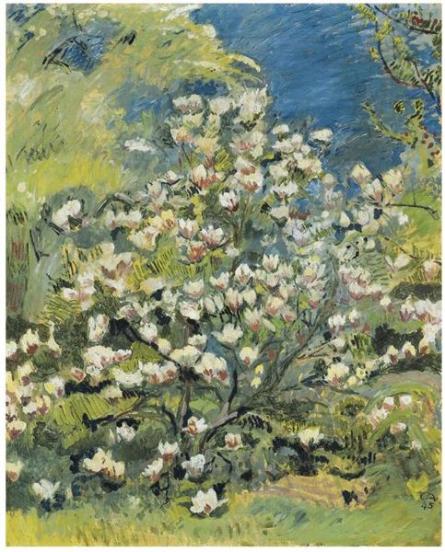
Deep in the wood, of scent and song the daughter, Perfect and bright is the magnolia born; White as a flake of foam upon still water, White as soft fleece upon rough brambles torn. Hers is a cup a workman might have fashioned Of Grecian marble in an age remote. Hers is a beauty perfect and impassioned, As when a woman bares her rounded throat. There is a tale of how the moon, her lover, Holds her enchanted by some magic spell; Something about a dove that broods above her, Or dies within her breast—I cannot tell. I cannot say where I have heard the story, Upon what poet’s lips; but this I know: Her heart is like a pearl’s, or like the glory Of moonbeams frozen on the spotless snow.
-José Santos Chocano (1875 – 1934) Peru Translated by John Pierrepont Rice
 Liturgy. Usually on Sundays there are two changeable parts of those readings called troparia, always one for the Resurrection, and often another for the feast or saint of the day. There was another sort of hymn, a kontakion, for the Blind Man, but there was not a troparian hymn in the lectionary for that event.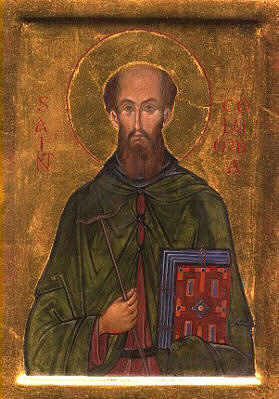
 “One evening, St. John’s Eve it was, right at the end of my journey, I came round a headland at sunset into a beautiful little bay and inlet on the west coast in Donegal, just as the fires were being lit around the headlands for St. John’s Eve, and there was drinking and fiddle playing and dancing round the fires that evening. And I asked where I was, and they said Glencolmcille, and I felt a sudden quickening and sense of connection, as though a memory stirred. And they asked me my name and I said ‘Malcolm’, and they said, ‘Ah that is why you have come, because he has called you’, and I said ‘who?’ and they said ‘Colm has called you, Malcolm, for this is the place he fought his battle and gathered his disciples and from here he left for the white martyrdom and Scotland.”

 Gladsome Lights