There is a great deal of difference between
an eager man who wants to read a book,
and a tired man who wants a book to read.
— G.K. Chesterton in Charles Dickens
I can’t relate to the tired man mentioned in this quote, because if I am ever too tired to be eager about it, I don’t enjoy reading at all. Short of totally drained, my style of “deep reading,” which requires a pencil or red pen for underlining and note-taking even for novels, is what I most like to do when fatigue sets in. In the years when I was worn completely down by evening, having provided the education, meals and home base for a passel of children and a husband, the most calming thing was to get in bed with a book of theology.
But the comparison Chesterton makes leads me to think about uses of books. It sounds as though the Tired Man is using a book, whereas the Eager Man wants to engage with and receive from the author of a specific book.
All the same, when I am an Eager Woman I seem to need several choices, not always being in the mood for meeting up with any and every interesting author. My family have been very good to me of late, providing many of these options.
My sister-in-l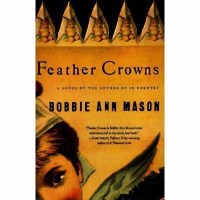 aw gave me Feather Crowns by Bobbie Ann Mason, not a book I’d have picked up otherwise; I’d never heard of the author. The prose was lovely, and transported me to Kentucky in 1900, to the house of a woman truly great with child. When she gives birth to quintuplets her home and family become the center of a community effort on the part of the women to help her with the babies, at which point I could smell the cornbread and hear the household sounds and the birds outside her window.
The closeness of the community and the friendliness and openness of the country people that are initially so appealing in this story soon set off alarms in my mother’s heart, when complete strangers hop off the train and come right in without knocking, to pick up the babies without asking. This very domestic story became a thriller for me as I turned the pages wanting to find out how fame was going to affect the babies, the marriage, the community — and most of all, the mother. I can enjoy engaging with a writer of fiction if she does a good job, and Mason qualifies.
Poetry provides a different kind of connection with the author, a relationship in which I feel most like the receiver of gifts, though of course I can’t help but bring something to the encounter. That’s why I don’t bother with many of the poe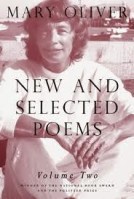 ms that come my way: I don’t have whatever it takes to hear what is in that particular poem, and I can tell right away. On the other hand, maybe poetry books are the sort that I want to read when I am on the verge of exhaustion. A good poem can give at several levels, depending on my state of mind.
Mary Oliver has a higher-than-average success rate with me, so I’m looking foward to delving into this collection that was a birthday gift from my husband. I’ve posted some of her poems on my blog in the past, but right now I just want to share a quote from her that makes me feel a connection to her as a fellow-writer, too. The quote within a quote, from Wikipedia:
She commented in a rare interview, “When things are going well, you know, the walk does not get rapid or get anywhere: I finally just stop, and write. That’s a successful walk!” She says that she once found herself walking in the woods with no pen and later hid pencils in the trees so she would never be stuck in that place again.
Another kind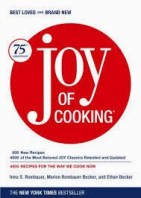 of book for less energetic times is a good cookbook, and The Joy of Cooking has been perfect for leisurely hours of perusal throughout my married life. Mr. Glad accommodated my desire for the 75th-anniversary edition, so I’ll be ready when that mood strikes.
I get poems in my inbox every day from two poetry websites, and last month one of them was by X.J. Kennedy, whose name I rec ognized as co-editor with Dana Gioia of a poetry textbook I bought a while back for the purpose of improving my receptivity to poems. I started reading about Kennedy and found that he himself has specialized in writing poems and stories for children.
So I borrowed a few of his books from the library and discovered some that I wanted to buy for my grandchildren. I read one of his stories, too, The Owlstone Crown, which I don’t think worth anyone’s time unless you have absolutely nothing else at hand.
My favorite by him was the children’s introduction to poetry that he wrote and compiled, Knock at a Star. I have now bought several copies on Amazon at one cent each, plus shipping, of course. The poems Kennedy collected are all of a sort that I would feel good about my children or grandchildren reading. I am not at home with the book at the moment so I will have to write another post about it when I can give some examples.
Where I am is at the home of Soldier and Joy and Liam. 21-month-old Liam and I are eagerly reading scores of books, but not always in the focused way I prefer. Often we get a page or three into the book when he gently closes that one and jumps down off my lap to bring a replacement from his bookshelf. But I am patient; so far I haven’t given up being an Eager Reader.
Linking up to Weekends With Chesterton