Category Archives: quotes

Indigestible Sightseeing

The time for summer vacations and traveling is upon us. I myself will be departing this week for the first of several outings short and long. So it was timely to discover words from G.K. Chesterton, my favorite philosopher, on the subject of sightseeing.

In an essay he wrote in 1931 he contrasted what he called the “age of monuments” with the “age of museums,” and found modern sightseeing problematic in that it is “not meant either for the wanderer to see by accident or for the pilgrim to see with awe. It is meant for the mere slave of a routine of self-education to stuff himself with every incongruous intellectual food in one indigestible meal.”

He hit that nail on the head as far as I am concerned. When Pippin and I were in England and Scotland I felt such an aversion to the museums, especially the ones with vast expanses of vertically-mounted text. Now GKC has explained what put me off: too much of the wrong food. I hunger for the monuments before which I can stand in awe, or the small discoveries, a few of which I wrote about and pictured here.

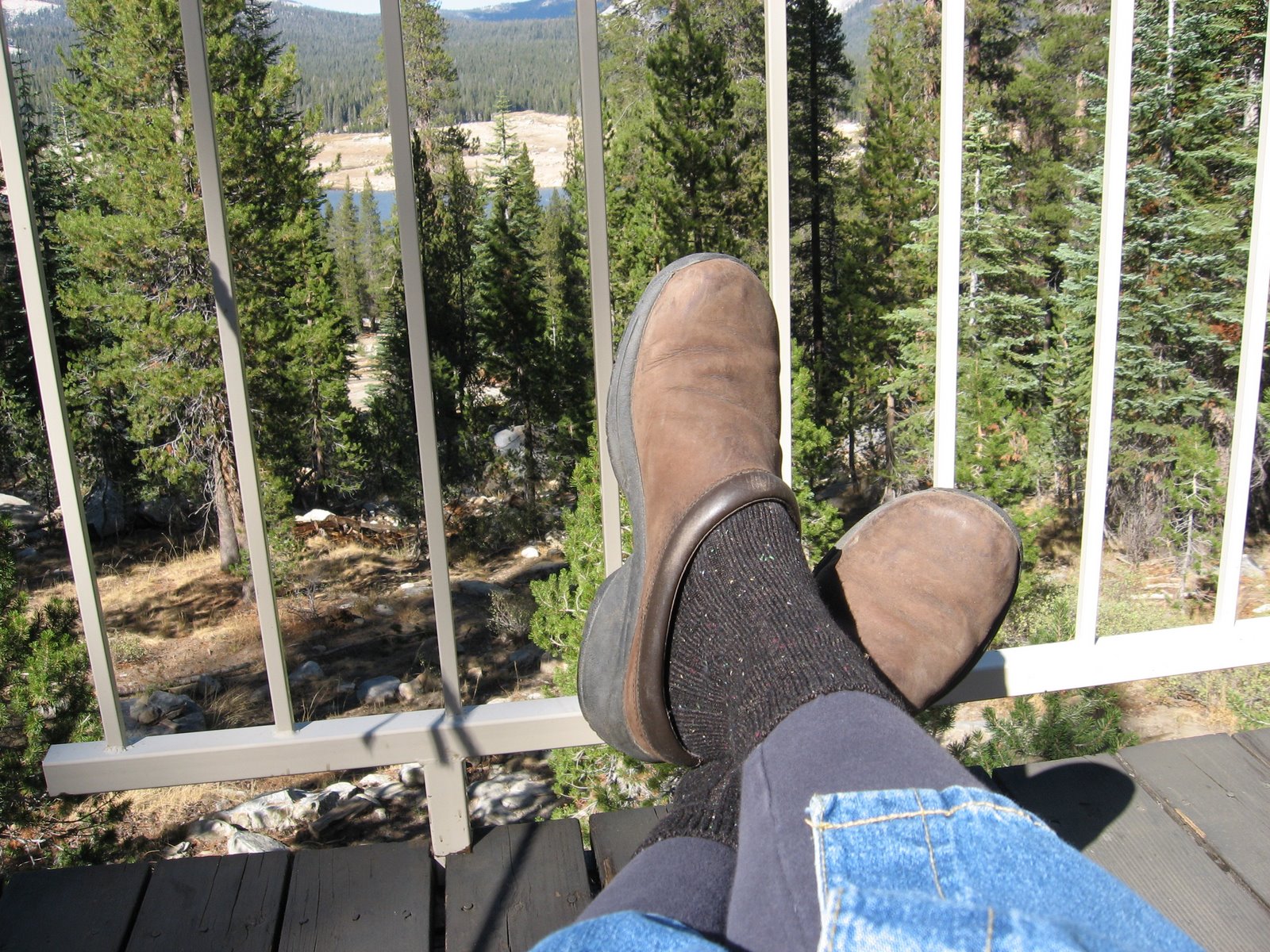
This photo shows one scene I expect to be enjoying very soon, not a monument, exactly, but evidence of and testimony to the Creator. I took the picture when on a solitary retreat two years ago, but it’s nice to know the spot will be essentially unchanged.

Sit down quietly.

Happiness is a butterfly, which, when pursued, is always just beyond your grasp, but which, if you sit down quietly, may alight upon you.

–Nathaniel Hawthorne

You won’t find butterflies in this photo…it’s just that the sunlight shining through the lemon balm made me happy. Also yesterday’s gardening work at church made me happy, all six hours of it, re-planting containers and flowerbeds. I even took a few photos, but they only convey the chaos stage of a work-in-progress. Not to mention that my camera got dirty hanging out in the pocket of my gardening apron, and the great picture I thought I was getting of a giant snail wasn’t great, because the lens cover didn’t open. It was the middle of the day, so the sun was too bright.

I never sat down quietly, but the gardening happiness came to me anyway. In a few weeks, when the plants have filled out and my work of art is more ready for viewing, I’ll sit down earlier in the day and from a different vantage point take my pictures and joy.

Crude Classifications

Friends of mine have had relatives who died leaving a house full of stuff, the junk all mixed in with the valuables. Someone has to put order into the mess and dispose of it. In one particular case, my friends were the only family members willing and able, so they spent two or three whole weeks working full-time to sort through the clutter.

One room in my house, plus several boxes and drawers, nooks and crannies elsewhere, are in need of similar treatment, but I am not dead. If I were dead, it would certainly be easier for someone else to sort through things and quickly figure out that a large part could go in the trash. After all, I don’t have money stashed between the pages of books or in amongst old newspapers, as my father did.

The things of value–well, I just know there is someone in the world who would want them, if I could only locate that person. I also know that I myself want some of the items, but I can’t find them right now, and I’ve forgotten what many of them are….

Faced with this kind of meandering mind, another friend found herself almost wishing (to actually wish it would be an outright sin, so I’m confident that her thoughts were more along the line of vain imaginations, as in counting the serendipitous blessings of something bad happening) that her house would burn down, and reduce the quantity of goods over which she was responsible.

“Crude classifications and false generalizations are the curse of organized life,” said George Bernard Shaw. Whole housefuls classified as “Gone” would be too crude, I’m afraid. A more practical outworking of acquiescence to life thus cursed is the three-box system, by which one sifts one’s possessions into one of three boxes labeled “Toss,” “Give,” or “Keep.” If I could do that, it would at least be a step in the right direction. Later I could sort the “Give” things into about twenty sub-boxes–or maybe reconsider and start another “Toss” box. T.S. Eliot said that “Success is relative: it is what we can make of the mess we have made of things.” I know without a doubt he wasn’t talking about women’s work, but it is a comforting thought.

One large group of belongings is my collection of quotes, some of which you see popping out on this page. Quotes are small and tidy things which is why I have been able to keep them corralled in just four places in one room: a folder in a drawer, books on a shelf, favorites in a small notebook, and digitally on the computer. They are legion and yet not overwhelming in physical size, so I spend enough time with them to keep them disciplined and fairly at-the-ready. See here, I have put several of them to work helping me to tackle my mountains of clutter.

I even managed to cut this blog down from the unwieldy treatise on life that it was originally going to be, and am hopeful about boxing up more of my world into bite-sized chunks for more enjoyment in the future.

As Martha Stewart says, “Life is too complicated not to be orderly.”
Rocks and Stones

If any one rock expresses for me the metaphor the Psalmist uses in words like this (Psalm 18): “The LORD is my rock, and my fortress, and my deliverer; my God, my strength, in whom I will trust; my buckler, and the horn of my salvation, and my high tower,” it is El Capitan in Yosemite National Park. Contemplation of this edifice over time probably contributed to my love for rock and stone. It may seem odd, or lazy, that I’ve never made the effort to study geology or petrology. All I do is stare at the big rocks and collect some pretty little rocks. The latter are good to put on the soil around succulents and keep the roots warm.

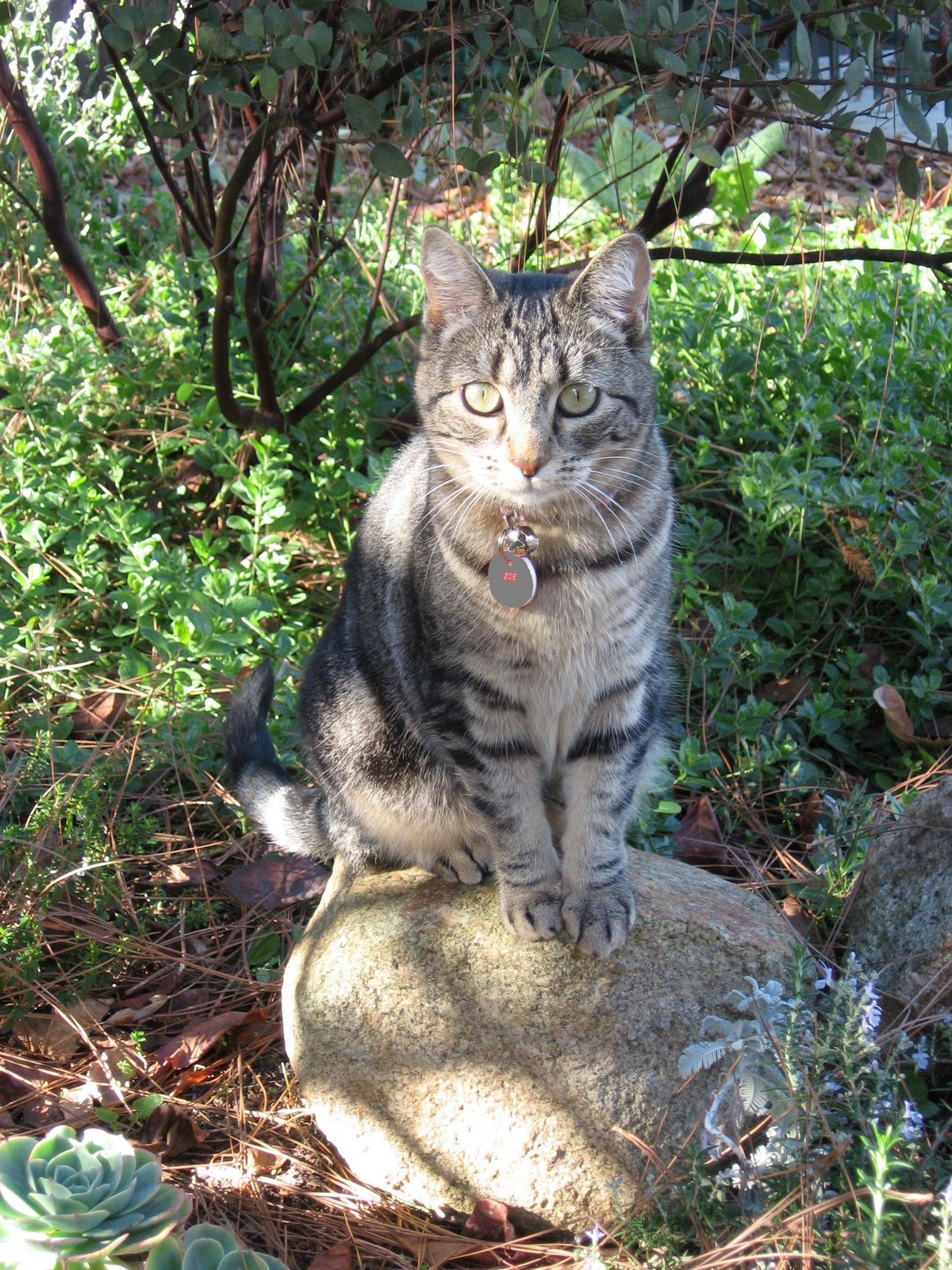
To be truthful, I collect some medium-sized stones as well and haul them down from the mountains on occasion, with the help of stronger and less enthusiastic members of the family. Granite. These are not only reminders of larger hunks of granite, such as El Capitan, but they are very useful in the garden, for beautifying generally, adding another texture and color to contrast with leaves and flowers, or the colors of the cats who sit on them. In some places they also prevent cats from engaging in other less desirable activities.

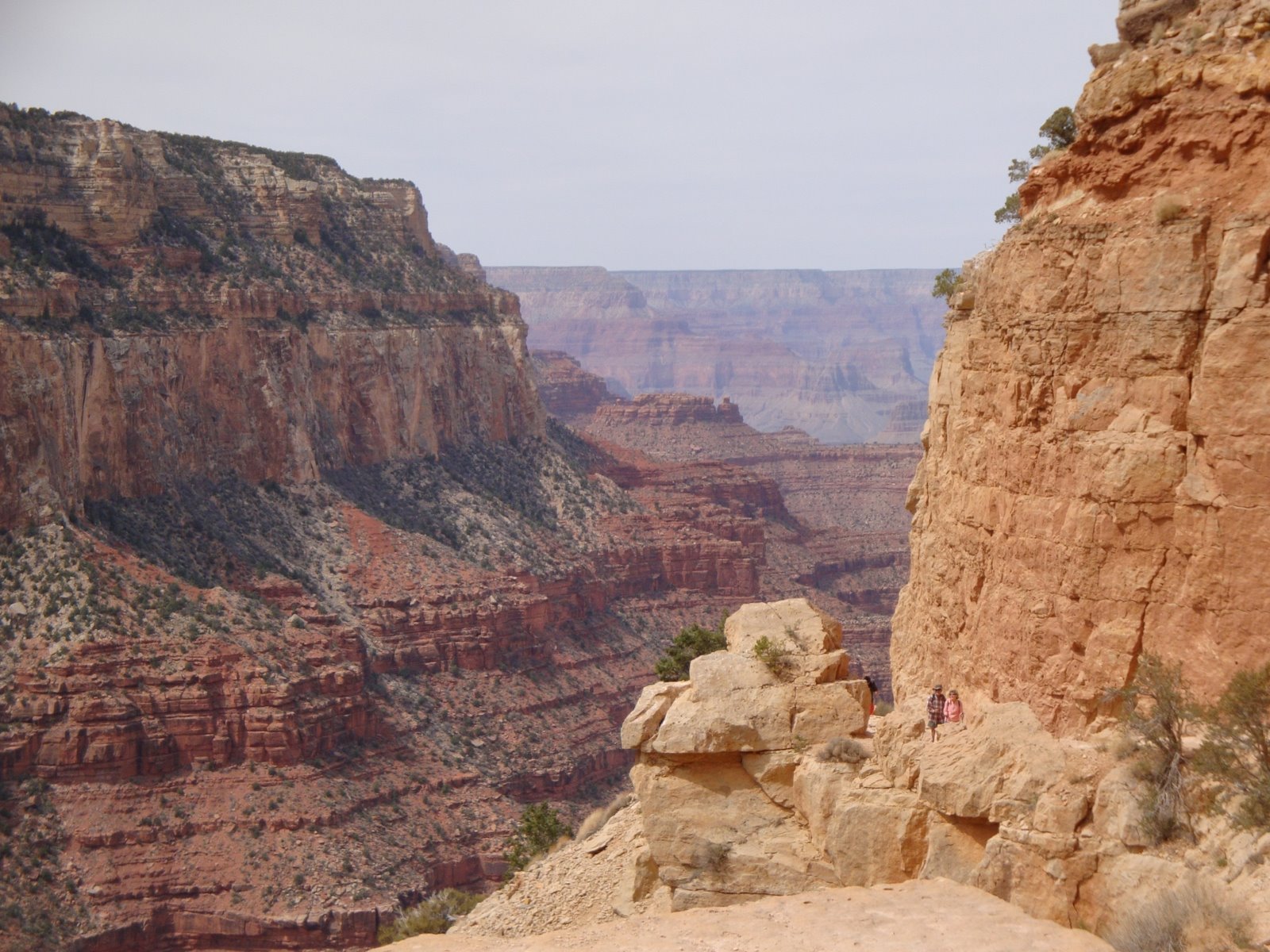
The Southwest, where we have recently traveled, is a delight to rock lovers, even the ignorant type like me. The stone there is typically redder than in Yosemite. Above is a shot from the Grand Canyon.

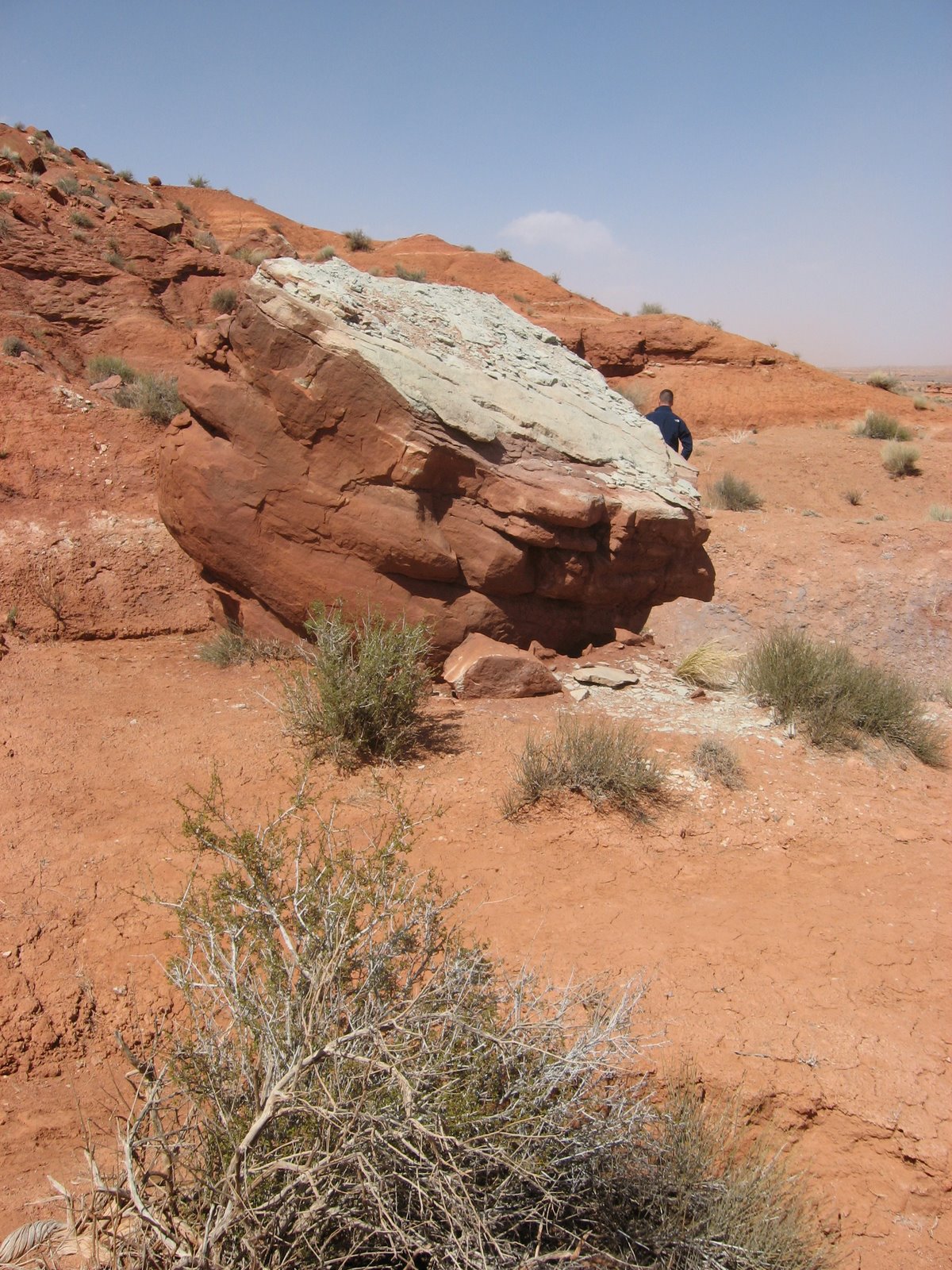
But in Monument Valley I was thrilled at aqua blue rock faces gorgeously setting off the mostly red cliffs. As we climbed out of the car and hiked in among giant boulders and hills of rock, I looked forward to taking their pictures.

Unfortunately, we were in the middle of a sandstorm, which made it unsafe to use one’s camera. My companions said, “What are you talking about? There is no blue rock here!” And when I got close to these piles of brilliant color and picked up some of the chips of sandstone, it wasn’t bright at all, but sort of grayish-white.

This photo I risked (above, with a man behind it) shows the bluest rock I saw–as it looks to normal people. I am still puzzled as to what was going on that day. If the rocks were reflecting the blue sky, why didn’t the others see that? Did I have blue sand in my eyes?

In England and Scotland several years ago I collected small stones that wouldn’t weigh me down too much on the return flight. Here is a photo of the first place where I couldn’t help myself, where the chalk cliffs on the southeast coast of England meet the sea. I am the dark shape bending down to hunt and peck along the shore. >>


 Also while in England, we visited several stone circles. Just being near these stones and thinking about the people who mysteriously erected them makes me praise God for creating humans with a desire to know the Absolute and numinous, people who are not content to live a life that is merely earthly. History is full of evidence of God’s working in men’s hearts, and I am linked with these people because we have all sought God.

The standing stones above are in Swinside. I much preferred just meandering in the historically rich countryside, soaking up….something, to visiting “museums” full of print-heavy posters that were too much like dull textbooks.

 Stone fences and walls abound in Britain, including portions of the famous Hadrian’s Wall and its forts, leftover from the Romans in the 2nd Century A.D. We liked hiking alongside it for a couple of miles (below).

I started out talking about the greatest, and will end this post with photos of the smallest, the collection of specimens I brought back from Britain–one group from Beachy Head in England, and three gatherings from Scotland. The plain white one from Beachy Head is pure chalk. The black cores of the other white rocks are a kind of obsidian. Beyond that I am pretty ignorant. If you click on one of the photos it will enlarge so you can see the stones more closely. I bet you’re not surprised that I could find a stone embedded with a cross.