Category Archives: saints

These two fought bravely.

Two important people in my life died on this day. I didn’t know either of them personally, but both have contributed hugely to the presence of true and living Orthodox faith in America, that Church in which I’ve found the fullness of Him Who fills all in all. Every year that we come to this date finds me more thankful.

Saint Herman of Alaska, whose feast we commemorate today, arrived in Alaska in 1794 and died there in 1837. On the occasion of his canonization in 1969 Bishop Dimitri spoke:

The Church on earth lives in a loving fellowship with the saints who have already run their race, who have fought the good fight, and have received their crowns (2 Timothy 4:7) (James 1:12). This is what the Apostle means when he says that we are compassed about or surrounded by the witness-martyrs or saints. We are assured both of their presence and their interest in us. In fact, they are concerned about the whole world and its salvation, for “there is joy in heaven over the repentance of one sinner” (Luke 15:7).

Father Schmemann was born in 1921 into a family of Russian emigres, and came to the United States in 1951 to join the faculty of St. Vladimir’s Seminary, where two of my own parish priests sat under his teaching. He reposed in the Lord in 1983. Not only has my life been enriched broadly by his contributions to the whole of Orthodoxy in America, but by my reading directly what he wrote, especially For the Life of the World, and his journals.

I’m so thankful, too, that I can commune with that cloud of witnesses in church this morning. So as to not be late, I’ll just finish by copying here what I posted last year on this happy day. And it is another cold one!

It seems fitting that we commemorate St. Herman of Alaska on this date, when winter is making itself felt. I’ve written before here and here about Father Herman, how he spurned the cold, befriended the animals, and interceded between the Aleuts and the powerful people who would exploit them.

His is a good example in the Advent season, of how to keep our hearts and activities focused on the Kingdom of God in the face of distractions. And if we have a church service to attend where we can share in the Life of Christ together with Saint Herman and all the Cloud of Witnesses, we are very blessed!

I just learned (and am adding this paragraph to my original post) that today is also the anniversary of the repose of Father Alexander Schmemann, another shining star in our church family. This note about both men leads to further inspiration from and about Fr. Alexander, who rests firmly in the tradition of Saint Herman. I’m ever so thankful to have this coinciding of the celebration of two of my favorites.
Athanasius – the heart sings

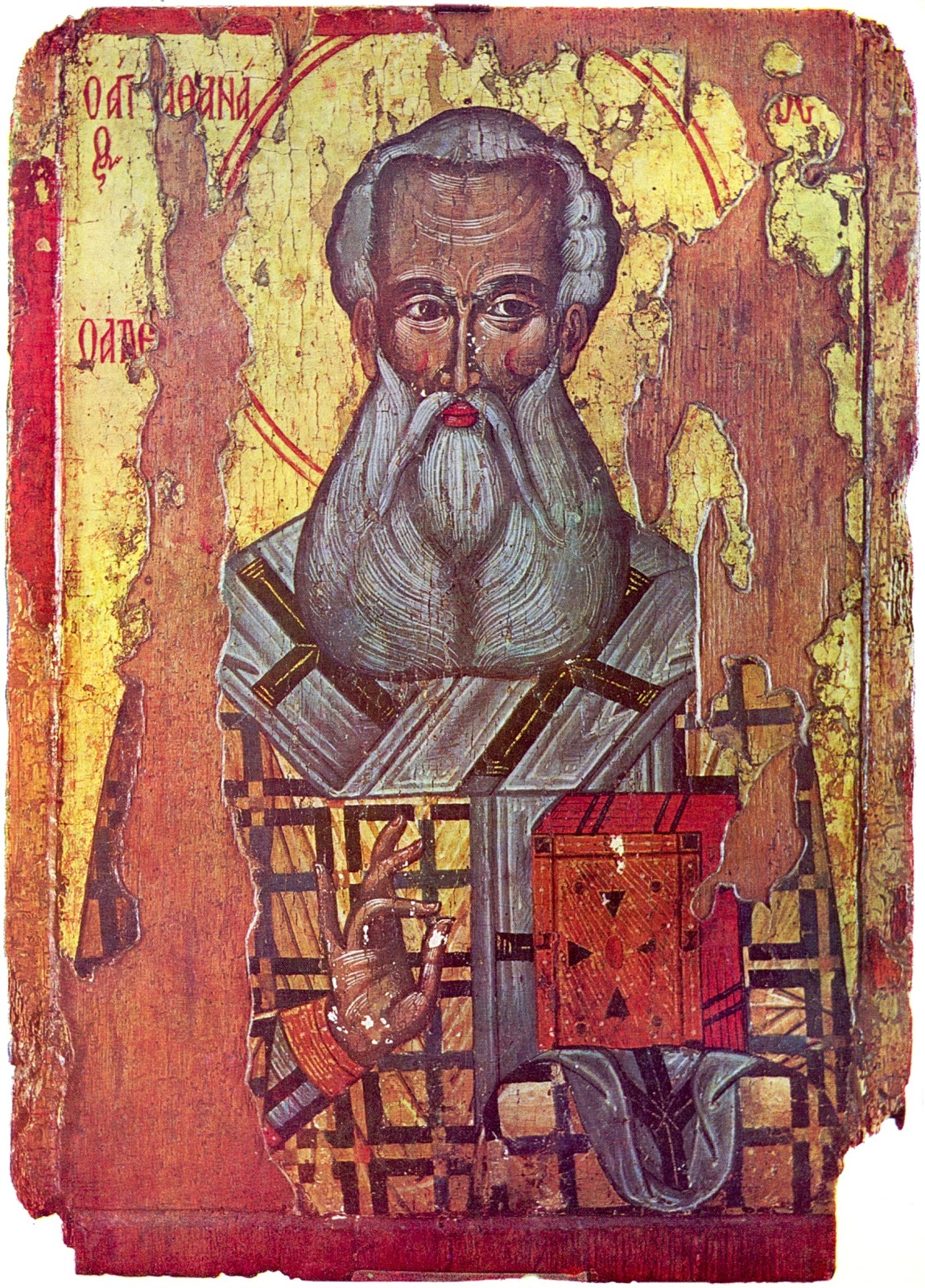
I must have read C.S. Lewis’s introduction to St. Athanasius’s On the Incarnation twice before in an attempt on the whole book, without getting much beyond it, but on this third try I have kept going. It seemed a fitting little paperback to read during Advent.

In the introduction we have an instance of Lewis’s exhorting us to read more of the Old Books, like this one from the 4th century, though we are timid: “The student is half afraid to meet one of the great philosophers face to face. He feels himself inadequate and thinks he will not understand him. But if he only knew, the great man, just because of his greatness, is much more intelligible than his modern commentator.”

And Lewis also writes here about devotional vs. doctrinal works, On the Incarnation being one of the latter, that he finds the doctrinal books often “more helpful in devotion” than the expressly devotional ones. I can relate to his description of people who “find that the heart sings unbidden while they are working their way through a tough bit of theology with a pipe in their teeth and a pencil in their hand.”

Actually I don’t know about the pipe in the teeth, but I always have a pencil in my hand as I lie in bed with my book of theology or literature or whatever. And I marked some passages from St. Athanasius to share in this season when we focus on God With Us.

You must understand why it is that the Word of the Father, so great and so high, has been made manifest in bodily form. He has not assumed a body as proper to his own nature, far from it, for as the Word He is without body. He has been manifested in a human body for this reason only, out of the love and goodness of His Father, for the salvation of us men. We will begin, then, with the creation of the world and with God its Maker, for the first fact that you must grasp is this: the renewal of creation has been wrought by the Self-same Word Who made it in the beginning. There is thus no inconsistency between creation and salvation; for the One Father has employed the same Agent for both works, effecting the salvation of the world through the same Word Who made it in the beginning.

St. Nicholas most simply put

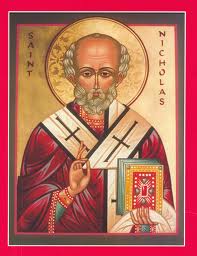
The feast of St. Nicholas begins with a vigil service this evening and continues with liturgy in the morning. Happy Feast Day! I read the following in The Winter Pascha by Thomas Hopko:

The extraordinary thing about the image of St. Nicholas in the Church is that he is not known for anything extraordinary. He was not a theologian and never wrote a word, yet he is famous in the memory of believers as a zealot for orthodoxy, allegedly accosting the heretic Arius at the first ecumenical council in Nicaea for denying the divinity of God’s son. He was not an ascetic and did no outstanding feats of fasting and vigils, yet he is praised for his possession of the “fruit of the Holy Spirit…love, joy, peace, patience, kindness, goodness, faithfulness, gentleness, self-control” (Gal. 5:22-23). He was not a mystic in our present meaning of the term but he lived daily with the Lord and was godly in all his words and deeds. He was not a prophet in the technical sense, yet he proclaimed the Word of God, exposed the sins of the wicked, defended the rights of the oppressed and afflicted, and battled against every form of injustice with supernatural compassion and mercy. In a word, he was a good pastor, father, and bishop to his flock, known especially for his love and care for the poor. Most simply put, he was a divinely good person.

St. Andrew and His Cross

Where we sang this morning

Happy St. Andrew’s Day! I had the honor and joy of celebrating the feast in church this morning. Added to the usual liturgy and communion were prayers and song lifting up one of our dear elderly parishioners who died in the Lord early today. Now the memory of his repose will always be tied to this feast.

Andrew was the first of Jesus’s disciples, and centuries ago became the patron saint of Scotland and other countries. I wore my tartan plaid skirt as I always do on November 30th, and this year I had a new purple Celtic scarf to wear, recently brought from Scotland by Pearl.

Some of you might remember that I wrote about this years ago; I’m sorry to say that while trying to repost those thoughts this morning I deleted them instead. Ah, well, it turns out to be a blessing, because the accident caused me to find that just today John Sanidopoulos has written a thorough history of how it happened that the Scots chose this saint for their patron, and his cross for their official national flag.


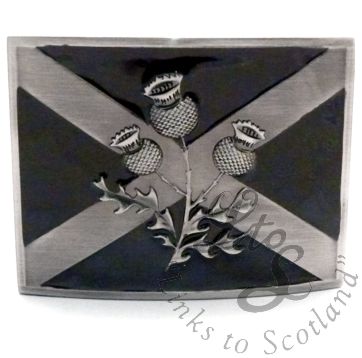
This form of cross is called a saltire and is linked to St. Andrew because he was crucified on a diagonal cross in the first century. I learned that the first use of the X-shaped symbol was on medieval soldiers’ clothing, probably a white image on a black background. And today there are many Scottish nationalistic garments and items that hearken back to this design, like this belt buckle.


It was only in the last decade that Scotland made St. Andrew’s Day an official bank holiday. The nation also has another flag you might be more familiar with, the Lion Rampant, the unofficial national flag that belongs to the kings and queens of Scottish history. And there is the Union Flag of the entire U.K. Time was, Scotland could not legally fly its official satire on its national holiday of St. Andrew, but that sorry situation has been rectified of late.

These national days and flags have been part of the cultural consciousness since the 14th century, a consciousness that naturally changes from generation to generation. The original and deeper meanings of this cross are probably lost in the background fog of the mind of the nation.  It is encouraging to think that even if they have largely forgotten him and their Christian heritage, St. Andrew continues to pray for the people of Scotland.