Category Archives: wildflowers

Oregon – Granite Man, Pennyroyal, and Deer Brush


An hour before the race began

On the first of June Mr. Glad competed with other members of the family in the Granite Man Triathlon in southern Oregon. It was one of several events and meetings that formed the outline of a little trip around our neighboring state.

My husband was doing the swimming leg, as was the other grandpa of our Oregon grandchildren, and the two of them were the team captains. Our son and three grandsons made up the remainder of the teams, with the younger athletes compensating somewhat for the slowness of their elders. We womenfolk and some out-of-town kin were the support crew and also played with the baby (cute boy even if he isn’t one of my grandchildren).

My favorite swimmer left of center with his hands on his hips

Perfect weather, and a lovely setting, with trees leafing out, flowers beginning to bloom. As we stood around on the grassy slope of Applegate Lake waiting for the race to start with the swimmers’ portion, I had my first botanical experience of the trip. It started with a smell that only gradually broke into my consciousness enough to make me look down and search out what source my feet were tramping on.

pennyroyal – or not?

Pennyroyal was my first thought, as I picked off some of what was growing in the wild lawn, and in case you aren’t familiar with it, I outlined one cluster faintly in red, in the photo above, in the lower right corner. Even so, you may have to click on the photo to see it.

But it doesn’t exactly look like pictures of Mentha pulegium, though that pennyroyal is considered mildly invasive in California and Oregon. It doesn’t even look like pictures of the Oregon “field mint” Mentha arvensis, which I looked at in case my sniffer is not able to distinguish between members of the mentha family.

Pennyroyal has what I’d call a sharper aroma than most mints, and this one under my feet had that distinctive smell that I have met many times in my life, often in the mountains. Was I mistaken? Its leaves do look in some ways more like Monardella odoratissima, whose common names include “Mountain Pennyroyal” – but not exactly.

This Applegate Lake variety looks like a cross between it and another mint, as I study it further. And that impression might not be too far from reality, because it turns out that pennyroyal has an ability to hybridize with other mint species, adding to its troublesome weediness. It may crowd out native plants and even threaten Oregon’s commercial peppermint and spearmint crops, as I read in this article.

I learned a new word while reading it: allelopathy: a biological phenomenon by which an organism produces one or more biochemicals that influence the growth, survival, and reproduction of other organisms. I am familiar with this kind of influence from my experiences in gardening, but I didn’t know the name for it. The latest instance is the way nothing much grows under my manzanita bush because of its negative allelopathic qualities. The authors of the article experimented by treating seeds of a rare Oregon plant with a weak extract of pennyroyal root, and found that the germination rate dropped.

Deer Brush near Applegate Lake, Oregon

I didn’t know all of this bad stuff when I was lolling about in such a bucolic place; I was only pleased to have found a plant to check on as soon as I got home.

When we went out to the parking lot after all our guys were done (and some were done-in) I found another, a bush covered with honey-scented flowers. I thought it might be a type of Ceanothus, and I was right. But about the common name, I was wrong. I guessed Mountain Lilac, and it is in fact called that by some people, but maybe by mistake…? It’s officially known as Deer Brush.

The flowers come in shades of light blue and white, mostly, and it’s native to the western states. All of its uses are positive: animals eat it, the Indians made baskets from it, and it fixes nitrogen in the soil. Everybody likes this one!

Ceanothus integerrimus

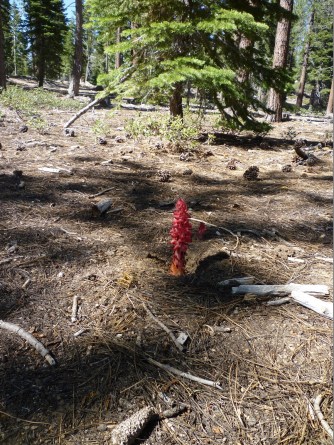
The parasitic snow plants are blazing at Tahoe.

Mr. and Mrs. C. invited us to their cabin again on the south end of Lake Tahoe. At 6,000 ft. elevation it’s still pretty brisk in May, but the sky was SO blue, the lake was SO blue, and the air was dry, full of the smells of pine trees and cedars with some wood smoke thrown in. I breathed deeply.

Here is a map if you need to get your bearings. The lake itself lies on the Nevada-California state line. We usually approach from the southwest and drive through the state capital of Sacramento to get there.

I had escaped the world down below where picture storage was one of the many time-consuming computer problems that had recently worn me out, and I arrived with a reluctance to use my camera. Of course that didn’t last long, especially when wildflowers are out. May in the Sierras brings flowers you can’t see in the summertime, so I had to seize my opportunity, didn’t I? My other blog posts about the Tahoe area have different photos from what I came away with this time.
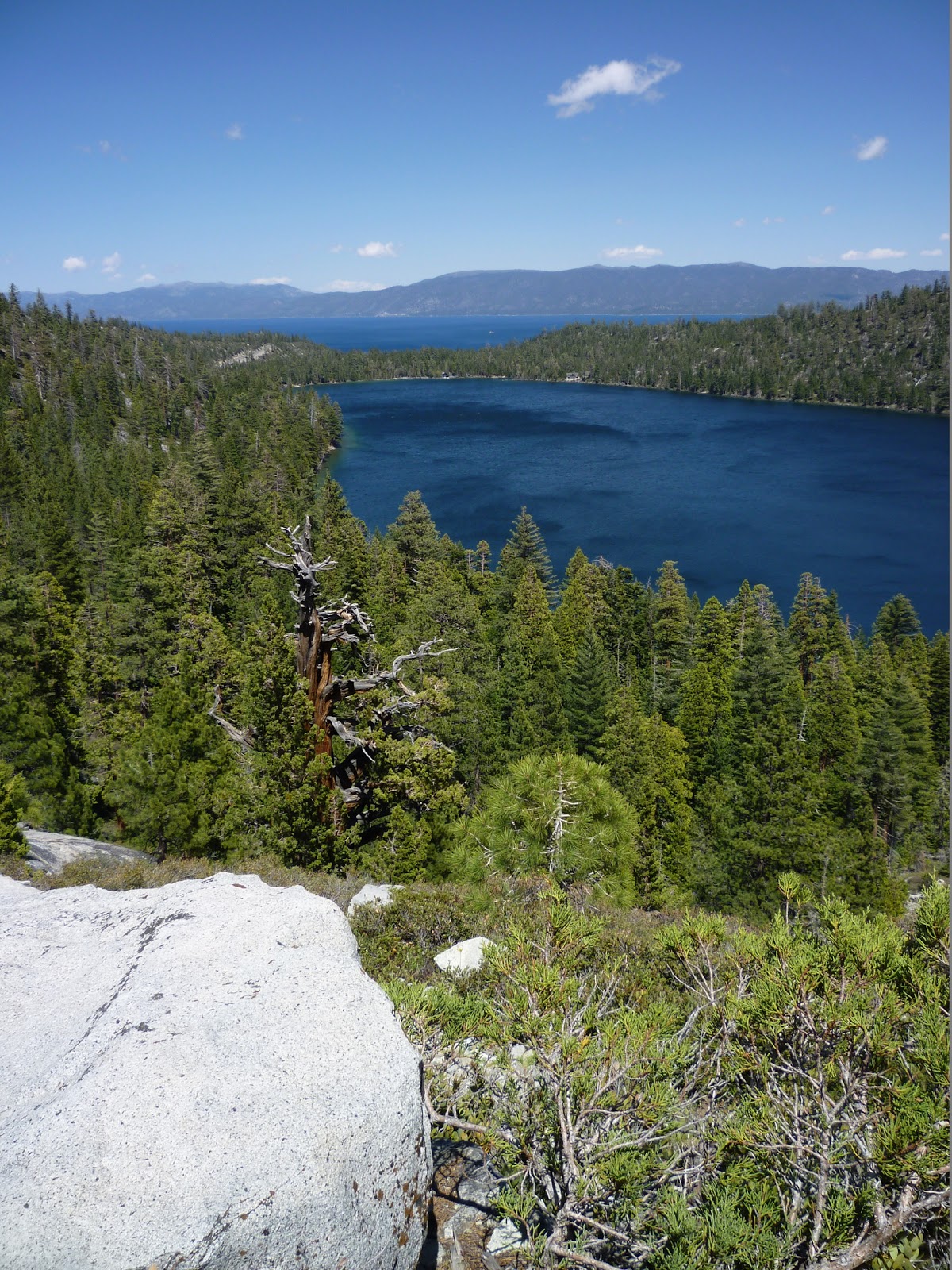
Cascade Lake in foreground, Tahoe in distance.

We hiked to the top of Cascade Falls one day. It drops and flows into Cascade Lake which lies just south of Emerald Bay, a little higher in elevation. This picture was taken from a granite shelf looking as straight-down as I could manage to the bottom of the falls.

Sticky Cinqefoil
                      This looks to me like some kind of buttercup but I haven’t found it in a book yet. (Update: I added the caption after one of my readers enlightened me.)

The Snow Plants have popped up all over, here and there on the floor of the conifer forest, with no leaves. Mrs. C. was coveting one, wondering how she might get a specimen to grow near the cabin, but what I found out on Wikipedia when I came home makes me think that would be near impossible to make happen.
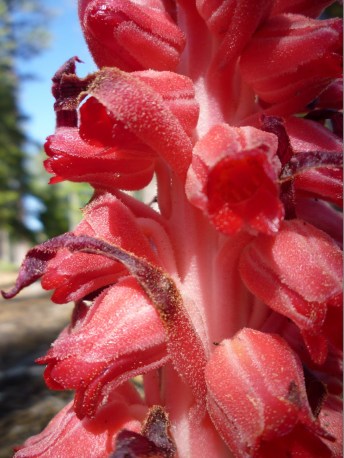
The snow plant is sarcodes sanguinea, the only species in the genus sarcodes, in the heath family. It is unable to photosynthesize its own food, “…a parasitic plant that derives sustenance and nutrients from mycorrhizal fungi that attach to roots of trees.” Now I can imagine the roots of these bright plants extending deeply into the world of tree roots. If we are lucky, perhaps the right conditions will in the future concur and surprise Mrs. C. with a burst of red.
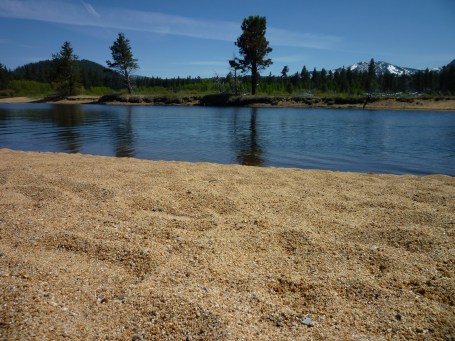
A lagoon by Kiva Beach

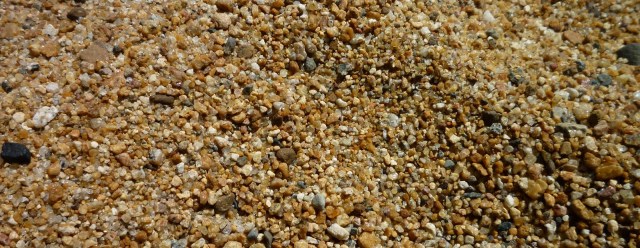
Another color that got my attention was the sand around Lake Tahoe. We took the yellow lab to swim and fetch and I sat on the shore and considered how all the grains of sand were warm golden tones, not like any ocean beach I’ve seen.

Wooly Mule’s Ears, also known as mountain mule’s ears, were in bloom, and I got a photo of them as in a perennial bed planted by Mother Nature, with a border of Squaw Carpet in front.

Wyethia mollis and Ceanothus prostratus

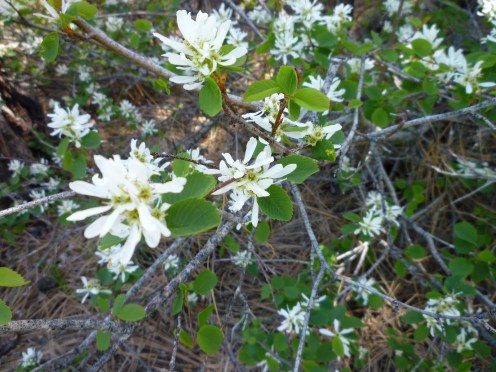
Here’s a nice flowering bush that I don’t know. Maybe someone reading this knows this plant? It grows in the forests on public land and in private yards. (Update: the same reader in a comment below is kind enough to tell us that this is Western Serviceberry.)
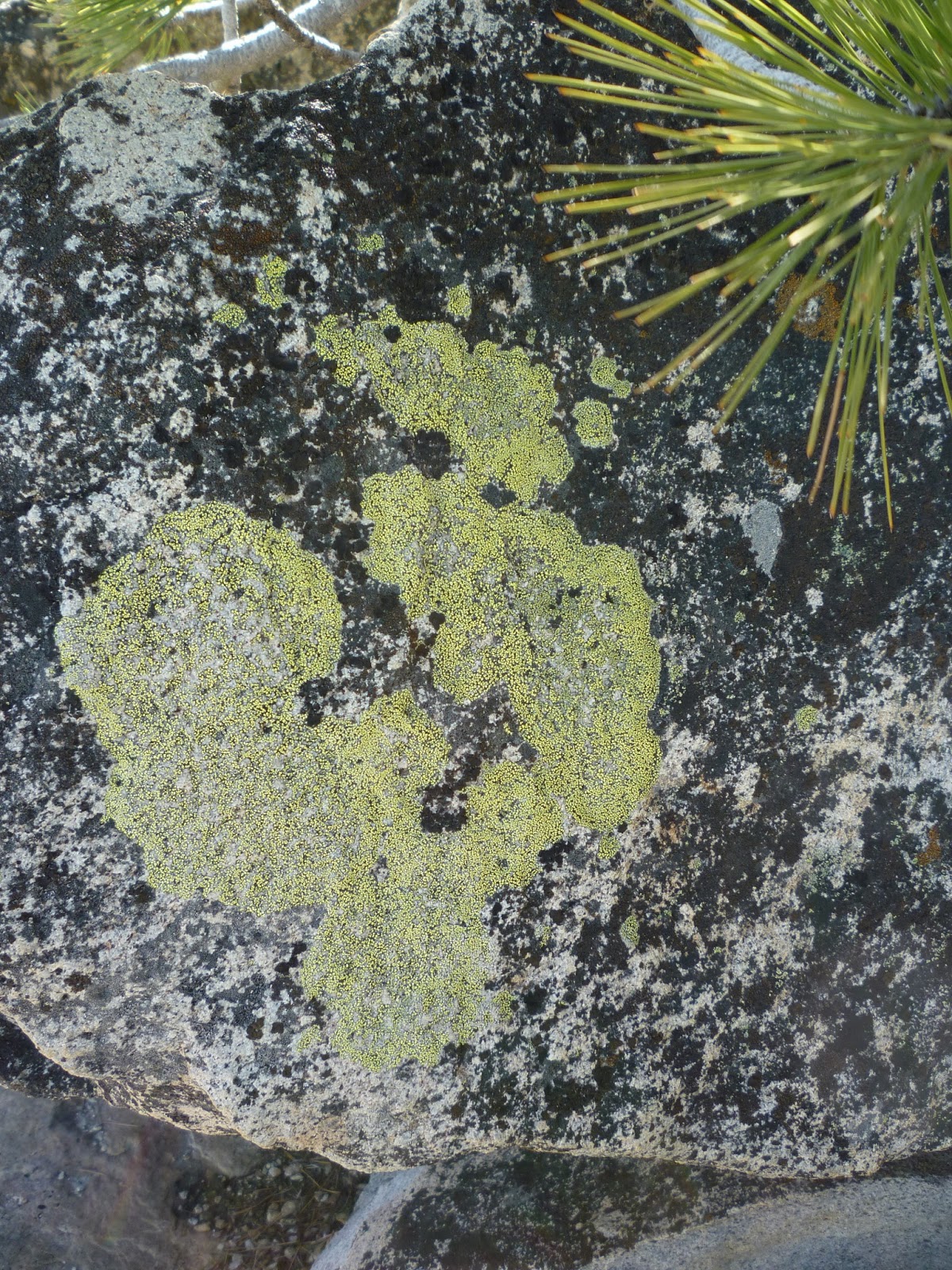
Did you ever do a Google image search of “lichen”? Amazing, amazing plants. Here is one of the more subtle designs, which we saw on a rock at the top of Cascade Falls, a lovely arrangement of vegetable and mineral and just one example of how God’s artwork is splashed all around the world for our pleasure and His glory. Thank You, Lord, for the refreshment.
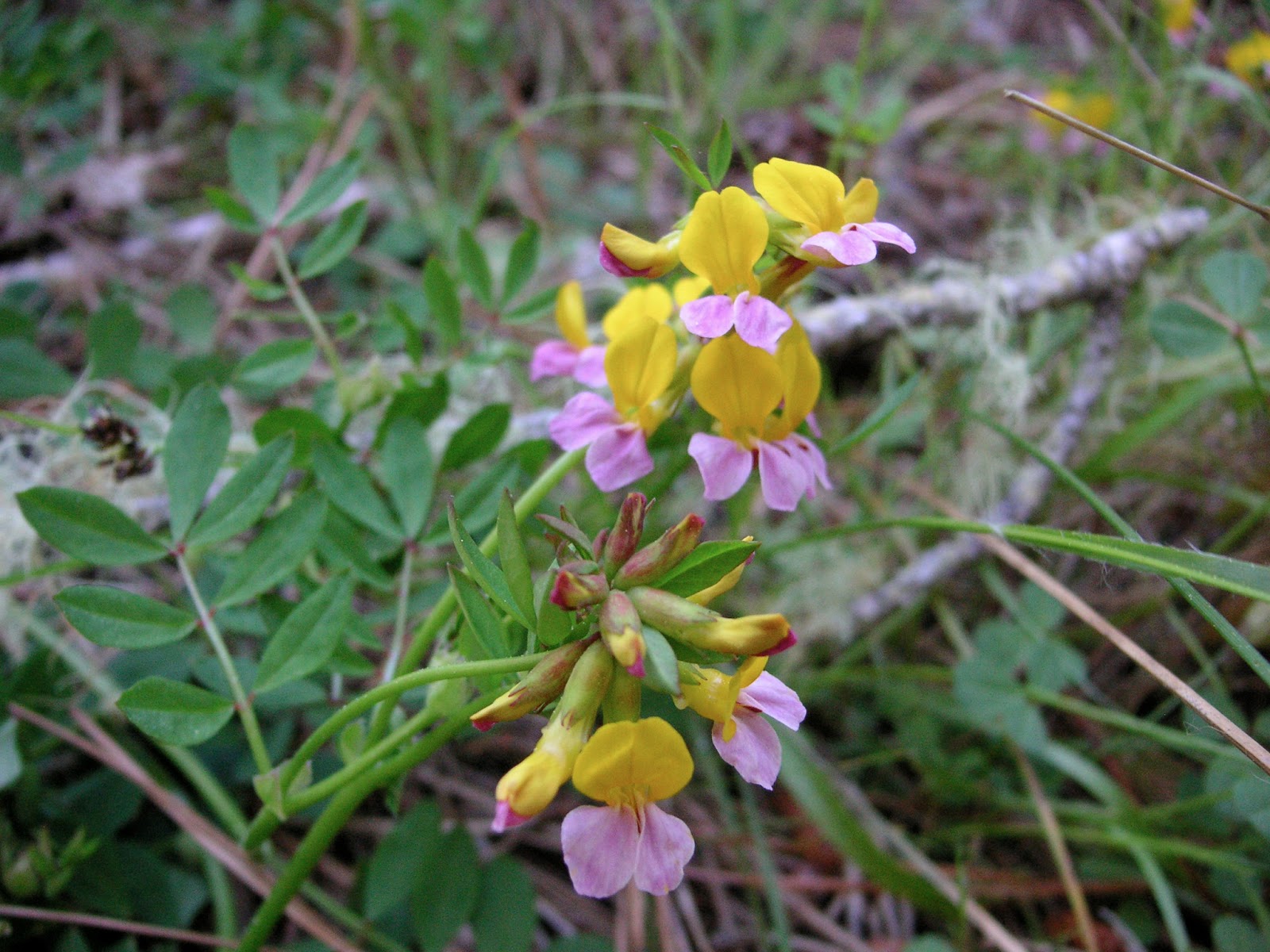
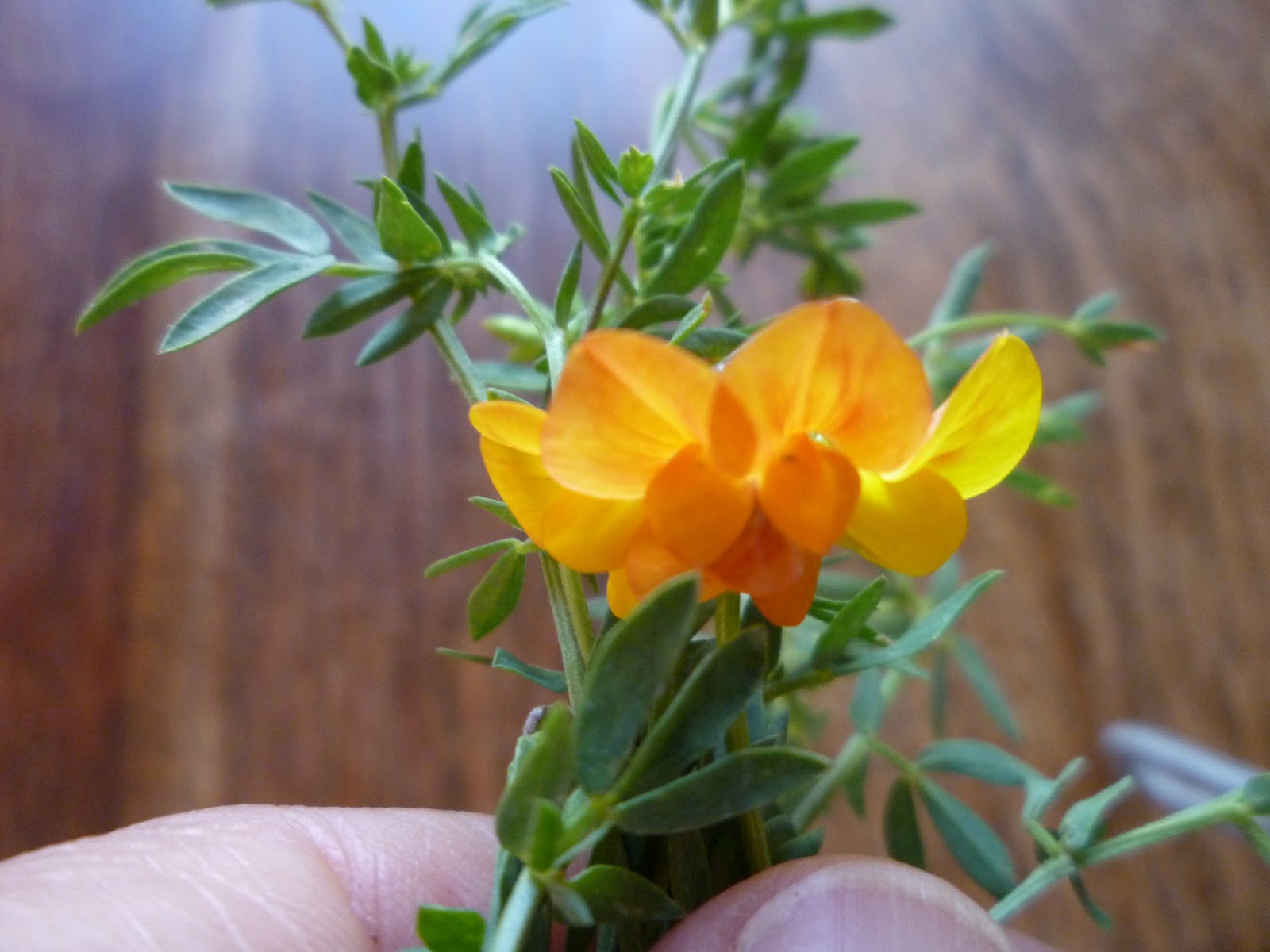
I might have found a lotus.

Recently on a walk through the neighborhood I noticed a pretty little weed flower by the path, and remembered having photographed something like it in the past. A few minutes after returning to my computer I saw Nature I.D.‘s blog post “lots o’ lotuses,” and the pictures looked so much like the plants I had just seen. Here’s one of Katie’s photos:

Today Mr. Glad and I were out in a different part of the neighborhood, and there was my flower growing in a sidewalk crack. I grabbed a bunch and brought it home. Here is its picture. I don’t have time to research this thoroughly right now but I’m putting up my pictures for Katie and anyone else interested to see. They are cute little flowers in any case and a welcome break from ugly thistles and puncture vines.

It just occurred to me that it would be fun to document all the weeds that grow through the different seasons around here, when they catch my attention. But I also thought of doing a similar project in my own yard, with the beloved plants that I cultivate. And the latter sounds like more fun for a starter.


California Mountains – How Not to Enjoy a Hike


If it weren’t for our friend Myriah, this hike would have been a huge disappointment. As it turned out, it was a shared adventure that made me thankful for my friend and for my husband.

Just thinking about the hike to Feather Falls makes me very tired, and that makes me want to write only a short list of ways Not to Enjoy a Hike. Because I did not enjoy the hike itself — only the companions. Sad to say, the short list turned into a pretty extensive one.

How Not to Enjoy a Hike

1. Pick a trail that has its descent on the way in, so that even during the first few easy miles, when you are at your freshest, you can be thinking, “What trail goes down, must rise again,” making it possible to imagine the misery you will know later when you have to hike steeply uphill the last four or five miles back to your car. Even a vague dread of the near future can ruin the present pretty effectively.

Red Ribbons – Clarkia concinna

2. Do it in July and the weather will be as hot as possible. Don’t bring too much water; you want to get dehydrated.

3. Plan to take your baking-dry and long hike just a couple of days after spending time in high places where you got used to singing rivulets of snowmelt all around you. This will encourage you to compare your lower-elevation hike unfavorably with recent ones, to keep your attitude complainy.

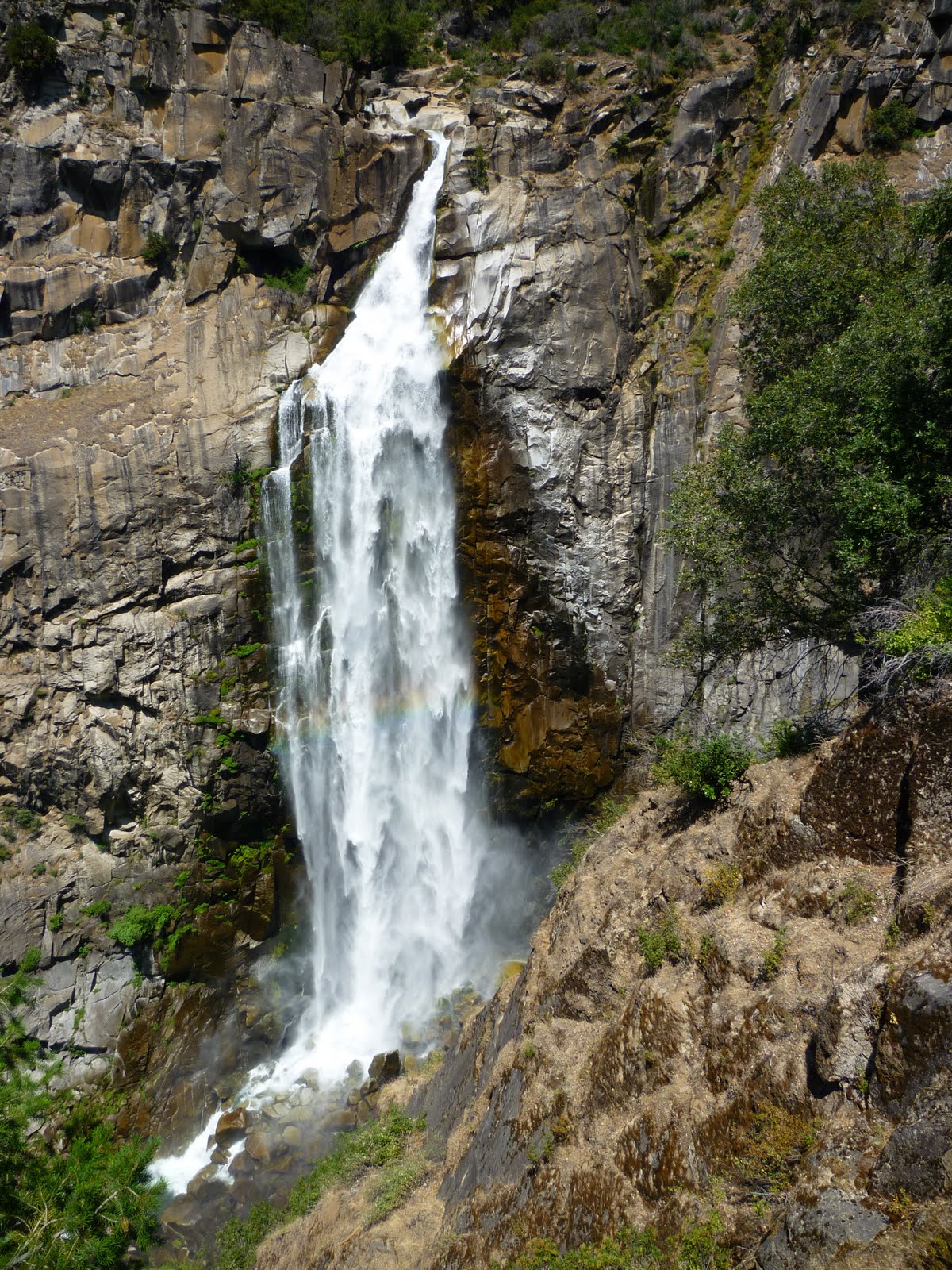
4. Hike on a trail that claims to takes you to a tall waterfall (the 2nd highest in California), so that when you are dripping sweat and collecting dust you can look forward to the cool mist that will revive you.

This way, when you discover that the end of the trail is at an overlook so far from the water you think it’s a mirage, you will have the maximum letdown.

It helps, if while looking at the waterfall with your tongue hanging out, you have to sit down in the dirt to avoid sunburn and the jostling of other hikers.

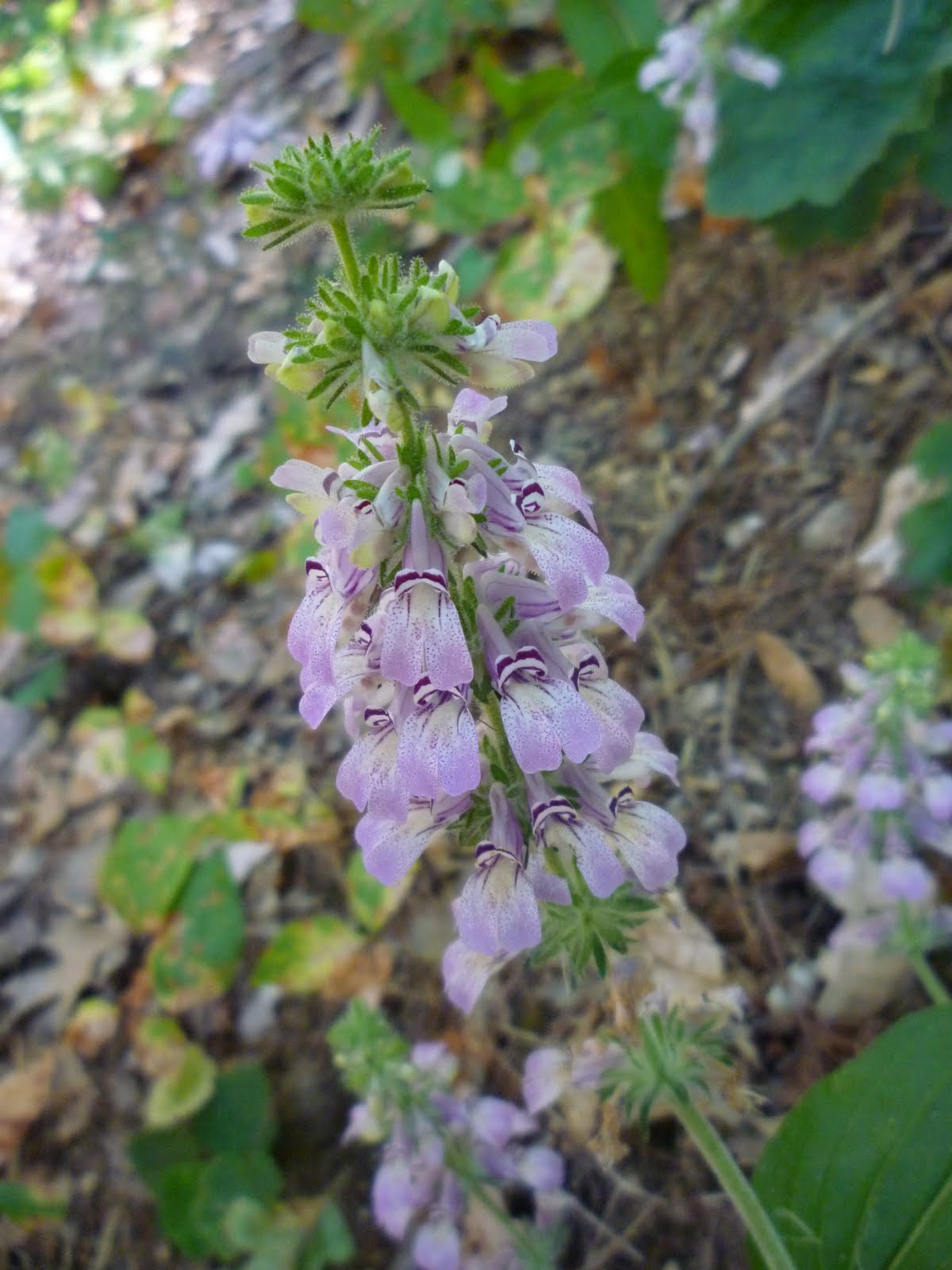
Tincture Plant – Collinsia Tinctoria

5. If there is a choice of a routes, allow only enough time for a long-legged 20-year-old to hike the shorter of the two. This way, when you get to the trailhead and find that the short route is closed, your heart can sink right away.

6. Be sure to have a dinner engagement to be late for, or some other reason to hurry through your lunch and doggedly hike your legs off, with your heart doing double-time, on that last long ascent.

Now, the things that kept me from being a total ingrate:

1. The loss of two pounds in an afternoon (even if it was 80% water).

2. Flowers to take pictures of, many conveniently in the shade of the trees, and few enough so as not to be overwhelming.

3. My dear and faithful companions, who joked with me and gave me water and snacks, and carried the knapsack.

This outing was a sort of add-on to our Sierra Nevada summer vacation. We came home for a night and then drove north to pick up Myriah before going on to our trailhead in the foothills of the northern Sierras, in the Plumas National Forest.

While trudging up those last few miles back to the car we talked about how we’d like to hike more together in the future, say, in April or October. I know that any hike in the foothills would be more pleasant during those months, but I’ll vote for going anywhere but Feather Falls.

Monkeyflower – Mimulus