Time to tan the knees.

Certain philosophical questions are probably hard to focus on when you are lying on the beach trying to get a suntan. I remember a Peace Corps ad on TV that showed a couple slathered with oil and doing nothing under the sun, seemingly oblivious to their radio propped in the sand and telling the news about people suffering in a third-world country.

If you are sitting up and looking out at the ocean, you might appear to be meditating, or praying, so maybe no one would try to make you feel guilty. It’s been three years since I was on a beach warm enough to expose much skin, and I wouldn’t feel bad at all about soaking up some summer in that manner.

Well, none of this applies directly to the poem I am sharing today. I just love this lighthearted look at how we humans are.

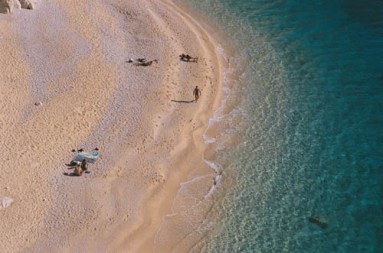
THE SOUL AND THE BODY ON THE BEACH

The soul on the beach
studies a textbook of philosophy.
The soul asks the body:
Who bound us together?
The body says:
Time to tan the knees.

The soul asks the body:
Is it true
that we do not really exist?

The body says:
I’m tanning my knees.

The soul asks the body,
Where will the dying begin,
in you or in me?
The body laughed,
It tanned its knees.

~ Anna Swir (1909-1984), Polish poet,

translated by Czeslaw Milosz and Leonard Nathan
01467

Attention to gnats and devils.

pig IMG_5528One of the books that Richard Wilbur wrote for children is Pig in the Spigot, which any lover of words should enjoy, whether you are a child or not. I can see reading it with a child who is well on the way to reading, but when I was homeschooling I often would introduce material “too early,” and that can work, too. If used with a notepad and pencil, I bet I could make this book serve as reading/phonics lessons for at least a week.
One of my favorite elementary school assignments was when the teacher would write a word on the blackboard, and tell us students to make as many more words as we could, using those letters. I always won this contest! Wilbur’s exercise is more stringent, but that only gives him the chance to show his poet’s skill in imagining the logical ramifications should the words within words become literal.

The illustrator must have had fun coming up with the sometimes-wacky pictures to go with the stories that one can create with this kind of activity. Here are a few of the examples of fun verses that often carry some even deeper implications.

The Devil is at home, as you can see,
In Mandeville, Louisiana, but he
Is often on the road, and in the line
Of work he visits both your town and mine.

Some tiny insects make a seething sound,
And swarm and jitter furiously around,
Which seems to me sufficient explanation
Of why there is a gnat in indignation.

pig IMG_5523

Moms weep when children don’t do as they say.
That’s why there is a sob in disobey.

I just noticed that the mother in this last picture is wearing a cross. There are many other interesting details to be explored in the images, but it’s the language of words that I get excited about. Anything that helps children slow down and pay attention to the details of letters and sounds will help them to be good readers and writers — and spellers!

But I don’t want to sound too pragmatic, even if the level of literacy in the country is dismal. John Holt said that it is not good methods but good books that make good readers, and here is an example of what he was talking about. What makes me happy is the knowledge that good readers will read more because they enjoy it, and if they keep reading good books their inner worlds will grow ever larger. They are more likely to become good writers and thinkers, and maybe they will write some more good books for children that are fun for me to read.

There is a pure fragility.

Part II of The Experience of God: Being, Consciousness, Bliss contains three chapters on those three aspects of the experience. In “Being” the author says that our wonder at the universe comes from a deep realization that it didn’t have to be this way, it didn’t have to be at all. Some snippets:

All thingsPippin 4th are subject to time…they possess no complete identity within themselves, but are always in the process of becoming something else, and hence also in the process of becoming nothing at all. There is a pure fragility and necessary incompleteness to any finite thing; nothing has its actuality entirely in itself, fully enjoyed in some impregnable present instant, but must always receive itself from beyond itself, and then only by losing itself at the same time. Nothing within the cosmos contains the ground of its own being….

One knows of oneself, for instance, that every instant of one’s existence is only a partial realization of what one is, achieved by surrendering the past to the future in the vanishing and infinitesimal interval of the present. Both one’s essence and one’s existence come from elsewhere — from the past and the future, from the surrounding universe and whatever it may dKtree 81JABMCBepend upon, in a chain of causal dependencies reaching backward and forward and upward and downward — and one receives them both not as possessions secured within some absolute state of being but as evanescent gifts….

Simply said, one is contingent through and through, partaking of being rather than generating it out some source within oneself; and the same is true of the whole intricate web of interdependence that constitutes nature.

–David Bentley Hart in The Experience of God