Reading as many blogs as I do has the subtle effect o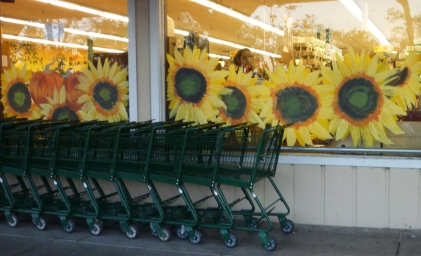 f making me want to bring my neighborhood in line with the music that autumn plays in most other places. For example, I found a November poem that is all about the violent wind, when we usually have to wait a month or two later for that sort of thing. It didn’t fit with my reality.
It’s definitely Fall here, but our notes sing a quieter background harmony, linking us more obviously to summer. Even the window art at the grocery store is mostly sunflowers to go with the pumpkins and turkeys.
All of the pictures from my garden were taken on this sixth day of November. A strawberry is ripe, as “ripe” as ornamentals get, but is decorated by a few of the telltale fallish pine needles that are slowly covering everything in that part of the yard.

The sign for the orange cherry tomato is hiding deep under the exploding foliage, and I can’t remember if it is a Sungold or a Sunsugar, but the fruit is still ripening, and nearly as sweetly as a month ago.

Mr. Glad stopped us on the way to Vespers last week to take this picture of clouds in a blue sky. Not rain clouds, sad to say. The grass has that November look, from having dried up and then been rained on a little, not enough to create any new green color. Our autumn is drier than usual, which is a hard kind of gentleness.
The furnace has been turned on, which means that we keep the windows closed, though with the days mild, and the air so fresh and soothing, I wish we could have them open. I just have to go fully out of doors if I want to get into the natural atmosphere.
It’s still not really cold enough to have a wood fire, and we haven’t had a frost yet, as you can tell from the tomatoes.
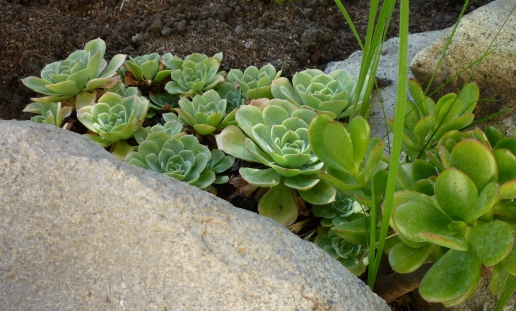
These are the hens and chicks near the new planting bed out front. I set out all the new ground-cover starts this week, and some of the thyme is blooming still.
October is the month to plant peas of any sort, and this year I bought sweet pea (those are the flowers) and snow pea seeds, but I never got around to actually putting them in the ground, which means that the failed flowering fennel and the nasturtiums are free to paint an impressionistic scene. The background music is called “Flowery Fall.”
 To convey to our imagination an abiding sense of the world’s goodness and givenness, artists require a vocabulary capable of such representation. Many of the conventional aesthetic resources of the contemporary arts are well suited to expressing anxiety, alienation, chaos and violence, but are not as capable of evoking innocence, simple purity, or quiet delight. (I’m more and more convinced that the omnipresence of relentless rhythm sections, even in love songs, is an expression of the mechanistic and brutish presuppositions of a culture convinced that all life forms are the end-result of a mindlessly competitive process of mere survival.)

