Tag Archives: C.S. Lewis

Glimmers and daily bread.

In regard to my reading habits of late, I am behaving much as I did during the months when my husband was sick unto death. It must be that the challenging remodeling project, combined with the physical disorder in several rooms, are taking all my resources to deal with it all, and making me hungry for literary comfort food. It’s hard to predict what I will be able to attend to, as I am impatient and flighty. The rare poem, or children’s stories of the deep and primal sort — those seem to be the best right now.

In the high school class that I help teach at church, we are are still working our way through C.S. Lewis’s The Great Divorce, in which story George MacDonald has a part, being as he was greatly responsible for Lewis coming to faith. That got us talking about MacDonald’s books, and I was reminded of The Princess and Curdie, which I hadn’t read for a long time. I brought it into my “book larder” almost as soon as I got home on Sunday, and have been taking that nourishment.

A quote from writer Mary Karr that I read today seems pertinent: “Memorize poetry & short prose hunks. This makes language eucharistic: you eat it. You take somebody else’s passion & suffering into your body, and it transforms you.” I found this to be the case a few years ago as I read MacDonald’s Phantastes at my cabin.

When I read the words that Curdie heard Princess Irene sing, before I had run across Carr’s advice, I had immediately thought that I should learn them by heart, to be part of a laid-up treasure to draw from.

They are the kind of message that must be stored in the heart if it’s to have any meaning and use at all:


The stars are spinning their threads,
And the clouds are the dust that flies,
And the suns are weaving them up
For the time when the sleepers shall rise.

The ocean in music rolls,
And gems are turning to eyes,
And the trees are gathering souls
For the day when the sleepers shall rise.

The weepers are learning to smile,
And laughter to glean the sighs;
Burn and bury the care and guile,
For the day when the sleepers shall rise.

Oh, the dews and the moths and the daisy red,
The larks and the glimmers and flows!
The lilies and sparrows and daily bread,
And the something that nobody knows!

(I wrote again briefly about The Princess and Curdie: here.)


The Word of the Father has been made manifest.

I must have read C.S. Lewis’s introduction to St. Athanasius’s On the Incarnation twice before in an attempt on the whole book, without getting much beyond it, but on this third try I have kept going. It seemed a fitting little paperback to read during Advent.

In the introduction we have an instance of Lewis’s exhorting us to read more of the Old Books, like this one from the 4th century, though we are timid: “The student is half afraid to meet one of the great philosophers face to face. He feels himself inadequate and thinks he will not understand him. But if he only knew, the great man, just because of his greatness, is much more intelligible than his modern commentator.”
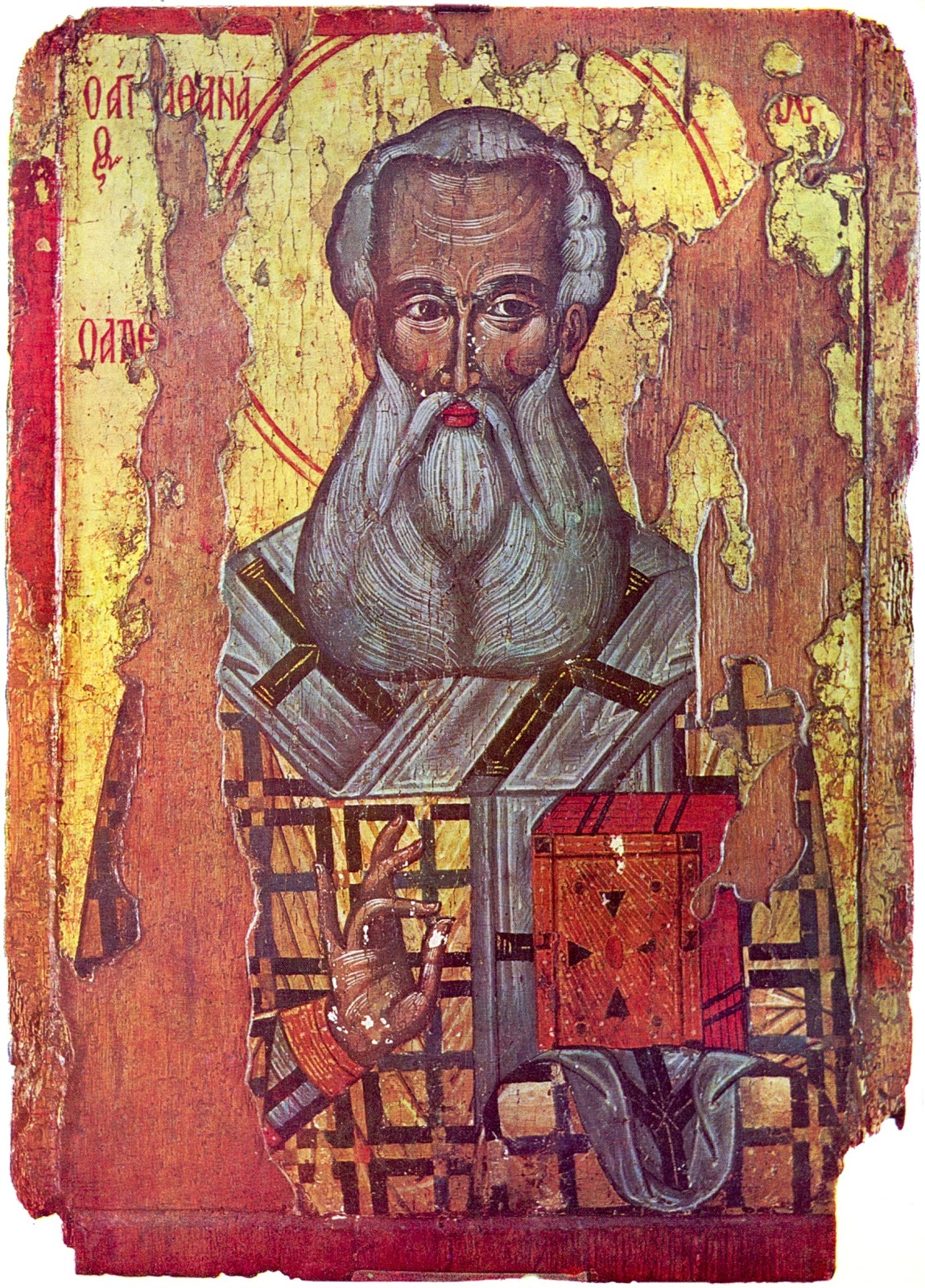
And Lewis also writes here about devotional vs. doctrinal works, On the Incarnation being one of the latter, that he finds the doctrinal books often “more helpful in devotion” than the expressly devotional ones. I can relate to his description of people who “find that the heart sings unbidden while they are working their way through a tough bit of theology with a pipe in their teeth and a pencil in their hand.”

Actually I don’t know about the pipe in the teeth, but I always have a pencil in my hand as I lie in bed with my book of theology or literature or whatever. And I marked some passages from St. Athanasius to share in this season when we focus on God With Us.

You must understand why it is that the Word of the Father, so great and so high, has been made manifest in bodily form. He has not assumed a body as proper to his own nature, far from it, for as the Word He is without body. He has been manifested in a human body for this reason only, out of the love and goodness of His Father, for the salvation of us men.

We will begin, then, with the creation of the world and with God its Maker, for the first fact that you must grasp is this: the renewal of creation has been wrought by the Self-same Word Who made it in the beginning. There is thus no inconsistency between creation and salvation; for the One Father has employed the same Agent for both works, effecting the salvation of the world through the same Word Who made it in the beginning.

From the archives – 2010

Real needs are not far from us.

Van Gogh – The Good Samaritan


I think each village was meant to feel pity for its own sick and poor whom it can help and I doubt if it is the duty of any private person to fix his mind on ills which he cannot help. This may even become an escape from the works of charity we really can do to those we know. God may call any one of us to respond to some far away problem or support those who have been so called. But we are finite and he will not call us everywhere or to support every worthy cause. And real needs are not far from us.

-C.S. Lewis

Roused out of dreams.

This morning I attended the lovely Bridegroom Matins of Holy Week, cherished because it uniquely expresses the “bright sadness” of our preparations for the joy and victory of Pascha. In my parish we are able to hold these penitential services early in the morning, at a time when people might be able to attend before going to work. Even on my drive to church I felt the grace of the clear sky, a pre-dawn blue, with a friendly gibbous moon shining down on me.


Eight years ago after attending this very service I wrote a blog post about laziness, standing up straight, and what it means to be human. Whew! I feel a bit lazier of mind these days, so that I am amazed at all I learned from Lazy Tommy Pumpkinhead and from just one chapter of Leon Kass’s book The Hungry Soul. I do often still remember the gist of the lesson, mostly when I am standing in church. If you don’t remember it well, I urge you to read it.

The article focuses on being physically upright, which helps us to be alert and attentive, ultimately to God and His will. It’s not hard to get distracted even in church, but at least we have in the Orthodox services many things to bring us back; for me it’s often necessary every minute or two, as I might simultaneously remember to put my shoulders back again and fix my gaze toward the altar. And especially during this week when we follow Christ to His voluntary sacrifice, our reverent attentiveness is facilitated by prostrating ourselves before God, which, though it is not upright posture, is the opposite of reclining in bed or watching whatever’s on TV.

When we are not in church, our Enemy probably has an easier time helping us to slouch away from Life, his methods so vividly portrayed in C.S. Lewis’s tale of correspondence between devils:

“You no longer need a good book, which he really likes, to keep [your target] from his prayers or his work or his sleep; a column of advertisements in yesterday’s paper will do…. You can keep him up late at night, not roistering, but staring at a dead fire in a cold room. All the healthy and outgoing activities which we want him to avoid can be inhibited and nothing given in return, so that at last he may say… ‘I now see that I spent most of my life in doing neither what I ought nor what I liked.’”

One theme of Holy Week comes from Christ’s cursing of the barren fig tree, in the days just preceding his crucifixion. We exhort our own souls in the hymns of Bridegroom Matins:

Why art thou idle, my wretched soul?
What useless cares cause thee to be lost in dreams?
Why busy thyself with things that pass away?
The last hour is at hand, and we shall be parted from all earthly things.
Therefore, while there is time, rouse thyself and cry:
“I have sinned before Thee, O my Savior!
Do not cut me off like the barren fig tree!”
In Thy compassion, O Christ, take pity on me who call out in fear:
“Let us not remain outside the bridal chamber of Christ!”

Busying myself “with things that pass away”... yes… I mean, No! I don’t want to do that. Lord, help me to rouse myself!

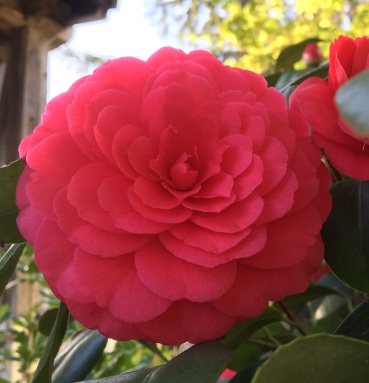
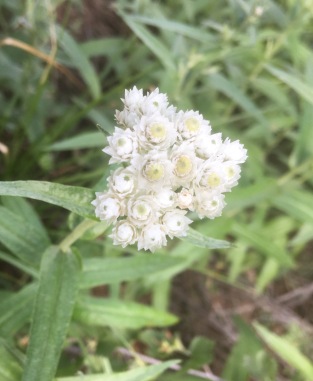
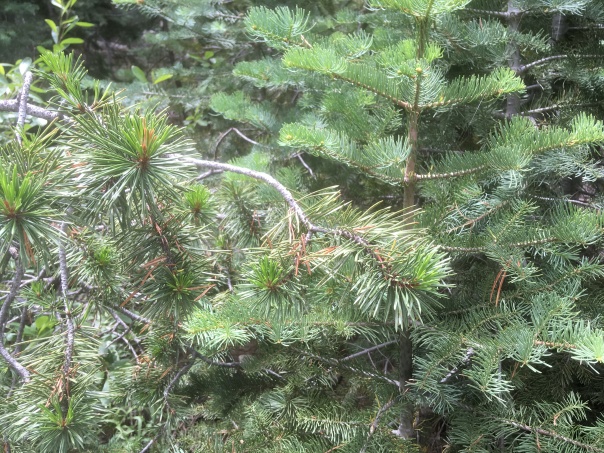
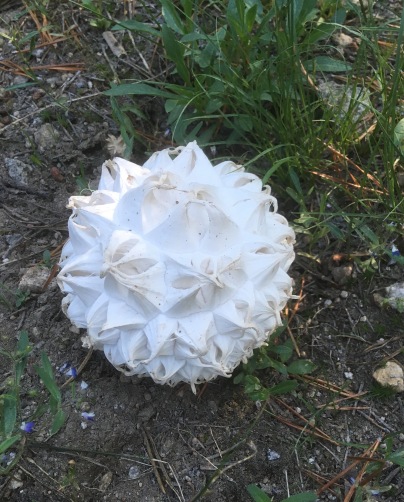
After the service — I’ve also done this before and made a blog post out of it! — I walked around the church gardens and took pictures, with which I decorated this page. Wherever you are in your liturgical cycle or in your heart’s journey, I pray that your souls may flower and bear fruit after the manner of these beautiful blooms.