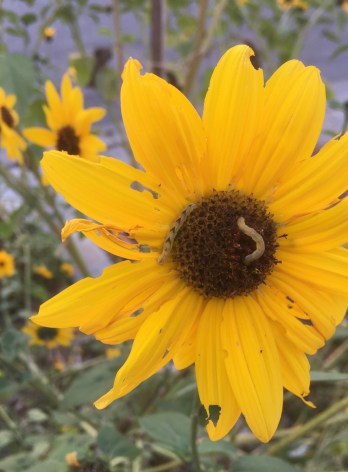
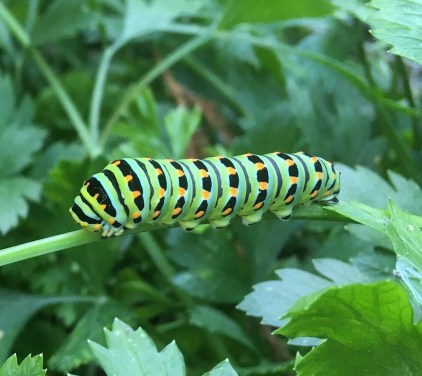
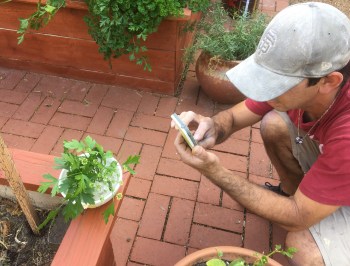
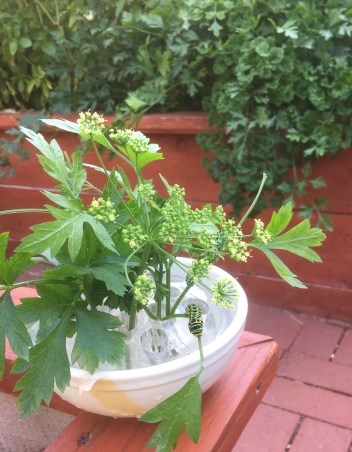
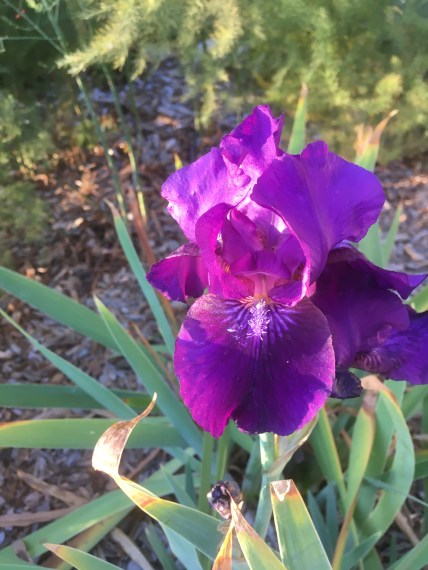
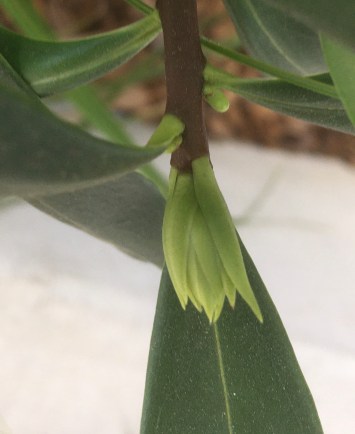
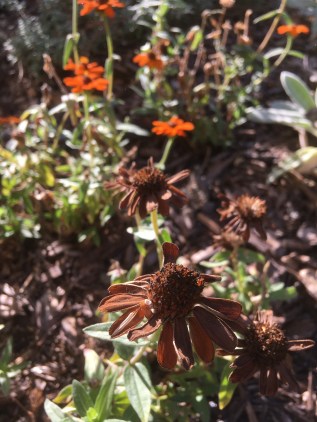
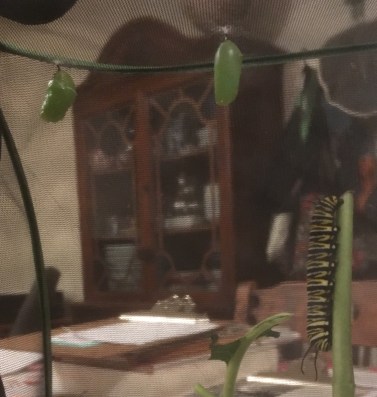
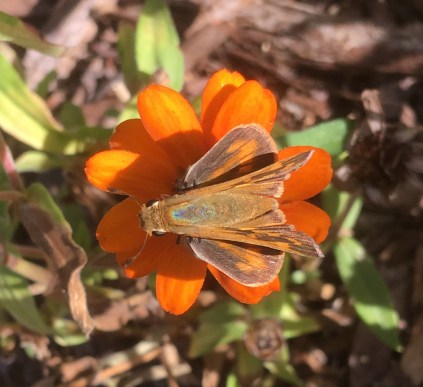
 Much earth and earthiness, fruitfulness, and aromas from it all, here on September 1st. I have been gardening a lot, soaking up the heat, collecting seeds, and ripping out vegetables that are done in by “pests,” those other hungry creatures who enjoy my garden. In a few days, God willing, my Monarchs will emerge from their delicate green chrysalises. In the meantime, other insects have been patiently posing for me.
I keep buying plants, and sticking them in the ground or in pots. Lots of perennials that will go dormant in a few months, but then they will be beautiful in the spring. I’m planning for another year in the garden, but who knows what tomorrow might bring?
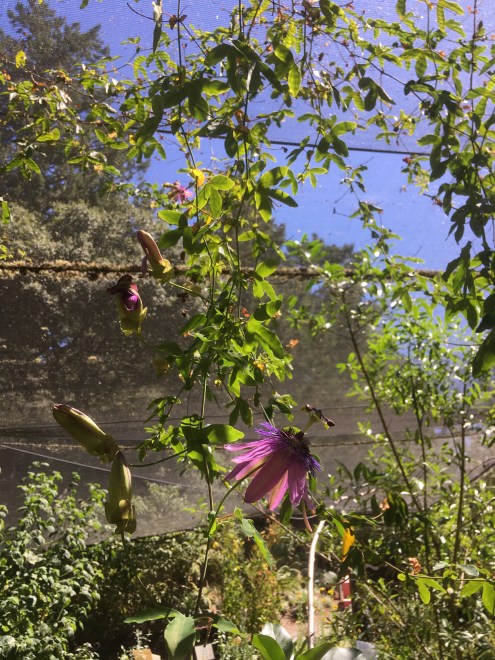
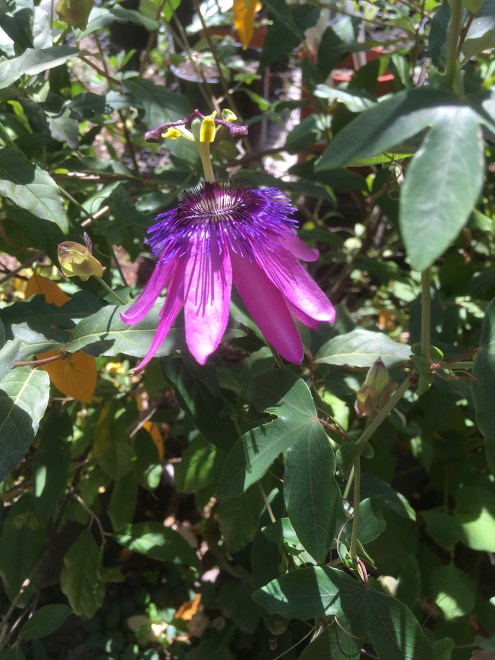
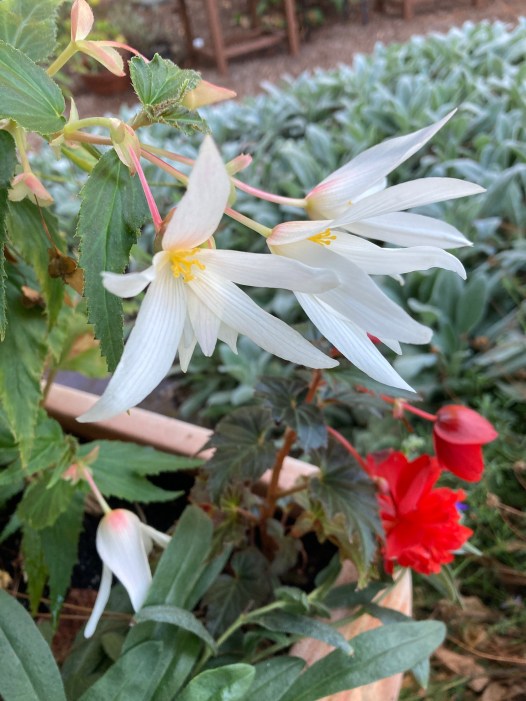
This nursery in the country that I rarely visit, I managed to drive to yesterday; they specialize in edible perennials and pollinator plants. I bought five unusual plants, which I’ll have to tell about in a separate post. One lovely thing I saw but didn’t buy was this passion flower that has decided to grow all over the mesh ceiling of the nursery.

In my own space, Alejandro spent a couple of hours trimming the lamb’s ears back to the steel edging of the paths. If we let it, it would grow all the way across the path, living a dry existence in the bark mulch, waiting for winter rains. I like to have my helper come at a time when I also can be working in my garden, and for some reason we seem to get more than double the work done. The other day he told me that my plum trees seem very likely to bear next year, judging from all the fruit spurs on them. 🙂


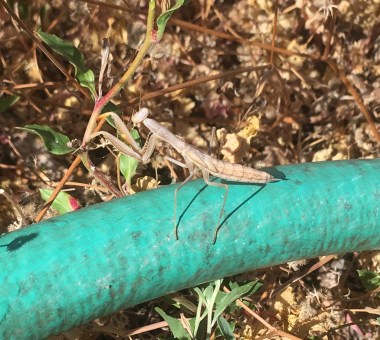
That mantis praying makes me want to tell you that it’s the beginning of the church year! Why, you may ask, does it start now? Why, because of Rosh Hashanah! I had been thinking a lot about this special day in preparation for teaching 7th-10th graders this morning, and then in today’s homily we were given a heavenly vision of this church calendar year and its cycles within cycles, with Christ at the center.
One book I used to prepare my lesson is The Year of Grace of the Lord by A Monk of the Eastern Church. He says, “The liturgical year forms Christ in us, from his birth to the full stature of the perfect man. According to a medieval Latin saying, the liturgical year is Christ himself, annus est Christus.”

Our homilist taught us about how we humans, along with angels, were made to live in a created eternity, something different from the unchanging, eternal nature that characterizes the Holy Trinity. But since the fall of mankind into sin, we find ourselves in a linear, world time, a fallen time that carries death in it; we are born, grow old, and die.
But we don’t have to live there exclusively; in the Church Christ gives us Himself by many means, including the daily, weekly and yearly cycles of prayers and hymn-filled services, feasts and saints’ days. The calendar brings the heavenly realm down and puts it into fallen time, where it is possible for us to enter in and live. We often get a taste of this kind of life at Pascha, but it is happening all the time.
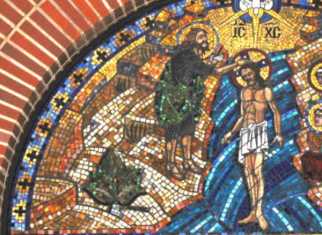 I love the church calendar, and have always reckoned it a great gift — that is, since I found the Orthodox Church. It was August twenty years ago that I was invited to a women’s retreat at a monastery, and the brief immersion into the daily, weekly and festal cycles of worship — eleven services! — made me feel that I’d found my true home. Here was a way to live with Christ!
It’s more helpful to think of the church calendar not as the paper type with boxes for each day, but as circles and cycles and rhythms, some following the cycles of the sun or the moon, some celebrations fixed on the linear calendar and some moving with the changes of the earthly seasons. Jesus Christ entered our linear time, where He lived through 33 years of Jewish festal seasons; through the church calendar we can follow Him through His life, death, Resurrection, and the birth of His Church, and use it all to unite ourselves to Him day by day. 
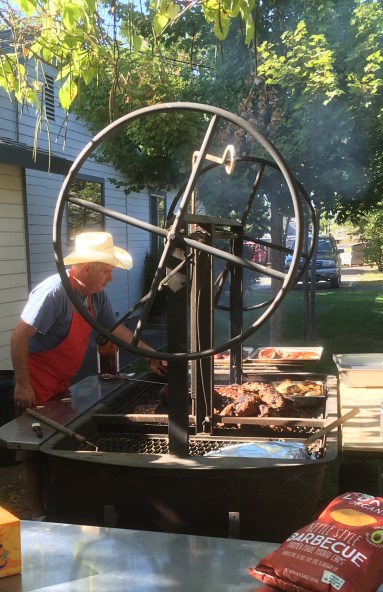
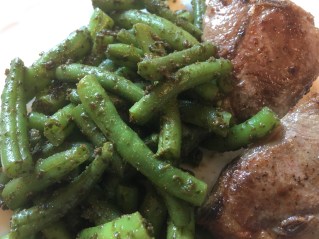
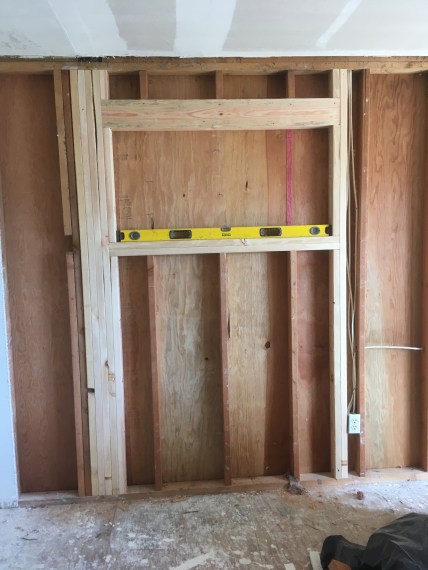
I think August and September might be my favorite months of the year. We’ve had other traditional, seasonal events, like barbecues at church – yum! Green beans from my garden slathered with pesto from my garden, and Gravenstein apples, harbingers of fall. September is the month that I love most to go to my cabin in the mountains, but this year is full in ways that prevent that. It’s really a year of preparation of my house, so that I can, if possible, live here for a long time to come, and continue to make it a hospitable place for my family and others whom the Lord brings.
“We can only see a short distance ahead,
but we can see plenty there that needs to be done.”
~ Alan Turing
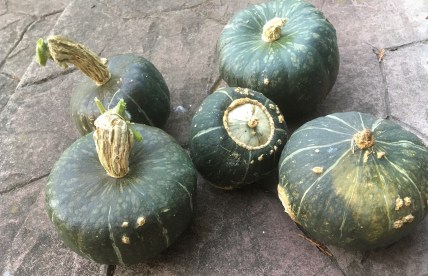
 Yesterday I wrote about the dwindling supply of milkweed leaves for my hungry caterpillars, and Linda responded in a comment that they have been known to eat butternut squash in a pinch. I was so grateful for her help, and was ready to go shopping for it and to put cubes of vegetable on sticks for them before I would head out of town.


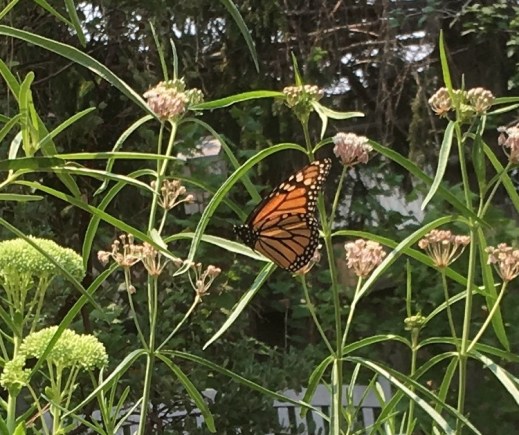
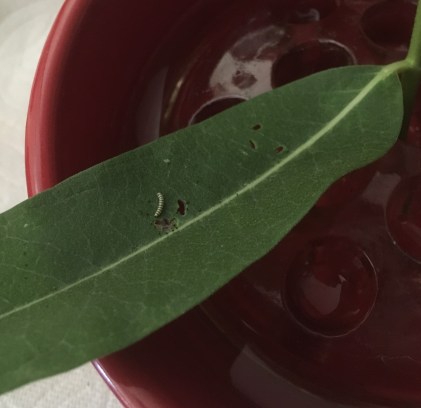


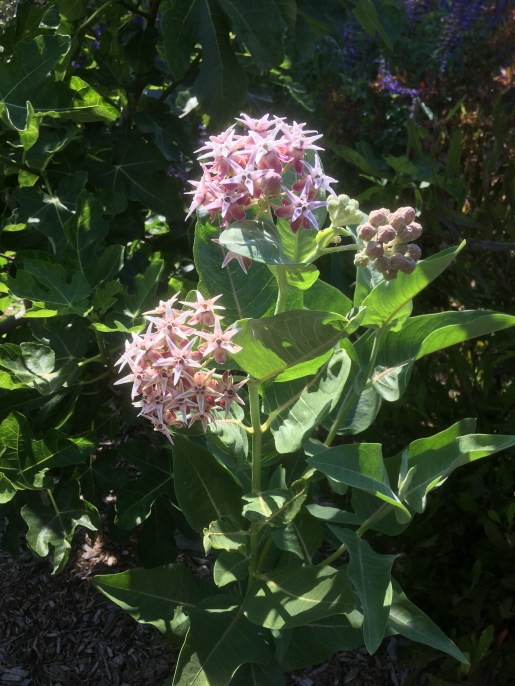
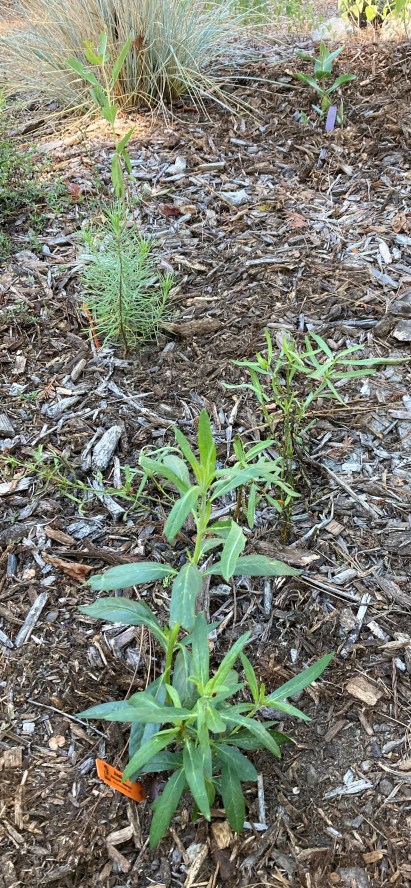 … but as I have said before, there is not enough leaf matter there to make the newborn caterpillars grow big and strong and become butterflies. It was my hope that if I put the Showy type out there, the Mama Monarch would choose it. And she did! But — it is hardly bigger than the new starts I set out. From the bottom of the picture at left:
 What sets this autumn apart from any other is my distaste for leaves turning color. Out of the corner of my eye I’ve seen it happening, and my heart protests, “Oh, please don’t!” I look the other way. Time has been swallowed up in remodeling, or waiting for remodeling, and the steady progress of months and seasons was not in my face so colorfully until now, telling me that without a doubt the end of the calendar year is drawing near as well.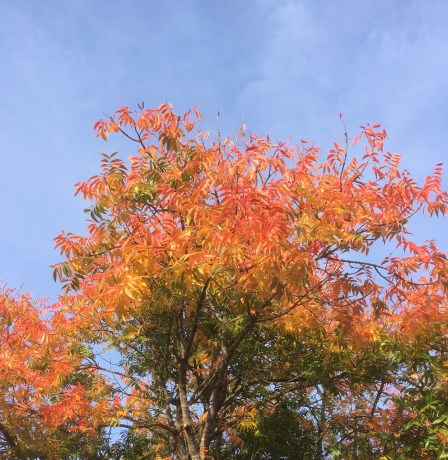
 peat the horrors of the fires of the last two years. Too bad we can’t put all that behind us — but “it” is trying to be part of our future as well, a reality of which the power company keeps reminding us, and shutting off the power as a precaution.