People who try to help out the butterflies by “raising” them in a protected location call the caterpillars cats. It took me a while to get used to this when I would browse the extensive Monarch Butterfly Garden website. After my experience last fall of losing the one caterpillar that I know hatched out on one of my milkweed plants, I had thought that if I found another this year, I’d try to feed it indoors.
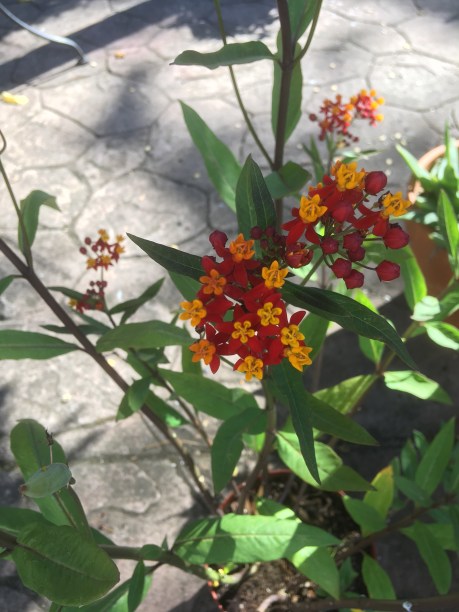
But why not collect the eggs and protect even them from the beginning? The website tells you how to do that, too, and I did. Again, the Monarchs seem to prefer the Narrowleaf Milkweed; I found most, if not all, of the white oval eggs on those narrow leaves that had been ravaged by aphids. I cut pieces of leaf with eggs stuck on them and let them incubate in a plastic storage container. (I did remove the aphid that can be seen in the picture.) The first ones hatched in about four days, just about the time that my grandson Laddie arrived with his father from Colorado.


We had to use a magnifying glass to be able to see the caterpillars at first. Once I thought they had all died, because they were so small it was hard to see that they had any color, or that they were chewing. But within a couple of days they were big enough to see without the glass; by that time I had moved them into a mesh cage I’d hastily ordered, and I arranged a stem from the showy milkweed in a bowl with a florist’s frog so that the leaves I was feeding them wouldn’t dry out so fast. From the first I encouraged them to leave the narrow half-dead leaves and move on to the fat and nutritious ones I brought in.
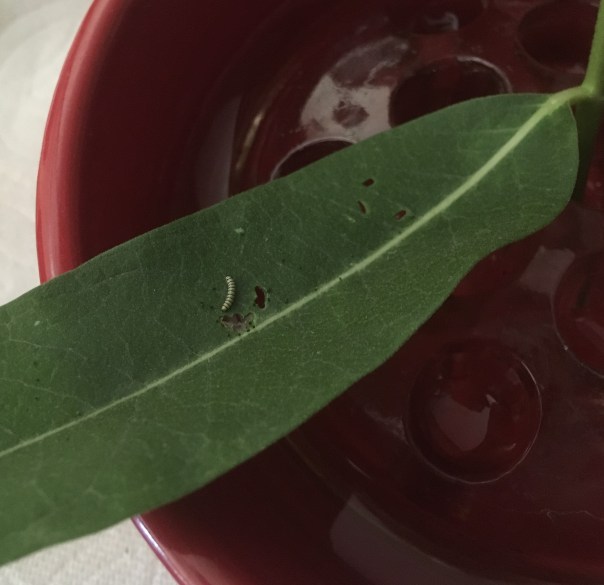
How do you encourage a teensy caterpillar? I carefully laid each drying leaf upside down on a fresh leaf, and the next morning they were making holes in the showy milkweed leaves. Well, two or three of them were. I haven’t been able to keep track of these microscopic specimens and it appears that most of them didn’t make it. Even now, I think the active ones are mostly hidden on the undersides of the leaves, but if I look hard I can see a head on the edge of a ragged hole and a mouth making the hole bigger.
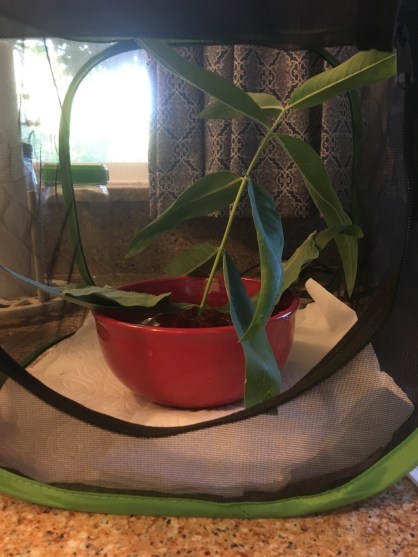
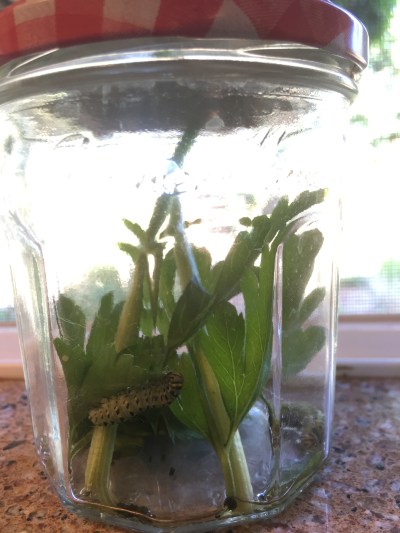
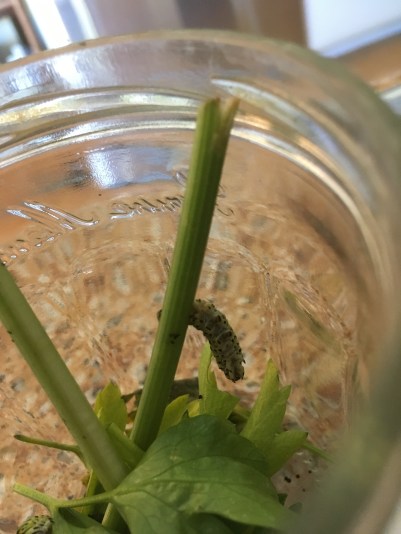
I will feel lucky if one or more of them gets to the stage where it spins a chrysalis. That almost happened with two other caterpillars I found on my Italian parsley. They didn’t look like Monarch cats, and I checked online to find that they weren’t the other butterfly I see around here, Painted Lady. I put them in a jar with more parsley and one of them did attach to a thick parsley stem I put in there for that purpose, but then he dried up. The other one kept trying out one or another place to hang, but he eventually lay on the bottom in the dead bug position. So.
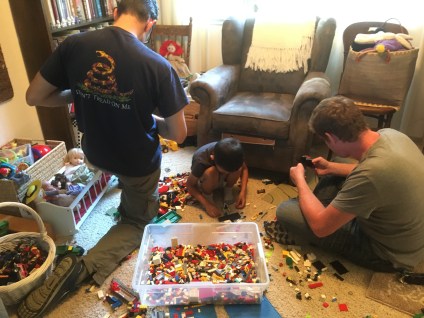
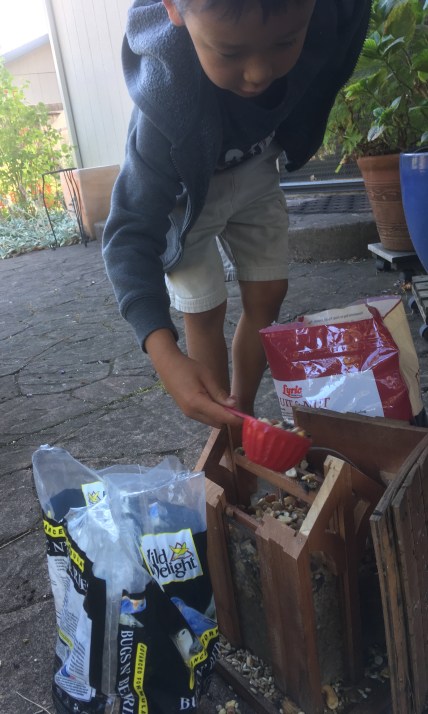
Nearly invisible caterpillars aren’t very exciting to a five-year-old, so Laddie didn’t pay too much attention to the lives of insects; Soldier and Laddie and I, and some other friends and in-laws had many kinds of fun over a long weekend. They helped me pick beans, fix a toilet, wash the dirt and spiderwebs off my collection of outdoor trucks, and replace a taillight on my car. Bowling and hiking didn’t get photographed.




Meanwhile more caterpillars were busy in the garden; a very few newly-hatched green ones were sticking their heads out of beans, and one was found on a basil leaf — but Soldier and I studied the bean leaves a long time trying hard to discover what is turning many into skeletons. Eventually I saw one cucumber beetle, and one tiny insect I’d never seen before.
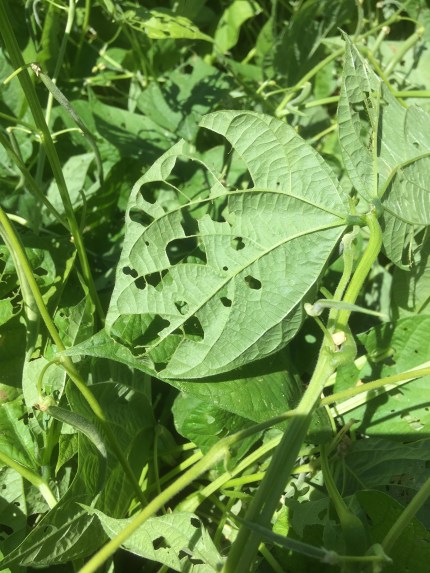
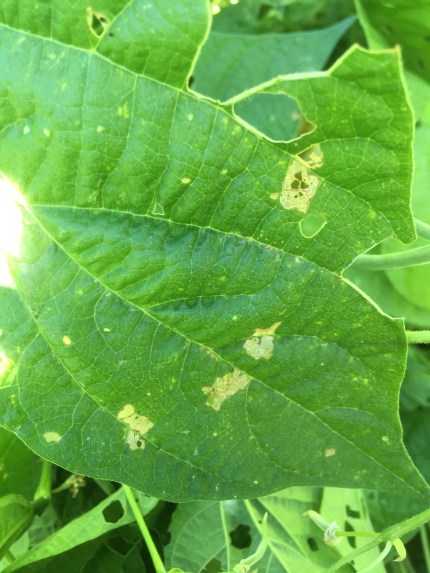
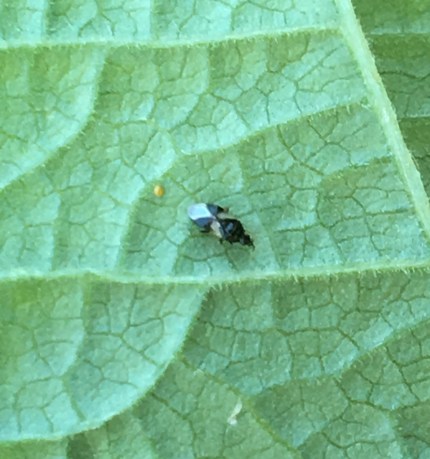
The bean crop is not affected so far; my second picking was 8 1/2 pounds, much of which I gave to neighbors. When Soldier and Laddie arrived, I was able to feed them quite a bit: first, steamed green beans slathered with basil pesto; then Turkish Green Beans. Laddie eats like a teenager, and his father said all the boys are like that. He had three helpings of everything, breakfast and dinner. I made a peach cobbler for them, too.
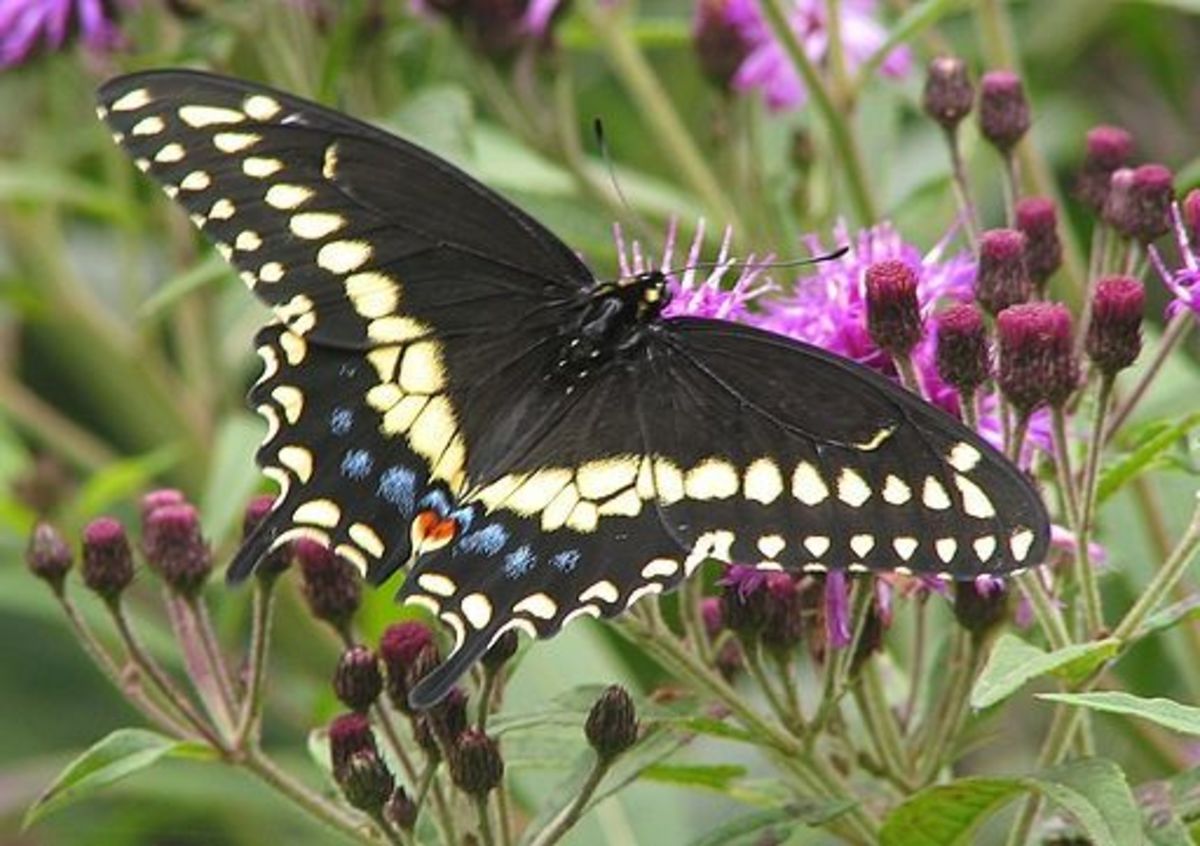
Maybe some of you recognized the parsley-eating caterpillar; finally tonight I caught my breath and looked it up online, to find that it is the caterpillar of the Black Swallowtail, a butterfly I don’t think I’ve ever seen. What do you know, they eat umbellifers! I hope that more than two of that butterfly’s cats were there in the vegetable box, and are now in the chrysalis stage. I’ll hope to see one next year.
 I’m in a good mood, because I cleared the driveway of weeds this morning, and brought sunflowers into the house. My foot feels all better, which had been slightly gimpy merely from wearing sandals instead of boots while gardening last week.