Alongside my reading of The Iliad itself, I have collected a few books from the library that are commentary or retellings. When I think about how many people have translated, interpreted and commented on Homer over the centuries, I realize I can only hope to scratch the surface layer of their insights, and of the poem — or poems, if I go ahead and read The Odyssey as well.
I am really enjoying The Iliad, but at this point in my life I don’t expect to gain enough knowledge to put together a whole essay. I will, however, feel free to share little bits related to that epic that are interesting to me. One of these is from a “Bloom’s Guide,” in which the literary critic Harold Bloom gives an introduction, and assembles a few articles by various other scholars. Bloom is known for his bold statements about culture and literature, and I appreciate that style, which is often refreshingly clarifying. This is an excerpt from the introduction to his guide to The Iliad:
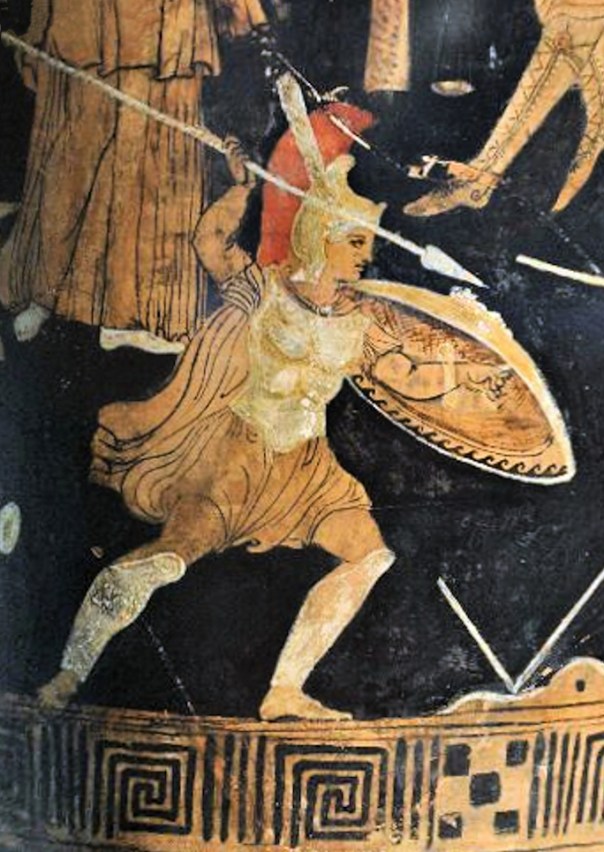
“The heroes of the Hebrew Bible — Abraham, Jacob, Joseph, David — have no affinities whatsoever with Achilles. Even David, the only professional warrior among them, carries on their blessing from Yahweh and so is in a position beyond tragedy, despite his many griefs that terminate in the death of his beloved son, Absalom. You can make a covenant with Yahweh and then trust in the covenant, but no one can trust Zeus. Achilles is half a god, and he says that ‘who trusts himself to the gods will gain their hearing,’ but he knows that the response to such a hearing is likely to be equivocal, and they cannot free him from war, since despite his disillusion he is war and nothing but war. The poetic strength of Achilles is that he is a man. No other purely literary figure is nearly as heroic, or is aesthetically satisfying to us, but Achilles’ otherness, in relation to us, is now his dominant characteristic.”
As summer warmth makes the lizards and bees busier, so it works on me. The point of Too Much Heat might lie ahead at some point, but evidently I am still on the continuum with no end in sight. New opportunities and fun things have recently come into my life, so that my calendar has been over-full for a couple of weeks, and my heart the same. So far I haven’t reached the stage where I am craving empty days… but today I am a little bit at loose ends, and probably distracted by the wildfire smoke that is drifting south from the Woodside Fire up on the coast, not close to us, but making the air unhealthy.
I don’t like having to keep the house closed up against smoke, but I am glad the indoor spaces had cooled off the night before the smoke blew in; I had closed all the windows and shades that morning, and in the evening it was still cool, so we didn’t open the windows when the sun went down. Our only “AC” is the marine air that almost always flows into the neighborhood in the evenings or at least at night. So far, the heat (about 90 degrees at the moment) has not seeped indoors very much.
Leaving comfort behind me, I walked out the door into the smoky heat to add water to the fountain, to see new things that have bloomed, and to deadhead a little. I tend to focus on garden “problems” that need fixing — transplanting, weeding, trimming, irrigating. But when I don’t have it in me to do actual work, I usually can remember to just look around and be thankful — for my patch of paradise.
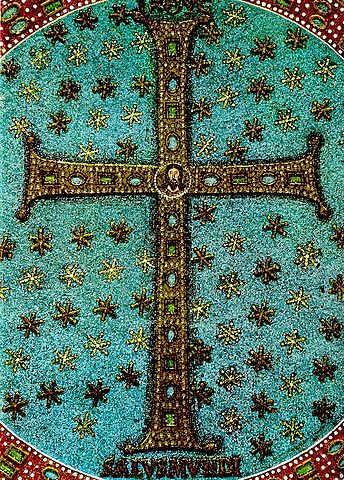
At church, we had a funeral this week, and I was able to participate in commending a 90-year-old child of God to her Father. Our funerals are so nourishing to the soul, as the hymns and prayers acknowledge our grief, and help us grieve in what is ultimately a healing way. The Church and her sacraments are truly full of Christ, His Life and Love, and I come out of every funeral full to the brim.
I told my priest that I wish I had a book into which I had transcribed over the years all the short homilies he has given at the end of funerals. Each is unique to the person and the situation, but they all are incredibly rich and edifying. Next week will be another funeral, for a priest dear to me, and I am very interested to learn how that is different from other funerals in the Orthodox Church.
I trimmed all the lavender but two bushes that the bees were still visiting, though they are faded quite a bit. Another purple note showed up in soup I made, using gifted carrots, cabbage from the freezer, a few ingredients from my garden: Painted Lady beans, kale, parsley, and tarragon.
I have joined a small in-person book group reading The Ethics of Beauty (by Timothy Patitsas) together every week, and an on-line class to study Universal History. I’m planning a trip to see my granddaughter Ivy in a youth musical production, and will continue visits about once a month to the nearby house of a family at church, to read stories to three young children. This is one of my very favorite activities, and it’s so sweet how this arrangement benefits all of us.
My new housemate Bea has been with me now for about a week. We are already having a good time brainstorming about various events we’d like to collaborate on, around books, high schoolers, tea, cooking… She’s baking a cake at this moment, and almost every day she is playing the piano, and that makes the house feel right.
Our usual women’s book group continues, and we have been reading Peace Like a River, by Leif Enger. It’s the second time I’ve read it, and I love it still. I’ve been reading Death Comes for the Archbishop over and over, because the narrator and the story are very calming, when I wake in the night and can’t go back to sleep on my own. For the first time ever I’m reading The Iliad in the original (translated), and that has been satisfying. Because I haven’t read the whole of the Odyssey before, either, I’m a little reluctant to jump into watching the new movie based on it. But I’ve read plenty of interesting reviews!
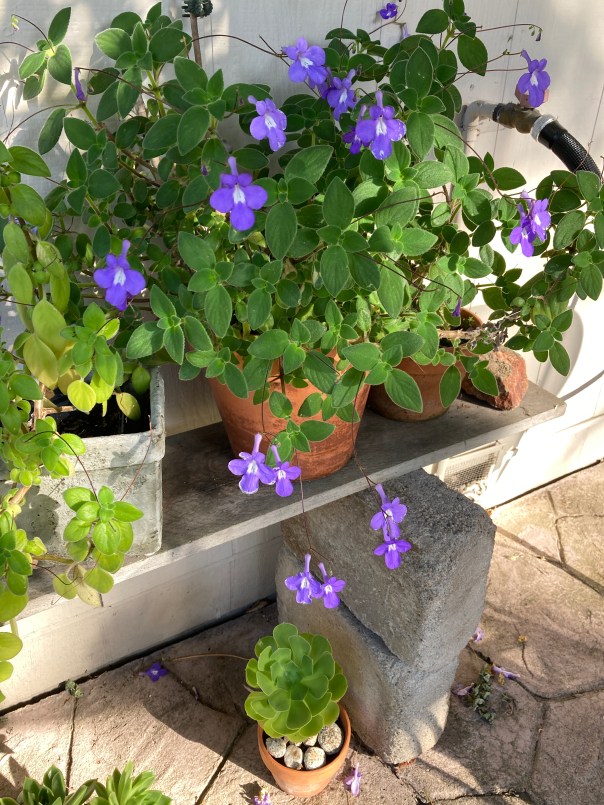
My large Nodding Violet plant I have been planning to give away as soon as it started blooming again, which is Now! If you live nearby and want it, let me know in a direct message. It needs protection from frost, so I bring it indoors in winter, but many people in my area leave them under a roof outdoors.
Here is a clearer photo of it from a year ago:
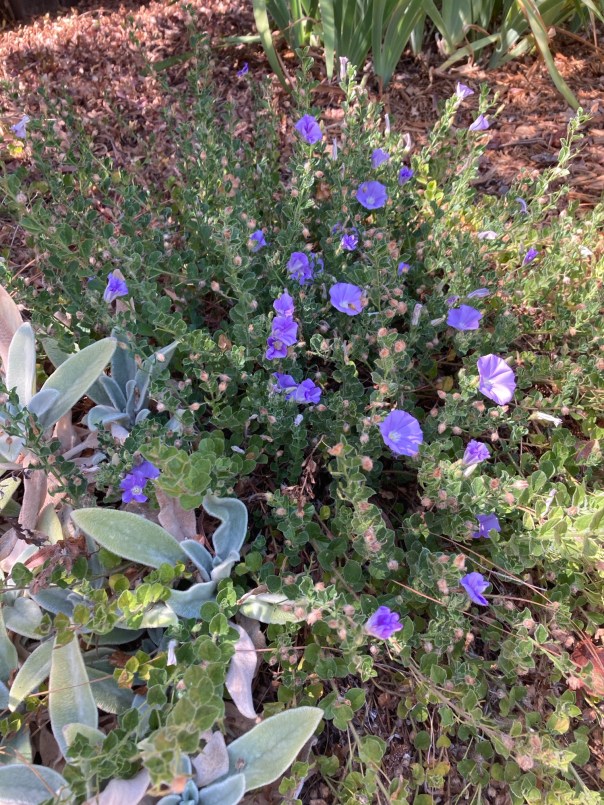
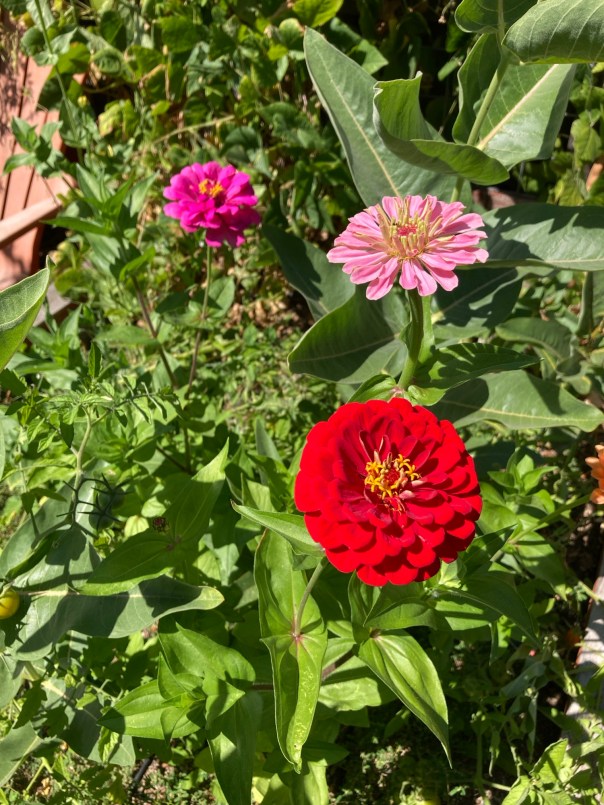
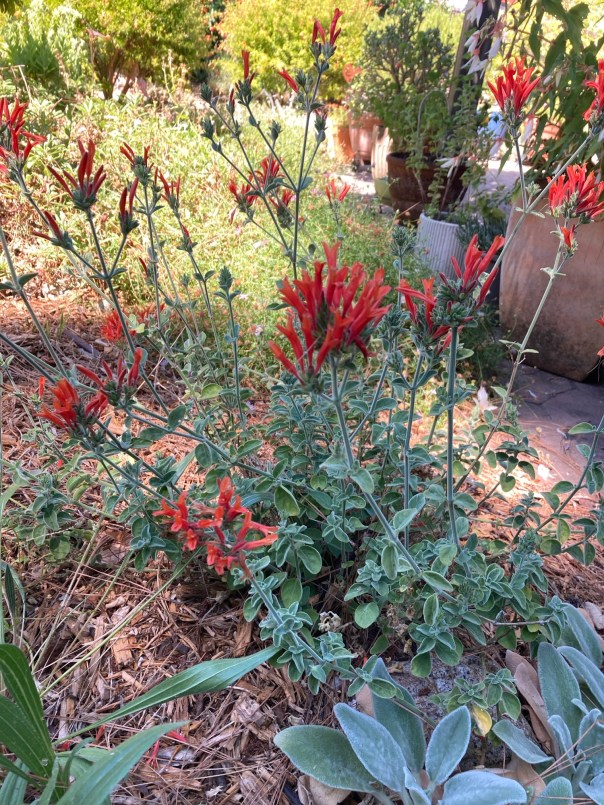
At the moment I can’t remember what this plant is… I think a salvia. But it is the one that pulled me outside this afternoon when I saw it out the window. One of the bright and wonderful things in my life right now.
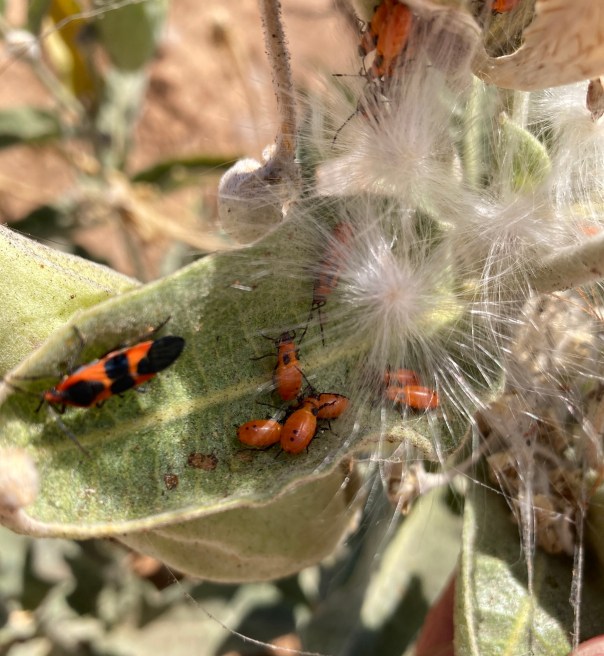
When I drove up into the mountains this month, it was through the area burned by the Creek Fire in 2020. The year following that devastation I’d also passed that way and shared a picture or two here. This time, four years later, I mostly noticed a couple of the plants that are thriving in the changed landscape. Along the road scores of milkweeds were lined up, and lots of young oak trees. I didn’t manage to take a picture of a little oak, but I got close enough to the milkweeds to see two kinds of bright insects on them.
The oaks in this case were the daughters of acorns that sprouted soon after the tall canopy above them had burned off. I read that “…fire directly promotes the establishment of oak seedlings by reducing competing understory vegetation, releasing needed soil nutrients and reducing numerous pathogens.”source
I think the ones I saw might be black oaks, Quercus kelloggii; the photos I found online.
EPIGRAM 9.312
Refrain, sirrah, from cutting the oak, the mother of acorns; refrain, and lay low the old stone-pine, or the sea-pine, or this rhamnus with many stems, or the holly-oak, or the dry arbutus. Only keep thy axe far from the oak, for our grannies tell us that oaks were the first mothers.
-Diodorus Zonas, 1st century BC, Italy
Translated by William R. Paton, The Greek anthology, Vol III
Oak, by Ivan Shishkin, 1865
In The Odyssey Homer refers to a legend that men were sprung from oaks or rocks,
e.g. “But tell me of your family, since you did not spring from a tree or a stone as in the ancient tales.”
Homer’s Odyssey XIX.
 “The heroes of the Hebrew Bible — Abraham, Jacob, Joseph, David — have no affinities whatsoever with Achilles. Even David, the only professional warrior among them, carries on their blessing from Yahweh and so is in a position beyond tragedy, despite his many griefs that terminate in the death of his beloved son, Absalom. You can make a covenant with Yahweh and then trust in the covenant, but no one can trust Zeus. Achilles is half a god, and he says that ‘who trusts himself to the gods will gain their hearing,’ but he knows that the response to such a hearing is likely to be equivocal, and they cannot free him from war, since despite his disillusion he is war and nothing but war. The poetic strength of Achilles is that he is a man. No other purely literary figure is nearly as heroic, or is aesthetically satisfying to us, but Achilles’ otherness, in relation to us, is now his dominant characteristic.”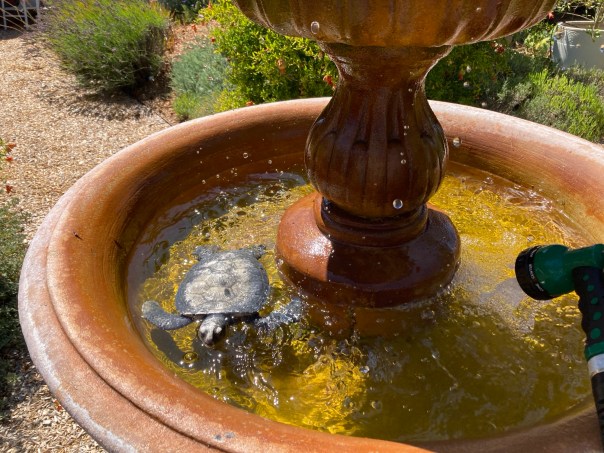
 distracted by the wildfire smoke that is drifting south from the Woodside Fire up on the coast, not close to us, but making the air unhealthy.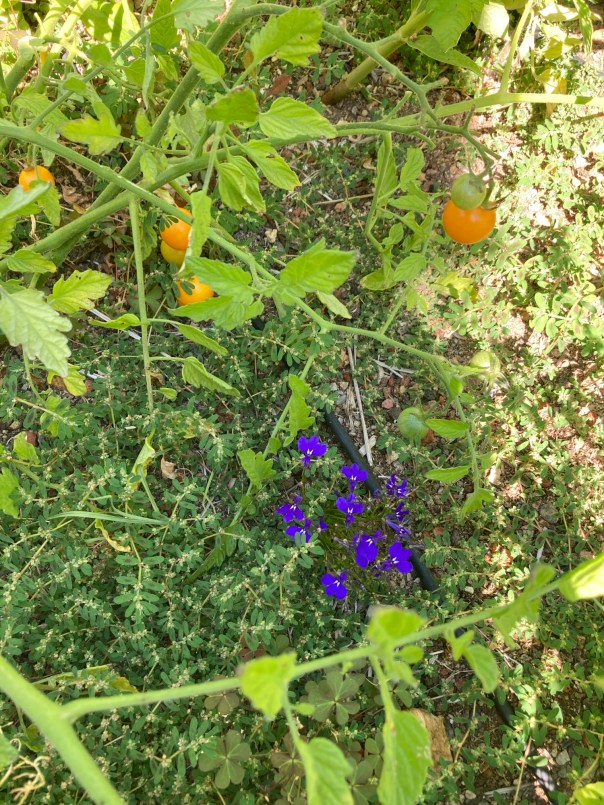
 year-old child of God to her Father. Our funerals are so nourishing to the soul, as the hymns and prayers acknowledge our grief, and help us grieve in what is ultimately a healing way. The Church and her sacraments are truly full of Christ, His Life and Love, and I come out of every funeral full to the brim.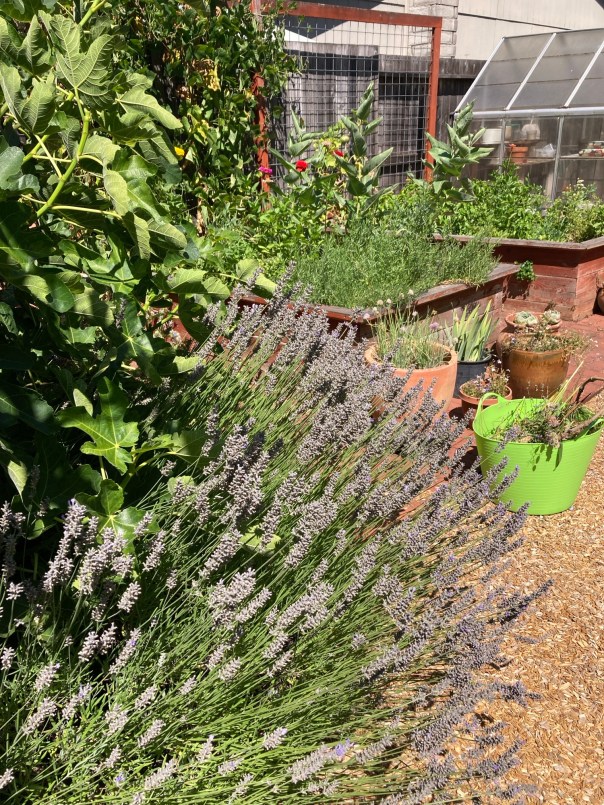

 My new housemate Bea has been with me now for about a week. We are already having a good time brainstorming about various events we’d like to collaborate on, around books, high schoolers, tea, cooking… She’s baking a cake at this moment, and almost every day she is playing the piano, and that makes the house feel right.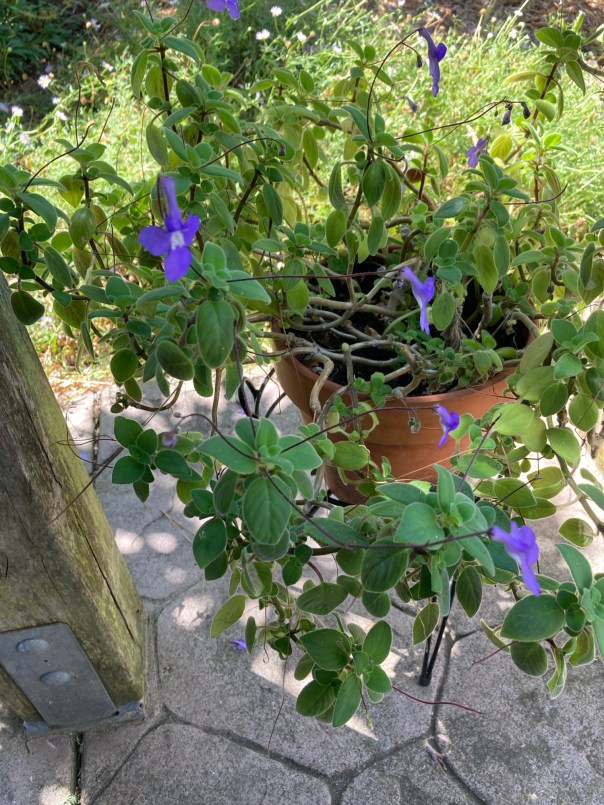
 When I drove up into the mountains this month, it was through the area burned by the Creek Fire in 2020. The year following that devastation I’d also passed that way and shared a picture or two


