Tag Archives: plant identification

From the mountains to the bay.

Our last day together at the cabin, Kate’s family and I took a walk to “Gumdrop Dome” in the morning. This is the walk I do every time I visit, not trying to climb to the top anymore, but picking my way around on its “shoulders” and feeling exhilarated from a combination of the exercise, sun, pine-scented air, and expansive views.

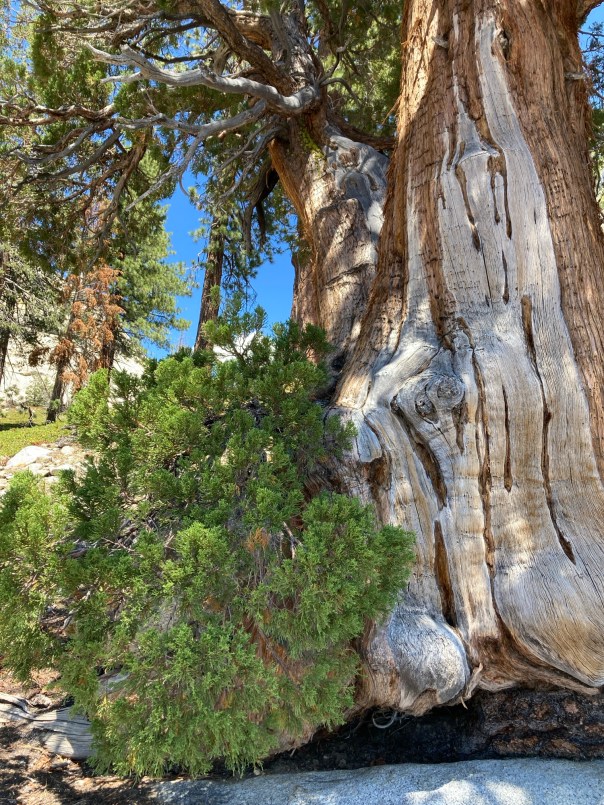
I very much  wanted to introduce my grandsons to my favorite tree. When I mentioned my tree “friend” to them beforehand they asked what its name was — of course a friend would have a name, right? But I hadn’t thought to name it. So I said they could help me choose a name after they were introduced.

Prickly Hawkweed

It took longer than expected for the whole expedition, because as we walked through an empty campground on the way, we met the campground host who loved to talk, and then his two “surprise rescue,” exuberant pups. That was fun, but eventually we started our ascent, which was slow and deliberate going as we adults cautioned the children about the gravel and the steep slopes. I avoided the trickiest gravel-strewn expanses of granite, and led our group into the manzanita ground cover higher up on the back of that hunk of rock, where we admired the lichens and flowers as we headed for the small dome to the side, which is easy to climb.

Then I found my friend, which is actually two trees intertwined, a Sierra Juniper and a pine. It/they were christened “Double Hug,” seeing as the two are in a forever embrace by means of large roots lying next to each other, and even their branches tangled together. We hugged the trees, and posed on the bench formed by those hugging arms.

Below, I am exclaiming over a little tree that, having been bent down by snow as a sapling, is growing sideways along the rock.

I don’t remember the last time I was with other humans on The Dome — it was a nice change, to have them along  to “ooh” and “aah” with me. Tom also had never been up at the lake at all, and Kate not since she was a teen, so they were truly thrilled to be there.
In the afternoon we went to the lake for a canoe outing. The previous day, a neighbor had helped Tom and Kate get the very heavy boat out from under the cabin deck and on to his truck, to haul it down for the season. This day I rode down with the four of their family in their car to help them clean out the canoe, and I took pictures as they pushed off and paddled away.

Then I began walking up the hill back to the cabin, a hike that can be done in ten minutes, but this time it took me one and a half hours, because I meandered and wandered and explored the woods and ditches along the way looking at the many beautiful plants, and also watching a mated pair of birds hopping back and forth on the road in front of me. They were Pine Grosbeaks. This is what the male looks like, from an internet photo, because mine were from too far away. That was definitely a new sighting for me, and combined with the junco nest, very encouraging, because other than Steller’s Jays, I rarely see birds up there. Maybe in my usual visiting month of September the birds are already gone to lower elevations.

Some of the (mostly yellow) plants and insects I admired and/or identified by the roadside are below:
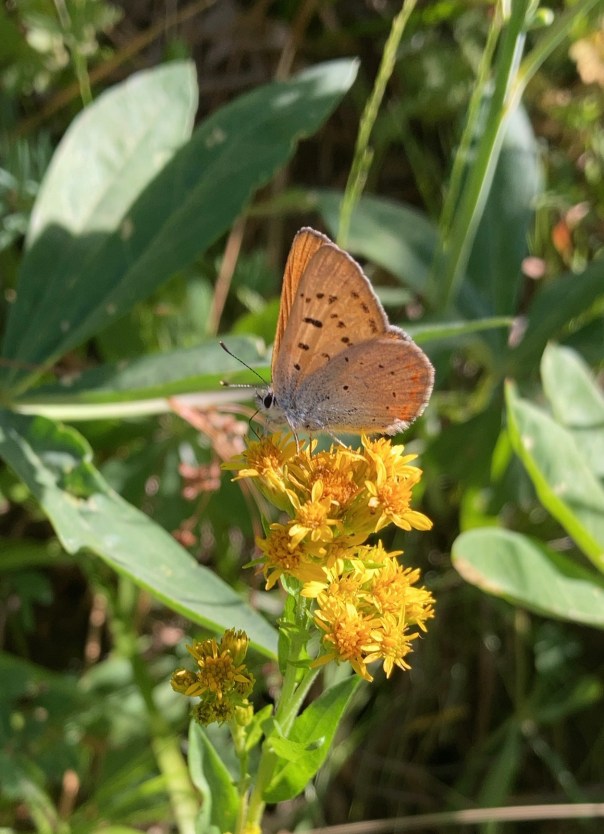
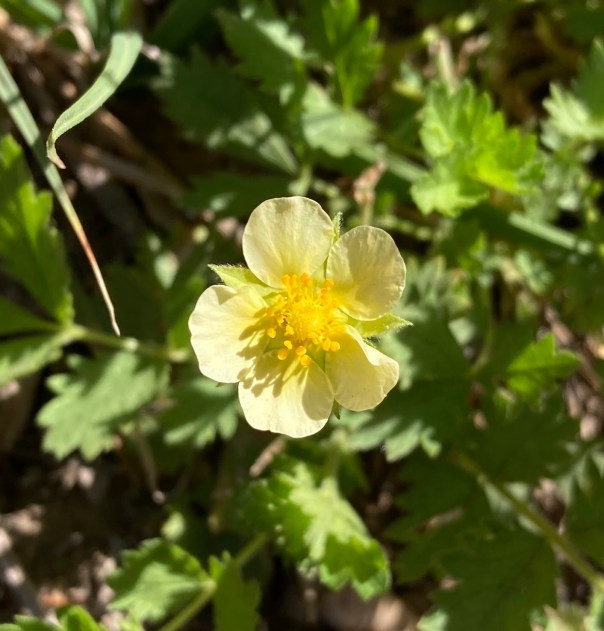
Pretty Face or Golden Brodiaea
Yellow Velvet Beetle on Ranger’s Buttons
Woodbeauty

I met on the road a mother and daughter whose cabin is not far from ours, and the daughter told me that one of our hugging trees on the dome is a Sierra Juniper, Juniperus occidentalis. I had thought it was some kind of cedar tree, but when I researched it later I realized that it is indeed a Sierra Juniper. True cedars are not native to the Sierra Nevada, though one conifer typically called “cedar” does grow there, the Incense Cedar (Calocedrus decurrens).
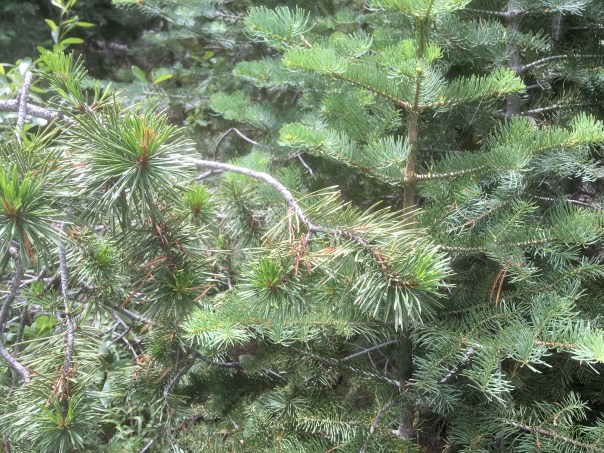
Lodgepole and Red Fir

The sad, sad day arrived, when we must pack up, clean up, and load up our cars, to caravan down to the valley and back to my house — but our vacation had not ended, only changed locations…

Soon Uncle “Pathfinder” had arrived to spend a day and a night, and we all headed out to the coast, to Tomales Bay, for a short walk through the entirely different biome. The sky was mostly cloudy and overcast, which is common in the summer.

In many places the paths were narrow tunnels through thickets of live oak and coyote brush, tall grass, fennel — and the dreaded poison oak reaching out threateningly. The boys’ uncle was a wise counselor who gently reminded them again and again to keep an eye out for those clusters of three leaves, often red and often shiny, so that they could squeeze by without their bare arms touching.
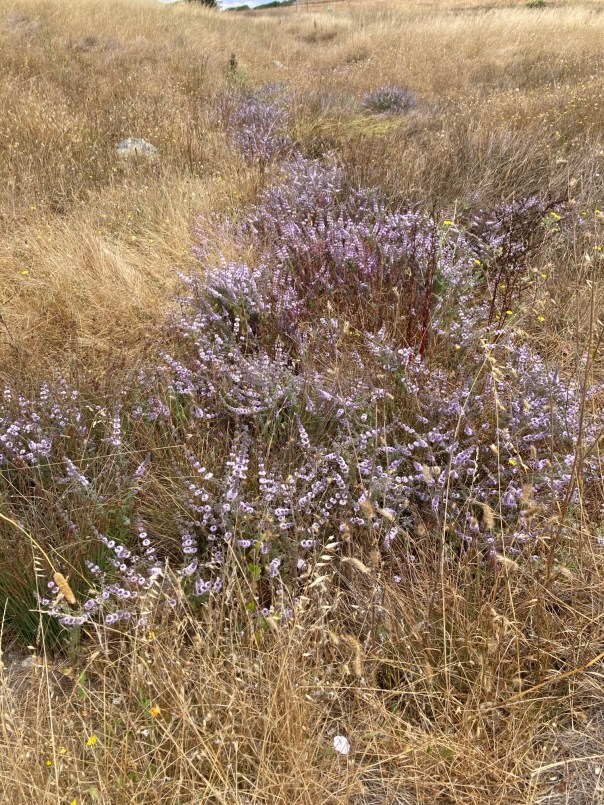
Pennyroyal marks where winter streams ran.

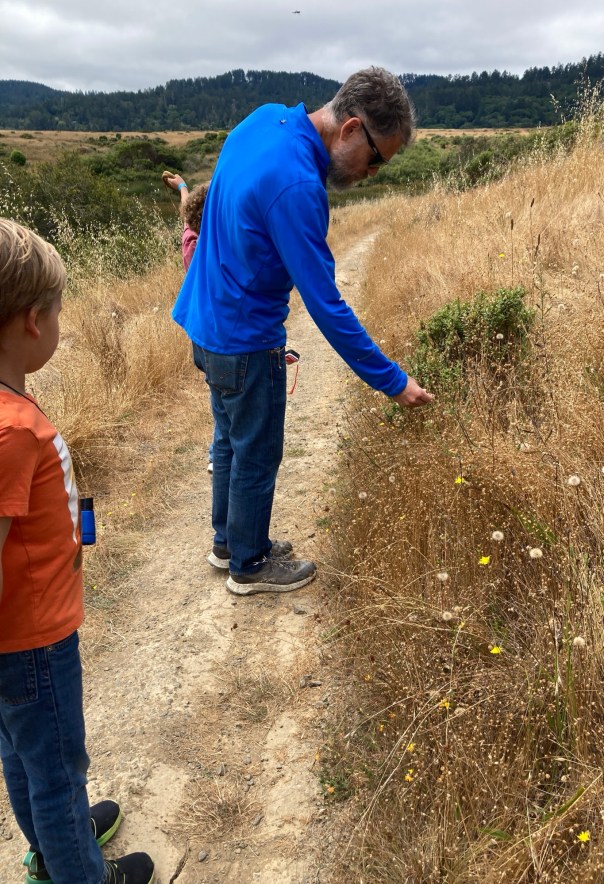
But mostly we walked through more open places with dry grass spreading away from the trail and far into the distance. I am actually on a path in this picture below. Kate had read a tick warning and no one wanted to venture into the foliage very much.

Pathfinder joined me in noticing various plants and talking about what they might be. He demonstrated to the nephews how the fennel fronds are pretty tasty for munching on, and he knew this flower that I didn’t, the Twinberry Honeysuckle:
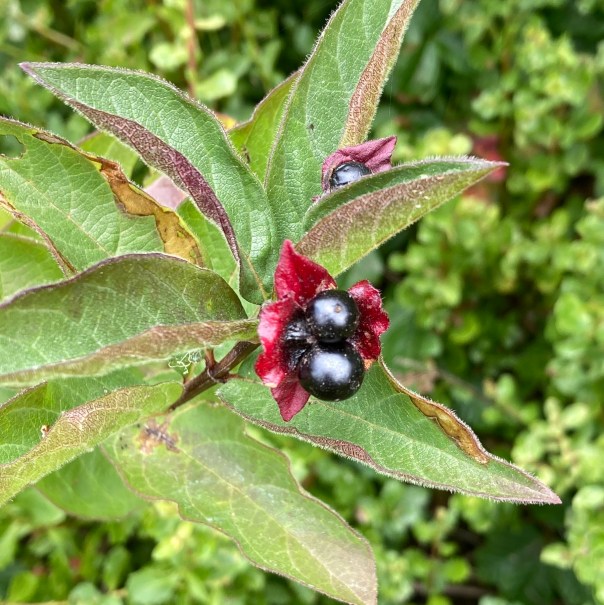
Twinberry Honeysuckle

Raj and Rigo were hopeful of reaching the shore of Tomales Bay and getting their hands at least into the water, but every time we drew near, the ground turned out to be too boggy, and no one, including them, wanted them to sink into the mud, and who knew how far one might sink and stick into it.

So we continued looping around on the paths, going on faith that they would eventually lead us back to the parking lot…

At left Pathfinder is looking at the Rattlesnake Grass, Briza maxima, which is not native here but has certainly naturalized and grows “everywhere.” It is native to areas of Africa, Asia and Europe. Do you have it where you live? I didn’t get a good picture this time, partly because it was not a good stand of the stuff, and most of the “rattles” were very short. You can click on the link to see the Wikipedia photo.

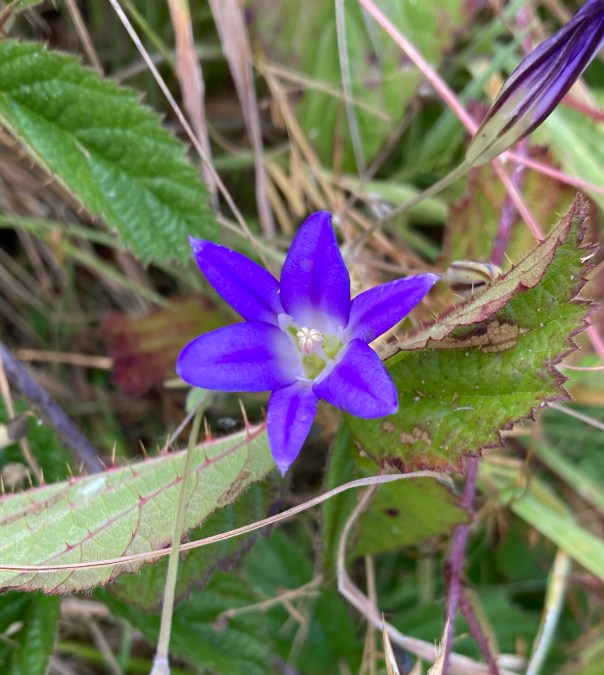
Related to the Golden Brodiaea I had seen at the lake, is the Elegant Brodiaea in its much drier habitat near the sea:
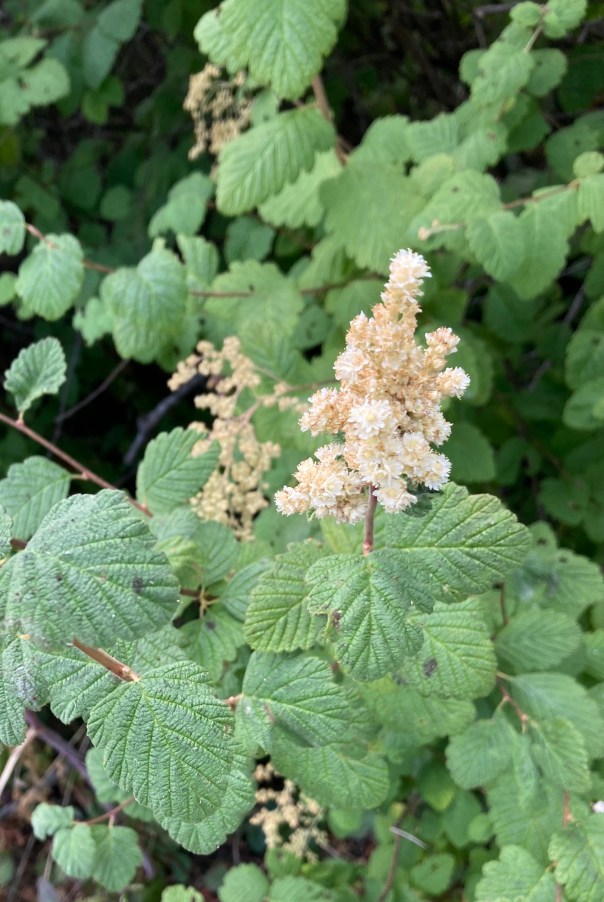
Ocean Spray
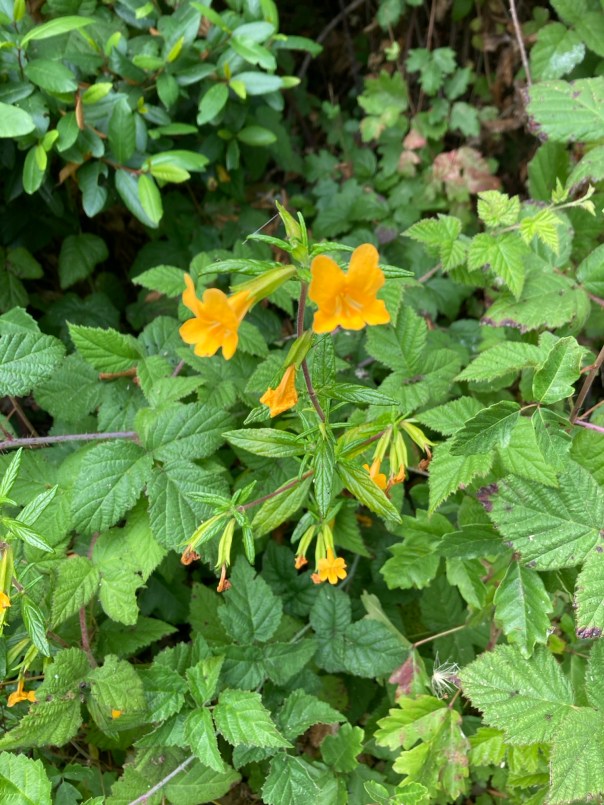
Orange Bush Monkeyflower

This forbidding plant has the agreeable name of Coastal Button Celery:
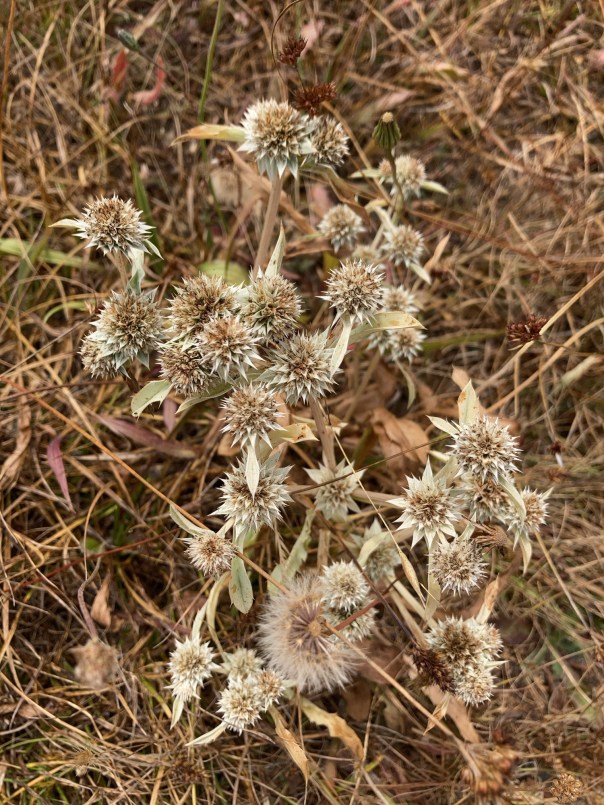
Coastal Onion


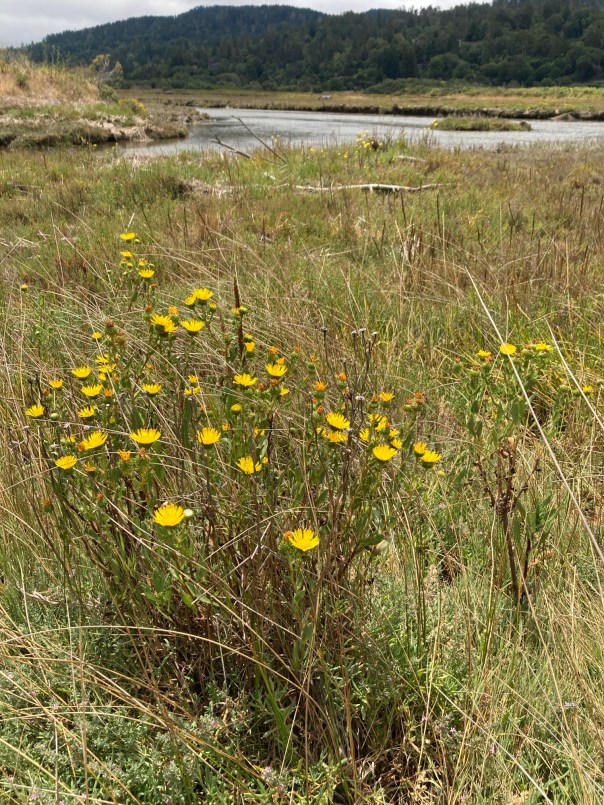
Oregon Gumplant
The pennyroyal was extravagant.

Oh, it smelled so good out there, among all that dry grass with the fennel and pennyroyal and other species continuing to dry up under our noses, where their essential oil droplets could be breathed into our lungs. I wished there were a bench to sit on… but there wasn’t, and anyway, we had places to go, things to do.

When we got back in the car we drove up the Coast Highway, Highway 1, and found the oysters Tom was longing for at Nick’s Cove. We didn’t order any of their special fries, but we noted on the menu that they came with a sprinkling of — chopped wild fennel!

It had been a most wonderful outing, and the final one of this visit with my dear children. This morning they will all have departed to their homes, and we’ll continue our adventures separately. It has been a very special couple of weeks, filling my gladness cup to overflowing. Thank you, Lord.
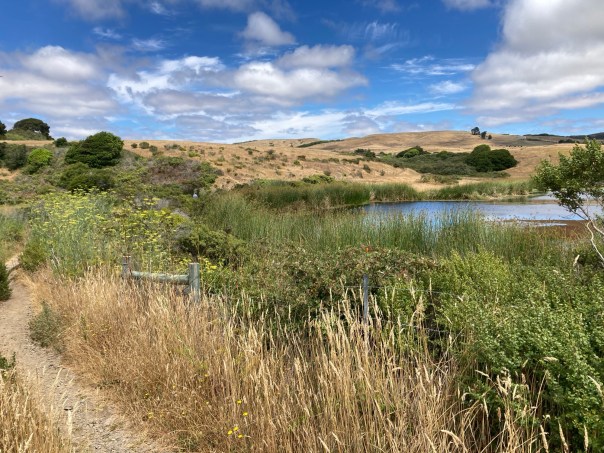
Evening explorations with grasses.

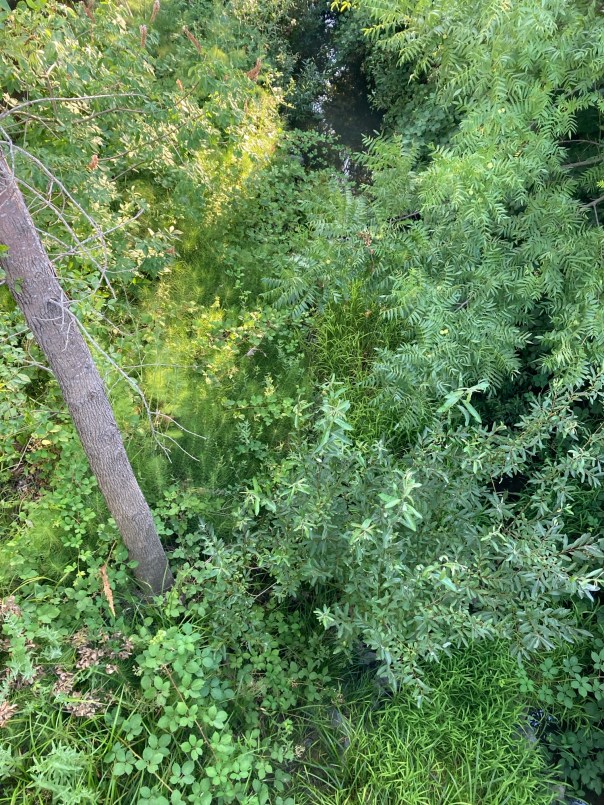
In the summer it’s relatively easy to take a walk after dinner, if I put my mind to it. The last two evenings I did manage to do my 30-minute creek path walk; for some reason it doesn’t feel like a chore at that time of day. There was plenty of light, and time to stop to look at interesting plants. But first I paused on the bridge and looked over… It’s always amazing how much plant matter grows up in springtime and early summer and fills the channel so that it’s hard to see the water down below:

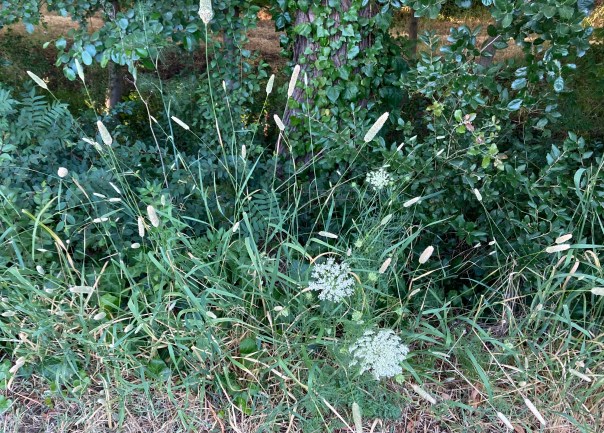
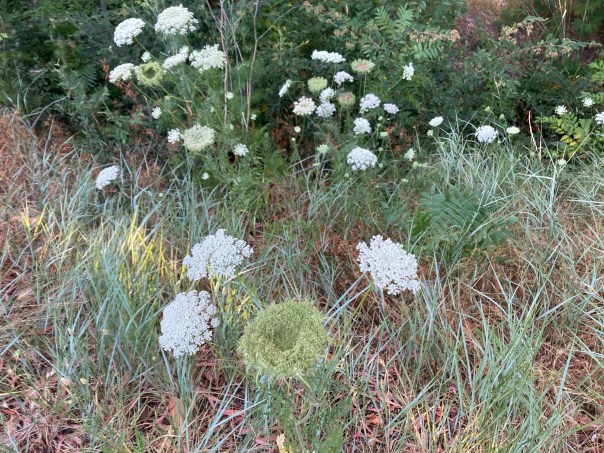
Harding Grass and Queen Anne’s Lace
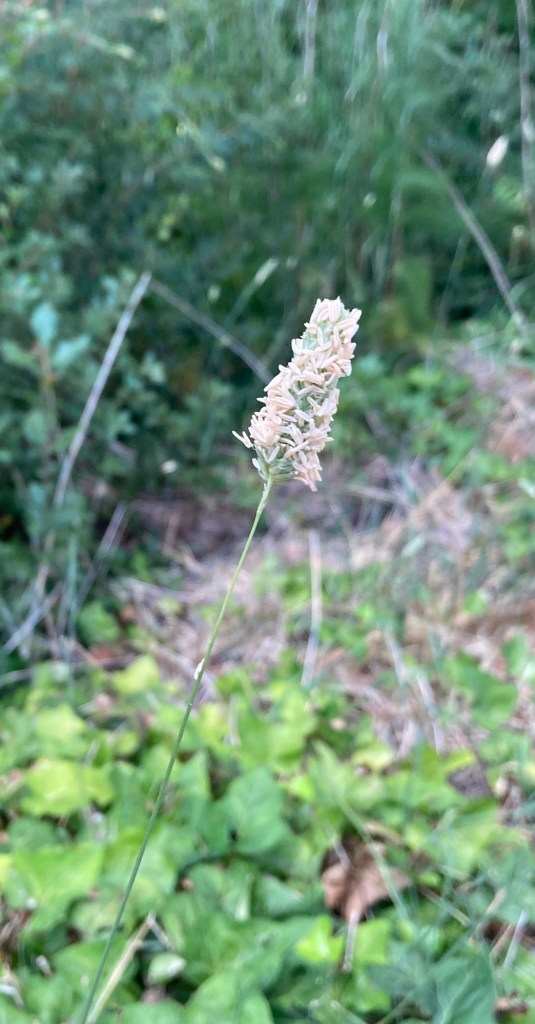
Harding Grass

During my visit to Greece last month, I really enjoyed the exploratory nature of all the walking I did, in a place where so much was going on, and ancient history was confronting me around every corner. Since I returned it’s been hard to get back into walking along my old home ways, just to be walking. But this evening I did a little exploring, too, of the botanical sort, using the Seek app on my phone. Usually it can’t identify grasses, but this time it confidently told me about two of them.

First the Harding Grass, Phalaris aquatica. You can see it blowing around the Queen Anne’s Lace in the picture above, the breeze making it very hard to get a crisp picture of the seed heads waving on their slender four-foot stalks.

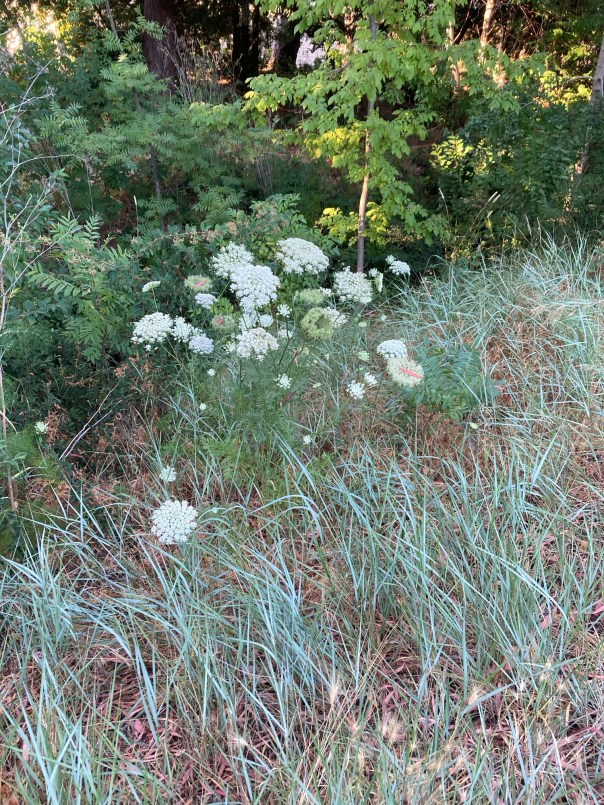
Then I noticed the way the blue grass was contrasting with the same white flowers. Seek says that is Creeping Wild Rye or Leymus triticoides:

Creeping Wild Rye and Queen Anne’s Lace

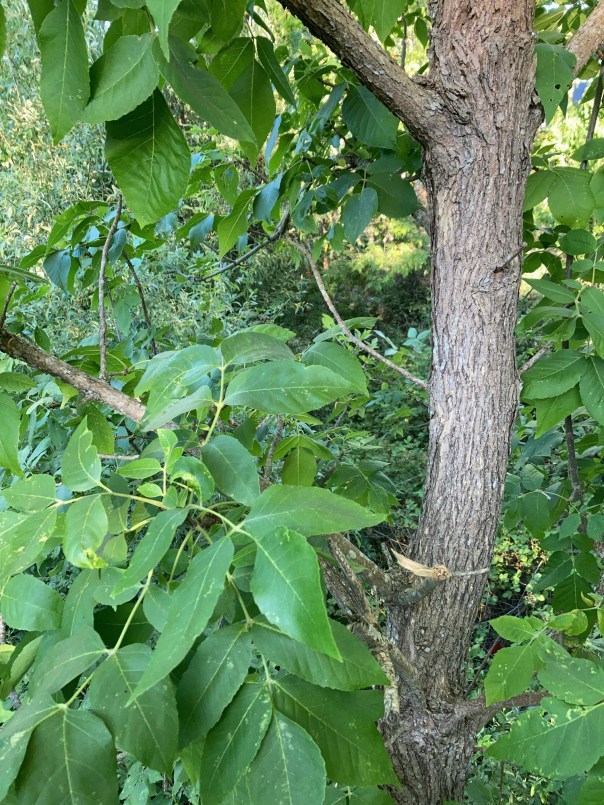
I noticed lots of young black walnut trees growing on the banks of the stream, and on my way back I met a big tree growing out of the creek bed and way taller than the bridge. Surely I’d learned what it was before? But evidently not — Seek told me it’s a Box Elder, and I read later that they do like wet areas, and grow fast. Maybe it’s California Box Elder. I wonder, when the city’s maintenance crew dredges the creek this year or next, if they will take out such a big tree?

Box Elder

I meant to write about my discoveries earlier, and go to bed at a reasonable time, but I started researching small drought-tolerant trees suitable for a garden like mine. I’ll have more to tell you about why I need such a thing. For now I’m content to have become further acquainted with two plants, reaching the stage of knowing their names. I will count the Box Elder as a new tree friend, and fall asleep late, but happy.

Best views and favorite people.

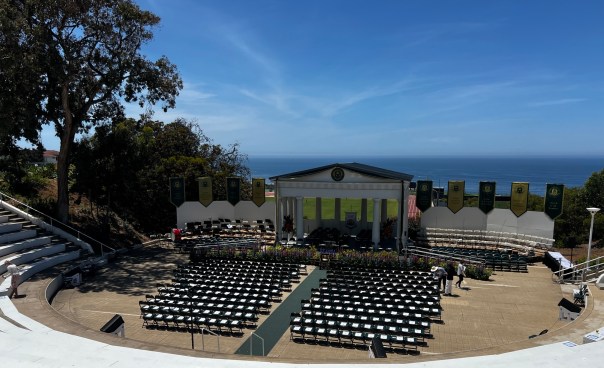
Pretty sure it was the quickest trip by plane I’ve ever made, my flight to San Diego and back, all in less than 60 hours. I went for my granddaughter Maggie’s graduation from Point Loma Nazarene University, which offers the guests at the ceremony an expansive view of the Pacific Ocean and the sky above. The weather cooperated; the day before, our view would likely have been obscured by fog and clouds.

But the brightest sun beat down on us that day, and having forgotten my hat, I shaded my face with a program throughout the ceremony. Before the ceremony, for which we arrived very early as to get the best amphitheater seats, I found myself holding a venerable copy of Grimm’s Fairy Tales that possibly Maggie was planning to return to the school library. I made the most of my opportunity and read “The Water of Life,” which is a story I’d been wanting to read for some time.
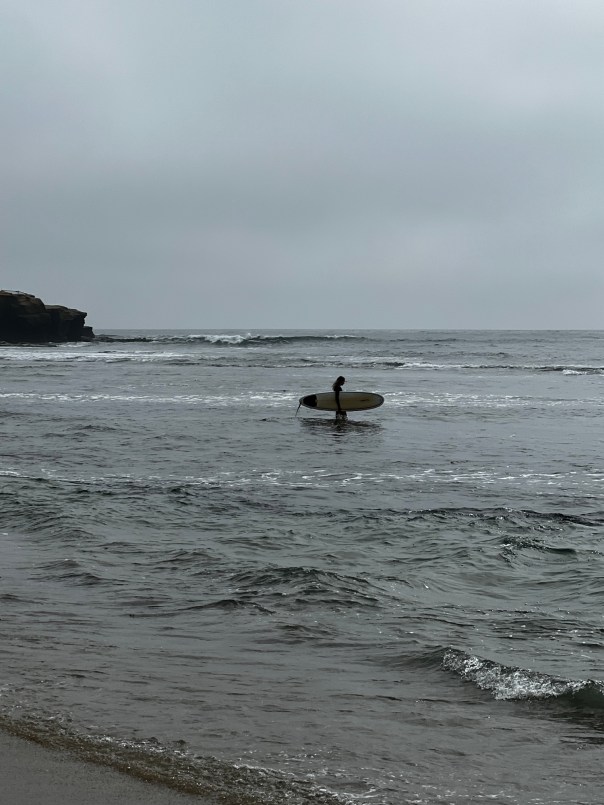
Maggie had most of her immediate family and many favorite people around her on her happy day, and we were and are terribly proud of her. It was a reunion as well as a celebration, as everyone in our group came in from somewhere else, three states represented, and we stayed in a house together across from the beach.

Maggie

Before and after the main event, we enjoyed the ocean and the beautiful campus, wonderful conversations, and lots of snuggling focused on my great-granddaughter Lora. She is of course the fourth generation from me, and all of those in her line were gathered, which was sweet!

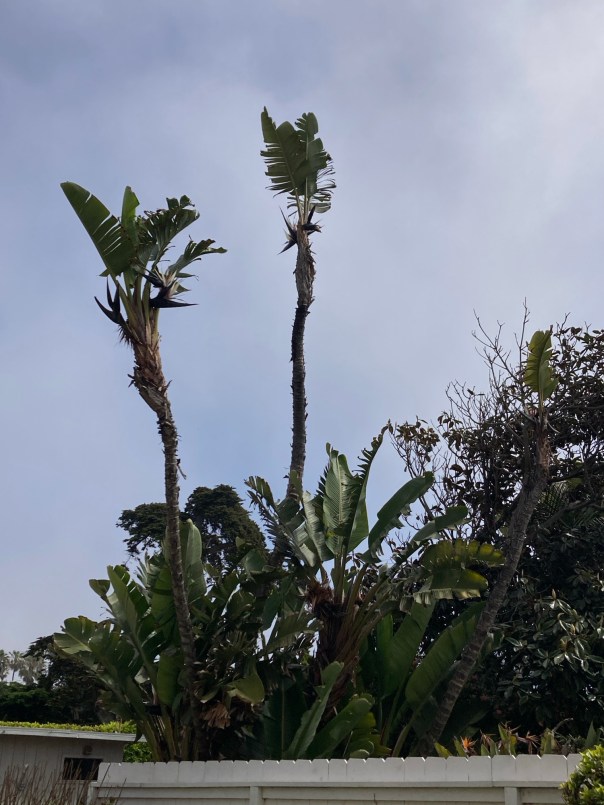
White Bird of Paradise

Everywhere I looked I noticed many and various plants that mostly don’t grow where I live, or don’t get as huge. I learned just now that the White Bird of Paradise, Strelitzia nicolai, is a different variety from the colorful ones, and that’s why the many such plants around our Airbnb house were taller than the two-story buildings. The lantana in the back yard grew higher than my head.

Bird of Paradise, Strelitzia reginae
Australian Tea Tree
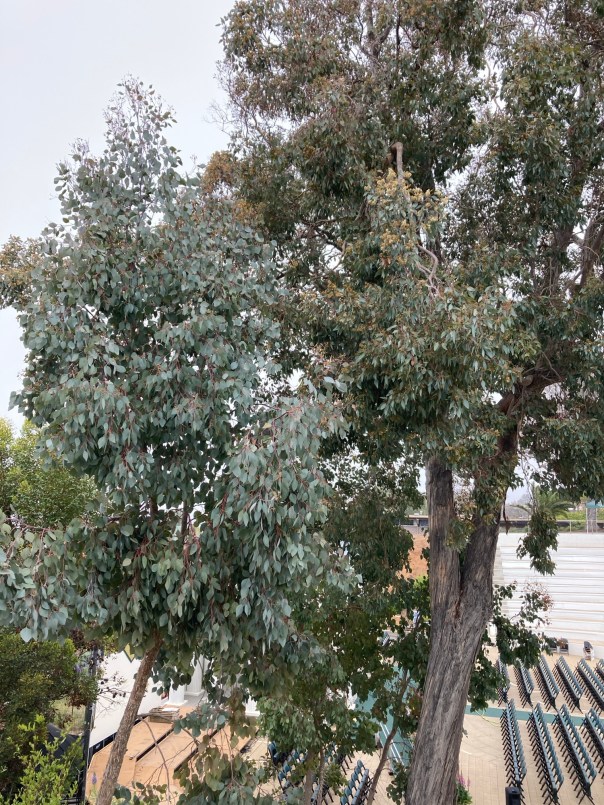
Two types of eucalyptus trees.
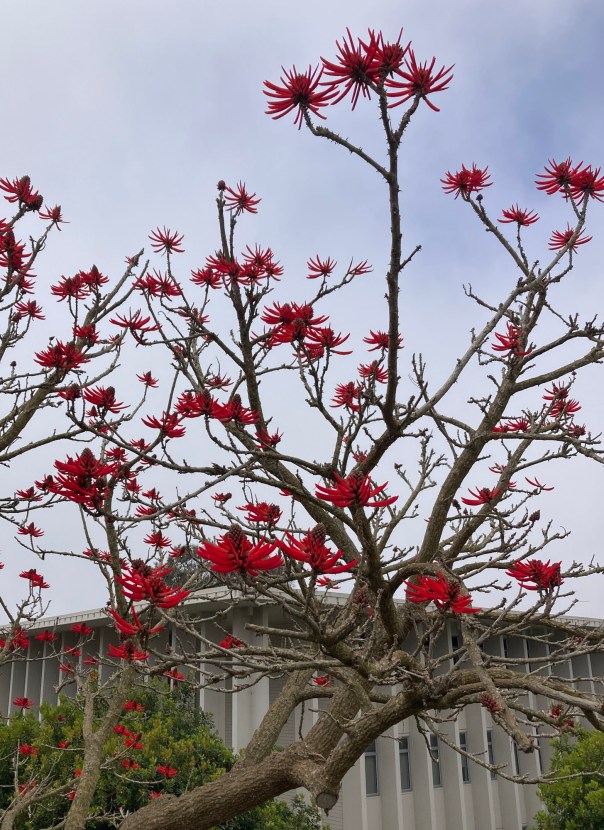
Coral Tree
Princess Flower, Tibochina heteromalla, South America

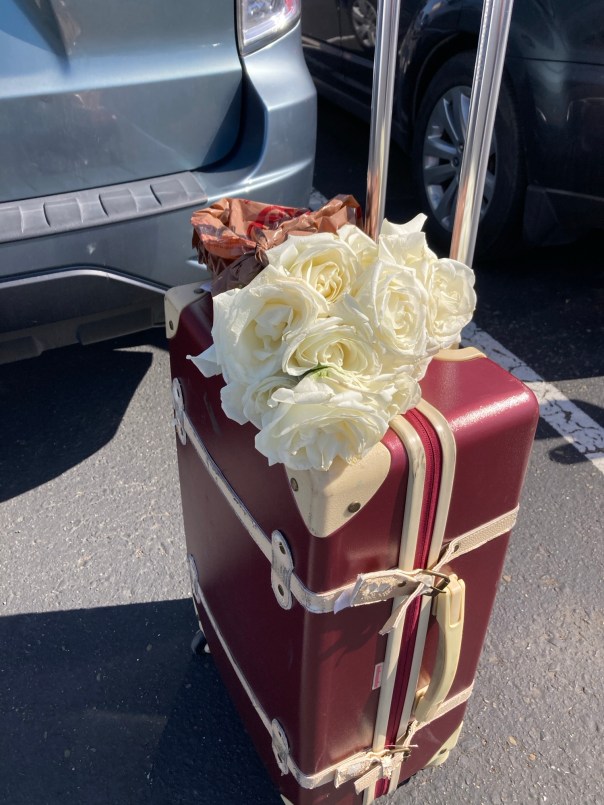
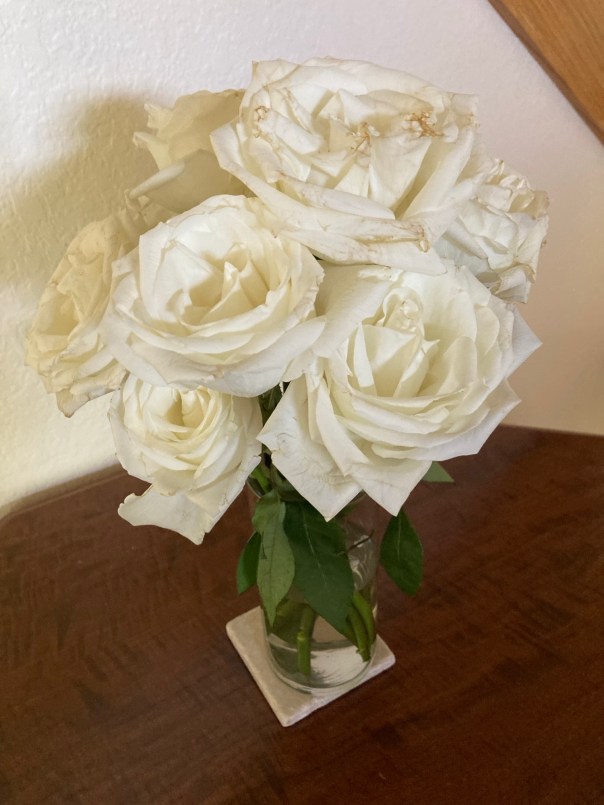
Early on the morning of Mother’s Day, we were clearing out and leaving to catch our planes, etc., but the day before, the two women who aren’t yet mothers gave the mothers among us roses. I carried mine home in my backpack, their stems gathered in wet paper towels tied up in a plastic bag.

Pearl, Maggie and friend arrived at my house soon after I got home, by a complex turn of events, so our happiness continued for two more days in a different climate. Yesterday we four took an evening walk in the nearby hills where I continued to find plants  I didn’t know, or rather, as is often the case, that I didn’t know that I knew.

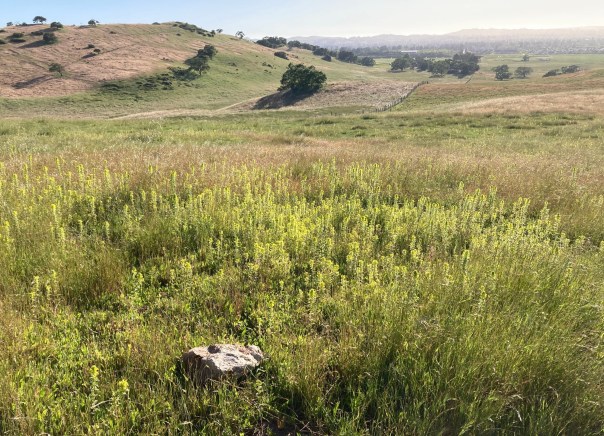
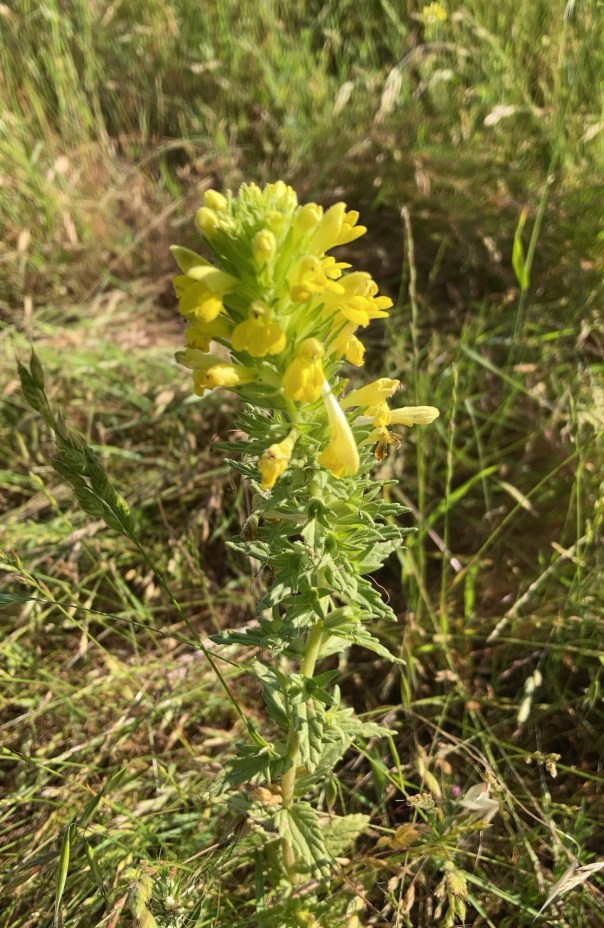
My Seek app tells me that I identified the Yellow Glandweed, Bellardia viscosa, a year ago this month, but I’m guessing from the location recorded back then that I saw one or a few flowers, and not as we experienced last night, of thousands and thousands of them spread up and down the slopes.

Yellow Glandweed

Maggie’s friend had never been in northern California before, and his sincere interest got Pearl and me talking more than we normally would about the natural history of this area especially. About poison oak, and oak trees, the California Bay Laurel, and Lace Lichen, which I had to look up again to remember what it is exactly.

Lace Lichen is truly a lichen, but Spanish Moss is not a moss: it is a bromeliad. As the latter plant is not native here and I don’t know if I’ve ever seen it, I won’t confuse myself any further by showing a picture of Spanish Moss. I may have seen it on Maui, where is is also not native but is reportedly “often confused with the native Hawaiian plant called hinahina, which is a silvery-gray native heliotrope used in lei making.” Lace Lichen:

Lace Lichen

The lichen that hangs from these trees is food for the deer and nesting material for the birds. If you look at it closely you would not confuse it with the bromeliad.

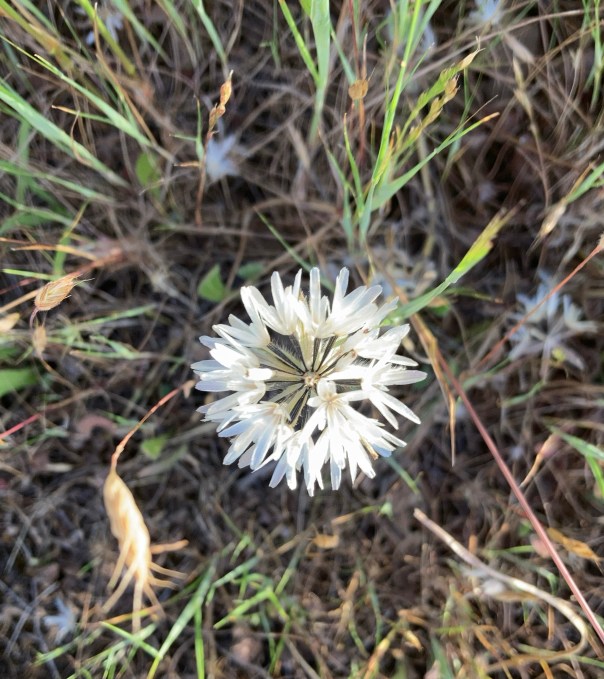
Blow Wives

The young people especially thought the golden California hills, the oaks and the bay trees most beautiful. They climbed up on the thick trunks the way our children, and some of us parents, always do. We all strolled through the grass and among the strange yellow flowers. It was a balmy walk in the hills at the end of the day when the air was still warm and our shadows were long.

Now my guests are gone, but my roses remain,
reminding me of my ever-expanding, most blessed motherhood.

In the weeds and happy about it.

On my way up the mountain earlier in the week I came across several plants whose common names include the word weed: Two tarweeds and two vinegarweeds. They all got my attention by the way they added color to the drying-out landscape of late summer.

When I was still only approaching the foothills, I saw bluish plants dotting the yellow-brown expanse stretching out away from the road, and it didn’t look like anything I had ever noticed before.

It may be that in the past they were not as tall and visible from the road, and that this year’s extra rainfall helped Trichostema lanceolatum to thrive. It was hard to get a picture of it without my socks attracting various stickers waiting in ambush, but this closeup on Wikipedia shows what a graceful flower form is hidden in the overall unimpressive bush:

“The plant is an important pollen source for native bees and other insects. When a pollinating insect alights on the lower lobes of the corolla, and inserts its mouth parts into the nectar-containing lower section of the same tube, the narrow corolla portion above is straightened and snaps rapidly downward brushing pollen onto the insect’s back.

“The volatile oils make it unpalatable to grazing and foraging animals.

“The indigenous peoples of California used this as a traditional medicinal plant, as a cold and fever remedy, a pain reliever, and a flea insect repellent.”

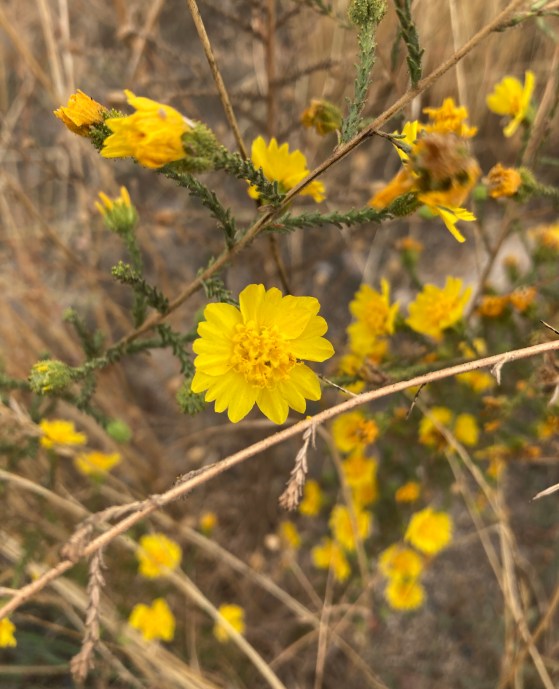
The two species of tarweeds caught my eye a little further on. I think it was mostly Fitch’s Tarweed, Centromadia fitchii, that had turned the slopes and flatlands gold in large swaths on either side of the highway.

But the more photogenic plant I managed to get close to was Heermann’s Tarweed (according to my Seek app), Holocarpha heermannii. Both of these plants are in the Aster Family, but different genera. A lot of tarweeds are in the Madia Family, but it seems that Heermann’s is irregular.

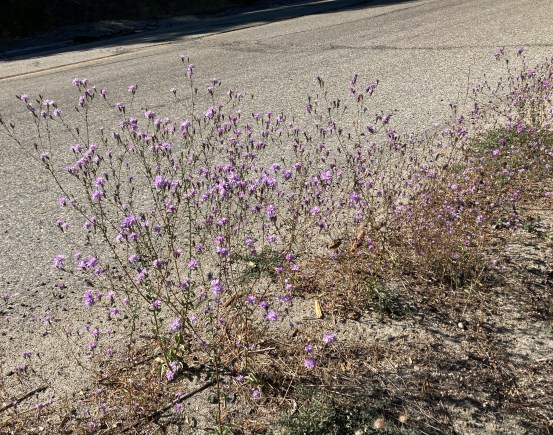
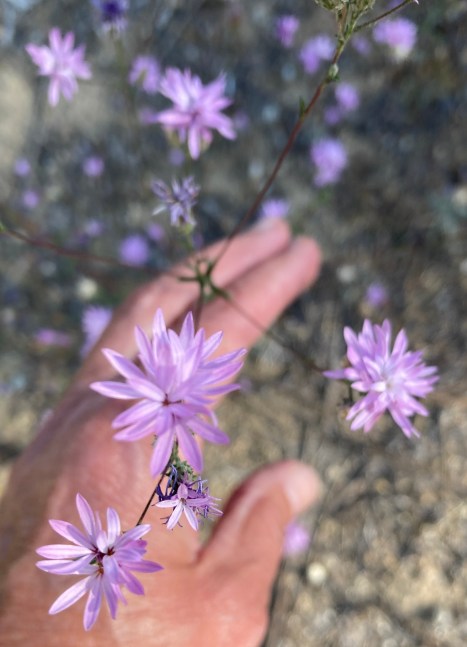
The second plant called vinegarweed grows along the roads in the High-er Sierra. When I first met it in 2009, it didn’t occur to me to taste it; maybe if I had, the idea of vinegar would have been uppermost? But my mind immediately wanted to call it Purple Haze, or Lavender Mist.

It typically gets my attention as I come  around a curve in the road, floating as a long pastel smudge on the shoulder. That first sighting was long before I had any kind of nature identification app, and when I eventually found someone who could tell me what it was (Sierra Vinegarweed or Lessingia leptoclada), that amateur botanist told me that if it had been up to her, she’d have named it Lavender Groundsmoke. The hope of encountering these flowers again would alone be enough to bring me up to the mountains every summer.

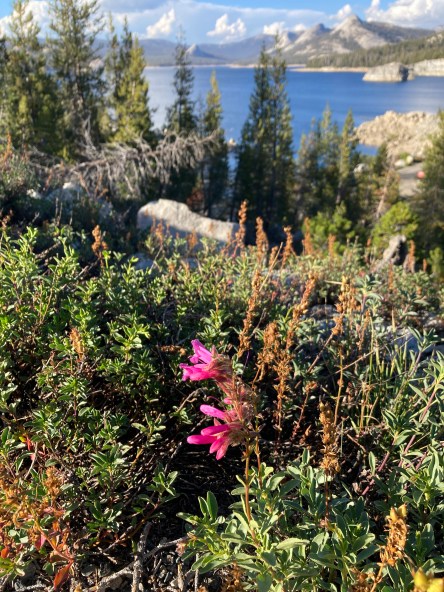
The last plant I will share has no connections to vinegar or tar; it is the favorite Mountain Pride, or Newberry’s Penstemon. In an average year, its flowers would have faded to brown by now, and in fact most of them have. But the snow hung on so late here this summer, till the end of July, that the earliest wildflowers had to wait at least a couple of weeks longer to emerge. I was happy to find one bloom of Mountain Pride still fresh and bright. These plants that sit overlooking the lake are a landmark for me, announcing at the end of my journey to the cabin, You have arrived!