Tag Archives: summer

Aunt Ida warns against haste in the blood.

Over a year ago I shared here a few excerpts from old letters written from Central and South America by Aunt Ida. I still plan to transcribe them all and share some more stories, but I’m afraid have fallen right down on that job.

This week we’ve been struck by an unusual heat wave. No one has AC here, because it’s so rarely warranted, and my recent experiences of wilting and sweating made me remember this passage from one letter in which she writes home to her sisters about how to cope in the Panamanian climate. I managed to dig it up and offer it here for anyone who may have need of it.

Tues. a.m. Aug. 5, 1919 …I like this country. Talk about the lure of the tropics. It’s got me. You couldn’t pull me away from here. It’s warm but everything is built for it. And it’s always the same so you can get ready for it and stay ready. I sleep with a sheet partly over me every night, and it’s the same at 4 a.m. as at 9 p.m. Everything is built open like a porch and tightly screened and it’s comfortable. All you have to remember is to take it easy and not hurry. “Never hurry” …. A negro sewing woman said one reason why I was so warm was because I had “haste in my blood.” And that is right. If you even “feel” in a hurry, the heat just surges through you. But if you keep calm, you stay cool. This place would never do for Ma. She’d just naturally die. Because she has so much “haste in her blood” and she simply cannot learn to take it easy. You have to learn it or you perish. You know how easy I take things – well if I keep that pace I’m OK but just let me take a spell where I want to straighten up or do the least thing and I’m all “het up.”

May you all keep as cool as possible this summer, in every sense of the word.

Not Lazy Summer Days


To be precise, summer only began yesterday, so I shouldn’t be complaining about the lack of hours sitting on a patio with tea, or in the shade reading a book. I will likely yet have time before we get to the fall equinox for solitary early-morning weeding sessions in the garden while towhees splash in the birdbath nearby. But lately I’ve been doing so many fun and good things, I’ve been getting a bit depleted.

A week ago today, I was baking pies. It was a satisfyingly creative job, even if I did have a huge mess afterward.

Initially I wanted to bake an apple pie for the father of my children, for Father’s Day. And at church the ladies were bringing in pies for the agape meal, also in honor of the day. I made three for that contribution, using up some flaked coconut and other goodies in my pantry.

This one above left was named Million Dollar Pie where I found the recipe online, but as I improved it by cutting the sugar in half, I’ll make that Two Million Dollars. It must have tasted like a candy bar, what with the coconut, chocolate chips and walnuts it featured, but none was left over for me to try.
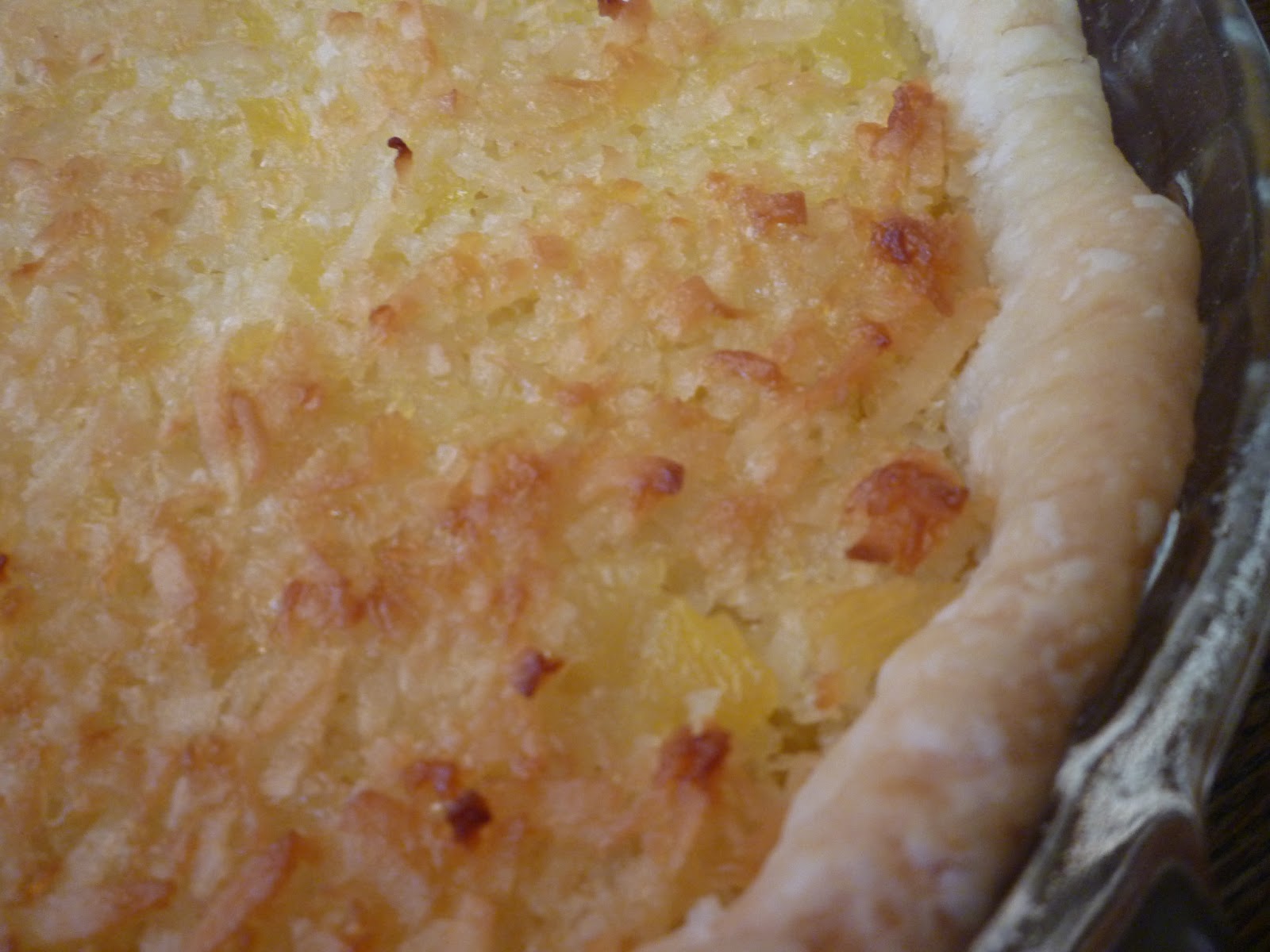
The recipe I found for Coconut Pineapple Pie made two pies from a 14-oz. bag of flaked coconut and a large can of crushed pineapple, with some eggs and butter, etc. in the mix. I did get a taste of that concoction, and I wonder if it might have had more zing if I’d used a name brand of pineapple. Even with its sugar cut in half it was a little too blandly sweet for me, but people liked it.

My newest favorite kitchen gadget got used that day: silicone pie crust shields. In the past I used aluminum foil to keep my crusts from getting too brown, but foil is not nearly as handy.

The day after Father’s Day grandson “Pat” flew to California all by his lonesome from D.C.’s Ronald Reagan Airport, mostly to spend a while with Pippin’s family, but we grandparents had the happy task of meeting him at the Oakland airport. Oakland is next door to Berkeley, where year by year I as a child visited my own grandparents, so we stopped in that old neighborhood of Indian Rock and Indian Rock Park in the Berkeley Hills.
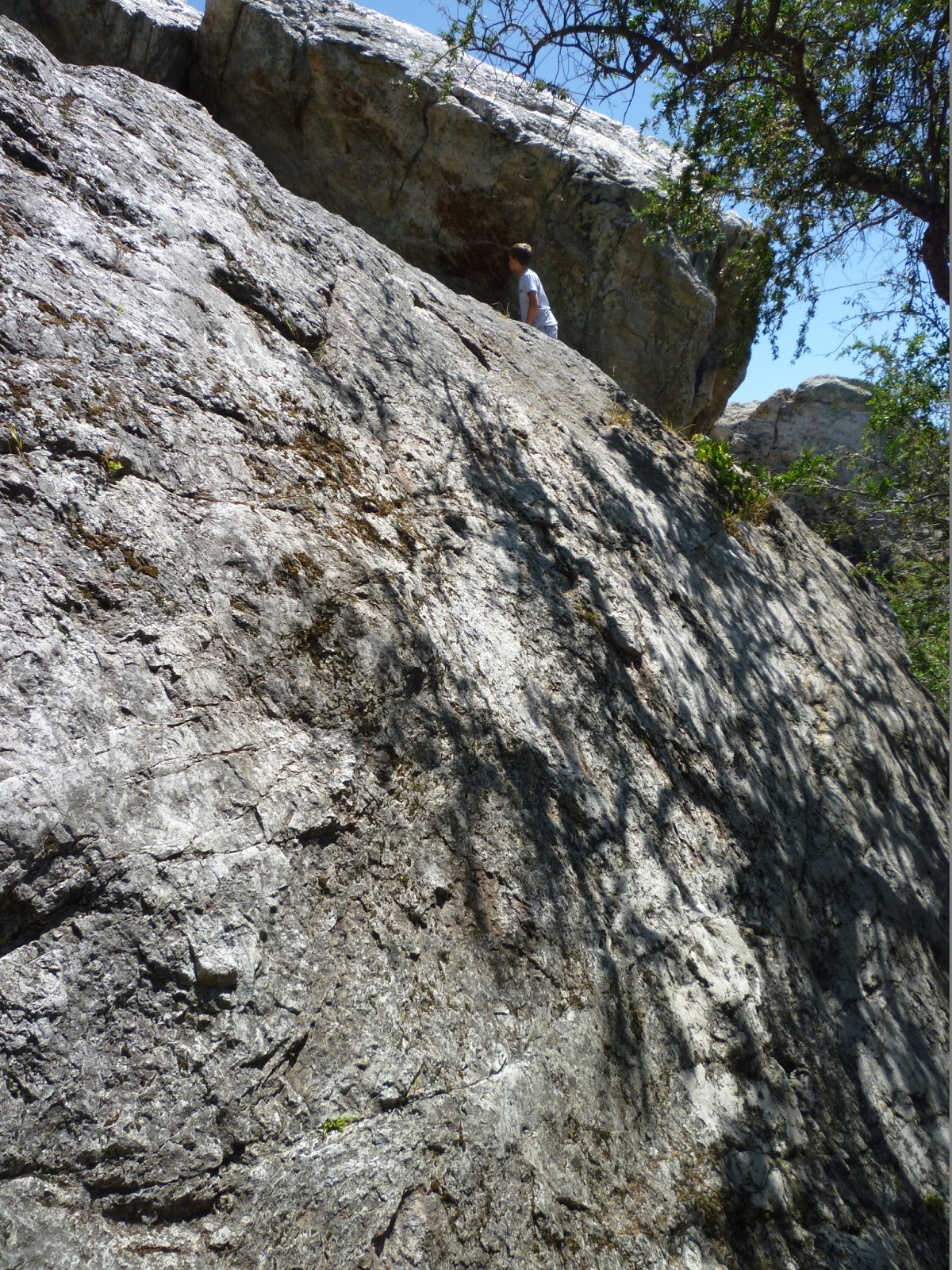
Indian Rock

My sisters and I used to play here, just down the block from my grandma’s house, and even my father had his picture taken on the Rock when he was a small boy. It’s such a lovely thing that the houses were built all around this cluster of craggy boulders that seem more likely to be found in the Sierra Nevada. Pat climbed “cross country” on them, while we older people used the flights of steps long ago cut in the rock.

My father in 1927

From the top you can see far and wide, both the Bay Bridge and the Golden Gate Bridge, and at the bottom, where the hill slopes into the town of Albany, it’s possible to walk down to Solano Avenue by way of stairs passing between houses. It takes only a few minutes to go this way, descending to shops and in my grandma’s time, her beauty parlor and the ice cream parlor that she let us visit by ourselves. Those were the days when children were safe.

After a couple of days having Pat all to ourselves, I drove him north to have adventures with the Professor and fun little cousins.; we listened to most of The Voyage of the Dawn Treader on the way up, with me interrupting frequently to say, “Would you look at all those sunflowers!” (There were a couple of thousand acres, I think, visible from I-5.) and “Those are tomatoes in that field, and this is alfalfa….” Sadly, we couldn’t get one of those faraway views of Mt. Shasta because of clouds.
I had a few sweet hours with Scout and Ivy before I wore myself out driving back the very next day. I needed to come home and get ready for multiple house guests, and for events such as the much anticipated Feast of Pentecost.

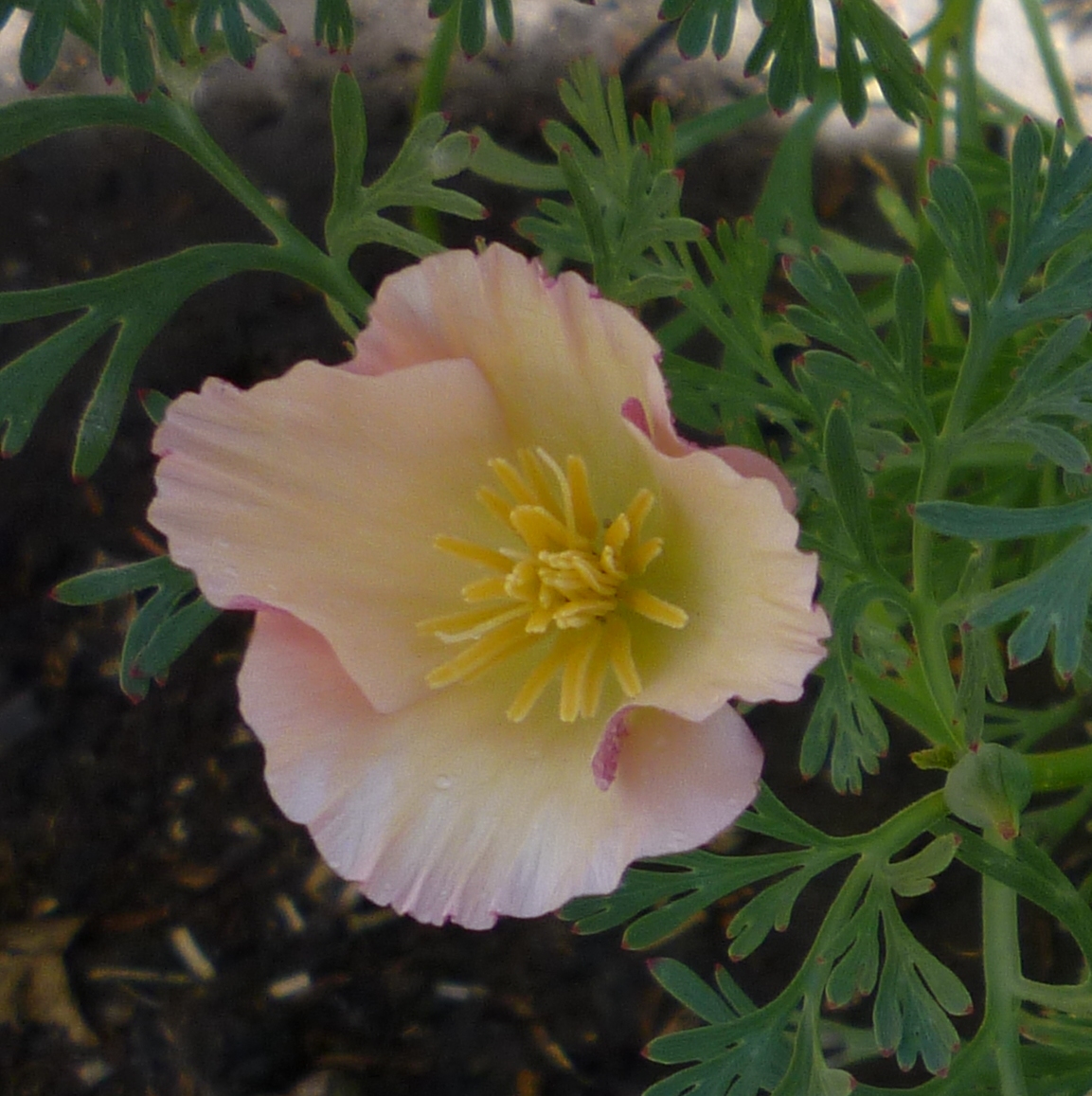
Friday morning when I was back watering the garden I discovered that more of my unusually colored California poppies had bloomed, like this one.

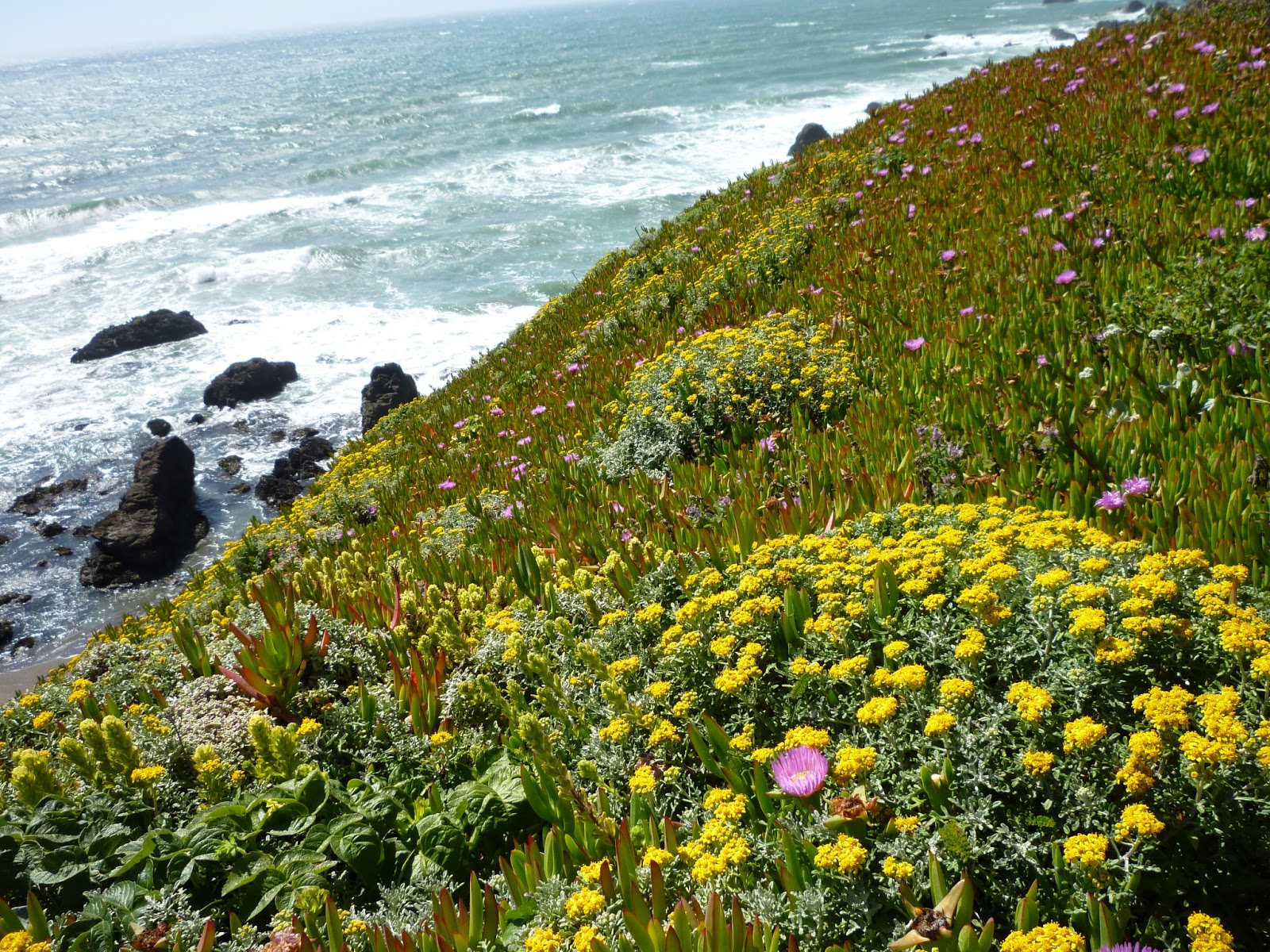
A brief look-around at my flowers didn’t seem to be enough R&R, though, so I asked Mr. Glad to take me to the coast where I could “just sit and stare at the ocean.” He was happy to comply.


The weather wasn’t as summery and calm as the predictors had led us to expect, but the fog hung around only thinly so that we mostly noticed the sunshine. I tied a bandana around my head so that the wind wouldn’t make a total tangle of my hair, and we sat in the lee of a sand dune where I could rake my fingers through the warm sand for an hour.

I don’t know how long I may have to wait to experience even a short string of rejuvenating days, but for now I think my half of a lazy afternoon will do nicely.
So Much Warmth


We’re having a lovely Indian Summer this week, maybe a good time to post this poem by Robert Frost, one that I copied for my own re-reading from a library book, back when the children were copying their own selections to memorize.

I hadn’t yet read the quote from C.S. Lewis that I can’t locate at the moment, where he also points out (here’s my very rough paraphrase) how life is mostly full of troubles, but that God sprinkles in enough joy-filled moments to keep us from losing heart. This poem speaks of that experience.

*Happiness Makes up in Height What it Lacks in Length*

Oh, stormy stormy world,
The days you were not swirled
Around with mist and cloud,
Or wrapped as in a shroud,
And the sun’s brilliant ball
Was not in part or all
Obscured from mortal view —
Were days so very few
I can but wonder whence
I get the lasting sense
Of so much warmth and light.
If my mistrust is right
It may be altogether
From one day’s perfect weather,
When starting clear at dawn,
The day swept clearly on
To finish clear at eve.
I verily believe
My fair impression may
Be all from that one day.
No shadow crossed but ours
As through the blazing flowers
We went from house to wood
For change of solitude.

–Robert Frost

Esthetics and Agriculture


We made at least two wrong turns getting to the mountains last month, and they helped put me in touch with my farming roots. In the middle of August the fields are lush with the bounty that gives California’s Central Valley the name of The Greatest Garden in the World. Tomatoes, corn, cotton, walnuts, tree fruits, grapes… Wikipedia says that every non-tropical crop is grown here.

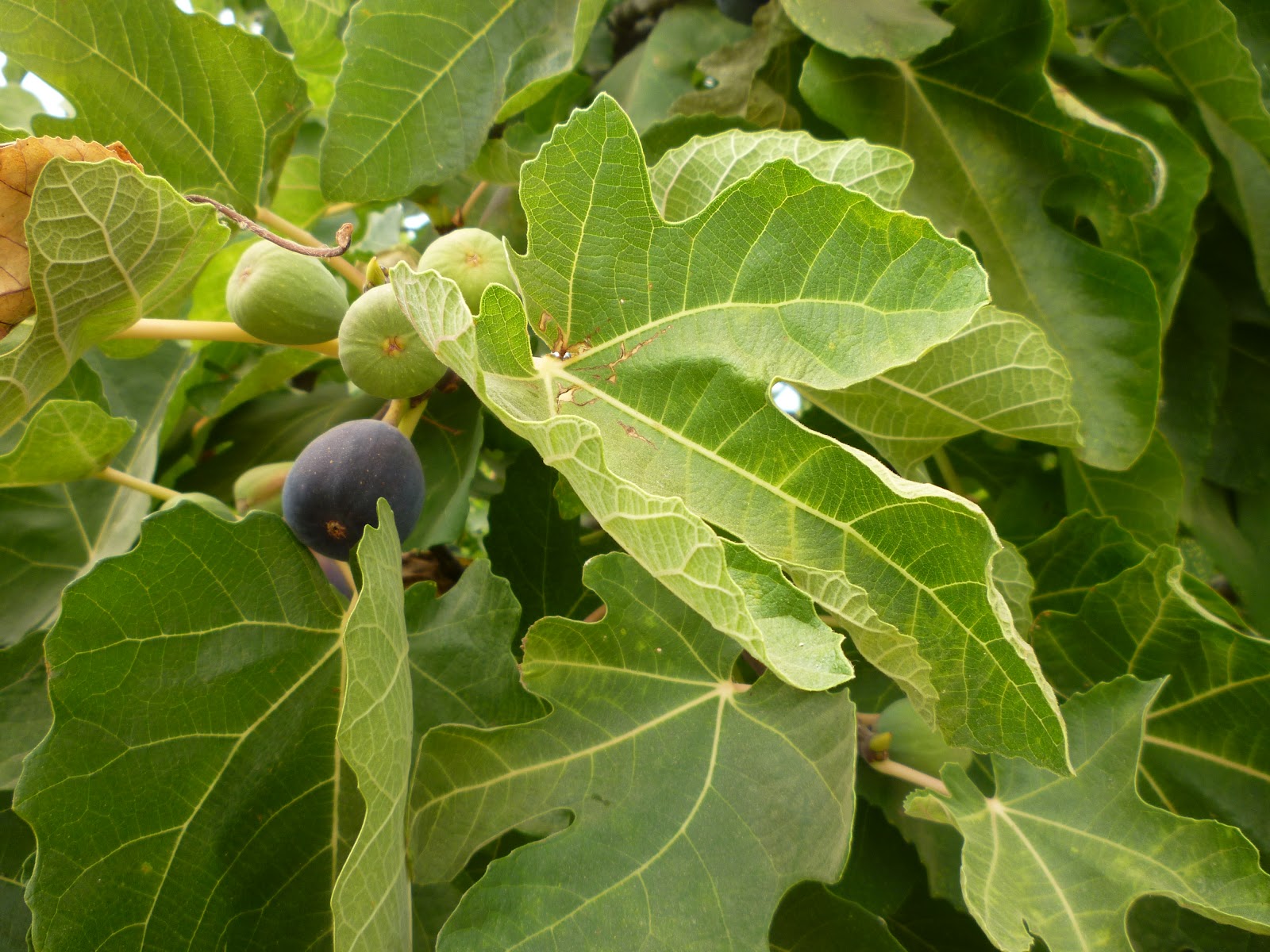
On our second meander, in the northeasterly instead of southeasterly direction, we were surprised to see fig orchards on one side and pomegranates on the other. What could be more exotic or impossible? William Saroyan describes the impossibility in his 1930’s story “The Pomegranate Trees” that Mr. Glad and I have laughed over a few times:
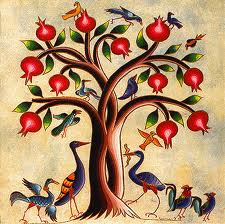
 

“My uncle Melik was just the worst farmer that ever lived. He was too imaginative and poetic for his own good. What he wanted was beauty. He wanted to plant it and see it grow. I myself planted over one hundred pomegranate trees for my uncle one year back there in the good old days of poetry and youth in the world. I drove a John Deere tractor too, and so did my uncle. It was all pure esthetics, not agriculture. My uncle just liked the idea of planting trees and watching them grow.

“Only they wouldn’t grow. It was on account of the soil. The soil was desert soil. It was dry. My uncle waved at the six hundred and eighty acres of desert he had bought and he said in the most poetic Armenian anybody ever heard, Here in this awful desolation a garden shall flower, fountains of cold water shall bubble out of the earth, and all things of beauty shall come into being.”

Melik plans to have apricots, peaches, figs and olives too, but he never gets beyond planting the pomegranates, which eventually fail, because instead of a fountain there is only a trickle of water flowing from the many wells he digs.

Fig orchard in Madera Co.

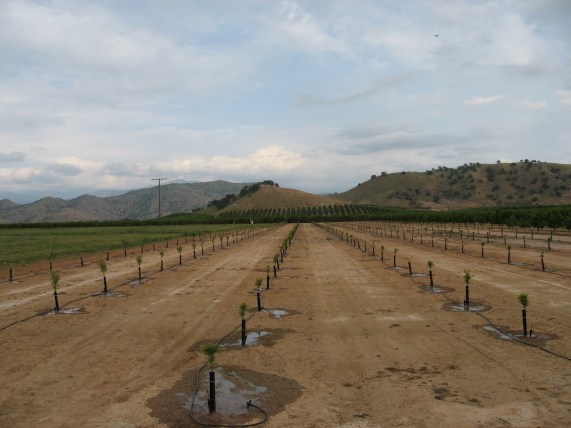
But since the 1930’s, state-funded irrigation projects have increased the available farmland to such a degree that in the present day about one-sixth of the irrigated land in the nation is in our Central Valley. The pomegranate trees we saw with their ripening red fruits were not far from where the fictional Uncle Melik farmed.

I do think there is nothing more lovely than a fig tree with its extravagant leaves on curvy branches, and fruits more refreshing than a cup of cold water. Though I grew up in the Valley this was my first sighting of a groveful. I didn’t notice what kind of irrigation system is used in the orchard, but no doubt there was one.

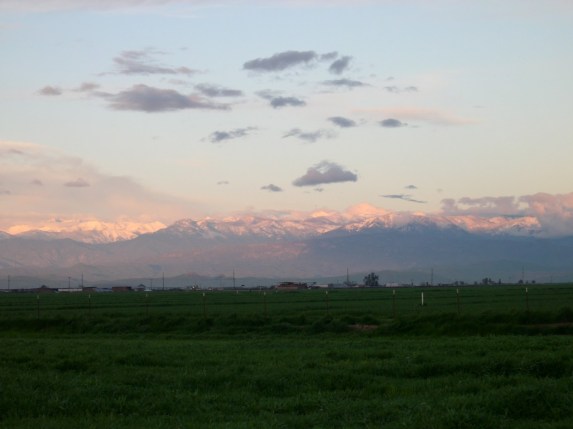
View of Sierras from Tulare County (Pippin pic)

By means of our state water projects we take all that melted mountain snow pack and hold it behind dams so that we can let it out bit-by-bit all through the summer. In this long agricultural center of the state, on less than one percent of the total farmland in the United States, we produce 8% of the nation’s agricultural output by value. (Wikipedia)

Tulare Co. in Spring – still green in places

I’ve been googling to find out how many dams are in California, but that list is too long for me to take the time to count. Maybe I’ll just stick to the ones in the Sierra Nevadas that end up feeding canals and rivers that water orange groves and almond orchards and alfalfa fields. It turns out that list above is sortable, and I can see that in Fresno County alone there are eleven dammed lakes.

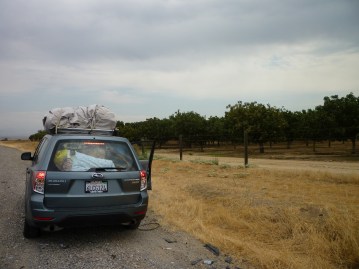
When you drive across the state, from a dammed mountain lake to San Francisco Bay Area in one day, the repetition of scenes along the highway impresses on you the importance of water. There are dead almond orchards on Highway 5, on the “West Side” of the Valley, that testify to water wars still going on, and to our inability to grow very much without irrigation.

Westside tomato field in April

It was 101° as we headed home through that fertile swath. All the crops whose irrigation was current were happy. The corn was probably growing inches every day, and the almonds swelling in their shells. We were happy to look out from our car through the windows that were closed to keep in the cooled air.

A little north of the dead trees, on a slope above the freeway, a Hispanic family were systematically planting new almond trees. It dawned on me that Why, yes, it is a week day, a work day, isn’t it? Not all the farm work can be done in the cooler mornings or evenings.

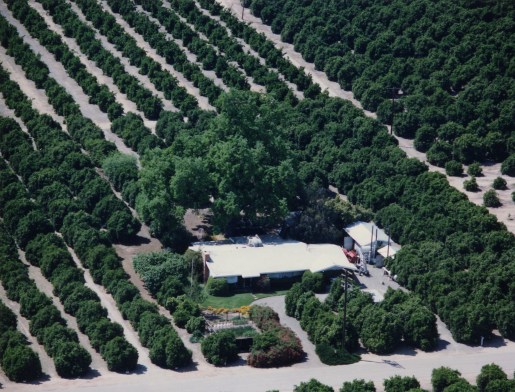
I recalled my sweaty and tanned father getting off his tractor, coming into the house mid-afternoon with a watermelon and slicing it into rounds at the kitchen counter. He’d put one big slice on a plate and eat it with a fork before going back out to take care of his orange trees.

Water melon. Melons are some of those things of beauty that Uncle Melik likely envisioned as he was trying to find their necessary water. And the people who tend the earth’s gardens, who are willing to build the dams and plant the trees and irrigate them all summer long are beautiful to me, too.

The house where my father ate watermelon.
Gardening requires lots of water – 
most of it in the form of perspiration. 

~Lou Erickson