Tag Archives: water

Esthetics and Agriculture


We made at least two wrong turns getting to the mountains last month, and they helped put me in touch with my farming roots. In the middle of August the fields are lush with the bounty that gives California’s Central Valley the name of The Greatest Garden in the World. Tomatoes, corn, cotton, walnuts, tree fruits, grapes… Wikipedia says that every non-tropical crop is grown here.
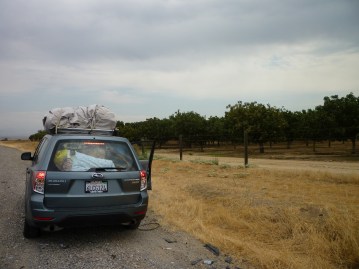
On our second meander, in the northeasterly instead of southeasterly direction, we were surprised to see fig orchards on one side and pomegranates on the other. What could be more exotic or impossible? William Saroyan describes the impossibility in his 1930’s story “The Pomegranate Trees” that Mr. Glad and I have laughed over a few times:


“My uncle Melik was just the worst farmer that ever lived. He was too imaginative and poetic for his own good. What he wanted was beauty. He wanted to plant it and see it grow. I myself planted over one hundred pomegranate trees for my uncle one year back there in the good old days of poetry and youth in the world. I drove a John Deere tractor too, and so did my uncle. It was all pure esthetics, not agriculture. My uncle just liked the idea of planting trees and watching them grow.

“Only they wouldn’t grow. It was on account of the soil. The soil was desert soil. It was dry. My uncle waved at the six hundred and eighty acres of desert he had bought and he said in the most poetic Armenian anybody ever heard, Here in this awful desolation a garden shall flower, fountains of cold water shall bubble out of the earth, and all things of beauty shall come into being.”
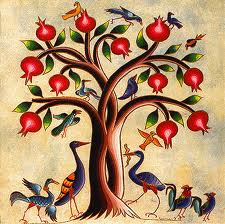
Melik plans to have apricots, peaches, figs and olives too, but he never gets beyond planting the pomegranates, which eventually fail, because instead of a fountain there is only a trickle of water flowing from the many wells he digs.
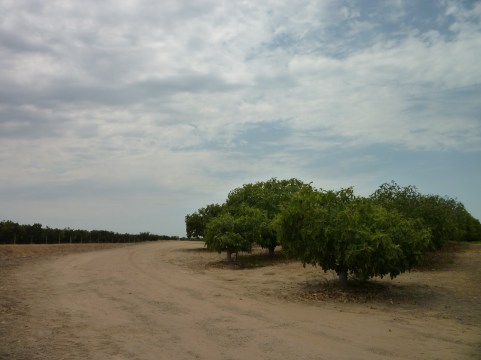
Fig orchard in Madera Co.

But since the 1930’s, state-funded irrigation projects have increased the available farmland to such a degree that in the present day about one-sixth of the irrigated land in the nation is in our Central Valley. The pomegranate trees we saw with their ripening red fruits were not far from where the fictional Uncle Melik farmed.

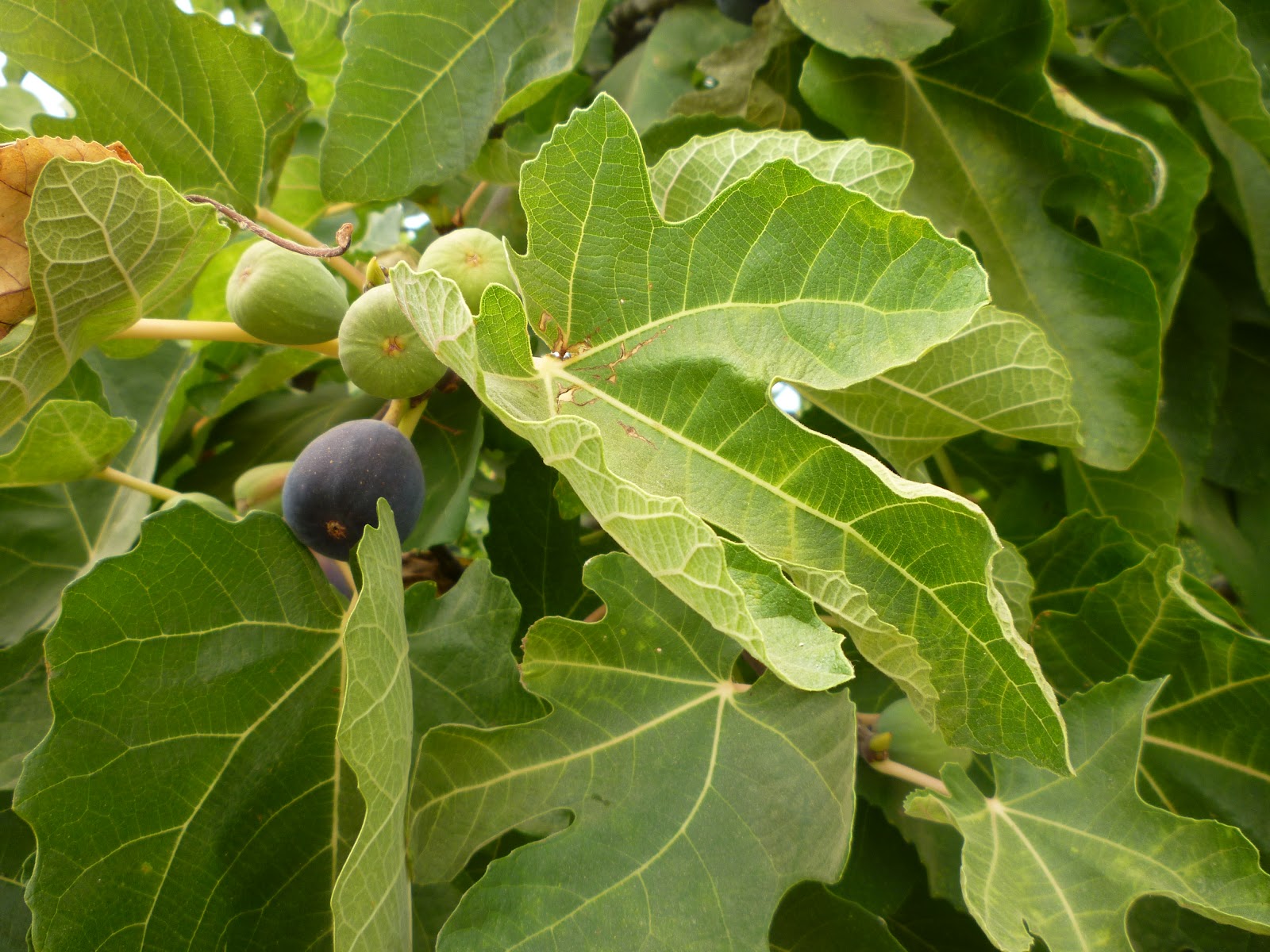
I do think there is nothing more lovely than a fig tree with its extravagant leaves on curvy branches, and fruits more refreshing than a cup of cold water. Though I grew up in the Valley this was my first sighting of a groveful. I didn’t notice what kind of irrigation system is used in the orchard, but no doubt there was one.
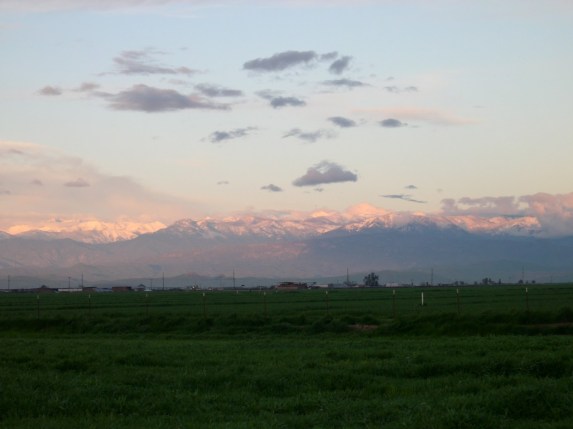
View of Sierras from Tulare County (Pippin pic)

By means of our state water projects we take all that melted mountain snow pack and hold it behind dams so that we can let it out bit-by-bit all through the summer. In this long agricultural center of the state, on less than one percent of the total farmland in the United States, we produce 8% of the nation’s agricultural output by value. (Wikipedia)
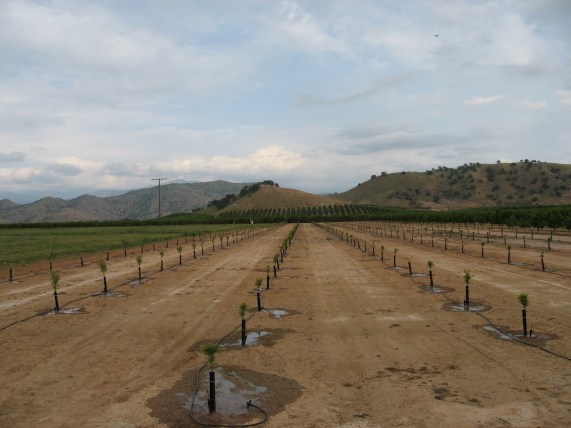
Tulare Co. in Spring – still green in places

I’ve been googling to find out how many dams are in California, but that list is too long for me to take the time to count. Maybe I’ll just stick to the ones in the Sierra Nevadas that end up feeding canals and rivers that water orange groves and almond orchards and alfalfa fields. It turns out that list above is sortable, and I can see that in Fresno County alone there are eleven dammed lakes.

When you drive across the state, from a dammed mountain lake to San Francisco Bay Area in one day, the repetition of scenes along the highway impresses on you the importance of water. There are dead almond orchards on Highway 5, on the “West Side” of the Valley, that testify to water wars still going on, and to our inability to grow very much without irrigation.

Westside tomato field in April

It was 101° as we headed home through that fertile swath. All the crops whose irrigation was current were happy. The corn was probably growing inches every day, and the almonds swelling in their shells. We were happy to look out from our car through the windows that were closed to keep in the cooled air.

A little north of the dead trees, on a slope above the freeway, a Hispanic family were systematically planting new almond trees. It dawned on me that Why, yes, it is a week day, a work day, isn’t it? Not all the farm work can be done in the cooler mornings or evenings.

I recalled my sweaty and tanned father getting off his tractor, coming into the house mid-afternoon with a watermelon and slicing it into rounds at the kitchen counter. He’d put one big slice on a plate and eat it with a fork before going back out to take care of his orange trees.

Water melon. Melons are some of those things of beauty that Uncle Melik likely envisioned as he was trying to find their necessary water. And the people who tend the earth’s gardens, who are willing to build the dams and plant the trees and irrigate them all summer long are beautiful to me, too.
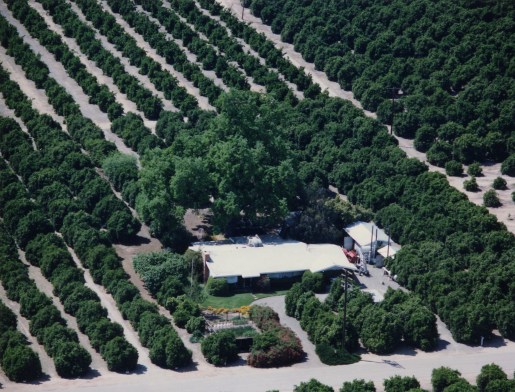
The house where my father ate watermelon.
Gardening requires lots of water – 
most of it in the form of perspiration. 

~Lou Erickson

Lost in a very good dream…

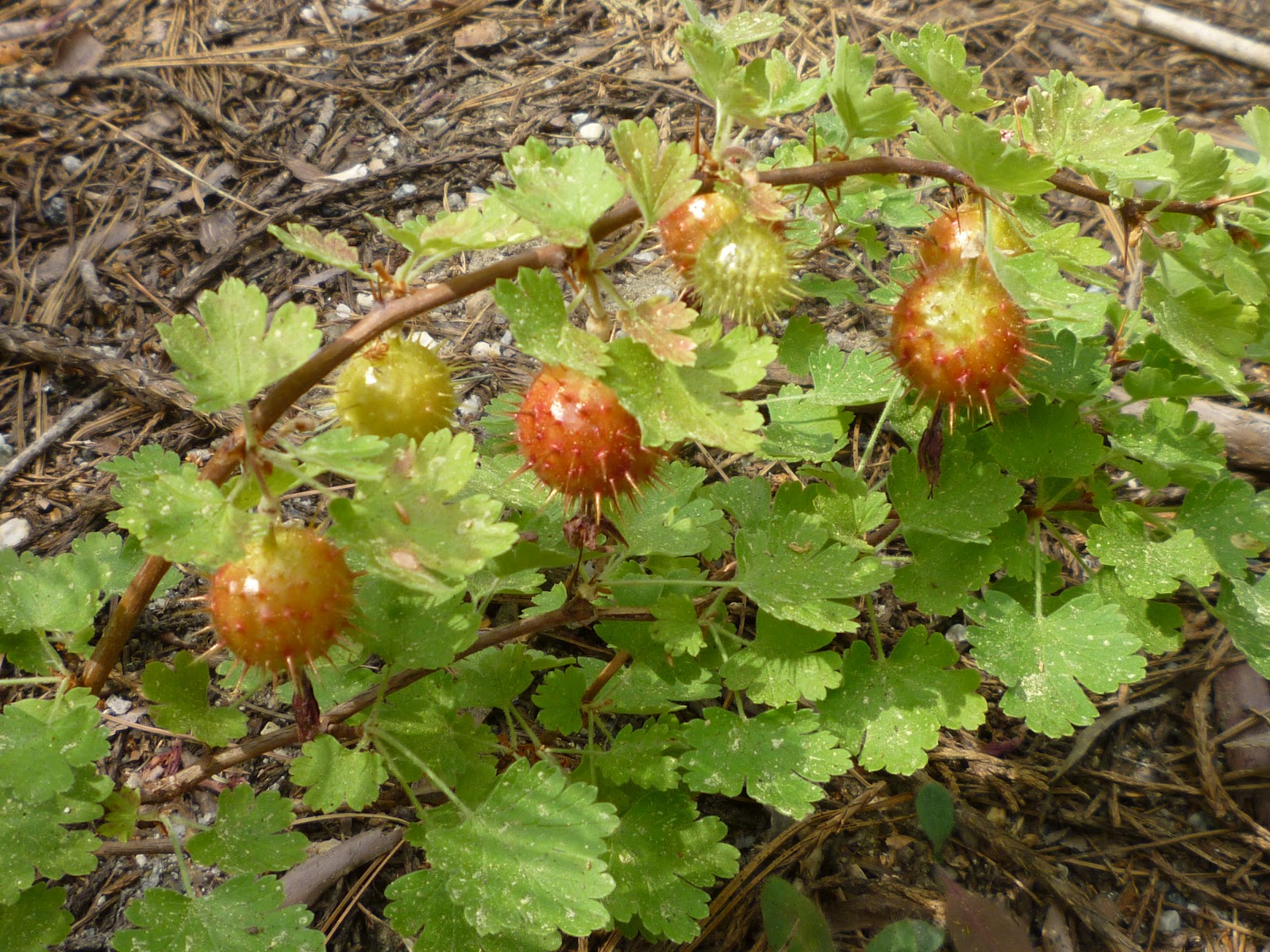
gooseberries

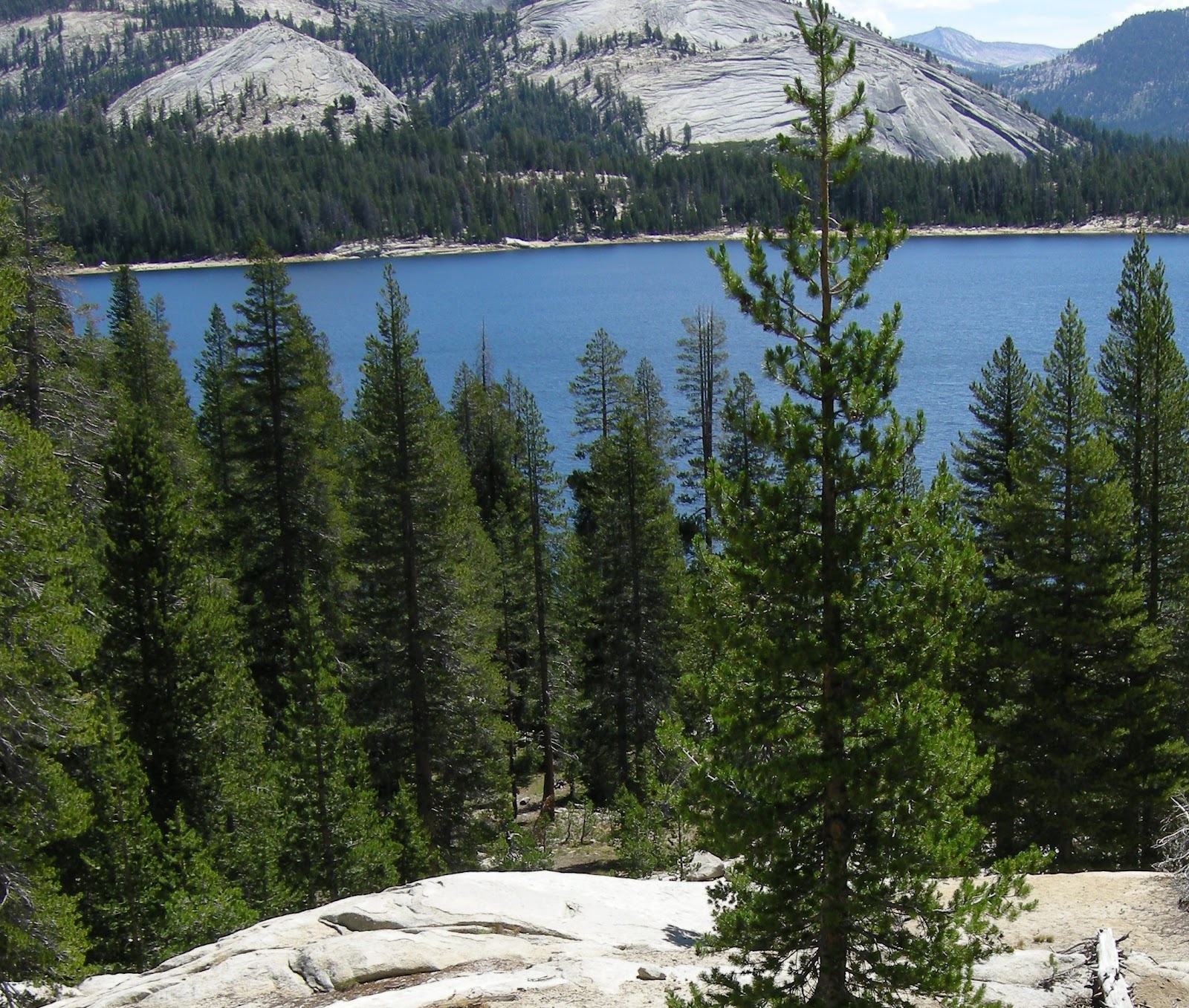
Coming home from the mountains last week, I didn’t have the usual thoughts of “That was lovely, but I have lots of things to do at home now and I can’t wait to get started.” No, this time I was mostly sad to say good-bye, and also couldn’t find good words to go with my pictures.

But one of our guests up there managed in her thank-you note yesterday to take away my sadness with her response to the few higher-elevation days we shared. I’m making her my guest blogger today. (Her thoughts in brown.)

Mountain time is a time-out from time, 
like the timelessness of being 
lost in a very good dream.
little lupine plants

When we came down from Gumdrop Dome the ground under the forest was scattered everywhere with tiny lupine plants. I wonder what month I would need to be there to see the slopes covered with tiny purple spikes?

… the dilated twinkle of 100 billion stars in the night sky (which reductionistically would take 3,000 yrs. to count.)

Of our three nights at over 8,000 feet elevation, we had only one night’s opening in the clouds to see the star glory. We missed most of the meteor shower — still, we saw a few shooting stars. And we gawked at the Milky Way, and were happy that the air was unbelievably warm all during our stay, day and night, so that we could gawk longer.

overlooking a canyon
All the sweet consolations of fragrant fresh mountain air, delicious soft water, 
warm sleepy nights… 

…laughter, storytelling, hiking and/or trying to chase Mr. Glad up Gumdrop Dome (in a loony-tune cartoon, some of us could take a running start up a sheer vertical rock face, hauling a low center of big gravity, our momentum so great that we actually overshoot the summit –beating him to the base – but unfortunately, not in one piece).

swooping in to join the fray
the terrible joy 
of ecstatic hummingbirds 
a-feeding.

Lakes, Waterfalls, and Sky

Eagle Creek

Before I finish the Maui Diary, I have to tell about our outing to Lake Tahoe last week. We were with Mr. and Mrs. C at their cabin, which is a true and rustic cabin with thin walls, so we wore our wool socks and flannel pajamas during the chilly mornings and nights.

Emerald Bay

But midday, on the trail to Eagle Lake, the temperature climbed to about 70° and the sun was hot. The warm air brought out the nutty scent of the cedars and other trees of the forest.

At our destination we ladies stepped into the melted snow of the little lake that is about a mile’s hike above Emerald Bay. Patches of snow were still hugging the shore of the lake all around, and the willows were barely in bud.

Eagle Creek streams out of the lake and flows over falls on its way into the bay. From a lower vantage point we looked out at the little island, the only island in the whole lake. The squarish thing at the very top is the shell of a tea house that was built there in the 1920’s. I’ve never been out to that island or on the lake in a boat.

Fannette Island

When our husbands went to the Nevada side of the lake one day for guy activities, we wives shopped for food and other supplies. Mrs. C found some blue champagne glasses at a thrift store, from which we drank wine the next evening out in the back yard. I sat in a comfy camp chair that laid my head back such that this was my view, of a pine-rimmed sky.

The mini-vacation was soon at an end, and Mr. Glad and I had to say good-bye to our friends and drive back down to the flatlands. But not so fast — we stopped to take another short hike to a place where we might get a good view of Horsetail Falls off Highway 50.

Picture of pussypaws (and lupine) by Pippin, I think

There hadn’t been wildflowers on our walk to Eagle Lake, so I didn’t feel so bad that day about not bringing my camera along. This day I left it in the car again ! and here, where we lost the trail that wandered over vast granite slabs, blooming pussypaws and purplish succulents were growing out of crevices, and red-orange pillows of moss made a splash in the shade of a downed tree. This picture is from another place and time, but I didn’t want to leave anyone wondering what the flower looks like.

We did get a good view of the falls, but my favorite part of this walk was the fields of rock, which I had missed since last summer. It was a satisfying finish to a springtime getaway.

web photo

Maui Diary 6 – Christmas and Fishes

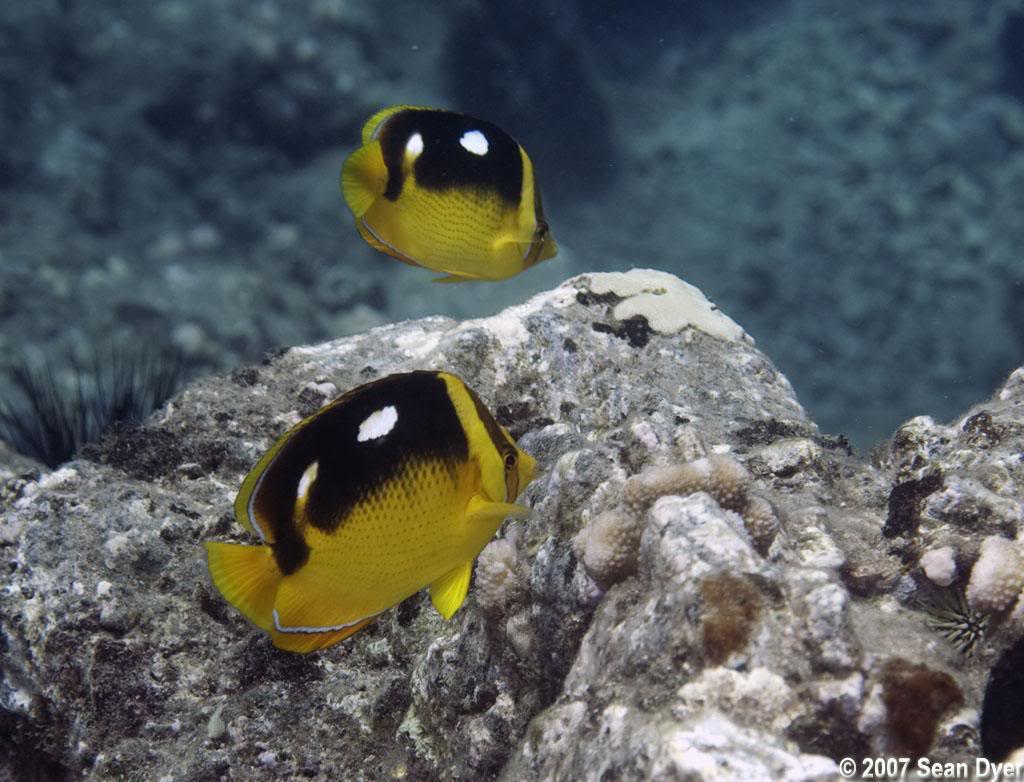
Ornate Butterflyfishes
No, we didn’t go to Maui at Christmastime, but one of the fishes I saw was named the Christmas Wrasse. That got me thinking about how children love Christmas with all its treats and presents and surprises, and how swimming in the ocean in that warm climate and discovering new wonders every moment made me feel like a child.
Orangeband Surgeonfish
Lots of people who are old or achy like to swim because there is no pressure of gravity on the joints, and we can get some exercise without much pain. It seems the salty ocean is even more buoyant; several times I tried hard to dive underwater to get closer to the fish, but I could not. And this water was blissfully mild in temperature…I thought I could swim forever, it was so friendly.
Saddle Wrasse

We didn’t take pictures of the fish, but I was able to find some photos online and am posting the ones that most resemble the particular fish as they were when we met them. I personally saw at least 16 different species on our four expeditions, of which I think my favorite to look at was the Ornate Butterflyfish (photo at top). Three times we rented snorkel equipment, and the last time we just used swim masks.

How free and happy I was, exploring a whole new natural environment. This was nothing like my usual gym pool where I doggedly plow up and back, up and back, watching the clock. It felt like a dream, maybe I was a fish myself, gliding almost effortlessly through the liquid world, gazing down into underwater pools and coral gardens. Sea urchins made splashes of black, blue, and hot pink behind the fish. But no, I wasn’t a fish, because there was the rough sound of my breath going in and out of the snorkel tube. At least the fish didn’t seem to be bothered.

Honolua Bay
It’s a mark of how special the snorkeling experience was generally that I can even remember the less pleasant parts without sadness. Like our visit to Honolua Bay, which on a good day is reported to have the best snorkeling — but it was not a good day. In this photo you can probably see that the water was brown under the surface, but we didn’t want to see that. So on we went!
Fourspot Butterflyfishes
The wind was blowing too hard, the water was cloudy, and a lot of gunk in the form of wood chips, twigs and other dirty organic material floated on the surface above the fish hangouts, getting into my hair and under my swimsuit. It was my birthday, so I didn’t feel guilty about asking that we cut that excursion short. Besides, we had already taken up a lot of time picking our way along the rugged shore, looking for a safe place to enter into the bay without getting sloshed against big rocks. Mr. Glad was pretty content to swim back to land, because he had seen a trumpet fish.
Ahihi Cove
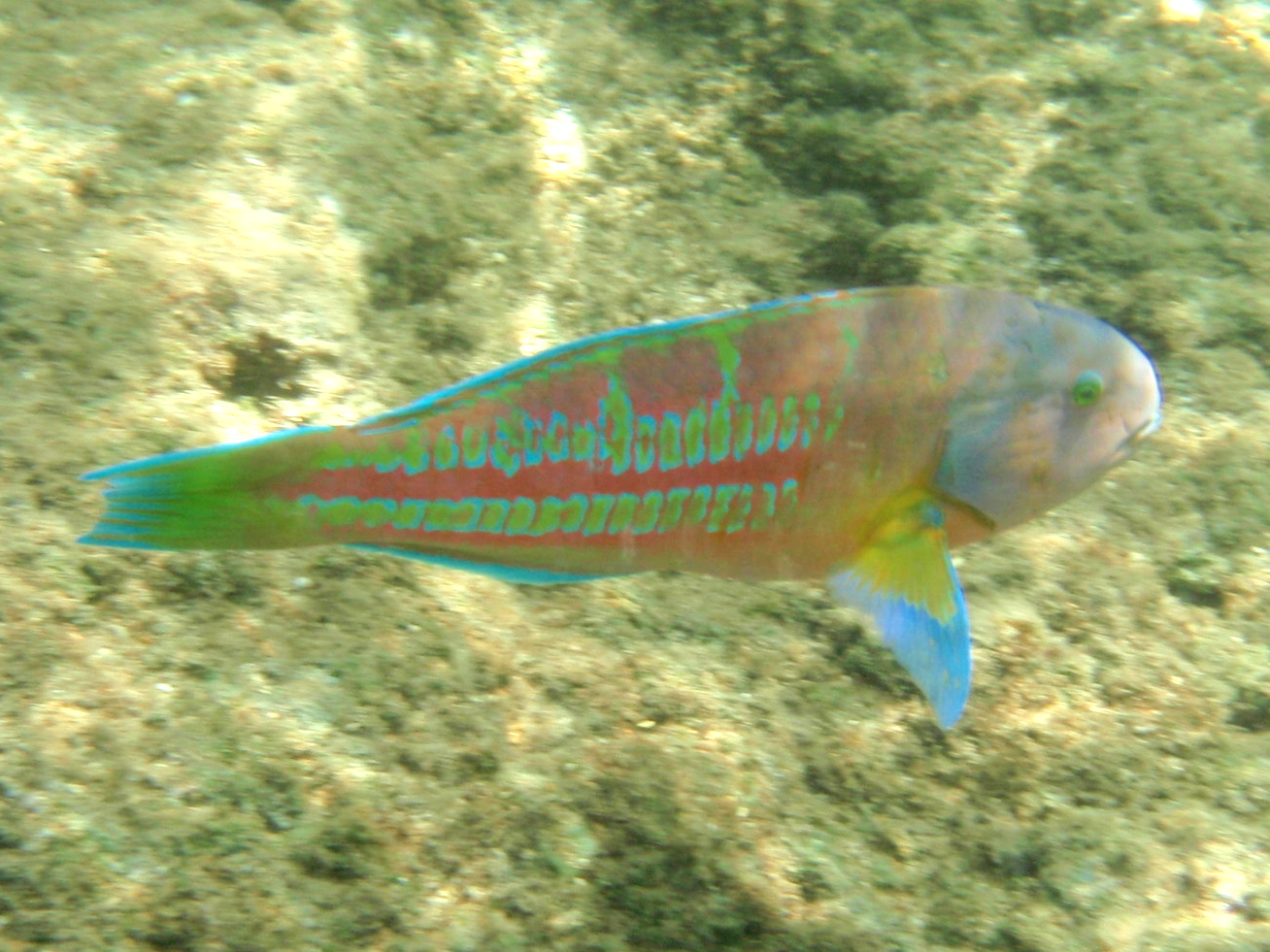
Christmas Wrasse
Our best fish-viewing experiences happened a few days earlier at spots along the South Shore, like the little cove in the picture above.

On our first outing, my first snorkeling ever, we lost track of time at Ulua Beach as we swam marveling back and forth. We managed to stay close together and point, waving our arms at one another when we saw a new fish for the first time — still, when we went back to the condo and looked at pictures we learned that each of us had seen at least one type of fish that the other hadn’t seen.

Several times I found myself in a predicament of tall coral and had to pay more attention to my paddling in order to get out of there without damaging me or the coral. Twice it seemed we were headed back to shore to rest, without discussing it…and then we changed direction and went away from the beach again and back to the coral beds. We didn’t really want to leave yet, I guess.

On one of these sojourns closer to shore I found myself next to a shimmery school of small silver fish that were swimming pretty close to the surface, a thousand of them at least, and I swam toward them, reaching out my hands hoping to touch one. They were like an underwater version of starlings, swiftly breaking into legions, swirling into new groupings and always away so that I could never get into their ranks, but I spent quite a while trying, and they didn’t seem to make much effort to get out of range.

They were some kind of scad, probably Big-eye Scad, and definitely the most fun to swim with. We were like distant cousins getting acquainted on Christmas Day, in a game of water-tag, playing chase for the pure joy of it.

(I’m taking a break from the computer for a few days, so it might be a week before I get the next Maui Diary episode published.)