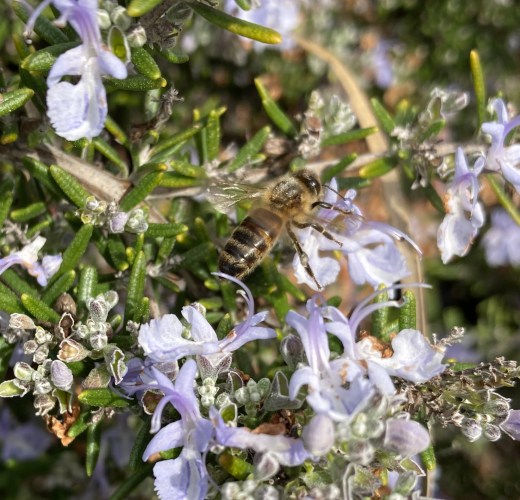
The day after Groundhog Day, or Candlemas, etc., my walk took me past a long hedge of rosemary in bloom, where hundreds of honeybees were already getting ready for next year’s Candlemas. There were both the golden orange striped and the browner kind. I had a lot of fun taking their pictures and sorting them. Most of the shots had to be tossed, quite a few because I had completely failed to include a bee in the frame.
I don’t know much about bees, but it seemed crazy that so many of them were around to notice the rosemary; our nights are still frosty. Do the people with the rosemary hedge also keep bees… handy? But many blocks away, on my own street, was a single such bush and bees were buzzing on its flowers, too. Now, as I write, it occurs to me that I saw bees on rosemary two years ago, possibly as early as January, in a nearby town.
When I got home I went straight into the back yard to see what’s going on with my own rosemary. It is barely starting to bloom, and there was not a bee to be seen. But across the garden, the cyclamen are coming up!
“A spiritual life without canon, without custom, without tradition, without rules, is the ultimate democratic freedom. But it unleashes the tyranny of the individual imagination. For with no mediating tradition, the modern believer is subject only to his own whim. The effect is to have no Lord but the God of his own imagination. Even his appeal to Scripture is without effect – for it is his own interpretation that has mastery over the word of God. If we will have no hierarchy, we will not have Christ as Lord. We cannot invent our own model of the universe and demand that God conform.
“It is a great spiritual accomplishment to not be ‘conformed to this world.’ The ideas and assumptions of modern consumer democracies permeate almost every aspect of our culture. They become an unavoidable part of our inner landscape. Only by examining such assumptions in the light of the larger Christian tradition can we hope to remain faithful to Christ in the truth. Those who insist on the absence of spiritual authority, or demand that nothing mediate grace will discover that their lives serve the most cruel master of all – the spirit of the age.”
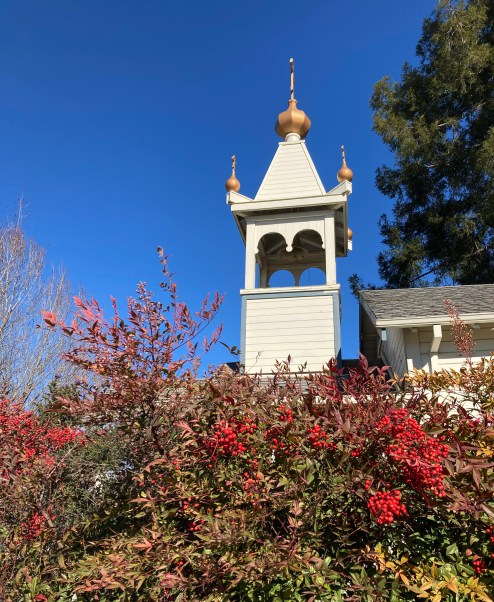
On this feast of many names, including Candlemas, Divine Liturgy was early, and the air bracing. When we came outside afterward we didn’t want to stand on the shady porch to chat, but moved quickly into the sunshine. I walked through the church gardens back to my car, and took a picture of the bell tower on the little church, which I know I have shared before one other time when it was set off brightly by the pyracantha:
In the afternoon I walked around the neighborhood
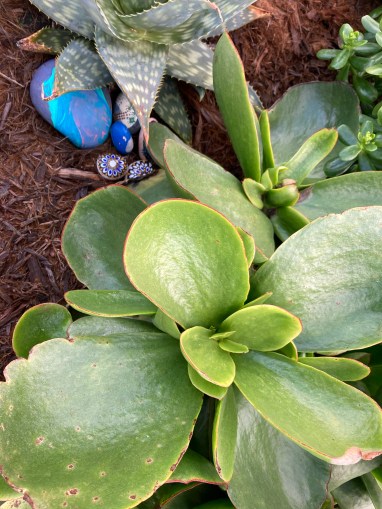
and saw several plants that seem to be thriving in this season:
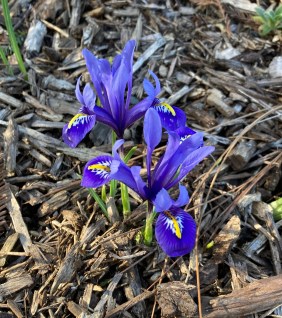
At home, some of my miniature irises have popped out!
Though there is nothing festal about this part,
I also want to wish you a Happy Groundhog Day!
Addendum: Not one minute after I published this post, I saw this video by Jonathan Pageau and Richard Rohlin, on “the forgotten Christian origins of Groundhog Day” ! I had to come back and add that link for you. Probably one of you will get to watching it before I do…
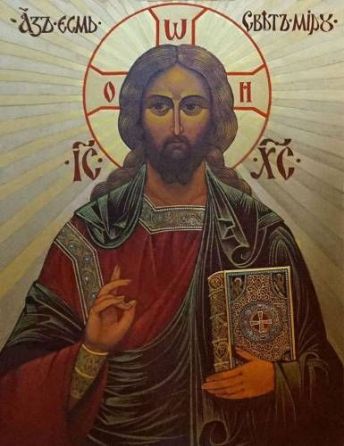
At the Feast of the Presentation of Christ in the Temple, we bless candles in church. I liked this letter from Abbot Tryphon in which he reminds us that the Light of Christ is what our lamps and candles represent, and what makes the saints shine:
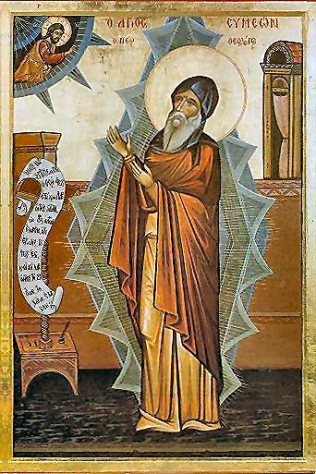
“Vigil lights are placed before the icons of the saints, according to Saint Symeon the New Theologian, as a way of showing that without the Light, Who is Christ, the saints are nothing. It is only as the light of Christ shines on them that they become alive and resplendent.
St. Symeon the New Theologian
“The saints show us what a glorious destiny we have in God, and through the example of their lives, point the way to our becoming ‘partakers of divine nature.’ The saints, as the cloud of witnesses in heaven, are present in the divine services, worshiping the Holy Trinity with us. They, as our friends, intercede before the Throne of God on our behalf, having won the good fight, and we are encouraged by the memory and example of their lives, as we struggle on our own path to God.
“It has been said that there are two kinds of people in the world: sinners who think they are saints, and saints who know they are sinners. A saint is a Christian who lets God’s light shine through, and whose life has been transformed by the power of the Holy Spirit.
“We venerate the saints as we seek their intercession with God, but we adore and worship only God in Trinity, the Father, the Son, and the Holy Spirit. We venerate the images (icons) as well as the relics of the saints and martyrs. Yet according to the decisions and Canons of the Seventh Ecumenical Council, this veneration relates not to the icons as such, but to their prototypes, or to the persons whom they represent.
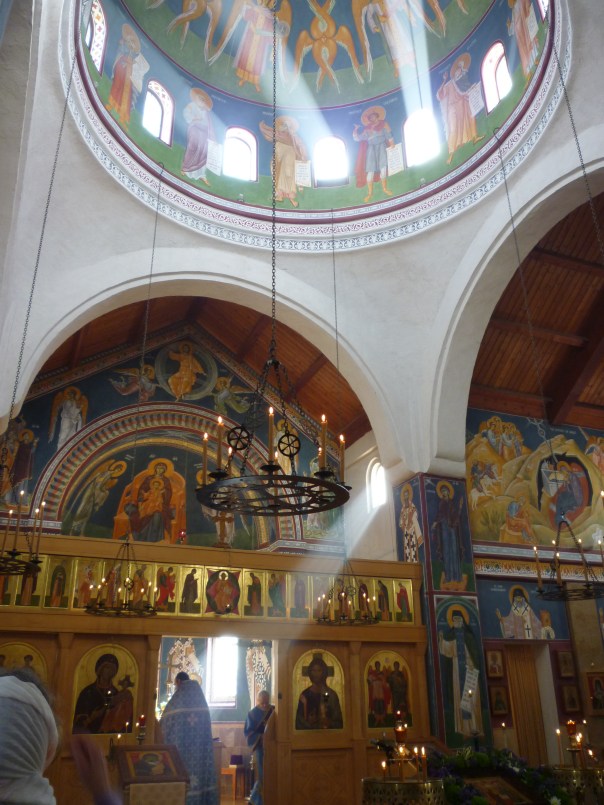
“The interior walls of our temples are adorned with the icons and frescoes of the saints as a reminder that we are surrounded by the cloud of witnesses, the saints, and that the Church Militant (here on earth) is not separated from the Church Triumphant (in heaven). In Christ, death does not divide us, for the saints are not dead, but alive in Christ Jesus.
“Glory to Jesus Christ, Who is glorified in His saints.



 “A spiritual life without canon, without custom, without tradition, without rules, is the ultimate democratic freedom. But it unleashes the tyranny of the individual imagination. For with no mediating tradition, the modern believer is subject only to his own whim. The effect is to have no Lord but the God of his own imagination. Even his appeal to Scripture is without effect – for it is his own interpretation that has mastery over the word of God. If we will have no hierarchy, we will not have Christ as Lord. We cannot invent our own model of the universe and demand that God conform.



 Gladsome Lights