Category Archives: food and cooking

Elizabeth’s teacup and my cake.

I don’t think I mentioned here that my friend Elizabeth fell asleep in Christ earlier this year, at the age of 103. Just this morning I was given this teacup of hers, and it made me think about my friends and  tea parties. The mutual friend who brought this cup had been one of the guests at the party that Maggie and I gave not long after her grandpa died.

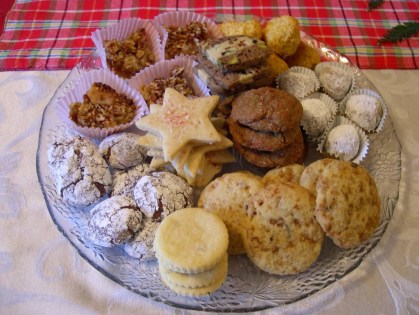
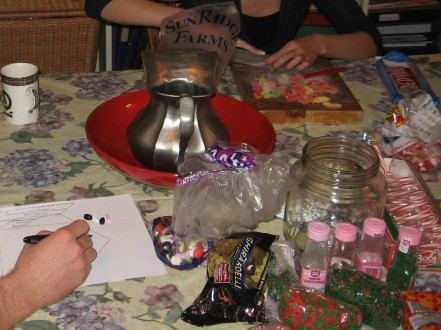
My house is in such disarray from the usual project paraphernalia plus that of some unusual ones; it’s hard to imagine even a recent time when I was able to clear my head and all horizontal surfaces in preparation for such an event, much less to cook for it! This is what Maggie and I laid out:

P1010140 crp

One of my favorite tea goodies is a lemon cake, the recipe for which I’d shared a year before the party above occurred. I’m pretty sure that one was the last tea party I gave, but I don’t intend for it to be the last ever. Here is the recipe again, below, as a little reminder to me of hopes and dreams. It is part of this post titled: “Lemon Trees and Cake.”

lemon cake 7-27-14

My father scorned Meyer lemons. Growing his own lemons made him, and all of our family, partial to the intensity of a Normal Lemon. If anyone wants to give me lemons, Meyer or otherwise, I will never turn them down, but I also prefer what I grew up with.

P1100832


When I cook with lemons I usually think of my father and our trees. If as I child I ever found my father lying on the living room floor it was not because he’d been wrestling with my brother, but more like he’d been wrestling with those trees. During pruning season he’d invariably put his back out doing that necessary work on our ten acres (We had twenty more acres in oranges.) That would be more than a thousand lemon trees.

P1100843
precious zest

I learned to drive a tractor before I was old enough to drive a car, because Daddy needed me to pull a trailer between the rows when my sisters and I were picking the second, smaller crop of lemons that wasn’t worth hiring a whole picking crew for.

In those pictures that I retain in my mind, my brother wasn’t old enough to buckle down and help yet. He was sitting under a lemon tree crying, and the dust mixed with his tears to make a miserable face.  I must say that he’s more than made up for it in the years since, and is one of the most buckled down and hardworking people on the planet.

P1100844eggs

P1100834
a grandma’s trusty old sifter

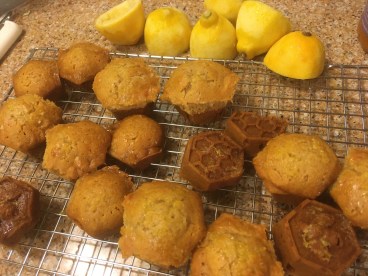
The latest thing I cooked with lemons is this meltingly appealing cake, which Mr. Glad requested for his birthday last month. That he wanted cake was very strange, because it’s been Blackberry Pie as long as anyone can remember, and a good month to be born if you want that. But I was happy to oblige with the cake, and I devoted most of one Saturday to making it, so I had plenty of time to enjoy the process.

In the past I’d only baked this glazed cake for tea parties that I used to have in a bygone era. Now that it’s been revived in my repertoire I’ll want to make it more often. It uses a lot of lemons in the form of juice, and in this recent case, even more fruits to get enough lemon zest to impart the deep lemony flavor. It can be made up to three days ahead and freezes well.

Lemon-Sour Cream Cake

INGREDIENTS:

1 3/4 cups flour
1 teaspoon baking soda
1 teaspoon baking powder
1 cup unsalted butter, room temperature
1 cup sugar
3 large or extra-large eggs at room temperature
1 tablespoon minced lemon zest
2 teaspoons lemon extract
1 cup sour cream

The Glaze:
1 1/2 cups powdered sugar
1/2 cup strained fresh lemon juice
2 teaspoons finely minced lemon zest

INSTRUCTIONS:

Preheat the oven to 350°. Butter and flour a 9-inch lightweight Bundt pan. Sift the flour, baking soda and baking powder together into a medium mixing bowl. Set aside.

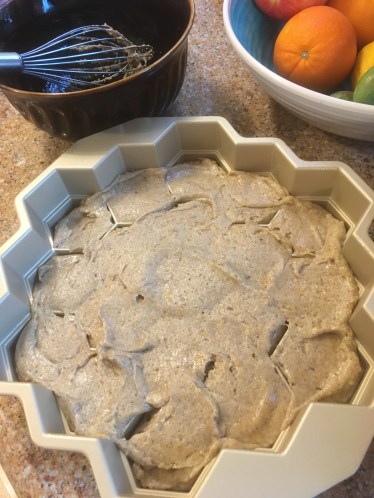
P1100839
very thick and fluffy batter

In a medium mixing bowl, using an electric mixer on medium speed, or in a food processor fitted with the metal blade, beat the butter and sugar together until light and fluffy, about 4 minutes. Beat in the eggs, minced zest and lemon extract and mix for 2 more minutes.

Reduce the speed to low or pulse with the food processor. Add half of the flour mixture and mix until well combined. Add half of the sour cream, mixing constantly, then add the rest of the flour and sour cream, ending with the sour cream.

Pour the batter into the prepared pan. Bake for about 35-40 minutes, or until a skewer inserted into the center comes out clean. Let cool in the pan for 10 minutes, then invert onto a wire rack and remove the pan. Make the glaze while the cake is still warm.

P1100842To make the glaze, using a fine-meshed strainer, sift the powdered sugar into a small, non-aluminum bowl. Add the lemon juice and lemon zest and whisk to break up lumps.

Transfer the cake to a rack placed over a rimmed baking sheet lined with wax paper. Using a long skewer, poke holes in the cake at 1-inch intervals, almost going through to the bottom. Slowly pour the glaze over the cake, giving it time to absorb as you pour. Let the cake cool to room temperature. Cut into wedges and serve.

P1100859

P1100881

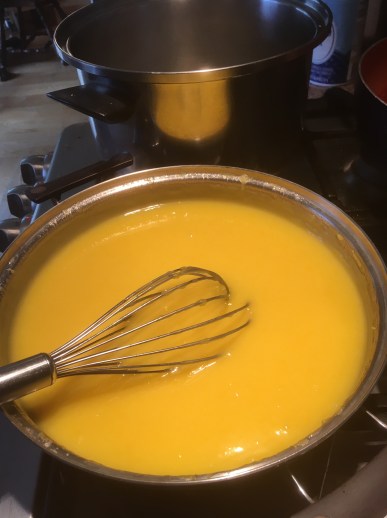
Every time I make this cake, about 1/4 cup of the glaze ends up on the baking sheet under the cake, and would be wasted and washed down the drain in all its precious lemonzestiness if I didn’t find a way to use it. This time I whipped some heavy cream and slowly drizzled the syrup into it at the end when it was getting nice and thick. I froze the mixture in custard cups, and ate one of them the next day. It was quite delicious!

RFC on idols and abstractions

07a8e-pearpiecompletewithcamerastrap

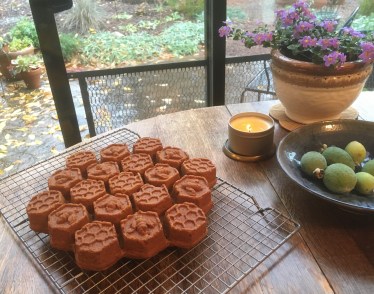
Today we had our annual birthday party for the Virgin Mary. Did you know her birthday is September 8th? It is one of the Twelve Great Feasts that we Orthodox Christians celebrate, and today, when it fell on a Sunday, several of us baked birthday cakes to eat at the agape meal. Even I baked one! I will try to post the recipe soon.

I guess that festivity put me in the mood to publish this post that I’ve had hanging around for five years. Back then I’d written several on The Supper of the Lamb by Robert Farrar Capon, and was working on a few more. Then, as they say, Life Happened, and RFC fell gradually down to the bottom of the drafts pile.  But he’s back, and I hope you feel the richer for revisiting his delightful book.

“A calorie is not a thing; it is a measurement. In itself, it does not exist. It is simply a way of specifying a particular property of things, namely, how much heat they give off when burned. Only things, you see, are capable of being eaten or burned, loved or loathed; no one ever yet got his teeth into a calorie.

“….How sad, then, to see real beings…calorie counters — living their lives in abject terror of things that do not even go bump in the night. What a crime, not only against hospitality, but against being, to hear him turn down homemade noodles in favor of idols and abstractions — to watch him prefer nothing to something. And what a disaster to himself! To have capitulated so starchlessly before the the devil’s policy of desubstantialization! His body may or may not lose weight; his soul, however, is sure to wither.”

-Robert Farrar Capon in The Supper of the Lamb

Other posts in this series:

RFC is the man we need.
RFC begins with the meat.
RFC considers blood and sacrifice.
RFC makes one of nature’s marvels.
RFC for Butter Week
RFC drinks in graces

The life force of words and wild things.

The Queen Anne’s Lace, or Daucus carota, one of the “wildflowers of the carrot family,” is in full glory this month along the creek near my house. It was a mild winter and a wet spring; though we are now well into the dry season, their plantation is lush.

Once before I posted a gallery of images of them, various angles and perspectives. This week my walk along the path was greatly extended and I explored the current neighborhood that has grown up, full of a unique assortment of plants and animals developing from this year’s natural and man-provoked conditions. That means a completely new gallery!

The picture just above shows a morning glory weed or bindweed (Convolvulus), which has twined around the stem of an opened flower, grown on through a bud, and is now reaching out into space. It has an opened flower just above the lower Queen Anne’s Lace bloom. And I just noticed a little seed of something, close to the bottom of the photo, and about to drop down, down… and make a contribution to next spring’s neighborhood.

Fennel in the background.

In my last gallery of Queen Anne’s Lace, I featured the red spots that are found in the center of many of the blooms. This year what were more eyecatching were insects and the other umbellifers.

I learned that word almost a year ago when Pippin and I were exploring wetlands together. As I walked along my nearby creek path I began to think about the flower form that Queen Anne’s Lace shares with the wild fennel nearby, and the word was struggling along my mind’s synapses for several minutes… and finally arrived where I could grab it. Today I researched its meaning again; it comes from the old name for the plant Family Apiaceae, which was Umbelliferae.

I found several helpful webpages besides the Wikipedia information. One has a timeline of North American invasive species: “We came on the Mayflower, too!“, where I learned that our wild fennel likely did come with those first pilgrims in 1620, and it spread all over the continent. That site also has lots of recipes for using wild plants, and I would be interested to try using the tender green fronds of fennel, or even the stems. But on the fennel page they were a little sloppy with their botany, telling me that fennel and anise are the same thing, which they are not.

Let’s start with fennel, which is my neighbor: its botanical name is  Foeniculum vulgare. Anise is Pimpinella anisum. They are both in the Apiaceae family but different genera. The fleshy bulb that is eaten as a vegetable is a fennel bulb. Anise looks very similar in the field, but I don’t ever see reference to eating the bulb.

On the Spiceography page I read a paragraph-long comparison of the seeds, which both contain the essential oil anethole. I found its guidelines confusing, and concluded that I will just try to use whichever seed a recipe calls for. By the way, two other plants with this flavor but completely unrelated and different in form are star anise and liquorice.

Anise is an ingredient in many alcoholic beverages traditional to the Mediterranean and Asia. At least one of them, absinthe, includes fennel as well. I was pleased to see a map showing the locales and the names of the drinks.

When I was in Turkey I did enjoy rakı. (Yes, that is an i without a dot. It designates a schwa or ə sound.) Usually it was served with water; you would pour a little rakı in your glass and then add water. It turned all milky then, as in this picture. No one ever tried to explain to me why this happened, and I doubt they could have if they knew, because when I read the explanation for it now it’s very complicated to my unscientific mind: The Ouzo Effect.

Fennel flower

I seem to have drifted from flowers to food and drink (passing quickly over insects). Truly this earth is full of enough animal, vegetable and mineral to keep us forever occupied examining, experimenting, cooking and brewing — and thanking our Father for putting us in a world so packed with beauty and life.

Lotus seed for the world.

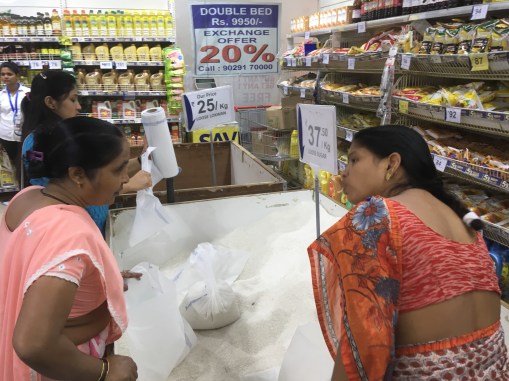
One package I picked up at the Indian market was a large bag of phool makhana or puffed lotus seed, a sort of popped-corn form of the seed of the lotus plant Nelumbo nucifera. When I was in India one restaurant that specialized in salads sprinkled a few of these puffs on top of one concoction that I loved.

I read about lotus seeds online, where there is a wealth of enthusiastic promotion of the food item as a cure-all, physically and spiritually. Unfortunately much of the prose resembles the spam comments I get on my blog, and gives me the giggles.

“… eaten as a fasting food in India as it considered a very pious. And, is also used to worship God.” Well, of course. “Whether you eat or drink, or whatever you do, do everything for the glory of God.” (I Corinthians 10:31)

Even Wikipedia seems to gush: “Lotus seeds can be processed into moon cake, lotus seed noodles and food in forms of paste, fermented milk, rice wine, ice cream, popcorn (phool makhana) and others, with lotus seeds as the main raw material. Fresh lotus seed wine has thirst quenching, spleen healing and anti-diarrheal advantages after drinking.[40][41] Lotus seed tea is consumed in Korea, and lotus embryo tea is consumed in China and Vietnam.”

One website that sells various flavors of puffed lotus seeds has this to say: “Focusing on ‘co-creation’ at all levels, we aim to bridge the gap between nature and consumers… to create an offering by combining the natural foods with modern techniques so as to enable the human kind to rejoice these gifts. POPMAK … is a healthy munching solution for all ages… which can add values in your life. We are just four years old company, aiming big to deliver and in this endeavor we will remain child like enthusiast for ever. Expect more surprises from us soon!!!!”

I must mention here a couple more Indian snacks that are in the house right now. Kareena bought these flaky fenugreek biscuits that she often eats for breakfast and shares with Raj.

I’ve eaten a few of them myself and they are really nice — crispy and subtly flavored.

We bought some bhakarwadi which I have already eaten all up. They are like a cross between a barely-sweet cookie and a cracker with Indian spices, mildly hot.

Bhakarwadi

The popped lotus seeds straight out of the bag were pretty bland and had the texture of stale popcorn. I roasted them in a pan with ghee, salt and spices, which transformed them into another light and crunchy, addictive Indian snack. Rejoice!