In the spring of 2018 Father Stephen Freeman wrote on “The Inherent Violence of Modernity,” andat that timehis thoughts prompted me to browse definitions of violence. Many of them are along the lines of “causing or intending to cause damage,” but the most succinct was “extreme force.” Father Stephen’s use of the word is based on the idea of us trying to “make it so,” improving society, changing other people, making the world a better place. I offer a few selected paragraphs from his article, and from his replies to comments on it:
“The philosophy that governs our culture is rooted in violence, the ability to make things happen and to control the outcome. It is a deeply factual belief. We can indeed make things happen, and, in a limited way, control their outcome. But we soon discover (and have proven it time and again) that our ability to control is quite limited. Many, many unforeseeable consequences flow from every action.”
“Modernity has as its goal the creation of a better world with no particular reference to God – it is a secular concept. As such, that which constitutes ‘better’ is, or can be, a shifting definition. In Soviet Russia it was one thing, in Nazi Germany another, in Consumer-Capitalist societies yet another still. Indeed, that which is ‘better’ is often the subject of the political sphere. But there is no inherent content to the ‘better,’ nor any inherent limits on the measures taken to achieve it. The pursuit of the better (‘progress’) becomes its own morality.”
“Keeping the commandments of Christ is not doing nothing. It is, however, the refusal to use violence to force the world into ever-changing imaginary versions of the good.”
“We do not have ‘responsibility as citizens.’ That is the rhetoric of the modern state. We have responsibility to God, to keep His commandments. That might very well exceed anything we think of under citizenship. Frankly, we need to quit thinking like ‘Americans’ and think as Christians. Most people’s idea of engaging politically is nothing more than thecheap, never-ending notion of having opinions and occasionally yapping about them. There is no commandment to have opinions and express them. There is no commandment to take political action. Modernity suggests that the political realm is that actual definition of ‘reality.’ It is where we do things. This is false and makes an idol of the state. The political realm is the place of violence.”
“Do not ask, ‘How can we fix the world?’ Instead, ask, ‘How should Christians live?’ and give the outcome of history back to God.”
What is the answer to “How should Christians live?” At the end of his article Fr. Stephen gives a few ideas, which are very appropriate for Christmastime, as the first of them all is:
“Live as though in the coming of Jesus Christ, the Kingdom of God has been inaugurated into the world and the outcome of history has already been determined.”
I think my favorite on his short but broadly useful list is:“Love people as the very image of God and resist the temptation to improve them.” I know that each of us has our own unique set of circumstances to deal with, including people who want to change us or who obviously “need improvement” and are not fun to be with. May God give us grace to be thankful for even them, and to love them “as the very image of God.”
In this audio clip of less than two minutes you can hear a few pointed and encouraging words from Alexander Schmemann about how to navigate “the sea of this world” and the crisis – on many levels — that we are living in.
Fr. Alexander taught at St. Vladimir’s Seminary in New York State and was dean of the seminary from 1962 until his death. For 30 years his voice was broadcast beyond the iron curtain on Radio Liberty, and the seminary has recently published the first volume of those talks in the book A Voice for Our Time.
Ten years later I am re-posting this review, about a book that I put off reading for a year after I bought it, mostly because of its cover design and notes. It’s a novel about Poland that won several minor awards, including the Hemingway Foundation/PEN prize in 2010. Our church women’s book group read it at my recommendation a few years ago, when I was too busy to join in. So it may be time for my own reaquaintance.
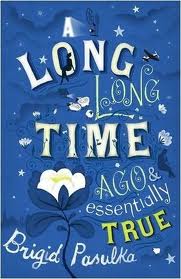
A Long, Long Time Ago & Essentially True exceeded my expectations; I don’t remember what I read on someone’s blog that got me interested, but when the book arrived and I saw the fanciful flowery cover with notes using the words “whimsical” and “romance” on the same page, I’m afraid I unconsciously relegated it to a genre of Light Reading.
A cover truer to the story.
But a story of Poland from the 1930’s to about 1990 is sure to be full of war, tyrants, secret police, lies and alcoholism. Wives and mothers can’t even mention their men who went missing years ago; their grandchildren grapple with the generational ripples of all the wounds and deaths and separations both social and physical. I had to look up the word whimsical just now to make sure of my understanding, and no, the author Brigid Pasulka never gave the impression that she was trying to be “playful, erratic or fantastical” with her subject.
The opening chapter that tells about an upright young man named Pigeon might make you think it’s all light and charming, and perhaps to some reviewers the idea of such a hero with old-fashioned morals seems like a fairy tale. He is a shining example of the classic Pole who has Golden Hands that can make or fix anything. And he loves Anielica, a sweet girl who will soon suffer much with and for him, including the long postponement of their wedding — but that turns out to be the least of their sorrows.
The novel alternates chapters about teenagers growing up during the war years with those about their granddaughter in the late 20th century. Her life, also, is nearly wrecked by many of the same old misfortunes as well as some newer ones, like drug-dealing boyfriends. Funny moments and comic aspects pepper her story, as they did her grandparents’. Being able to appreciate the comedy is one way to deal with the heartache; that doesn’t make the story a piece of humor.
Brigid Pasulka
The book was just serious enough and just long enough for my current reading “mood,” and I did not predict the ending that lifted me out of the general bleakness that was trying to smother the characters all the way through. The Polish people had several years of trying to survive and even fight against the Nazis, and then could barely catch their breath before the Soviets took over and they had to quickly shift gears and learn how to cope with a slightly different oppression, the effects of which stretched long into the future.
Through it all the protagonists in this story, the grandparents and the parents and grandchildren, fight to stay together and to protect one another. Bribes and lies and dreadful compromises at times appear to be daily necessities, but the characters’ love and perseverance keep them from the despair that lurks around the corners of their houses like a traitorous neighbor. The moral quandaries that they experience are neither explored in depth nor treated flippantly.
The author, I read on the cover, spent a year in Poland learning the language and the culture of her ancestors. She uses often untranslated Polish words lavishly throughout the story, and they aren’t always easily deciphered versions of English words, so I was frequently left wondering what I was missing, not having a Polish dictionary handy. Nor did I want to look up the many references to obscure events in Polish history which the characters mentioned. But those are my only complaints.
In the middle of meditating on the history and people of Poland I read this poem by a Pole who would have grown up during the Soviet era. The images the writer conjures up, of a field mouse, a tree, “A grass blade trampled by a stampede of incomprehensible events,” lined up very well with the impression I got from this debut novel, of a brave people surviving by means of the virtues of their humanity, which is the grace of God.
By Zofia Stryjeńsk, artist of the interwar period.
Friends of mine were chatting over tea this week about how, if your neighbors are actively cooking up crystal meth in their garage, it creates a strong chemical smell that will accost you when you’re strolling by. In my neighborhood we have been aware of more than one such small industry in the last 30 years, but I didn’t know about the strong “flavor” that might have been wafting down the street back then.
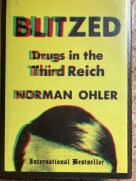
Our conversation reminded me to tell about a book I read last month, on the subject of drug use in Nazi Germany. Normal Ohler’s book Blitzed: Drugs in the Third Reich, published five years ago, is not the first that has ever been written on the subject, but it’s the only one I’m likely to read. The story about how I came to delve into that depressing topic is a meandering one; I’ll return to it another time.
As I read in a brief interview with the author: A Fresh Light on the Nazis’ Wartime Drug Addiction, the original German title of the book is Der totale Rausch, or “Total Rush,” a play on the phrase “total war” that the Nazis used. The first substance discussed in the book is Pervitin, a drug that contains methamphetamine, which by the late 1930’s people all over Germany were using like coffee, to boost their energy. “Pervitin became a symptom of the developing performance society. Boxed chocolates spiked with methamphetamine were even put on the market. A good 14 milligrams of methamphetamine was included in each individual portion — almost five times the amount in a Pervitin pill.”
Soon it was being distributed to German soldiers in large quantities to help them stay awake for days at a time. Official records on how many millions of pills were manufactured and delivered to the troops during the war years, and references in correspondence and official directives, all testify to how pervasive the use of this addictive upper was. One military report after the invasion of Poland in 1939: “Everyone fresh and cheerful, excellent discipline. Slight euphoria and increased thirst for action. Mental encouragement, very stimulated. No accidents. Long-lasting effect. After taking four tablets, double vision and seeing colors.”
Music is sometimes really a great consolation to me (not forgetting Pervitin, which provides a wonderful service — particularly during air raids at night). -Heinrich Böll
At first it was considered a medicine, but after the Reich health officer Leonardo Conti warned that the use of Pervitin was actually “terrible abuse being practiced in the widest circles of the population,” in 1941 it was outlawed, and from then until the end of the war only military doctors had access to it. Conti kept speaking out, but he was fighting a losing battle. The military found the stimulant essential, in spite of it not being in line with the Nazi propaganda about the superior Aryan race being morally superior and physically fit, certainly not drug users.
Either you give up smoking or you give up me. -Adolf Hitler to Eva Braun
Theodor Morell on the right.
Hitler himself, however, needed something to boost his own performance, and he became increasingly dependent on the pills and injections provided by his personal doctor, Theodor Morell. Ohler concludes that Eukodal (oxycodone, OxyContin) was Morell’s narcotic of choice for his patient, and maybe it was the most destructive one in the long term; but from the doctor’s detailed notes Ohler calculated that Hitler, listed as “Patient A,” was given “methamphetamines, steroids and other substances 800 times in 1349 days, and took 1100 pills.” The eventual challenge of finding a fresh injection site was also noted.
You must be healthy, you must stay away from that which poisons your bodies. We need a sober people! In future the German will be judged entirely by the works of his mind and the strength of his health. -Adolf Hitler
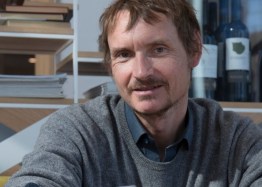
Norman Ohler
In the interview linked above, Ohler recounts: “Hitler loved Eukodal. Especially in the fall of 1944, when the military situation was quite bad, he used this strong drug that made him euphoric even when reality wasn’t looking euphoric at all. The generals kept telling him: ‘We need to change our tactics. We need to end this. We are going to lose the war.’ And he didn’t want to hear it. He had Dr. Morell give him the drugs that made him feel invulnerable and on top of the situation.'”
When Germany did indeed begin to lose the war, and supplies of drugs dwindled, then Hitler may have suspected what was happening to him, and that he was going through withdrawal. Descriptions of his last days are painfully graphic:
“At six o’clock in the morning, after the military briefing, during which he had fumbled ceaselessly with his empty pillbox, Patient A lay completely exhausted and apathetic on a small sofa, filled only with the single thought that the best meal of the day was on its way: a mug of hot chocolate and cakes, three plates full of them. Sugar was the final drug: one more minute release of dopamine, one more small reward for the soul. Those bright blue eyes, once so hypnotic, were now dull. Crumbs stuck to his purple lips: a sweet-eating human ruin wrapped in slack skin. His body felt numb, as if he were no longer present in it. His temperature was always high. Every so often he’d go into the oxygen tent.”
You have all agreed that you want to turn me into a sick man. -Adolf Hitler
Before I read this book, I had no idea about the use of stimulant drugs in the wars of the 20th century. Evidently the British and American forces also made use of amphetamines, primarily the somewhat less harmful Benzedrine. In the Korean War soldiers concocted an injectable mixture of amphetamine and heroin and called it the speedball.
The only military drug-use-abuse I’d heard of was in Syria, where I.S.I.S. was giving drugs including the amphetamine Captagon to soldiers, who reported that it “gives you great courage and power.” It helped explain how they could make human boys into killing machines.
A long time ago I came across some discussion of military history that I think must have originated with S.L.A. Marshall and his book, Men Against Fire: The Problem of Battle Command. He concluded from studying multiple wars that fewer than 25% of soldiers ever fire at the enemy, and he thought that part of the reason was, they did not want to kill their fellow humans: “He will not…take life if it is possible to turn away from that responsibility, and at the vital point, he becomes a conscientious objector.” Many people discredit his particular research data, but his conclusions have been confirmed by other studies going back to the 18th century.
I don’t know if he compared the firing ratio of different cultures and nations, or considered their possible intake of mind-altering substances; but considering that humans are made in the image of God, I do believe that deep down we are averse to killing. The concoctions of drugs that contribute to the alienation of men from their true natures, at the same time injuring their beautiful bodies, are a regrettable accomplishment of modern technology.
The real war will never get in the books. -Walt Whitman
 “Keeping the commandments of Christ is not doing nothing. It is, however, the refusal to use violence to force the world into ever-changing imaginary versions of the good.”



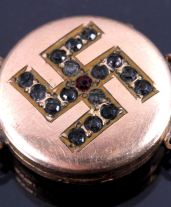
 years ago, is not the first that has ever been written on the subject, but it’s the only one I’m likely to read. The story about how I came to delve into that depressing topic is a meandering one; I’ll return to it another time.
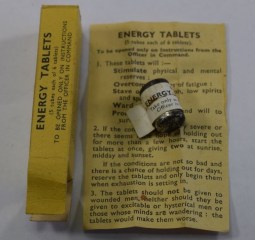 Soon it was being distributed to German soldiers in large quantities to help them stay awake for days at a time. Official records on how many millions of pills were manufactured and delivered to the troops during the war years, and references in correspondence and official directives, all testify to how pervasive the use of this addictive upper was. One military report after the invasion of Poland in 1939: “Everyone fresh and cheerful, excellent discipline. Slight euphoria and increased thirst for action. Mental encouragement, very stimulated. No accidents. Long-lasting effect. After taking four tablets, double vision and seeing colors.”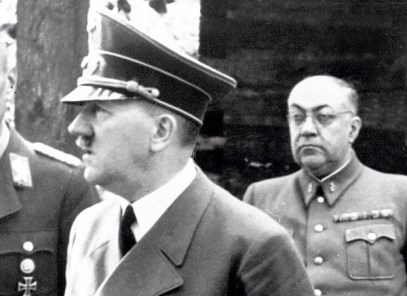
 “At six o’clock in the morning, after the military briefing, during which he had fumbled ceaselessly with his empty pillbox, Patient A lay completely exhausted and apathetic on a small sofa, filled only with the single thought that the best meal of the day was on its way: a mug of hot chocolate and cakes, three plates full of them. Sugar was the final drug: one more minute release of dopamine, one more small reward for the soul. Those bright blue eyes, once so hypnotic, were now dull. Crumbs stuck to his purple lips: a sweet-eating human ruin wrapped in slack skin. His body felt numb, as if he were no longer present in it. His temperature was always high. Every so often he’d go into the oxygen tent.”
 A long time ago I came across some discussion of military history that I think must have originated with
  Gladsome Lights