“Revolutionaries are always in the wrong, since, in their juvenile fervor for everything new, in their hopes for a better future, and a way of life built on justice, they always base themselves on theories that are abstract and artificial, making a clean sweep of living tradition which is, after all, founded on the experience of centuries.
“Conservatives are always wrong, too, despite being rich in life experience, despite being shrewd and prudent, intelligent and skeptical. For, in their desire to preserve ancient institutions that have withstood the test of time, they decry the necessity of renewal, and man’s yearning for a better way of life.
“Both attitudes carry within themselves the seeds of death. Is there, then, a third way? Another destiny for society than of always being subject to the threat of revolutions which destroy life, or reactionary attitudes which mummify it? Or is this the inevitable fate of all terrestrial cities, the natural law of their existence?
“In fact, only in the Church can we find both a Tradition that knows no revolution and at the same time the impetus towards a new life that has no end. Her theory (understood in the true sense of the word, namely ‘vision’) is based on a constant experience of Truth. Which is why she is in possession of those infinite resources upon which may draw all who are called to govern the perishable cities of this world. “
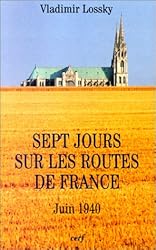
From Seven Days on the Roads of France
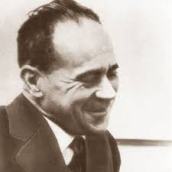
Father Stephen Freeman posted this quote recently from Lossky’s “account of his flight from the invasion of the Nazis into France in 1940.”
I don’t know who all will be in my class when my parish’s church school program begins again next month. But I think I know what I’ll be teaching, and it includes gleanings from this book that I haven’t read yet, With Pain and Love for Contemporary Man. The arrangement of our classes and students and how and where they will meet is one more realm of decisions that has been affected by the coronavirus situation, and that is why I didn’t know until this week to get busy and start reading; I had expected to be using a different curriculum.
This big book was first published in Greek in 1996, as the first of several volumes of the monk’s teachings. Over the course of 28 years his spiritual counsels were carefully recorded in notes and on tape, by the sisterhood of St. John the Theologian monastery in Souroti, for whom he was a guide and helper. In the preface they tell about his response at the beginning of their project:
“When Elder Paisios realised what we were doing, he was rather irritated: ‘Why are you taking notes?’ he asked. ‘Are you saving them for an emergency? You should put my words into practice; put them to work! Who knows what you are saying in these notes! Let me see them.’ When we showed him a sample, particularly the notes of one Sister, his expression changed. He seemed comforted and reassured, and exclaimed with satisfaction, ‘My goodness! She is like a tape recorder! She wrote it exactly as I said it!'”
This man, who in 2015 the Orthodox Church formally recognized as a saint, was in 1924 born Arsenios Eznepidis, in Cappadocia in Asia Minor. This was just after the Greco-Turkish war, and just before those governments mutually agreed upon a population exchange that forced more than a million people to become refugees; his family was among them, and they moved to Greece. You can read all about his life here: St. Paisios, and in other articles and books. I just wanted to tell you a little bit in introduction, because I’m planning to share at least a few quotes from the saint as I go. For now I will leave you with this that I found elsewhere:
“What I see around me would drive me insane if I did not know that no matter what happens, God will have the last word.”
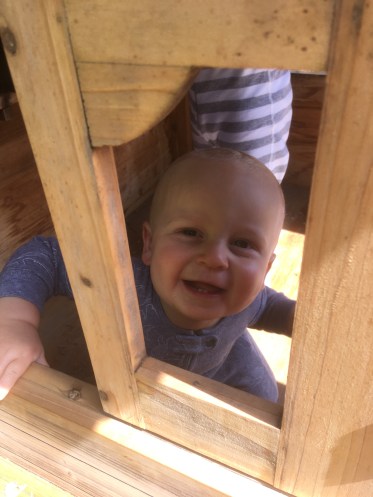
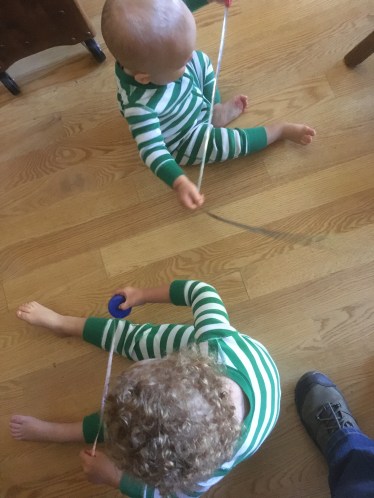
I’m glad to say that the two littlest of my (thirteen) grandsons are still here with their parents. I really do love hanging out in the garden with them; whether it’s engaging the “help” of Raj to pick up pine needles or wipe the patio furniture, or sitting by Rigo as he splashes his hands in a pan of water.
Yes, that’s my brand-new bathroom! It’s about the only part of the remodel that is both usable and picture worthy. Busy little people keep me occupied with better things than the rest of it, like unfinished closets.
On the Fourth of July Kate and I stayed up long after the little boys went to bed, to watch the film version of the musical “Hamilton.” We had thought to watch only part of it, but it was hard to stop. Besides, my neighbors were making a lot of noise with their fireworks, so our household couldn’t easily settle down anyway.
A couple of years ago after my cousin Renée saw “Hamilton,” she gave me the book by Ron Chernow that was its inspiration. The two-hour show naturally had to reduce the story of Alexander Hamilton’s life and times to a few themes and historical threads that Lin-Manuel Miranda found especially meaningful; I don’t think I’d have appreciated it much without the background of the book. But having become familiar with the players from Ron Chernow’s purely historical telling, I was impressed with how much could be expressed through the choreography alone. Thomas Jefferson’s character was a brilliant example of this. I’m sure if I watched this fast-paced musical a few times more I’d notice much more; but on my own I’m not much of a watcher of shows, period. I’m glad Kate arranged it, and I wanted to mention the book-theater connection here with my recommendation.
The weather has been perfectly summery, and not too hot to have friends over twice already while Kate is here, and to eat brunch in the garden. Feeding people, and helping to facilitate the necessary baths and naps and soothing garden tours… those are some of the fundamental activities that have consumed me this week from morning to night. Maybe that is why I liked this poem. Also, it reminds me of my own father coming out of the 100-degree afternoon into our ranch house, and eating thick round slices of cold watermelon before returning to irrigate his orange groves.
Summertime is like a bath of sensory experiences rich with poetry. It slows and calms me and prompts prayers of thanksgiving. Drink up!
CARRYING WATER TO THE FIELD
And on those hot afternoons in July, when my father was out on the tractor cultivating rows of corn, my mother would send us out with a Mason jar filled with ice and water, a dish towel wrapped around it for insulation.
Like a rocket launched to an orbiting planet, we would cut across the fields in a trajectory calculated to intercept— or, perhaps, even—surprise him in his absorption with the row and the turning always over earth beneath the blade.
He would look up and see us, throttle down, stop, and step from the tractor with the grace of a cowboy dismounting his horse, and receive gratefully the jar of water, ice cubes now melted into tiny shards, drinking it down in a single gulp, while we watched, mission accomplished.
The best fast is to patiently endure everything that God sends.
-St. Anatoly of Optina
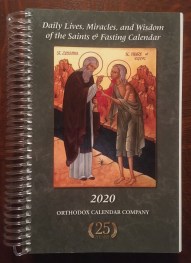
St. Anatoly knew what it was to endure; he was arrested by the Bolsheviks and his monastery was closed in the 1920’s. I only today read about him after seeing the quote above in this calendar I’ve been using lately, at the top of the page for April 1. So many readings for Lent take on new significance this year.
If you want to learn more of his story it is here.
 “Revolutionaries are always in the wrong, since, in their juvenile fervor for everything new, in their hopes for a better future, and a way of life built on justice, they always base themselves on theories that are abstract and artificial, making a clean sweep of living tradition which is, after all, founded on the experience of centuries.
 r theory (understood in the true sense of the word, namely ‘vision’) is based on a constant experience of Truth. Which is why she is in possession of those infinite resources upon which may draw all who are called to govern the perishable cities of this world. “
  I don’t know who all will be in my class when my parish’s church school program begins again next month. But I think I know what I’ll be teaching, and it includes gleanings from this book that I haven’t read yet, With Pain and Love for Contemporary Man. The arrangement of our classes and students and how and where they will meet is one more realm of decisions that has been affected by the coronavirus situation, and that is why I didn’t know until this week to get busy and start reading; I had expected to be using a different curriculum.


 A couple of years ago after my cousin Renée saw “Hamilton,” she gave me the book by Ron Chernow that was its inspiration. The two-hour show naturally had to reduce the story of Alexander Hamilton’s life and times to a few themes and historical threads that Lin-Manuel Miranda found especially meaningful; I don’t think I’d have appreciated it much without the background of the book. But having become familiar with the players from Ron Chernow’s purely historical telling, I was impressed with how much could be expressed through the choreography alone. Thomas Jefferson’s character was a brilliant example of this. I’m sure if I watched this fast-paced musical a few times more I’d notice much more; but on my own I’m not much of a watcher of shows, period. I’m glad Kate arranged it, and I wanted to mention the book-theater connection here with my recommendation.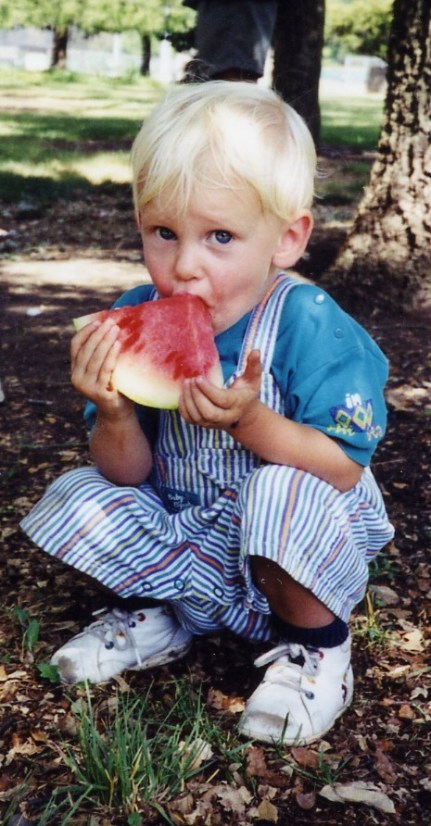

 Gladsome Lights