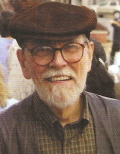
 Father Alexis Trader in another article on grief, excerpted and linked below, discusses not just the memories we hold of those who are departed, but the love that binds us to them even after our former connection is gone forever. Notice that it is not the loved one who is gone forever, but the nature of the relationship.
That the relationship one has with those who have died can continue to change is something I haven’t given much thought to in my own case, though I have heard of a person asking or offering forgiveness at the gravesite of someone with whom they didn’t have “closure.” Not knowing back then that it would pertain so closely or so soon to my experience, a few months ago I printed out an article from the Internet on the subject of “Dostoevsky and Memory Eternal” but didn’t read it until after my husband died.
I always love the hymn “Memory Eternal” that is sung at the end of every Orthodox funeral service, and I was eager to read what conjunction the writer Donald Sheehan found between it and The Brothers Karamazov, a novel that I also find very meaningful. About half of his article discusses the theology of Fr. Pavel Florensky and conditions of personhood, but it was the second half that most affected me so far, where Sheehan describes the events of his life and how they led to him becoming Orthodox. His father had been the cause of chaos and suffering for his family, but after he died, seemingly in response to his son’s own efforts at reconciliation, the father gives him a great gift.
Thanks be to God, I could not relate to the kind of pain that Sheehan lived with, between me and anyone I’ve known. It was the love he had for his father, of a kind that would not give up even after death, that resonated with me in the first days after my husband died. In his article on Grief and Human Bonds Fr. Alexis quotes two church fathers on this topic:
As Saint John Chrysostom once wrote to a widow, “For such is the power of love, it embraces, and unites, and fastens together not only those who are present, and near, and visible but also those who are far distant; and neither length of time, nor separation in space, nor anything else of that kind can break up and sunder in pieces the affection of the soul” (Letter to a Young Widow). That love was real, is real, and leaving it free to maintain a bond with the beloved is a healthy, real response to grief.
When Saint Ambrose of Milan’s brother died, he wrote “My relationship with you is not lost, but changed; before we were inseparable in the body, now we are undivided in affection; for you remain with me, and will always be with me” (Book 1 on the Decease of his Brother Satyrus). In the same spirit, Saint John Chrysostom once consoled a parent who had lost his son, “I beg you, do not say ‘I am no longer called father,’ for why would you not be so called while your son remains? For you surely have not parted with your child or lost your son, but rather obtained him and have him safe.”
At the cemetery this week Fr. Michael exhorted us about the ways we can continue to love those who are no longer present in body. His words, “Do good deeds in their name,” reminded me of the broader concept of living the kind of life that honors the one who has died, and that will keep me on the road that leads to the great rendezvous at the end time. (The thought of that meeting causes me to wonder: Do you suppose we will hug with our new bodies?)
In the words of St. John Chrysostom, I may have my husband safe, but does he have me safe? I am still on my journey, and my love for him will help me to stay on track.
“For I am persuaded, that neither death, nor life, nor angels, nor principalities, nor powers, nor things present, nor things to come, nor height, nor depth, nor any other creature, shall be able to separate us from the love of God, which is in Christ Jesus our Lord.” (Romans 8)
(Photo credit: Pippin)
 the beginning of Lazarus Saturday, when we remember an event that starts out very poignantly, with Jesus’s friends lamenting the death of their brother, and Jesus Himself weeping.
 most nourished of anyone by all the sweet flower-love. These real and aromatic things helped to keep me aware of God’s presence as much as did the kind messages in cards, and the care packages of fruit and candy.
 The power of Resurrection is not a Divine “power in itself,” but the power of love, or rather, love as power. God is Love, and it is love that creates life; it is love that weeps at the grave and it is, therefore, love that restores life… This is the meaning of these Divine tears. They are tears of love and, therefore, in them is the power of life.