Category Archives: my garden

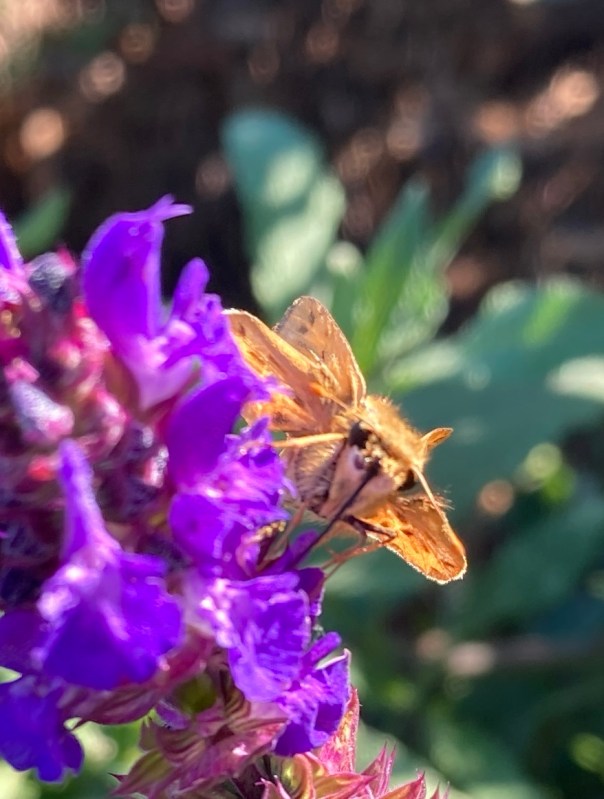
The languid skipper sets an example.

When I was pruning the salvia in front, this skipper was languidly sipping from the same. You can see its proboscis going right down in. The creature was definitely not feeling skippy… I wonder if skippers die in winter? Did it lay eggs somewhere already?

So much is going on in the garden. These irises really should have been divided again — but, already? I’m afraid they will have to wait until next year.


I ended up with so much lemon verbena — what wealth! This is a very nostalgic herb to me, because of when I was in Turkey riding non-air-conditioned buses across Anatolia, and first experienced its delicious scent, though I didn’t know what it was. The bus attendant would walk up and down the aisles every hour or so with a big bottle of something like cologne, and if you held your hands cupped he would sprinkle a tablespoon or so into them. I followed the example of others and quickly splashed it on my face and neck for refreshment. Later, when I returned home, I brought an empty bottle with me and kept it for many years, just so I could take a whiff from time to time.
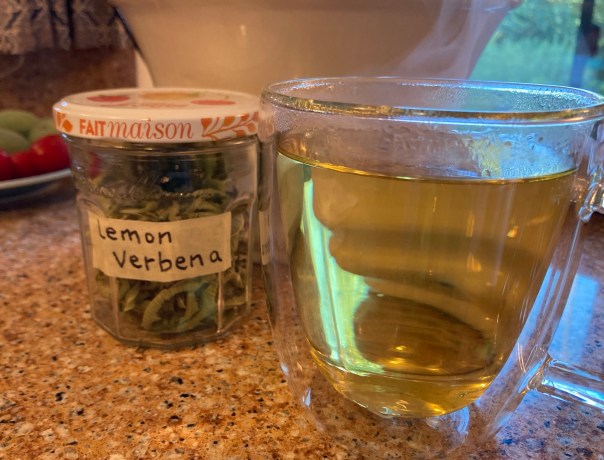
It was decades before I matched that scent to the lemon verbena plant. I mentioned in the summer how I had made lemon verbena paste, and last week I made lemon verbena simple syrup, trying to use a lot of the leaves before they fall off when the bush goes dormant. Now I wish I had just dried them. Making tea is the obvious thing, but for some reason I never did, though I had dried a few leaves last year and they were sitting on the counter. Last week I made a pot of tea with them and loved it. It’s wonderful just “plain.”

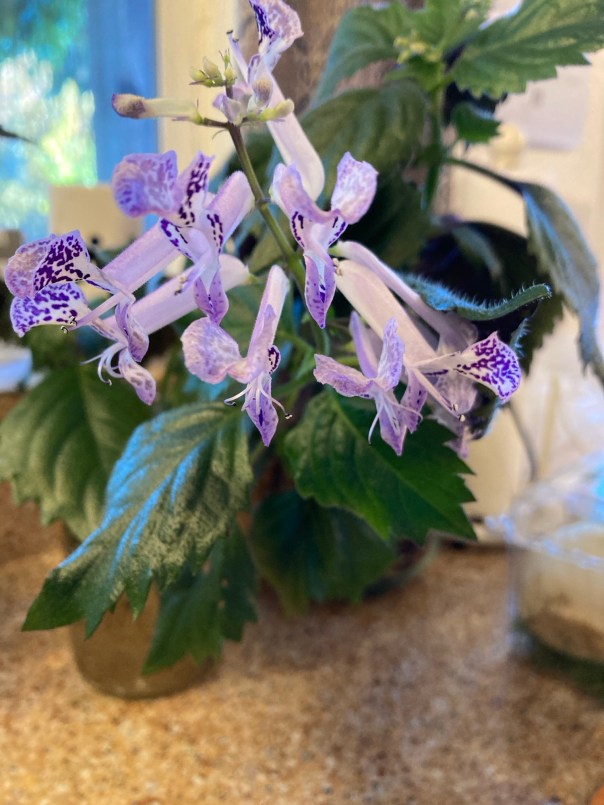
A few months ago my neighbor Kim broke a big stem off a plant on her patio and handed it to me. “Stick this in the ground,” she suggested. Instead, I cut the stem into three parts and put them in water, wherre I noticed they had made a lot of roots pretty quickly. One day I spied this huge flower cluster at the back of the jar by the window. Kim says this is a Plectranthus ecklonii, and her plant never gets blooms like that. I don’t know what I will do with it, but I found out that it is not terribly frost tender.

Plectranthus ecklonii


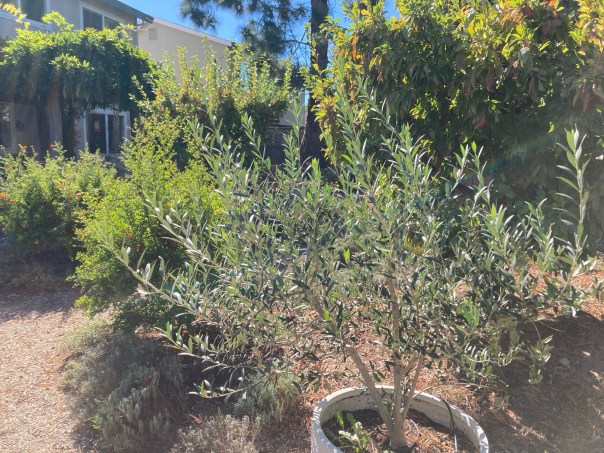
The olive that I repotted with great effort is looking healthy again. I guess my pruning wasn’t too bad, either. I do enjoy pruning, but I’m glad I don’t have to do all of it, or get on ladders anymore for that task. I can just prune the smaller bushes and leave the big ones for my helper.

Recently I did prune all four dwarf pomegranates, in advance of their dormant pruning that will happen later, because my new landscaper consultant told me I should “lift their skirts.” Ahem… is that common parlance in the gardening world? I had never heard the term, but I knew what he meant.

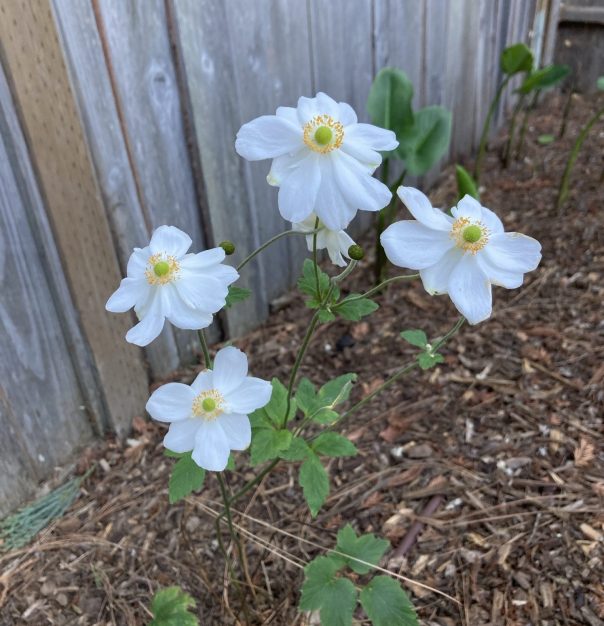
I am thrilled that my Japanese anemones (below) are putting on their best show ever, though they still are not robust — I gave the four of them extra water this year, and they have been getting more sun since the pine tree was thinned. If I feed them a little maybe they will do even better next year.

I have lots more to do before I will feel prepared for winter, but that skipper put me in touch with the reality that I, too, am slowing down. Most likely I won’t get “everything” done. And I guess that will have to be okay!

The reality and rhythm of pea-planting.

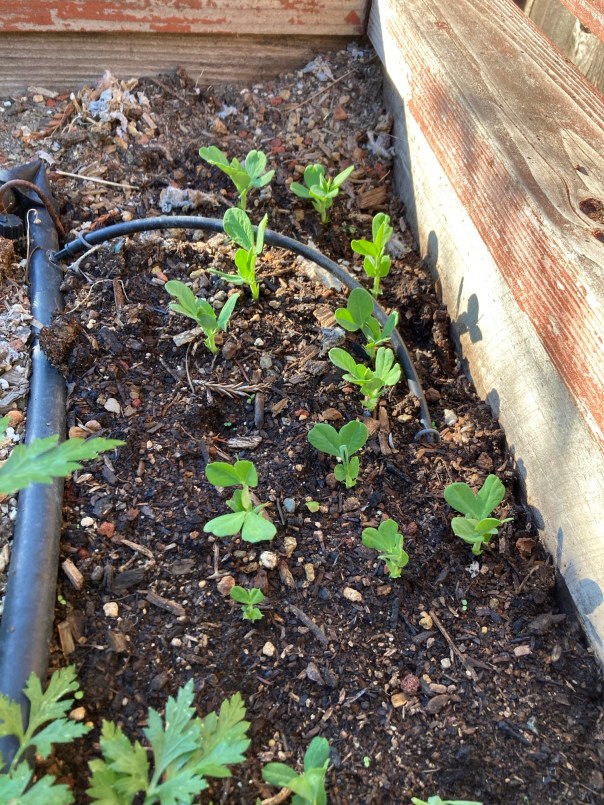
I was thrilled when my newly planted peas came up within a few days. That was one benefit of the Hot Week, when it was over 100 degrees for many days in a row. The seeds were bedded in a temporarily partly shady place behind the zinnias and parsley, so the earth stayed moist.

They are petite and very cute, growing close together next to the tall trellis where I planned to train them upward… until after they were up I read online, and then confirmed it by checking the packet, that Sugar Ann snap peas are a Bush Type of plant, and typically grow only 1-2 feet tall. I have grown peas for more than half my life, so why would I have read the description and instructions?? The packet had been a kind gift a few months ago from Hearth and Field; my thought process on rediscovering them in my box of seeds went quickly from “Oh, goody!” to “Must plant these right away!” and I did that very efficiently.

Chartwell Sweet Peas

Efficiency is not one of the guiding principles of Hearth and Field, however, and I should have embarked on my pea project more in the spirit and manner of the vision expressed on the website of that journal:

Welcome to Hearth & Field!
We are the only journal you’ll find
that makes the internet move
at the pace and rhythm of real life.

Hearth and Field also quotes G.K. Chesterton at the top of that home page, saying,

“The simplification of anything is always sensational.” 

I don’t have time to think more about how that second quote relates to my peas. [Update: I originally put something here about Winston Churchill’s Chartwell peas, which I attributed to Chesterton, which is very embarrassing, and there is no way to fix it, so I removed it. Thank you to my blessed reader Amy who noticed.]

In Real Life, “Haste makes waste,” right? But that motto doesn’t convey quite everything about how I will need to spend an extra hour today that I was not planning on. I will transplant those little starts to the middle of the planter box, so as to free up the trellis for planting Green Beauty snow peas from Baker Creek, because it would be a waste of my beautiful trellis to do otherwise. This is how “the pace and rhythm of real life” works in real life!

Green Beauty pea blossom from February 2021

From a neglected garden.

In spite of my absence for various reasons, the garden continues to carry on valiantly its business of growing and changing by the hour. I love walking around and picking off a few dead flowers, or noticing seeds forming, even when I can’t give it the more thorough care it needs.

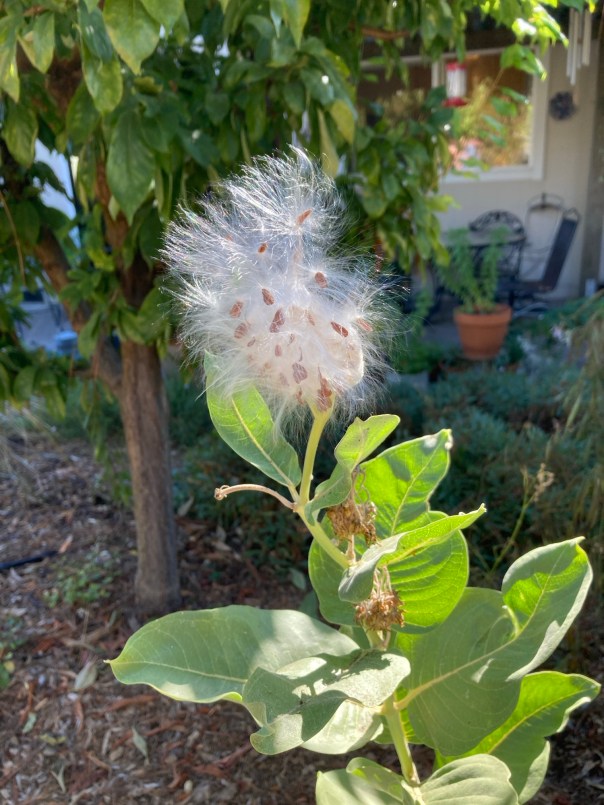
A couple of years ago I managed to transplant one of the vigorous Showy Milkweed plants (above) next to where the Narrow-Leaf Milkweeds grow. You can’t see the latter very well in the background, which is a good thing, because their leaves have mostly had the life sucked out of them by aphids and have turned black. But every spring, they come back stronger than ever.

Tatsoi greens and lobelia

The leafy green Tatsoi really took off in this pot where I stuck it in next to lobelia, and is begging to be thrown into a stir-fry a.s.a.p. Those I set out in the planter boxes are languishing; that soil must need amending.

The dwarf pomegrantes are mostly a fun member of the garden in that for most of the year have flowers, often with hummingbirds drinking from them; or foliage bright and beautiful catching one’s attention in spring and fall; and their darling fruits, that don’t get very large, and in this climate don’t get enough heat for their seeds to develop sweetness. But they are so cute right about now. This one is about an inch and a half in diameter.

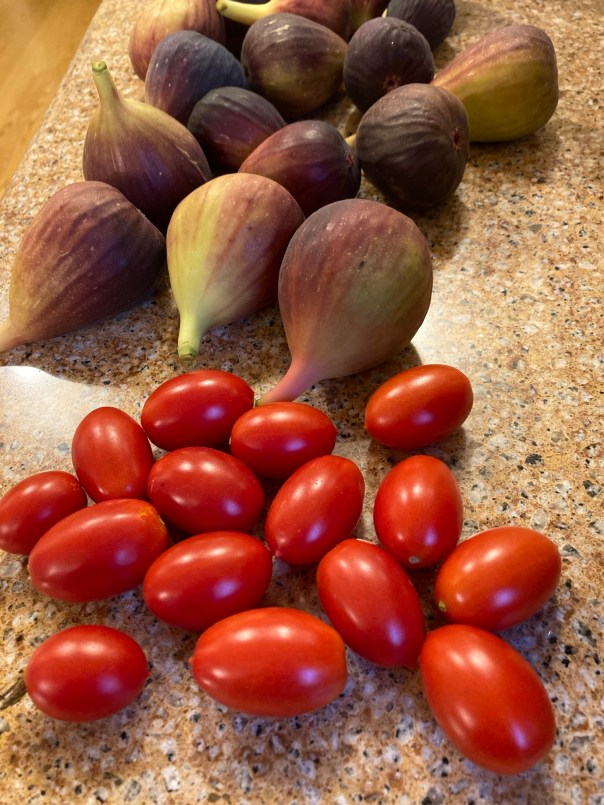
Every day I pick figs; the evening of my return from the mountains I gathered two dozen, and yesterday nineteen. Soon I hope to make that Autumn Fig Cake I told you about one time. And the Juliet grape tomato plant is prolific. I eat the tomatoes in the garden and in the kitchen, and took enough with me to the cabin that I could eat a few every day for ten days, and they were always sweet.

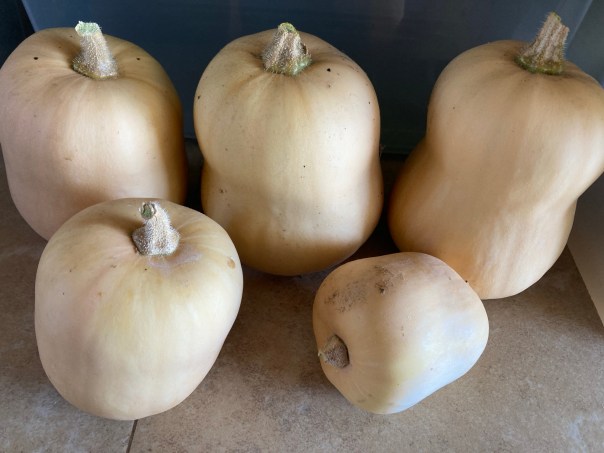
I harvested all but one of the little butternut squashes I grew this year, and planted some Sugar Ann snap peas in their place. Ideally those will start bearing about February, if the winter isn’t too cold and if I can keep the snails from devouring the plants between now and then.

My native sneezeweed is of the less showy sort, but it welcomed me when I returned from my mountain retreat with a particularly lovely array of blooms, not plain at all.

No doubt about it, my garden loves me, and forgives my neglect.
It makes me want to do better in the future.

A red surprise popped up.

California poppies with Iceland poppies in foreground – April 2020

In spring, the California poppies (Eschscholzia californica) swamp the front of my garden, and after a few weeks of exulting in their glory I have to pull them all out and uncover the irises, salvia and other plants that I want to see. A few more weeks, and the poppies have sprouted new leaves and sometimes blooms as well. Here’s an example at left, from just now.

The classic orange color is dominant, so orange flowers keep appearing, and I remove them as much as possible, so that my favorite pale yellow ones can shine.

But this week in the back yard, far from any other poppies, close by the bulbine, I saw a new red one blooming on a little plant. I think I may have scattered seeds for red California poppies here last fall, and forgot about it. This one flower is encouraging me to do that again.