Category Archives: reality

The reality and rhythm of pea-planting.

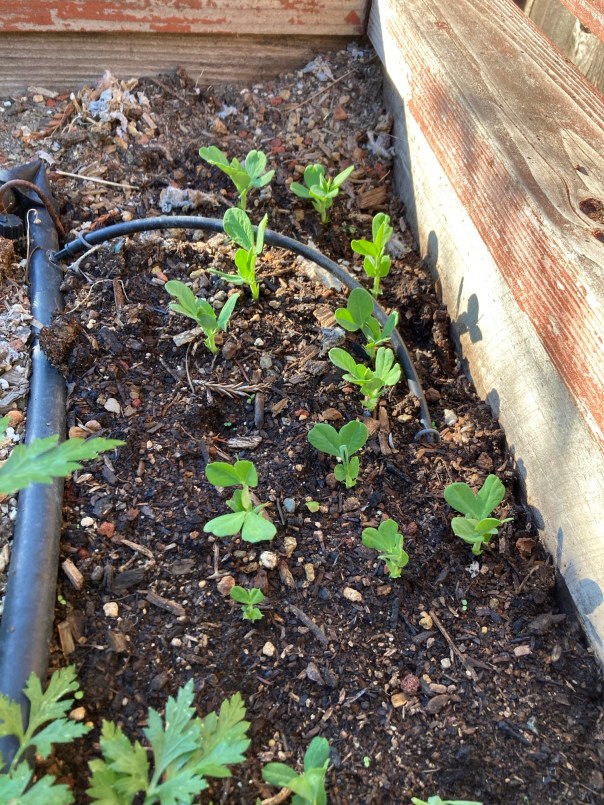
I was thrilled when my newly planted peas came up within a few days. That was one benefit of the Hot Week, when it was over 100 degrees for many days in a row. The seeds were bedded in a temporarily partly shady place behind the zinnias and parsley, so the earth stayed moist.

They are petite and very cute, growing close together next to the tall trellis where I planned to train them upward… until after they were up I read online, and then confirmed it by checking the packet, that Sugar Ann snap peas are a Bush Type of plant, and typically grow only 1-2 feet tall. I have grown peas for more than half my life, so why would I have read the description and instructions?? The packet had been a kind gift a few months ago from Hearth and Field; my thought process on rediscovering them in my box of seeds went quickly from “Oh, goody!” to “Must plant these right away!” and I did that very efficiently.

Chartwell Sweet Peas

Efficiency is not one of the guiding principles of Hearth and Field, however, and I should have embarked on my pea project more in the spirit and manner of the vision expressed on the website of that journal:

Welcome to Hearth & Field!
We are the only journal you’ll find
that makes the internet move
at the pace and rhythm of real life.

Hearth and Field also quotes G.K. Chesterton at the top of that home page, saying,

“The simplification of anything is always sensational.” 

I don’t have time to think more about how that second quote relates to my peas. [Update: I originally put something here about Winston Churchill’s Chartwell peas, which I attributed to Chesterton, which is very embarrassing, and there is no way to fix it, so I removed it. Thank you to my blessed reader Amy who noticed.]

In Real Life, “Haste makes waste,” right? But that motto doesn’t convey quite everything about how I will need to spend an extra hour today that I was not planning on. I will transplant those little starts to the middle of the planter box, so as to free up the trellis for planting Green Beauty snow peas from Baker Creek, because it would be a waste of my beautiful trellis to do otherwise. This is how “the pace and rhythm of real life” works in real life!

Green Beauty pea blossom from February 2021

A new flower and an unnamed star.

HOPE

Hope is with you when you believe
The earth is not a dream but living flesh,
That sight, touch, and hearing do not lie,
That all things you have ever seen here
Are like a garden looked at from a gate.

You cannot enter. But you’re sure it’s there.
Could we but look more clearly and wisely
We might discover somewhere in the garden
A strange new flower and an unnamed star.

Some people say we should not trust our eyes,
That there is nothing, just a seeming,
These are the ones who have no hope.
They think that the moment we turn away,
The world, behind our backs, ceases to exist,
As if snatched up by the hands of thieves.

―Czeslaw Milosz

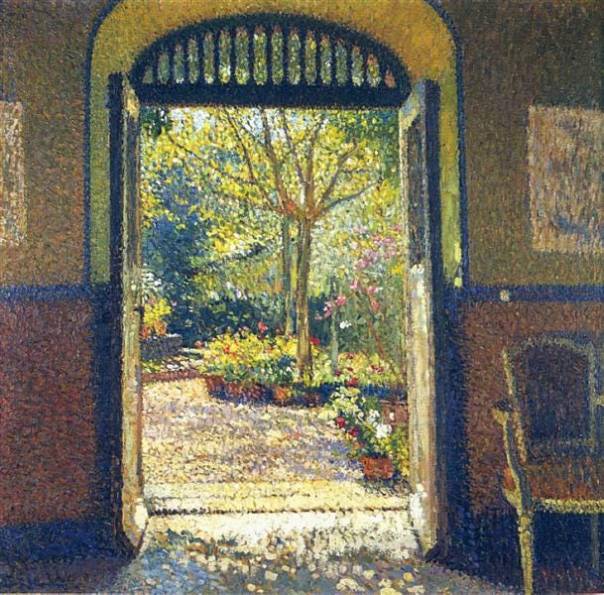
A Garden in the Sunshine, by Henri Martin

We have ruthlessly crushed the instincts.

Why do people think it intelligent to say, “I can see no difference”? It is nowadays quite a mark of culture to say that one can see no difference between a man and a woman, or a man and an angel, or a man and an animal. If a man cannot see the difference between a horse and a cow across a large field, we do not call him cultured: we call him short-sighted. Now there are really interesting differences between angels and women; nay, even between men and beasts, and all such things. They are differences which most people know instinctively, as most people know a cow is not a horse without looking for its mane; or most people know a horse is not a cow without looking for horns. Whether the difference ought to count in this or that important question is a completely different matter; but it ought not really to be so difficult simply to see the difference…

This is a strange epoch; and while, in some ways, we have quite dangerously encouraged the appetites, we have quite ruthlessly crushed the instincts.

— G.K. Chesterton in The Illustrated London News, December 1912

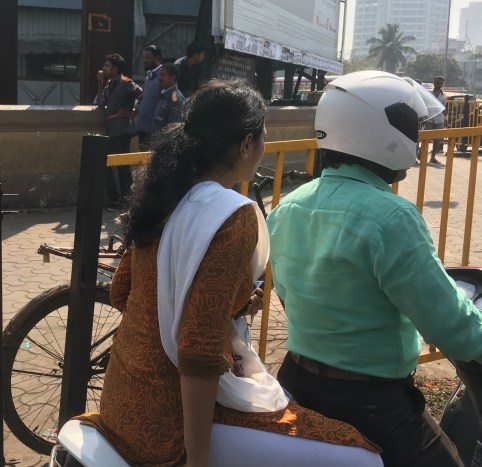
India 2018

You have to treat it as a living thing.

Tessa Carman was having a conversation with Paul Kingsnorth last year, on “Following Christ in the Machine Age.” This is an overarching theme of Kingsnorth’s thinking and writing. Their conversation was leisurely and ranged over many topics, everything from books they have been reading, to Kingsnorth’s conversion, to Hollywood, to being “cancelled.” Kingsnorth lives on a “smallholding” in Ireland, so naturally the conversation turned to how we humans treat the land. I liked the point that Carman brings up, about how farmers traditionally have not been sentimental about nature, but because they “have to do” the work of caring for the land day in and day out, they develop an intimate relationship with it:

“Christians were not untouched by modernity. Especially when there’s more uprootedness — I suspect it’s easier to treat things like machines if you are used to living amongst machines. And if you’re used to taking care of a piece of land, where you have to treat it as a living thing in some sense, even if you don’t think of it as a living thing, that’s just what you have to do, because there’s a living relationship amongst the animals and the land and the people. You see that and live that, and you see the reality of it— the cycle of life and death, how manure brings life.

“If you’re in the city, you can have your image of how the natural world is instead of the reality. And there’s the danger of sentimentality, when we have disconnected ourselves from the land such that we think we can decide what’s good for the land without even knowing it, without knowing the people, let alone this specific piece of land, these animals and these plants.”

Tessa Carman

Orange groves in Tulare County, California.