Category Archives: reality

A new flower and an unnamed star.

HOPE

Hope is with you when you believe
The earth is not a dream but living flesh,
That sight, touch, and hearing do not lie,
That all things you have ever seen here
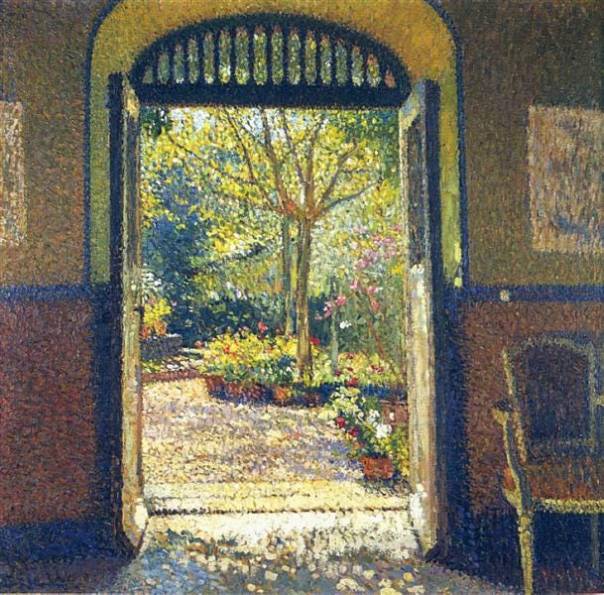
Are like a garden looked at from a gate.

You cannot enter. But you’re sure it’s there.
Could we but look more clearly and wisely
We might discover somewhere in the garden
A strange new flower and an unnamed star.

Some people say we should not trust our eyes,
That there is nothing, just a seeming,
These are the ones who have no hope.
They think that the moment we turn away,
The world, behind our backs, ceases to exist,
As if snatched up by the hands of thieves.

―Czeslaw Milosz

A Garden in the Sunshine, by Henri Martin

We have ruthlessly crushed the instincts.

Why do people think it intelligent to say, “I can see no difference”? It is nowadays quite a mark of culture to say that one can see no difference between a man and a woman, or a man and an angel, or a man and an animal. If a man cannot see the difference between a horse and a cow across a large field, we do not call him cultured: we call him short-sighted. Now there are really interesting differences between angels and women; nay, even between men and beasts, and all such things. They are differences which most people know instinctively, as most people know a cow is not a horse without looking for its mane; or most people know a horse is not a cow without looking for horns. Whether the difference ought to count in this or that important question is a completely different matter; but it ought not really to be so difficult simply to see the difference…

This is a strange epoch; and while, in some ways, we have quite dangerously encouraged the appetites, we have quite ruthlessly crushed the instincts.

— G.K. Chesterton in The Illustrated London News, December 1912

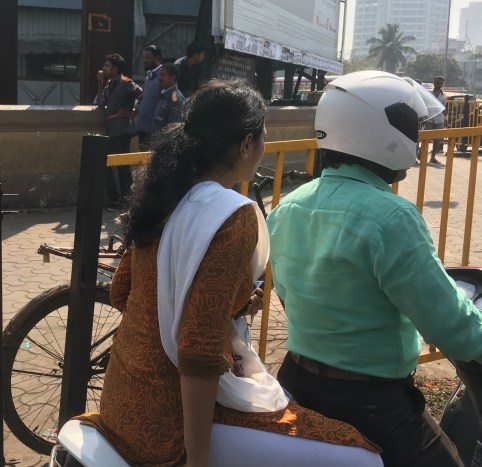
India 2018

You have to treat it as a living thing.

Tessa Carman was having a conversation with Paul Kingsnorth last year, on “Following Christ in the Machine Age.” This is an overarching theme of Kingsnorth’s thinking and writing. Their conversation was leisurely and ranged over many topics, everything from books they have been reading, to Kingsnorth’s conversion, to Hollywood, to being “cancelled.” Kingsnorth lives on a “smallholding” in Ireland, so naturally the conversation turned to how we humans treat the land. I liked the point that Carman brings up, about how farmers traditionally have not been sentimental about nature, but because they “have to do” the work of caring for the land day in and day out, they develop an intimate relationship with it:

“Christians were not untouched by modernity. Especially when there’s more uprootedness — I suspect it’s easier to treat things like machines if you are used to living amongst machines. And if you’re used to taking care of a piece of land, where you have to treat it as a living thing in some sense, even if you don’t think of it as a living thing, that’s just what you have to do, because there’s a living relationship amongst the animals and the land and the people. You see that and live that, and you see the reality of it— the cycle of life and death, how manure brings life.

“If you’re in the city, you can have your image of how the natural world is instead of the reality. And there’s the danger of sentimentality, when we have disconnected ourselves from the land such that we think we can decide what’s good for the land without even knowing it, without knowing the people, let alone this specific piece of land, these animals and these plants.”

Tessa Carman

Orange groves in Tulare County, California.

What’s left is The Nothing.

“What is left to a people who have believed only in politics after they lose their faith is ‘nothing,’ or perhaps ‘The Nothing.’ And what follows the failure of politics is not another form of political order but most likely the end of political community as such and therefore of properly human self-government. We are on the cusp of a new age that is at once post-political and post-human….”
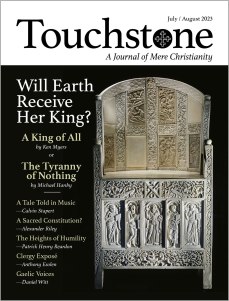
The quote is from the opening paragraphs of Michael Hanby’s article, “Nothingness Rules,” in the latest Touchstone magazine. Hanby writes about the modern mind, especially its expression in the American vision, and how it sees the world from the standpoint of pragmatism. As an example he quotes John Dewey saying, “things are what they can do, and what can be done with them.” Any consideration of what things are in themselves, what their nature is, is unnecessary; more likely, it is a bothersome hindrance to getting on with controlling and changing what is.

“At the core of this metaphysical vision is the elevation of possibility or power over the givenness of the actual world. The celebration of possibility takes on mythic tones in American romanticism about the ‘frontier,’ in our political homage to the ‘American dream,’ and in a thousand mind-numbing commercials. But it is also deeply inscribed into our public philosophy, both political and natural.

“Liberalism elevates possibility over actuality in the political sphere by identifying freedom with rights. Rights create what D.  C. Schindler calls an ‘enclosure of a field of power’ around each citizen, transforming every given reality that would define me prior to my choosing—God, the moral order, and, now we discover, even my own nature—into a possible object of choice. Liberal order thereby undermines these basic realities while appearing to uphold them.”

Hanby goes on to discuss the difference between Marxist atheism and previous versions, why authority and not power is the “true source of the law’s efficaciousness,” and how “technocracy is not the rule of technocrats, but the rule of nobody.” He points out that the seeds of the new vision of nature are right there in our U.S. Constitution:

“The U.S. Constitution grants Congress the power to ‘promote the Progress of Science and the Useful Arts,’ prompting Leon Kass to comment that ‘the American Republic is  . . . the first regime explicitly to embrace scientific and technical progress and officially to claim its importance for the public good.'”

It’s a thought-provoking read which you can access online: “Nothingness Rules.”