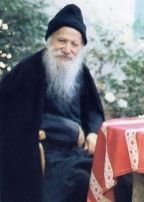
Christ is everything. He is joy, He is life, He is light. He is the true light who makes man joyful, makes him soar with happiness; makes him see everything, everybody; makes him feel for everyone, to want everyone with him, everyone with Christ.
Christ is everything. He is joy, He is life, He is light. He is the true light who makes man joyful, makes him soar with happiness; makes him see everything, everybody; makes him feel for everyone, to want everyone with him, everyone with Christ.

“The name Elijah (the Lord’s strength) given to the infant defined his whole life. From the years of his youth he dedicated himself to the One God, settled in the wilderness and spent his whole life in strict fasting, meditation and prayer. Called to prophetic service, which put him in conflict with the Israelite king Ahab, the prophet became a fiery zealot of true faith and piety.”
From this site, where you can read his whole story.
The Prophet Elijah is commemorated on July 20.
The robin outside my window this morning had his priorities straight. Before there was light enough to see by, before he even thought of going about his necessary business of sustaining himself by eating, he spent an hour and more in praise and song. I was unusually awake and he helped to me to tune my heart to the same frequency. 
That happy hour I spent with him was like a special gift I opened first thing on the occasion of my name day. In addition to Myrrhbearers Sunday, which is a movable feast, St. Joanna is commemorated on June 27 every year. It’s a good day to head over to church and do a little garden work along with some celebrations in the church.
This blog post contains a good overview of what we know of St. Joanna. It is from a man who was planning to name his daughter Joanna, though he admits she is a “relatively minor saint.”
I had my own reasons for choosing Joanna as my patron saint when I converted to the Orthodox Church in 2007, which were not exactly the same as the following that an anonymous Christian listed in a comment on that blog in the same year, but I am grateful for her thoughts and have added them to my personal list:
1. She did what she could. She couldn’t stop the beheading of John the Baptist, but she could give his head a decent burial, and she did that.
2. She went where Christ was–the cross and the tomb. She didn’t go alone–she was part of a group. I want to go where Christ is, and I need to go with the Church.
3. She had a name we can pronounce in English.
4. She died peacefully.
One thing I can definitely relate to in Joanna is that she needed the angels to tell her not to seek the living among the dead. These lines from a hymn for Myrrhbearers Sunday will be good for me to sing all day:
The angel came to the myrrhbearing women at the tomb and said:
Myrrh is meet for the dead;
But Christ has shown Himself a stranger to corruption!
So proclaim: the Lord is risen,
Granting the world great mercy!
Anthony Esolen wrote in Touchstone a few years ago his observations of how good and holy people such as Mother Teresa manage to provoke hatred of themselves. This caused him
“…to ask what it is about the holy that strikes fear into the hearts of so many. We think that the saints are beautiful, and they are. Then how do people miss it?
“Then again, why should we be surprised that they miss it, when in Jesus himself, as far as many a Pharisee would concede, no beauty was to be found? When Jesus wrought his signs and wonders, and when he taught with authority about the kingdom of God, what did those Pharisees ask him, but why his disciples did not wash their hands before eating, and suchlike? They had before them the Lord, the long-awaited anointed of God, who had made the blind to see and the deaf to hear, and somehow the truth could not penetrate the shells of their self-regard.
“For the holy is a challenge to us, and therefore an affront. It does not curry our favor. It does not mingle with the guests at parties in our own honor, eating cucumber sandwiches and speaking empty pleasantries. It is not nice. It stands in fearful judgment before us. The holy is set apart; its ways are not our ways; yet it calls us to surrender our ways, and to be converted.”
“Let us, finally, be quite clear about one thing. Those who believe in God, and who honor his holiness, longing to be transformed in mind and soul—they are the true and only humanists. They hold so high a view of man that, if they were to see a victim of cholera dying in a ditch in Calcutta, they would burn in shame that the image of God should be treated with such contempt; or should they see a rich man destroying his soul with the vices that money can buy, they would pray that he might someday see what man is called to be.”

