Category Archives: wildflowers

The seeds dropped out.

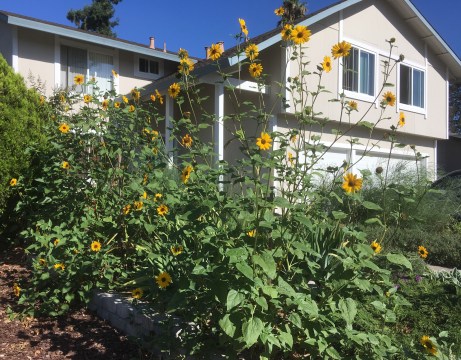
When my Landscape Lady suggested Delta Sunflowers for my front garden, she said they would reseed themselves year after year. Those in her own garden have done that, and she gave me my original plants from her excess of volunteers when they came up in May of 2017. My plants did make their own starts in succeeding springtimes, but not very many, which I think has something to do with the thick bark mulch. The seedlings that did emerge were not in the right places, so I had to transplant them.
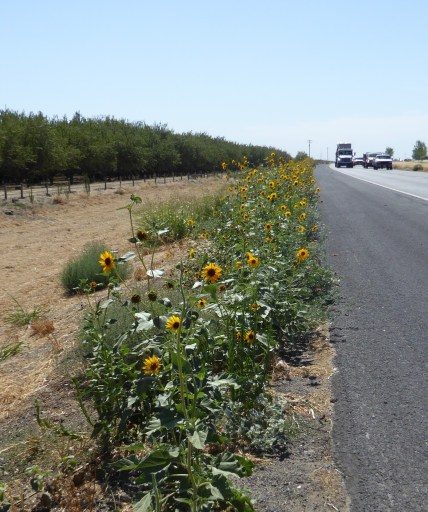
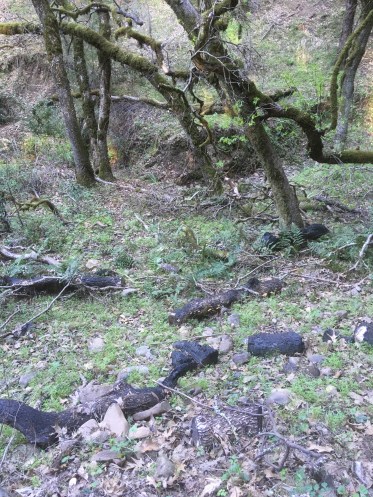
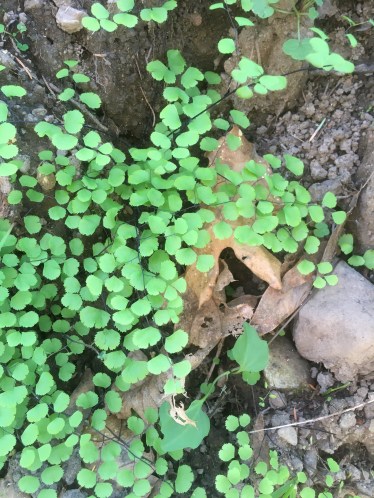
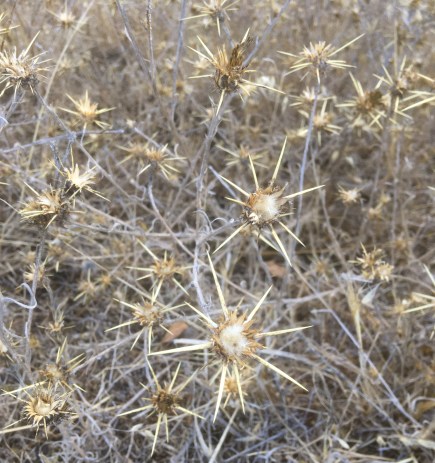
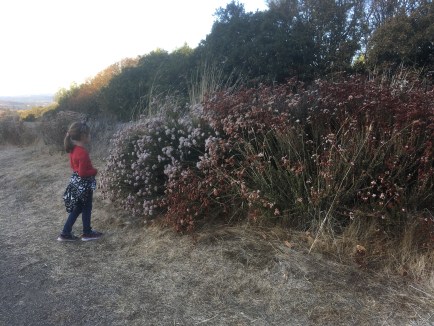
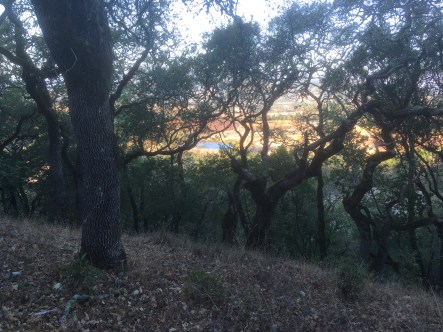
Here I will insert three pictures I took on the dry east side of California’s Central Valley before I ever knew what these sunflowers were, or dreamed that this species would end up in my own garden. These shots show how well they do with no water at all, in temperatures often well above 100°, all summer long. They just keep going.

Last fall and this, I saved some flower heads from my plants, but I could not see any seeds in them. They are very stiff and prickly by the time they are dry enough to be certain the seeds will have matured. This year my second picking of them I set on the workbench as I was going into the house, and there they sat for a couple of weeks, where I walked past many times a day.

One day I noticed seeds under them – the hidden seeds had simply fallen out. I knocked each bristle brush flower hard against the wood and more seeds came out, so now I have a good collection. I can start them myself in the greenhouse and have some sturdy seedlings to plant in exactly the right spots next spring. 🙂


A discipline in pleasure.

I’m in a good mood, because I cleared the driveway of weeds this morning, and brought sunflowers into the house. My foot feels all better, which had been slightly gimpy merely from wearing sandals instead of boots while gardening last week.
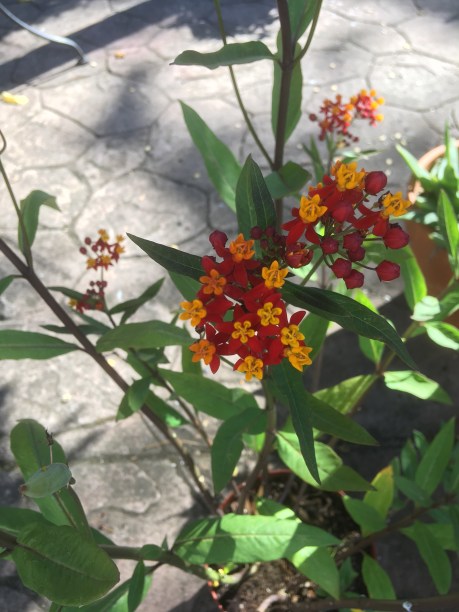
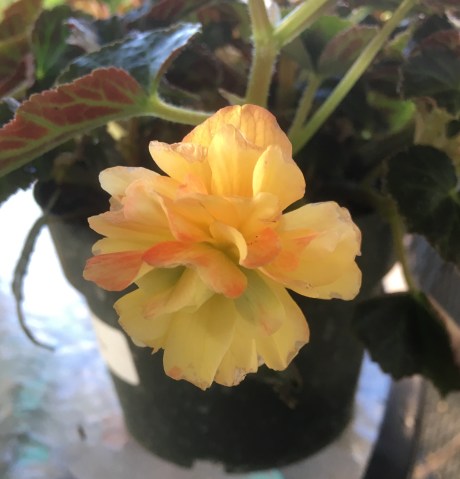
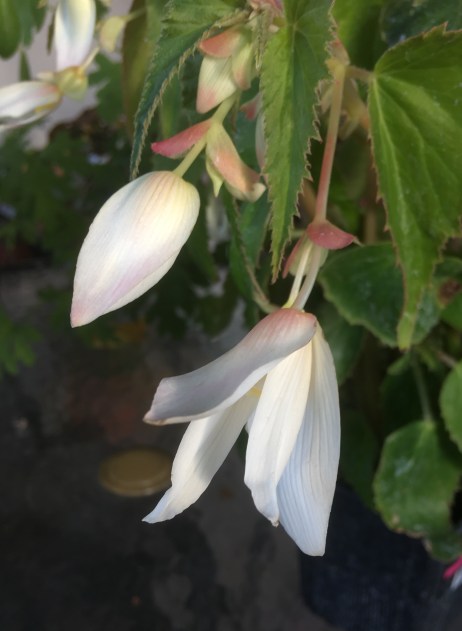
The Monarch caterpillars are thriving on giant leaves of the showy milkweed that I bring to them in their mesh cage almost every day. If they had hatched out on the spindly narrowleaf variety where Mama Monarch had laid the eggs, they’d have run out of food fast. I bought a new tropical milkweed plant when I went shopping for begonias last Sunday, but they don’t seem to care for its leaves. (At the bottom of the page is a milkweed I encountered in the mountains some years ago.)

I’ve been too busy to write good sentences about All The Things. I am trying hard to learn to say NO to myself sometimes: “Remember, Dearest Self, you can’t do ALL the things ALL of the time!” Finally after four months, in the middle of which we think the city lost my application, we got the building permit for my remodeling project that I’ve been preparing for over the last year. It’s taking hours and hours to choose paint and cabinets and faucets and mirrors, and more time to watch caterpillars munch, so naturally there have been fewer hours with which to read, write, and cook.

I don’t know how to apply the principle that wise GKC is telling us about in this quote that I thought was simply lovely when I put it in a draft a while back. The word austerity doesn’t seem to fit with the way I behave, though pleasure and gratitude are the world I live in. I’d like to know what you all think about his twist on these qualities of our existence.


Purification and austerity are even more necessary for the appreciation of life and laughter than for anything else. To let no bird fly past unnoticed, to spell patiently the stones and weeds, to have in the mind a storehouse of sunsets, requires a discipline in pleasure, and an education in gratitude.

-G.K. Chesterton — Twelve Types (1903)


What I was given on my Home Day.

Today was my Slow/Stay at Home/R&R/Catch up Day. That sounds like a lot to expect of one day, especially when you stay up writing until the hands of the clock are telling you it has already become that day, and therefore you will start out short on sleep.

But what a blessing it turned out to be! The first gift was a phone call from my grandson and his wife, the parents of my great-granddaughter, and that was heartwarming. I loved talking about maternity care — what she got as well as cultural trends — with Izzie, who is bouncing back with the resilience of youth and those hormones a woman gets a good dose of in childbirth. The whole family and her mom were walking at a park when Roger decided to phone me and we had our satisfying visit.

And then a spell of plant identification. 🙂 Yes, and I didn’t even have to go out and discover the plant myself. My farmer friend from whom I buy lamb every year had posted a picture of flowers on Instagram, glad to see them in the pasture before the sheep ate them. She didn’t say their name so I assumed she didn’t know, but they were so pretty, I wanted to find out.

I asked Pippin’s help, but she didn’t know them, either, so I looked in the Wildflowers of the Pacific Northwest guide, even though the authors don’t try to include my area of California in their book; I might still find a clue. And I did see one very similar, which was enough to take to the Internet and search with. I’m pasting the Wikipedia photo here, almost identical to the farmer’s, of downingia concolor or calicoflower, which is in the Campanulaceae Family. Aren’t they darling? I wonder if the sheep have eaten them by now…

Kasha, or roasted buckwheat groats, is one of my favorite things to eat on fast days. I like to cook a potful so that I have several servings on hand, but I had run out of that a couple of weeks ago. This package that was given to me by a friend is nearly used up now; it cooks up the way I like it and has the best flavor, so I think I will try to get this type from now on. I got to eat kasha for lunch, and stashed three containers in the fridge and freezer.

I had told myself that I would not read or write blogs today, since I did just do that last night, and because I wanted to catch up on one or two of the many other things that I’m behind on. Lately it’s become R&R just to wash the dishes, and when I was washing up my kasha pot I just kept going, and ended up spending a couple of hours on the kitchen. What took the longest was giving my stove top and range hood a thorough cleaning of the sort is hasn’t had for ages. After that experience, my hands told me they needed a manicure.

The sun came out — but not until 6:00 p.m. But after bending over my housework all that time, and feeling not rushed, the sunshine was all the encouragement I needed to get outside. I would just take the easiest stroll, no hurry.

Once I was in the neighborhood where I took pictures for my “Roses on My Path” series a long time ago that doesn’t feel that long ago (before my husband was even sick), I remembered that I wanted to go back to the house I called the Rose House back then, to find whether anything had changed.

I found it, and the display was more opulent than ever. This is the house where the roses do not appear to be cared for, though I continue to think they must be getting water from somewhere to make it through our rainless summers. All the roses on this post are from that house, and a link to the previous post might show up as one of the “related” posts below.

They still have the mailbox with stylistic roses painted on it, but now it is hidden deep under a broad spray of blooms hanging down. I think maybe that bush seems twice as tall as before because it has climbed into a tree behind it.

The profusion of flowers is probably a result of the rain of the last two years. The species are very special. I can’t tell you much about them, except that I find them exquisite, but many of my readers will know things just by looking. This time I noticed an identifying tag at the base of one bush that has the trunk of a tree. It was grown from a cutting taken in 2001; how long, I wonder, was the rose bush cared for before it was allowed to grow wild?

I feasted my eyes and my nose for quite a while, walking and gawking up and down and wishing I were in an official rose garden with a proper bench. I wanted to sit for a while to gaze at their loveliness, bursting out through the tangled canes and deadwood. Eventually there was nothing to do but go home. I felt thoroughly loved through those roses.

But when I got here I had to write after all, while it is yet today.
It’s one way I have of thanking God for all His wonderful gifts
that pour down even on — or is it especially on? — a slow day.

I admire Marie’s garden.

A mile or so down the mostly dirt road from the monastery lives my friend Marie, who moved there from my county a few years ago. She’s learning by a process of self-education, experimentation and observation how to garden in this “intermountain” area that gets very cold in winter, yet doesn’t escape the summer heat and drought.

She made me a cup of tea, and I sipped while we walked and chatted our way around her vast plantings and greenhouse — herbs, vegetables, trees and flowers, intermingled with native plants and wildflowers, all of which ultimately either thrive or don’t. Many of the trees and shrubs and even perennials she has to plant in mesh cages to keep out the gophers. And of course there are deer, and rabbits.

Marie isn’t sure about many of the flowers, whether they have come from seeds she threw out one time and forgot, or if they are fully native-born. But if they are happy to take the place of weeds and grow in that climate, she is happy, too. She has other work to do besides gardening, sitting at a desk and computer, and appreciates the necessary breaks during which she can work outdoors with material and living things, but still, she was happy to unpack the hedge trimmer that was delivered that morning, which will help her to prune a hundred lavender bushes.

If we had been competing for the prize for who could remember the most names of plants, I don’t know who would have won. Mostly we both had to be accept that we were unable to bring to mind the names of many that were actually very familiar, even our favorite salvias or wildflowers. I knew I had seen this striking bloom before, but I had to ask Pippin that night what it was:  Pretty Face (Triteleia ixioides) or Golden Brodiaea.

It was Marie who told me what Bugleweed was, and who also knew the name of a salvia she showed me and that I would like to find, “Gracias.” When I went looking for it just now I found a site extolling the wonders of our native sages where I read that some of these plants can live 40 years  if they are growing in a spot that they like. They are typically drought tolerant; maybe some of the species I have planted have not thrived because they got too much water. Check out this list: California Native Sages

I wish I could identify this pretty blue flower that I also pictured at top. If someone knows… [update: I think this is the flower I just saw on the Annie’s Annuals blog, Nemophila menziesii “Baby Blue Eyes”] In this picture it looks more purple for some reason.

Out there you don’t find the orchards and gardens such as the monastery tends; you are in the middle of oak and scrub. Marie does like the oaks, but they get a little monotonous, so she is lovingly expanding the botanical interest and color palette by her labors. She has planted more species of manzanitas and ceanothus, also California natives.

When I left her place I got turned around and drove the wrong way for a mile or two, but that route took me past a great view with more flowers that I didn’t know, and which I could only see at a distance — but what a springtime spread that was.

I was halfway home, stopped at a rest area, before I really noticed my shoes, which were carrying with us quite a bit of that mountain dirt. As I cleaned it off that night it was a fitting end of my trip that turned out to be more about farms and gardens than I expected. I’m very thankful for all those who tend the Lord’s creation and are fellow-gardeners with Him, and to be around so many of them in just a few days was a joy. It’s another springtime in God’s world.