I would like to read more of Søren Kierkegaard’s writings. My intent is on display in the form of four titles by him that I have had sitting on the mobile bookshelf here in my kitchen/family room, for a year at least. I guess if I could decide which to read that would be a good start. A biography of him I am not likely to get to, but who knows…? In the meantime, I am reading this homage by Dana Gioia in the form of a poem. Seems like after this I owe it to Kierkegaard to read at least one more of his own works, though not in hopes of explaining any “riddles.” Only God can do that, and we know that He will — all of them, all of us.
HOMAGE TO SOREN KIERKEGAARD
Work out your own salvation with fear and trembling. —St. Paul
I was already an old man when I was born. Small with a curved back, he dragged his leg when walking the streets of Copenhagen. “Little Kierkegaard,” they called him. Some meant it kindly. The more one suffers the more one acquires a sense of the comic. His hair rose in waves six inches above his head. Save me, O God, from ever becoming sure. What good is faith if it is not irrational?
Christianity requires a conviction of sin. As a boy tending sheep on the frozen heath, his starving father cursed God for his cruelty. His fortunes changed. He grew rich and married well. His father knew these blessings were God’s punishment. All would be stripped away. His beautiful wife died, then five of his children. Crippled Soren survived. The self-consuming sickness unto death is despair.
What the age needs is not a genius but a martyr. Soren fell in love, proposed, then broke the engagement. No one, he thought, could bear his presence daily. My sorrow is my castle. His books were read but ridiculed. Cartoons mocked his deformities. His private journals fill seven thousand pages. You could read them all, he claimed, and still not know him. He who explains this riddle explains my life.
When everyone is Christian, Christianity does not exist. The crowd is untruth. Remember we stand alone before God in fear and trembling. At forty-two he collapsed on his daily walk. Dying he seemed radiant. His skin had become almost transparent. He refused communion from the established church. His grave has no headstone. Now with God’s help I shall at last become myself.
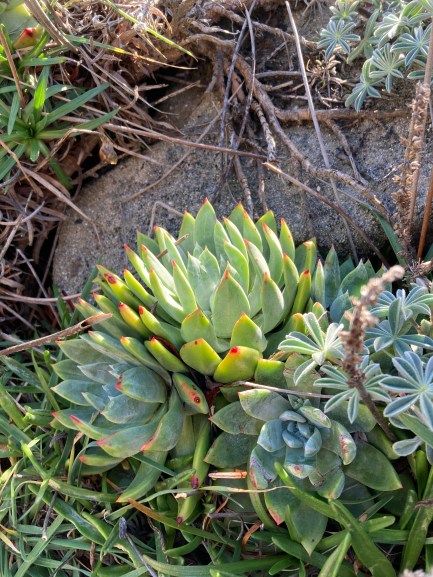
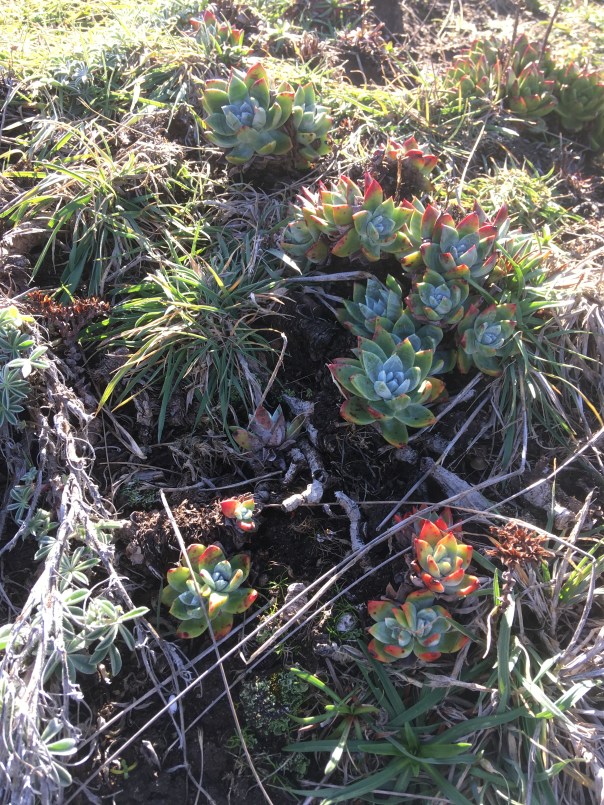
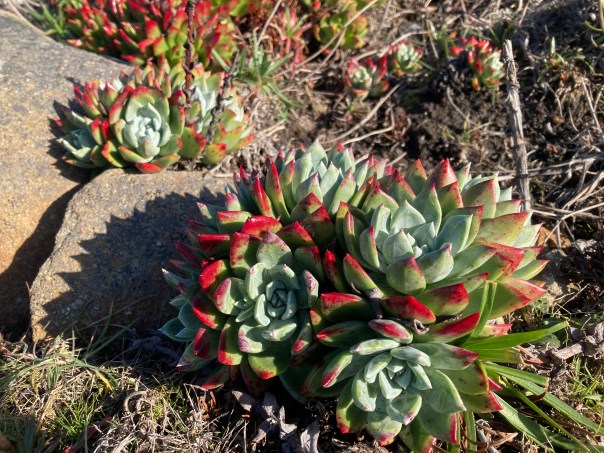
Succulents and mustard are related by their mutual membership in the plant kingdom, but also by being bright particulars of my weekend that also included lots of ocean watching.
“Why pay a premium for organic brassicas like kale and broccoli at the farmer’s market when all the free wild mustard you could ever ask for is likely waiting right around the corner?”
This question was posed in an article about food foraging that I read last weekend. Pippin’s family was here and we had opportunity to explore the topic. On Saturday we took a long drive to Salt Point State Park, farther north on the coast than I have been in many years, and passed by many vineyards looking like this:
We tried to remember whether the mustard we are used to seeing in springtime in California is at least a near relation to what one buys prepared in a jar, and that night we researched further, finding once again how many good edibles are in the Brassica family. We had no idea we’d get the chance to taste some very soon.
Yes, that mustard above ismustard, and in this context it isn’t considered a weed that needs eradicating. It actually helps suppress the nematode population among the grapevines, because mustard contains high levels of biofumigants in the form of glucosinolates. Evidently the sharp flavor isn’t appreciated by the nematodes. However the mustard got there, it’s ubiquitous now, and beneficial.
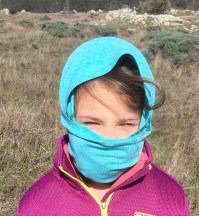
At Salt Point the sun shone on us brilliantly, and made us squint. The wind pushed us this way and that, and the sound of crashing surf thundered up the cliffs to where we walked along the headlands. Some of us had gaiters around our necks, which we pulled up to keep our hair out of our eyes and our cheeks warm.
We wanted to climb that “castle rock,” but Pippin thought she better go scout ahead for poison oak. She found a lot of it, so we gave up on that idea.
Most of the plants out there hug the ground or the rocks where they are growing. Even the milkmaids stay under cover. When Ivy took off her gaiter scarf, her hair needed re-gathering into its scrunchie; once we accomplished that, she bounced off musing, “Some people say, ‘Another day, another dollar;’ but we always say, ‘Another day, another hair out of place!'”
MilkmaidsSome brassicas are likely in this mix.saniclelupine
Where the trail dropped down close to the shore, we explored the sandstone that has been carved into strange shapes by the wind. The surface of the rocks with the smoothest appearance, where I grabbed when I felt buffeted off balance, was like the coarsest sandpaper.
The children all napped on the way home that evening, but slept long in their bags after they went to bed again later that night. Before we knew it we were all up and going again, but southwest this time, aiming for a hike along the Marin Headlands. Marin County is the one just north of San Francisco County/City, and it soon became evident that this destination, so much closer to a large population, was going to be too crowded. There was nowhere to park at the trailhead.
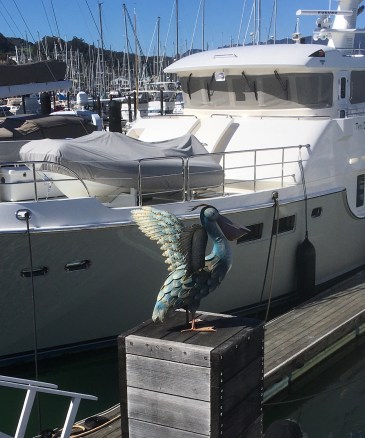
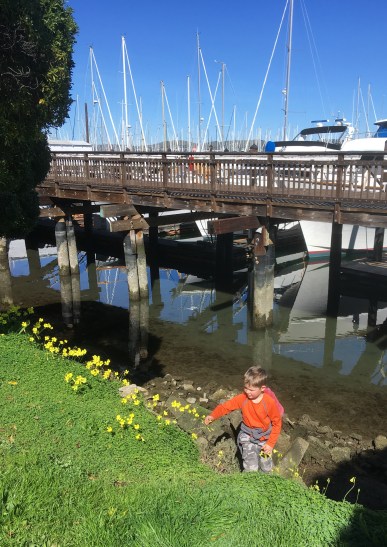
So we went into the town of Sausalito and looked at boats in the harbor, and ate our lunch at a little park with a view of Angel Island, and the Bay Bridge to the southeast.
The first wild thing we found to eat that morning was oxalis, or sourgrass, also called wood sorrel. Once I told the children about it, they continued to break off stems and chew on it for the rest of the day, it being everywhere we went. Ivy liked the flowers best, but most of us preferred the stems.
Plantain was growing everywhere beneath our feet, mixed in with the oxalis. Scout told me that if you get a rash from stinging nettle you can chew some plantain and put it on the rash to soothe it. But there were no nettles in this neighborhood, and we left the plantain alone.
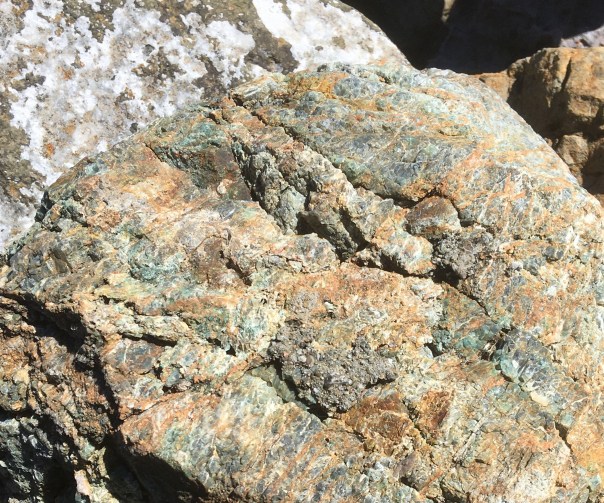
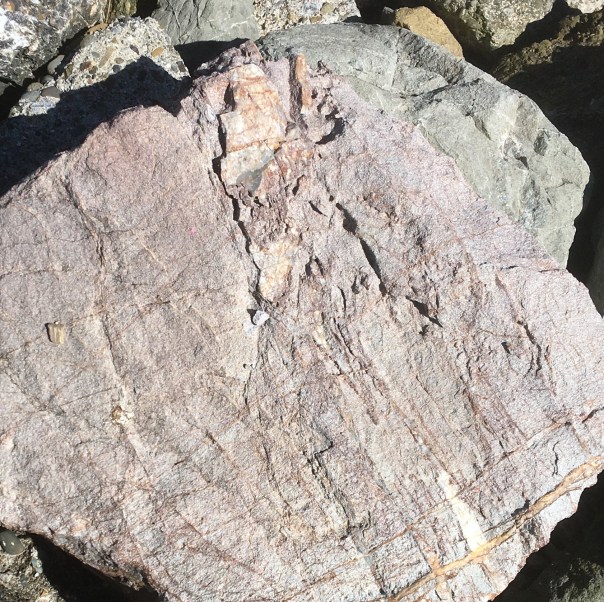
The water was glittering, and the children discovered countless crabs as they peered into their dark caves among the rocks. While the more agile folk spied on crabs, I admired the colorful minerals in the giant specimens bordering the sidewalk.
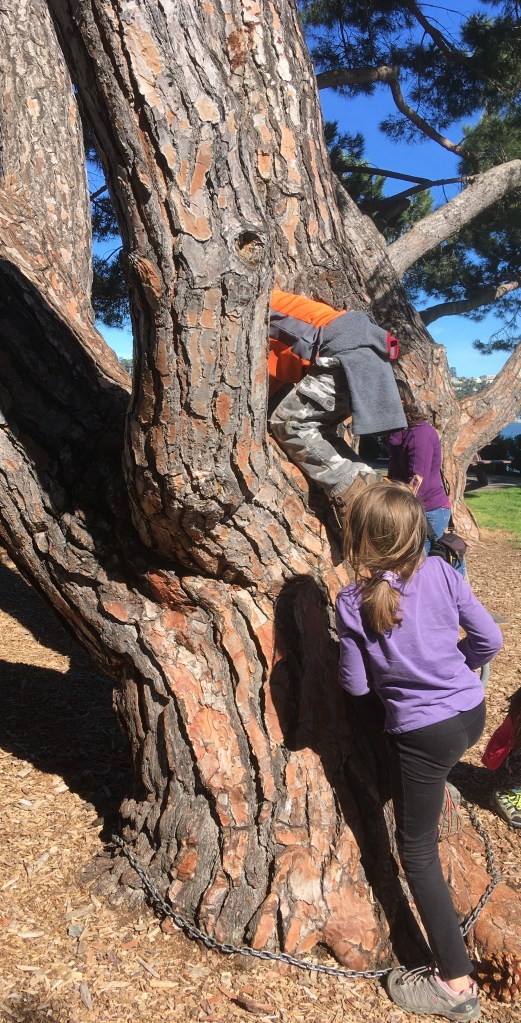
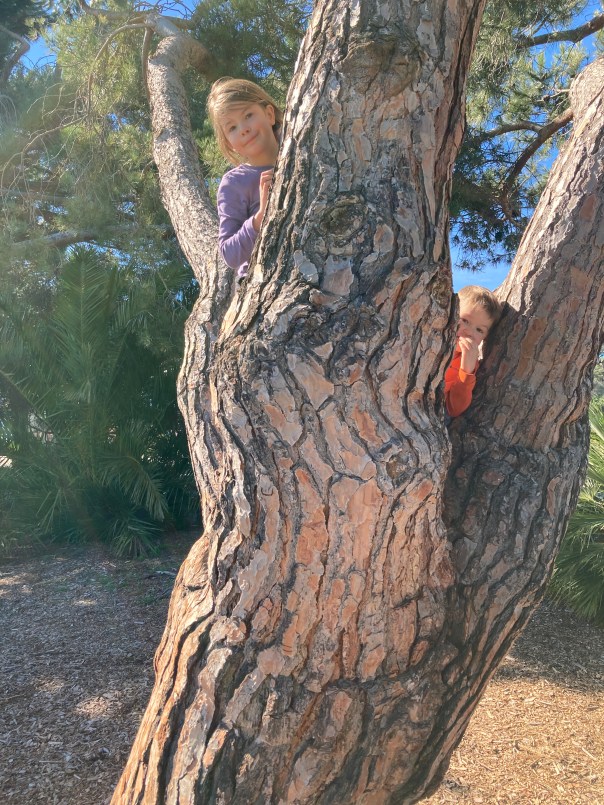
Big pine trees with gorgeous trunks shaded us at the park. Ivy and Jamie took on the challenge of climbing one of them. Their mother gave them tips from time to time; eventually Ivy gave Jamie her knee for a footstool, and he was up! Pippin then helped Ivy, and they finished their lunch in an elevated position.
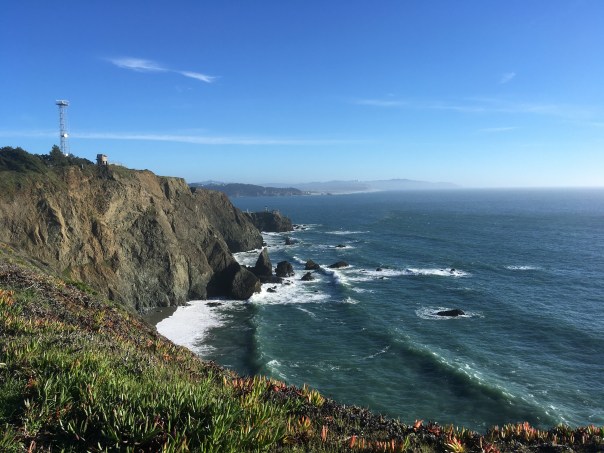
We drove to a different access point for the Marin Headlands and ended up at Point Bonita. Here is a map on which you can see the point, right where a lighthouse needed to be, outside San Francisco Bay at its north entrance. The lighthouse itself is closed currently, but we walked down the little peninsula as far as possible.
We stared and stared at the Golden Gate Bridge, from that perspective that we rarely get, looking in toward the bay. That narrow entrance to a huge bay was named the Golden Gate Strait by John C. Fremont:
“In 1846, when soldier, explorer and future presidential candidate John C. Fremont saw the watery trench that breached the range of coastal hills on the western edge of otherwise landlocked San Francisco Bay, it reminded him of another beautiful landlocked harbor: the Golden Horn of the Bosporus in Constantinople, now Istanbul. Fremont used a Greek term to name it: Chrysopylae – in English, Golden Gate. In his 1848 ‘Geographical Memoir,’ Fremont added another layer of meaning: The rugged opening to the Pacific, he wrote, is ‘a golden gate to trade with the Orient.'”
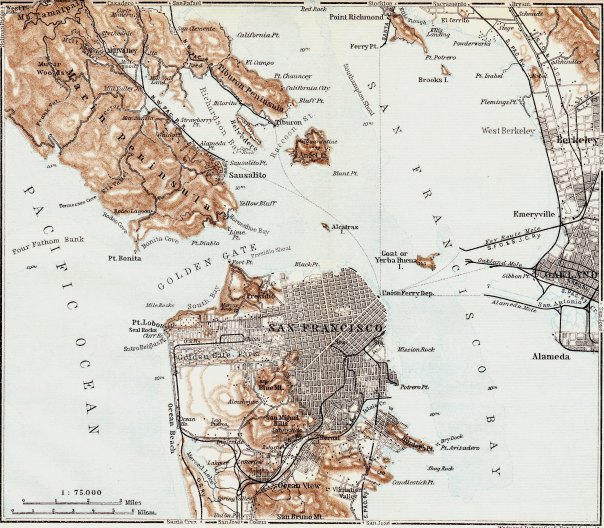
Here is another map of the bay from 1909, before the Golden Gate Bridge was built.
A couple dozen harbor seals were sunning themselves on rocks in Bonita Cove. We could see Ocean Beach in San Francisco to the south, and the skyline of the city with its new, tallest building, the Salesforce Tower, and indeed it towers over the others. I don’t think it’s as ugly as its name, which speaks volumes about our society. But let’s get back to more interesting things…
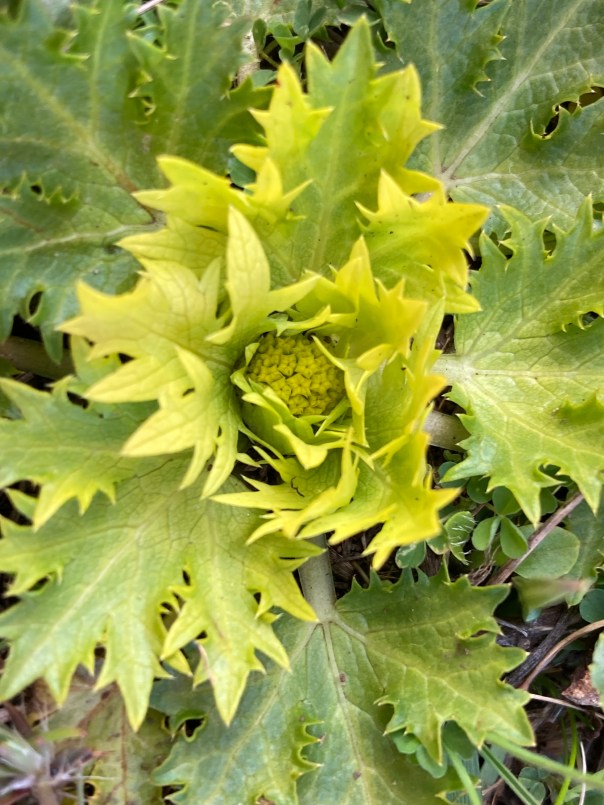
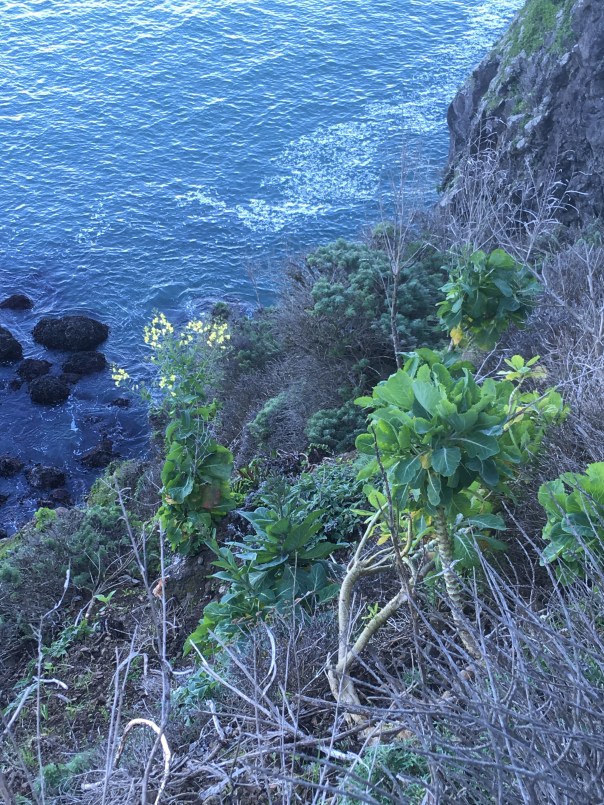
… And what do you think we saw at our feet? Mustard! I wouldn’t be surprised if these plants or their grandparents have been hanging around these bluffs for a hundred years or more; they are obviously robust and venerable.
Quite recently they’ve had baths and blow-drys, and the leaves looked so juicy…
… it’s no wonder Pippin wanted to taste a leaf. I of course had to follow suit… Yikes! That is the strongest tasting Brassica I ever hope to sample.
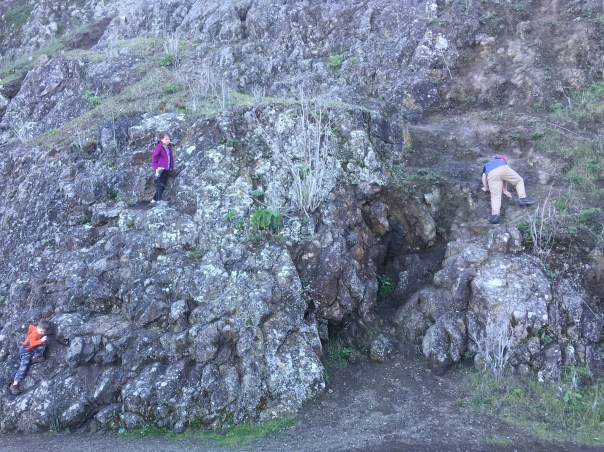
Ivy tried a periwinkle flower and spat it out. Then, the kids interacted with their environment with hands and feet, making their way up the rocky wall to our west.
We walked back up the path and drove around the corner to the former Fort Cronkhite, now part of the Golden Gate Recreational Area. From the batteries we could see north up the coast and south to the lighthouse.
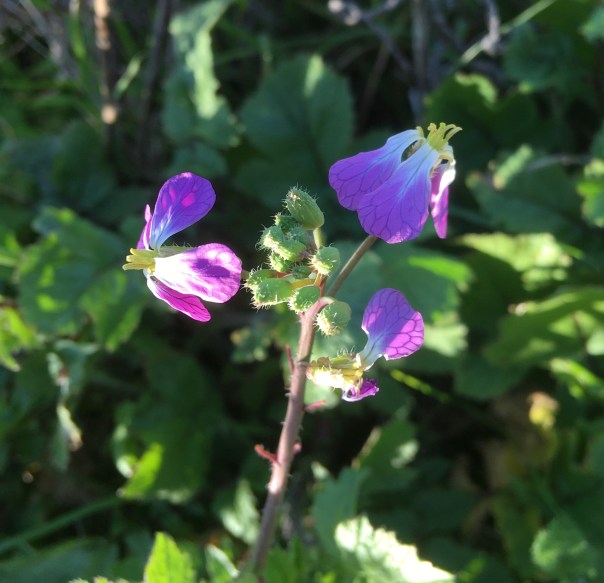
Another Brassica lives on that side, the very common wild radish, raphanus raphanistrum; shown here with violet blooms, though white and yellow are common, too. I used to notice these flowers as I walked home from the bus stop as a child. We didn’t taste this one.
wild radishCalifornia Manroot
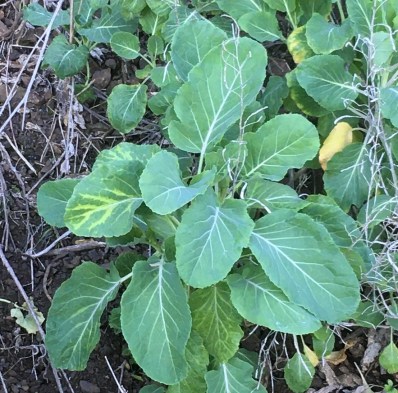
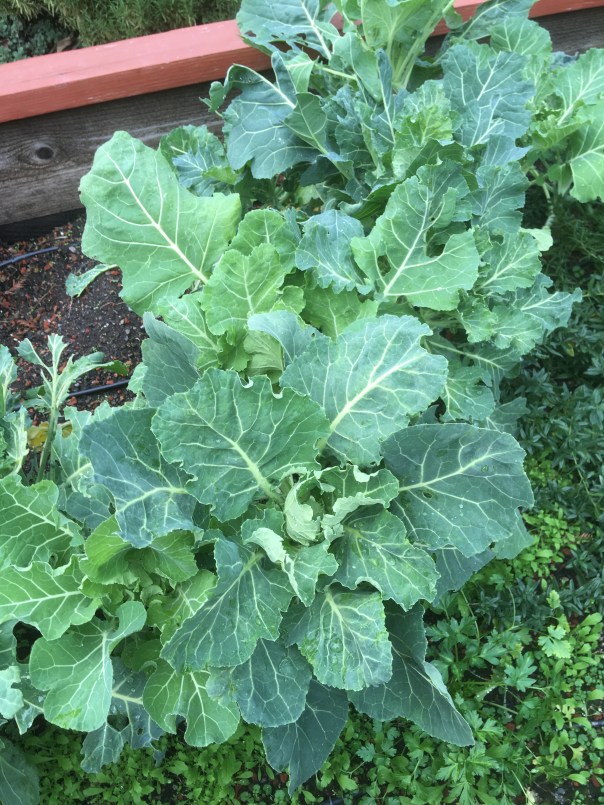
The last Brassica experience of the weekend was the next morning when Pippin took a little tour of my garden before they started home. She told me she’d eaten some of the flower buds of my collards. How did they taste? “Like broccoli.” I don’t normally eat my collards raw, but I decided to snap off all the developing flower stems, and I ate them right then. Mm-mm — they were so sweet and tender. And just around the corner of my own house.
“Modesty has moved from the organ of ambition. Modesty has settled upon the organ of conviction where it was never meant to be. A man was meant to be doubtful about himself, but undoubting about the truth: this has been exactly reversed. Nowadays the part of a man that a man does assert is exactly the part he ought not to assert — himself. The part he doubts is exactly the part he ought not to doubt — the Divine Reason…
“The old humility was a spur that prevented a man from stopping: not a nail in his boot that prevented him from going on. For the old humility made a man doubtful about his efforts, which might make him work harder. But the new humility makes a man doubtful about his aims, which will make him stop working altogether.”
Seeing posts of those who are at the beginning of Lent prompts mixed feelings in me. Orthodox Easter, or Pascha, does not come to us until May 2 this year, and our Great Lent begins March 15th, by which time western Christians will be halfway to their April 4th Easter.
Part of me is envious, and wishes we were already there, in that blessed season of “bright sadness.” But probably the greater part says, “Thank God we have a few more weeks!”
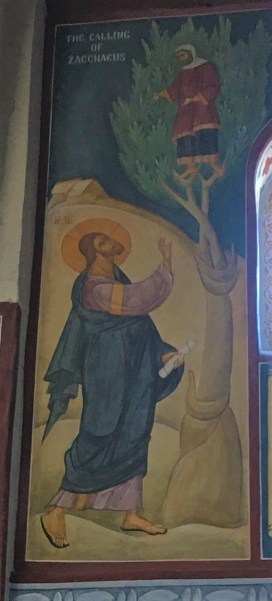
Yes… and I do want to take advantage of that time so that Lent itself won’t fly past without any effect on me. The Orthodox Church gives us five Sundays of preparation, and last Sunday was the first of those, Zacchaeus Sunday. Our rector emphasized to us that Zacchaeus climbed to a good vantage point because he wanted to see who Jesus was.
I appreciated Patriarch Kirill’s homily for the day in which he explained how Zacchaeus “…received his post from the hands of the Romans, the people who captured Israel, who enslaved the Jewish people. In modern terms, Zacchaeus worked in favor of the occupation power. And the freedom-loving Israelites, who painfully experienced everything that had happened to them – the fact that pagans seized power over the chosen people and over the holy places – treated those who voluntarily served the Roman authorities, collecting taxes from their own people, with contempt and indignation. That is why, in the minds of the Israelites of that time, the publicans were equal to the greatest sinners.
“But one of these tax collectors, Zacchaeus, was so eager to see the Savior that, being short, he climbed up a tree to see Him from there. The act itself is out of the ordinary, because Zacchaeus was one of those who had power, and adults who have power usually do not climb trees. If they need to see something, they have the opportunity to come closer: to push through the crowd, to make people part. But Zacchaeus climbed a tree, humiliating himself, only to see the Savior.”
And oh, my, wasn’t he rewarded! He did see Jesus, and apparently not just superficially. His humble act led eventually to true repentance and salvation; can you imagine how the whole town must have been astounded? As another has put it, “He lived in luxury from what he stole in the name of a hated foreign power.” It likely was not an easy process to make restitution to all the people through whom he had made himself rich, and to disentangle himself from the corruption of the political system, but however it happened, he went on to become one of the Seventy Apostles described in Luke Chapter 10.
Patriarch Kirill goes on to say, “Everything in this story is so simple and so unexpected. All human conventions are destroyed by the power of humility.” If we also can act in such a way that we begin to see Jesus more clearly, there is no telling what huge changes might begin in any of us, for the glory of God and our full salvation.
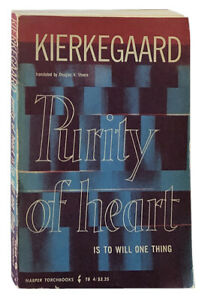 I would like to read more of Søren Kierkegaard’s writings. My intent is on display in the form of four titles by him that I have had sitting on the mobile bookshelf here in my kitchen/family room, for a year at least. I guess if I could decide which to read that would be a good start. A biography of him I am not likely to get to, but who knows…? In the meantime, I am reading this homage by Dana Gioia in the form of a poem. Seems like after this I owe it to Kierkegaard to read at least one more of his own works, though not in hopes of explaining any “riddles.” Only God can do that, and we know that He will — all of them, all of us.

 Yes, that mustard above is mustard, and in this context it isn’t considered a weed that needs eradicating. It actually helps suppress the nematode population among the grapevines, because mustard contains high levels of biofumigants in the form of glucosinolates. Evidently the sharp flavor isn’t appreciated by the nematodes. However the mustard got there, it’s ubiquitous now, and beneficial.







 Plantain was growing everywhere beneath our feet, mixed in with the oxalis. Scout told me that if you get a rash from stinging nettle you can chew some plantain and put it on the rash to soothe it. But there were no nettles in this neighborhood, and we left the plantain alone.








 Seeing posts of those who are at the beginning of Lent prompts mixed feelings in me. Orthodox Easter, or Pascha, does not come to us until May 2 this year, and our Great Lent begins March 15th, by which time western Christians will be halfway to their April 4th Easter.
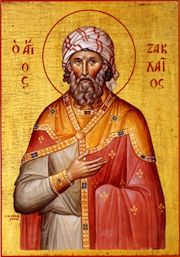 And oh, my, wasn’t he rewarded! He did see Jesus, and apparently not just superficially. His humble act led eventually to true repentance and salvation; can you imagine how the whole town must have been astounded? As
