This morning I prayed at home and participated as much as possible in the streamed service of Divine Liturgy; I could see the wind blowing the vestments and the hair of the servers, and I knew that those worshipers who stood outdoors and out of the picture were bundled up against the elements. At least the sun was shining weakly.
It is November 8, when we commemorate the Archangel Micha el and the Other Bodiless Powers. Father James in his homily shared this verse that he still prays daily.
Angel of God, my guardian dear,
To whom God’s love commits me here,
Ever this day be at my side,
To light and guard, to rule and guide.
I had never heard it before, because I never knew about guardian angels when I was a child. I wonder if that prayer rhyme is ever sung to a tune? I would like to sing it every day myself.
The Gospel and the Epistle for the day also gave me a lot to think about here as I write, but I will just mention the angels after all. I looked through my blog posts to see what I’ve shared before, so that I don’t just repeat myself. What I came away with is great comfort and encouragement from the fact of the countless bodiless powers that God sends around, to accomplish His holy will. Our women ‘s quartet brought bright images to our minds as they sang:
He makes His angels spirits,
and His ministers a flame of fire.
(Psalm 104)
If you could use a little bolstering as we go into the dark time of the year and you are still not able to be with the people you love as much as you would like, or at all; or if for any number of reasons you are not at the peak of positivity, you might browse all the things I have shared about angels. If you click on the tag “angels” in the header, it will take you to previous posts that include links to articles from people who know more; for example, this page tells about how the date was chosen in the early fourth century, and about the nine ranks of angels and their services.
“When you are praying alone, and your spirit is dejected, and you are wearied and oppressed by your loneliness, remember then, as always, that God the Trinity looks upon you with eyes brighter than the sun; also all the angels, your own Guardian Angel, and all the Saints of God. Truly they do; for they are all one in God, and where God is, there are they also. Where the sun is, thither also are directed all its rays. Try to understand what this means.”
-St. John of Kronstadt
This morning, as the distribution of the Holy Mysteries of Communion began, the view for us watching remotely was turned upward, so that we could see the dome of the cathedral. There was our Savior, surrounded by the seraphim and the cherubim who cry,
“Holy, Holy, Holy is the Lord God Almighty!”


 But twice this month it happened. Once after the attack the raptor sat on the fence, backlit by the morning sun; I could see the shape and size of it, and the color of its breast. The next time I saw its dark gray back just before it disappeared. I think it was a Cooper’s Hawk. When




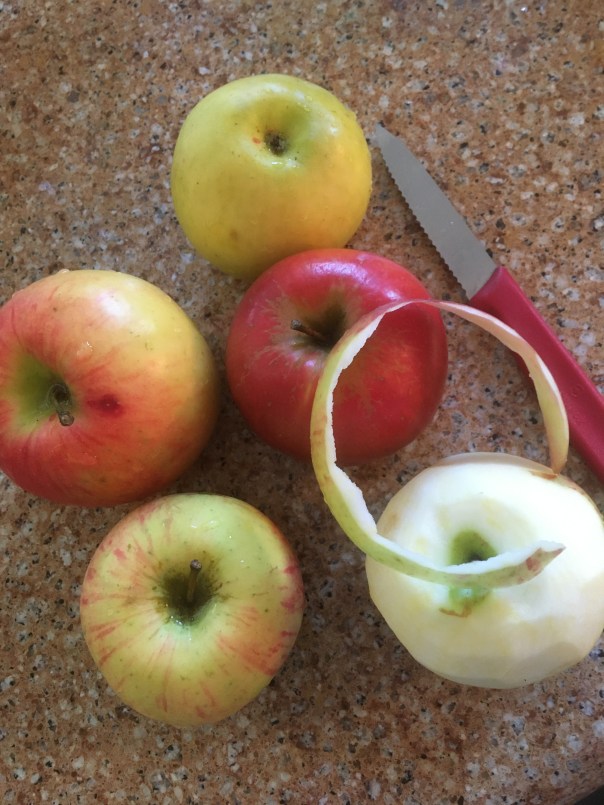
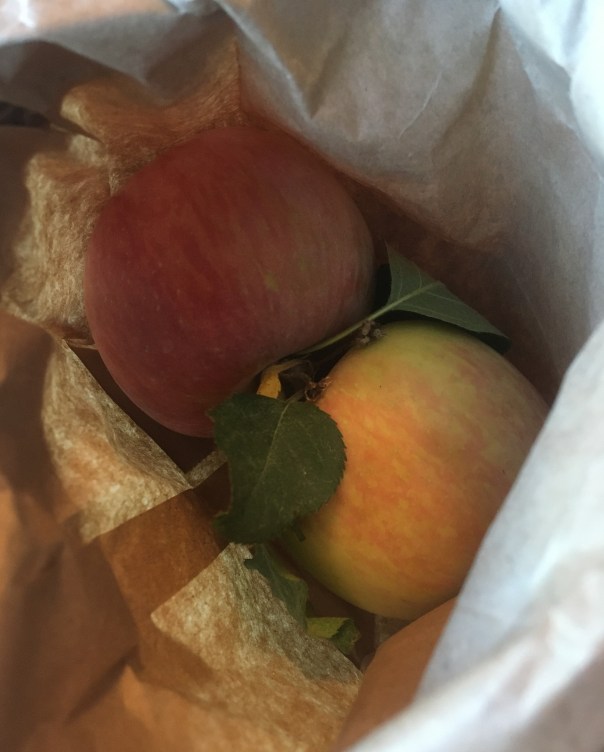 Mrs. Bread and I thought we might sit on her deck and chat… or, we might meet at the beach and walk. But in the end, she came to my garden in the afternoon, and brought me two perfect Fuji apples just picked from her tree.