 Not only is my mind typically scattered to the four winds, but it is also buffeted and pushed down and downright dominated by currents of thought — and current events — that somehow turn into raging hurricanes. But in my daily life, they are only passing and mental hurricanes, so when I read this quote from my daughter Pearl, I was freshly encouraged to call frequent moratoriums on the practice of wondering whether it might be a Viking or a bomb or a car wreck that will eventually make my loved ones suffer.
“In one way we think a great deal too much of the atomic bomb. ‘How are we to live in an atomic age?’ I am tempted to reply: ‘Why, as you would have lived in the sixteenth century when the plague visited London almost every year, or as you would have lived in a Viking age when raiders from Scandinavia might land and cut your throat any night; or indeed, as you are already living in an age of cancer, an age of syphilis, an age of paralysis, an age of air raids, an age of railway accidents, an age of motor accidents.’
“In other words, do not let us begin by exaggerating the novelty of our situation. Believe me, dear sir or madam, you and all whom you love were already sentenced to death before the atomic bomb was invented: and quite a high percentage of us were going to die in unpleasant ways. We had, indeed, one very great advantage over our ancestors—anesthetics; but we have that still. It is perfectly ridiculous to go about whimpering and drawing long faces because the scientists have added one more chance of painful and premature death to a world which already bristled with such chances and in which death itself was not a chance at all, but a certainty.
“This is the first point to be made: and the first action to be taken is to pull ourselves together. If we are all going to be destroyed by an atomic bomb, let that bomb when it comes find us doing sensible and human things—praying, working, teaching, reading, listening to music, bathing the children, playing tennis, chatting to our friends over a pint and a game of darts—not huddled together like frightened sheep and thinking about bombs. They may break our bodies (a microbe can do that) but they need not dominate our minds.”
—C.S. Lewis, “On Living in an Atomic Age” (1948)
 I also don’t need to spend (all my) time researching how bombs are made, or why the Vikings are so ruthless. Which is great, because it leaves more time for writing a chatty blog post to my friends, which is a very human thing to do, and I hope sensible as well.
September 1st really felt like the first day of fall! It hasn’t warmed up much since, but I’m sure we will get some hot days in the next weeks. My fig tree is absolutely loaded, and one of the four winds that my mind goes to is Preparation for Preserving. Get out the dehydrator, and gear up for the harvest: pushing through the perennials and bushes that surround my tree, and stooping under the low-hanging branches to extract the plump fruits, which are revealed by contrast with the big green layers when one by one they turn black.

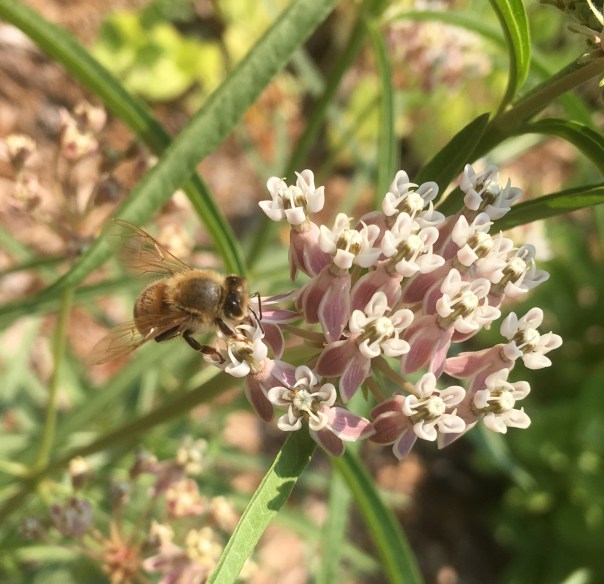
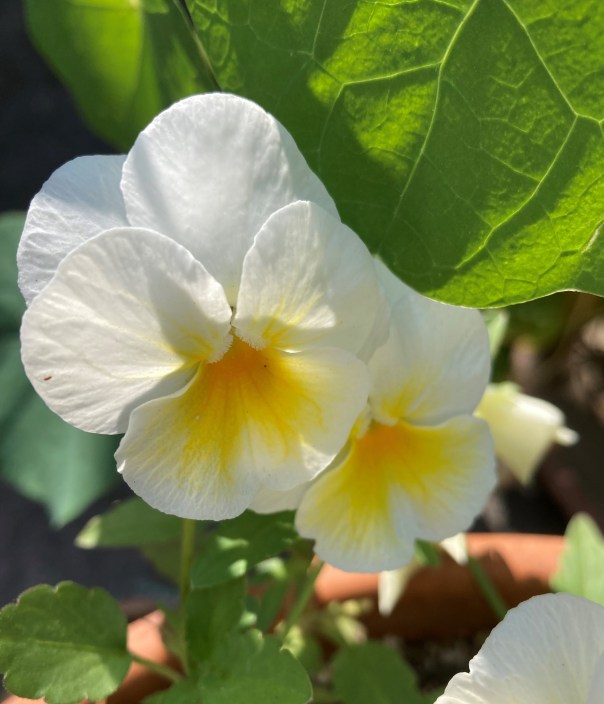
I went to a nursery the other day to lay in a supply of echinacea purpurea plants to set out this month. Some areas of my “new” landscaping need reinvigorating after six years, and I have been longing for the standard echinacea species that I used to have. The white ones in my front garden are thriving, the multicolored ones in the back are not.
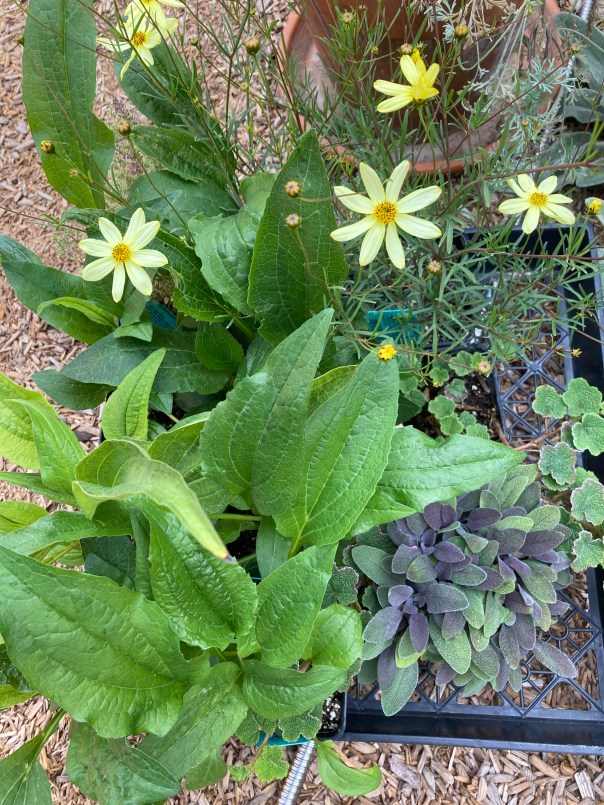
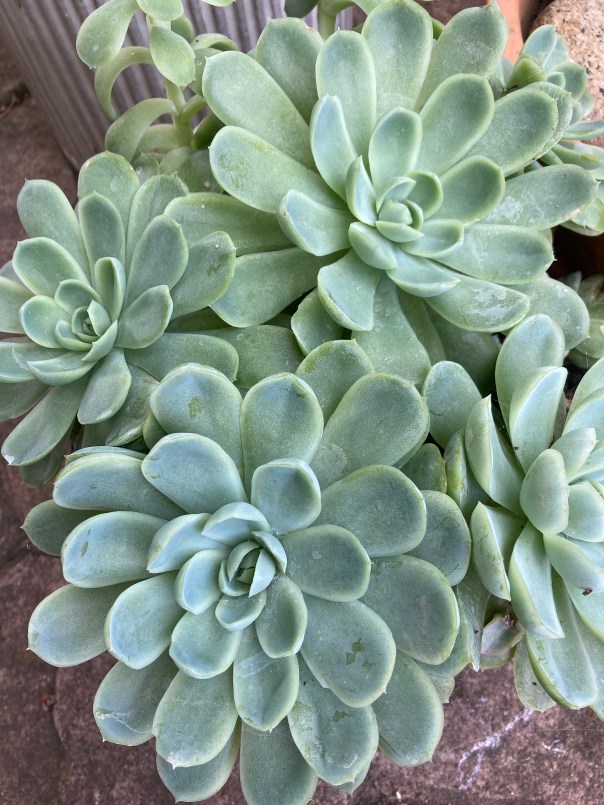
A friend who was moving across the country asked if I would like any of the potted plants he’d kept on his small patio. I evidently hadn’t paid much attention to them when I’d visited his duplex, because I said I’d take them all, and was quite surprised to end up with 37 pots of plants. Three of them are quite large, and two of those are gorgeous jade plants.
So — I have more lovelies in my garden to keep me company and give me good work to do. This morning I went out to take pictures of a couple of them to post here, and ended up watering. Not one but two blue jays were visiting my property, and adding to the ambiance with their scratchy voices that make me feel for a moment that I am in the mountains. I noticed a ripe fig, and ate that as a fast-food breakfast. Then… a few ground cherries for dessert! Ah… September.

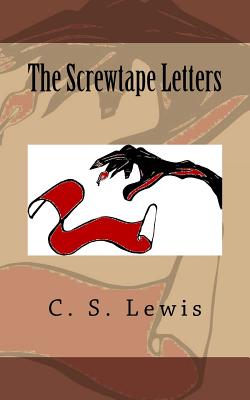 “The whole philosophy of Hell rests on recognizing the axiom that one thing is not another thing, and specially, that one self is not another self. My good is my good, and your good is yours. What one gains another loses. Even an inanimate object is what it is by excluding all other objects from the space it occupies; if it expands, it does so by thrusting other objects aside or by absorbing them. A self does the same. With beasts the absorption takes the form of eating; but for us, it means the sucking of will and freedom out of a weaker self into a stronger. ‘To be’ means ‘to be in competition.'”