Tag Archives: irrigation

My tree is stressed and so am I.

The fig tree towering over my garden is loaded with fruit — but wait, what is wrong here? The figs are turning purple while they are still very small; they stay hard, they stay small, and they fall on the ground. You can see in the photo below how they don’t have enough water content to droop at all, and the sign of a ripening fig is that it droops more and more on its stem until it is hanging quite limp and juicy and sweet. I am distressed about the situation, but from what I’m reading the tree has been stressed. And I think I know why.

My wonderful new landscaper who turned out to be not so wonderful, adjusted my irrigation settings several weeks ago, and since then I’ve been concerned about a few plants that don’t look happy. When I checked the control box it appeared that everything was horribly mixed up, but I didn’t trust myself to understand it, so I had my neighbor down to look at the setup, and between us we got it straightened out.
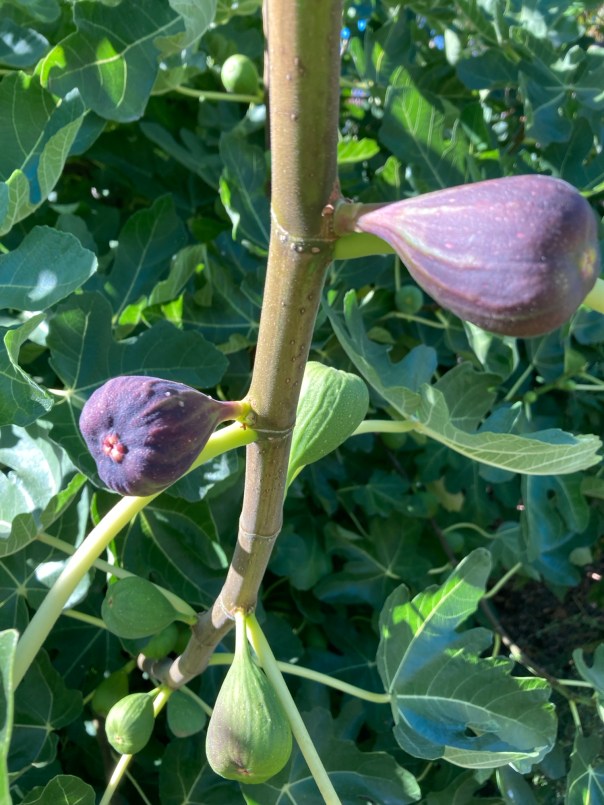
In the meantime the poor tree was very thirsty. Evidently when this happens the tree itself doesn’t show signs of stress, but it neglects the fruit ripening process. I have followed advice online to remove the smallest fruits at the ends of the branches, farthest from the tree; many of these were only 1-2 centimeters in diameter and probably would not have ripened before the frost anyway. Removing them lets the tree pour more energy into the larger fruit, and I hope at least some of them will ripen. I gave the tree a deep watering with the hose, too.

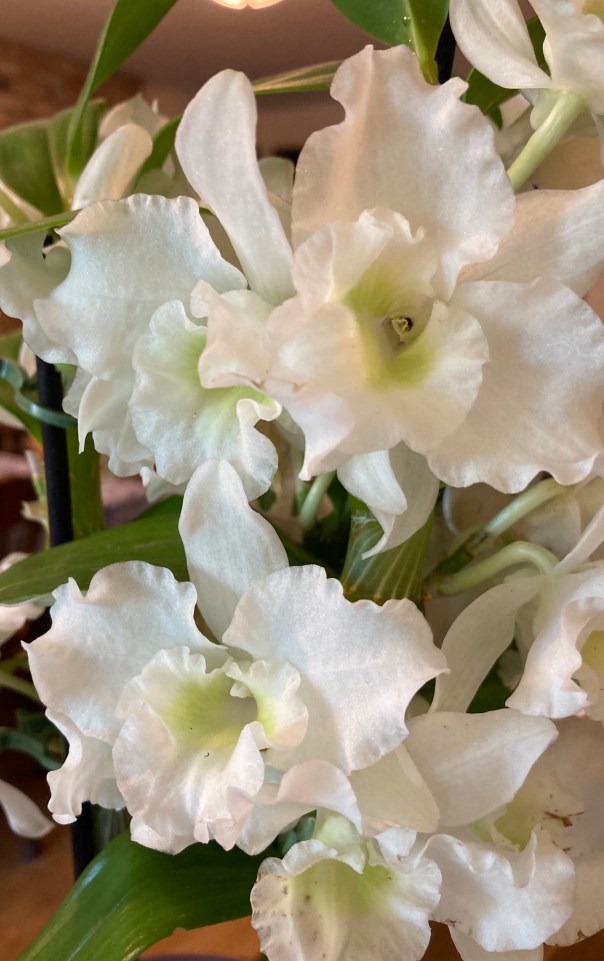
My newest orchid.

We’ve been having nice warm weather for a week or so, but at this moment it is raining. This afternoon the sun was shining and I had a young family for lunch. The children played in the garden and the playhouse, arranging salads on the little plastic plates. They’d collected snippets of parsley, mints, cherry tomatoes, rosemary, lavender, and even kale, and to top it off, asked me to cut up a lemon for them to squeeze over. They liked their salads better before the addition of lemon.

I showed them this bird’s nest that I found in the fig tree. It doesn’t look as though any baby birds hatched in it. It is very clean, and a unique building project. I see familiar materials from close by: cast-off garden twine (two types), needles from the Canary Island Pine, long Bermuda grass stems, and even dried nigella flowers. The strangest element, and not something I’ve seen outside here, is steel wool, forming the center of the bottom.

At least half the garden is in transition and upheaval right now; I will soon have all of the irises out and will amend the soil in several places before I put those back, or install the many new plants I have, or transplant old ones to an environment with more suitable amounts of sun.

milkweed

The tarragon has flowers! That was a surprise; it’s evidently a bigger plant than I can make use of anymore. It will go dormant soon…
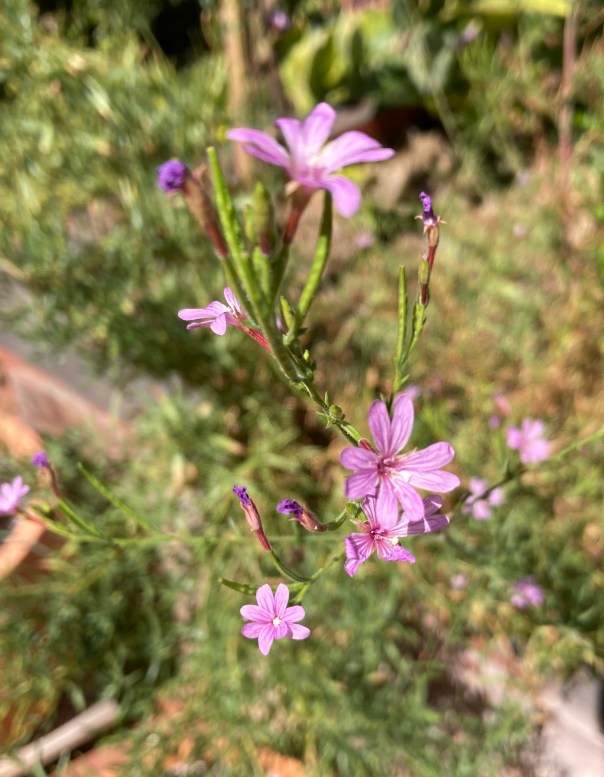
Tarragon flowers

I finally took the time to cut zinnias and bring bouquets into the house, for the sake of my lunch guests. They are like much of my backyard garden now, not getting as much sun as they used to, and they are leggy — but plenty productive. Yesterday I was able to spend quite a while, in the 90-degree heat, tidying up all over the place, so I feel better about the stuff that remains undone. And there are still twelve days left of September ❤

Sometimes both useful and easy.

When I posted about borage two months ago, half of the commenters said they also hadn’t had luck growing it. For some it didn’t reseed itself; for others, the summers were too hot. Kim said, “I have always thought it to be easy,” though she doesn’t have any growing right now.

bee drinking from oregano

The uses of borage was the subject of several comments; a couple of people said they didn’t know what they would do with it if it did thrive. But Cathy wrote, “It is such a captivating plant which attracts bees and creates curiosity from human garden visitors.”

And it is primarily for the bees that I thought to grow it in my Pollinator Garden, and so that I could behold that pretty sight of borage with bees buzzing happily around it. I let the insects make use of the plants, such as the oregano I always grow, but rarely use myself. The bees drink their fill of its nectar and last year I got good pictures of them doing it. So I guess I would use borage as material for my photo art. 🙂

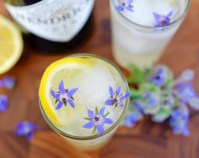
I want the borage for its pretty, often gorgeously blue, flowers. I would like to have a few of those flowers to put in salads or in cold drinks in the summertime. Martha asked if I would be making tea with it — perhaps I would! They say that tea made from the leaves tastes like cucumber. Here is a picture from the Internet of one way I can imagine enjoying those blue accents, come August.
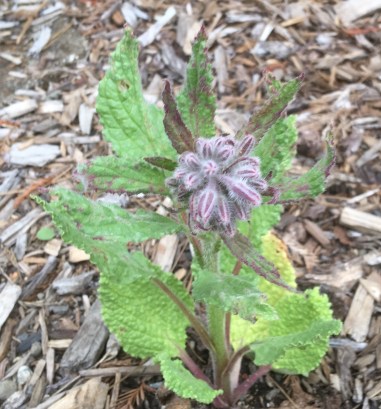
A young friend dug four borage plants from her garden and brought them to me at church just this month. Then the weeks of rain began, so they are still sitting in their pots, but looking very healthy.

I have come to suspect that borage is a bit thirstier than most of the plants in my garden, and that previously it has died from drought. The one I bought and planted this spring is looking good after the recent season of bounty, during which its little roots were surrounded by as much water as they could drink, day after day, no matter where they reached. Once the rains stop — as of this evening, there is no rain at all on the forecast — I may just have to squirt a little extra from my garden hose on the borage, beyond what it gets from the drip irrigation.


It won’t be long before this flower cluster opens, and the bees arrive!
To do their work, to get their sweet drinks, they will find to be the easiest thing.

They come, they wake us.

pineapple guava buds

This afternoon was a healing balm, flowing from the mild-weather waking to breezes coming in at open windows, and Divine Liturgy on the Sunday of the Myrrhbearing Women. I was celebrating and extra-blessed along with all of the Marys and Susannas and Salomes, plus Joseph of Arimathea and Nicodemus. Our Sisterhood at church also counts this as our Name Day.

So after all the spiritual food and agape meal, when we finally arrived home, all three of us (my two housemates and I) spent some time out in the corner of the back garden enjoying the sun while working or reading.

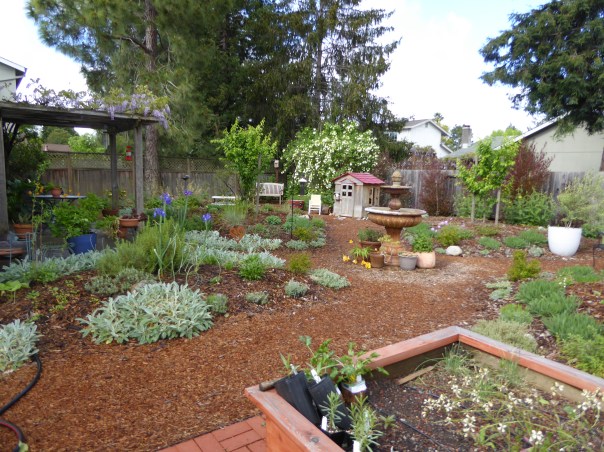
The photo below was taken two weeks ago after a rain, but it gives the rare wide view. The table where we like to sit is off the picture to the right.

Kit talked to us as she added some emitters to the irrigation lines that serve the pineapple guava. Last summer many of its leaves got sunburned, probably because it wasn’t getting enough to drink.

At dusk I went around taking pictures as I seem to do most days. The abutilon is a somewhat gangly adolescent right now, and it was near impossible to take its picture with a nice scene in the background, but each bloom is exquisite, hanging down bell-like so that one has to point a face or camera skyward to see inside. This view is also toward the street, and the lightpole near the corner of my property.

If I stand near that light pole and point my camera back toward the house,
this is what I see:

Do you see the abutilon at the far left? I have yet to finish filling in the asparagus beds on either side of the walk, though I spent a few hours on the job last week. When that job is finally completed I plan to dedicate a blog post to the topic, but by then I might be too done with it all.

Here is one of the showy milkweeds I planted a week ago – I still have narrow-leaf milkweed to put in the ground, plus tomatoes, basil, succulents, pipevine…  Tomorrow is May 1st. When I took a look at the weather forecast for the next ten days, to see how hot it might get, I was quite surprised to read that we are expected to get more rain showers. This spring I have several times been mistakenly comforted in “knowing” that we have seen the end of rain. I guess it’s too soon to start leaving my tools and toys out of doors at night.

And now, a poem, which I posted at least once before — but it does seem like one that bears repeating, with its simple and obvious truth about days such as the splendid one that for me is coming to a close. For many of you, it is already the merry month of May.

Days

What are days for?
Days are where we live.
They come, they wake us
Time and time over.
They are to be happy in:
Where can we live but days?
Ah, solving that question
Brings the priest and the doctor
In their long coats
Running over the fields.

– Philip Larkin

Wandering into Urban Homesteads

God willing, today was the last day I will have to live out of my car. The floors took two weeks instead of one. In the meantime I have forgotten how to keep house–having a thick layer of fine wood dust on everything each night has beaten me down–and haven’t learned how to be a gypsy. I’ve been leaving the house at 9:00 and wandering around the county doing little errands or some shopping. I can take all the time I want to try on clothes or look for that special title at the library’s used book store…

But today, Memorial Day, the library was closed, and there was no place to be. My bed, my computer, and some vegetables were what I longed for. I have lost all my sociability and courage and just want to be a housewife hermit for a few months.

But before today’s last straw, some outings I enjoyed were gardening at church, and having a long-overdue chat with my priest; sitting in Starbucks on a day of pouring rain and drinking the largest Café Mocha I’ve ever indulged in; and visits with crafty gardening friends.

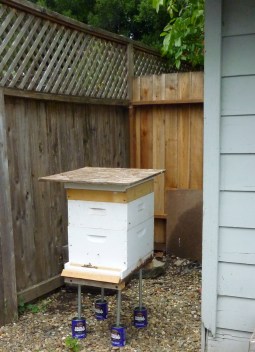
K. and S. got more chickens, and a hive of bees! They are growing everything from parsley and onions to raspberries and blueberries. K. has been knitting sweaters and socks. It was lovely to catch up on their homesteading developments.

One night we visited with our longtime friends who I will call Art and Di. Di is one my best-ever book friends; we never have enough time to sit by a fire in winter, or on the patio in summer, to talk about our reading and how it is all connected. She and my husband never tire of sharing music from their old and new favorite musicians.

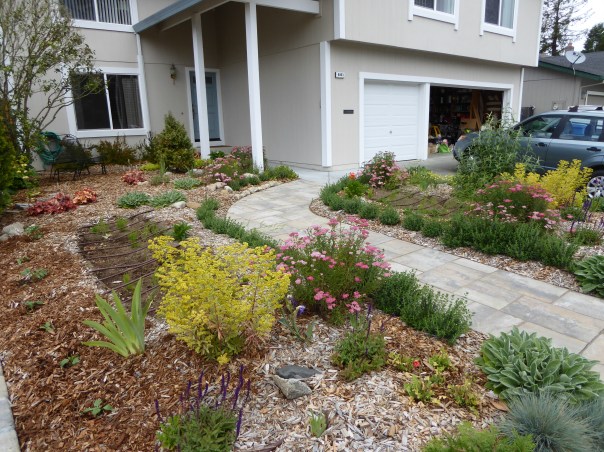
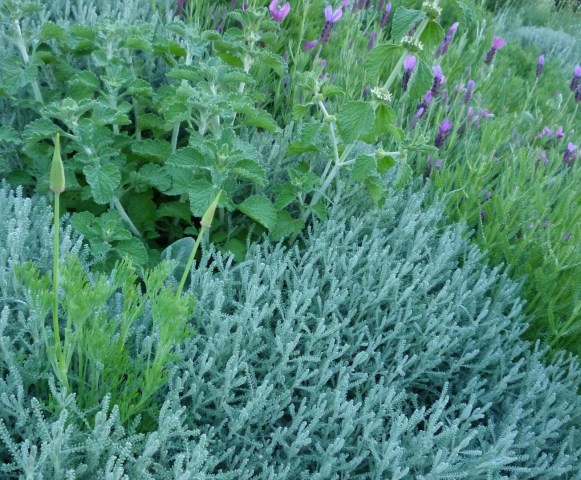
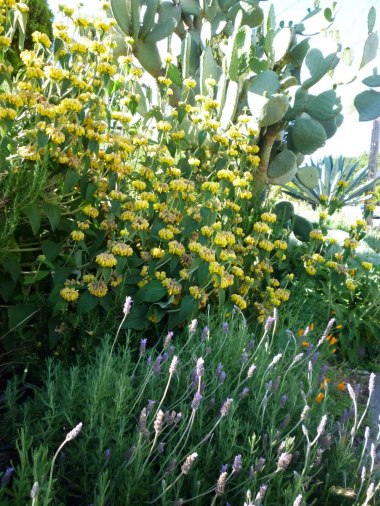
Art creates beauty, whether it’s in his sketchbook or the garden. Among the santolina, lavender, germander and California poppies he had this yellow-flowered giant I wasn’t familiar with. He said it was sage, and wanting to know just what sort, I went home and researched it online.It didn’t seem to be in the salvia group, so I set several of my botanical sleuths on the chase and found out that it is Jerusalem Sage, not a salvia but Phlomis fruticosa. I also learned that Salvia and Phlomis are both members of the Lamiacea family, also known as the mint family.

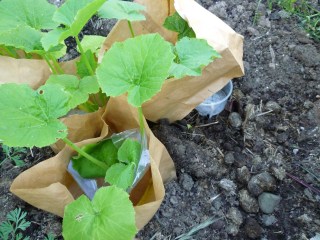
In addition to propagating unthirsty plants such as the ones that populate the textured garden in their front yard, he has created a clever drip/wicking irrigation system that gets the needed amount of water right to the roots of his back yard vegetables. In the photos here, if you look closely you can see that the wick goes into a piece of hose carrying the moisture deep to the root zone. The paper bag that normally hides the water pot from the sun has been lifted briefly for me to see it.


Writing about these inspiring gardens and people I love is helping bring my most stressful day and fortnight to a better close than I thought possible when I sat down here an hour ago. Just remembering gardens and books and good friends is soothing and healing.