 Eric Hyde is an Orthodox Christian psychotherapist writing at Eric Hyde’s Blog. I appreciated his brief musing, on the increase of his understanding of boredom from reading Heidegger; he combined it with his own experience and that of his clients, in this post: “Heidegger’s ‘Profound Boredom’: using boredom to cultivate the soul.”
Heidegger names three levels of boredom, the most extreme which is profound. To many people, the idea of profound boredom probably sounds frighteningly close to deep depression — a condition to be avoided at all costs. But I have heard more than one person say that they welcome boredom — even if it is said half-jokingly, as in, “I wish I had time to be bored!” But there are various ideas out there about what boredom is, and theories about what to do about it, if anything. I’d like to learn more about the difference between boredom and acedia. So this probably won’t be my last post on the subject.
Eric Hyde writes:
“If you’ve ever sat alone at the beach, or in the mountains, or the country, or sat gazing at the fully illumined night sky and had that deep sense of your own smallness, of your own seeming triviality in the broad scope of existence, and yet rather than crushing your soul it gave you a sense of calm wonder, a sense of spiritual ordering, then you’ve likely had the experience of profound boredom as Heidegger described it.
“In short, what I found so powerful in the notion of profound boredom is that boredom has the power to grant a person ‘attunement’ to oneself and to existence as  a whole—or more properly speaking, attunement to Being as a whole—in a truly spiritual manner. Rather than causing torment, boredom, if used properly, can be at once a guide to peace and a guide to the very mystery of being.”
I’m familiar with this attitude, because it is commonly taught in the Orthodox Church; offhand I think of books on prayer by Metropolitan Anthony Bloom.
Hyde gives three tips:
1. Don’t wait for boredom to find you—search it out.
2. Once there, allow boredom to reveal its message.
3. Repeat daily.

 “Books you have read share a deep ontological similarity with books you haven’t: both can be profoundly fuzzy. At times books you haven’t read shine more brightly than those you have, and often reading part of a book will shape your mind more decisively than reading all of it; there is no inherent epistemic superiority to having read a book or not having read it.”
 we have the same feeling in a forest, at the beach, in a big city, or simply in breathing? There is more going on in our body every second than we will ever understand, and yet we rarely feel bothered by our inability to know it all. Books, however, are designed to make demands on our attention and time: they hail us in ways that nature rarely does. A thing is what Heidegger calls zunichtsgedrängt, relaxed and bothered about nothing. A plant or stone is as self-sufficient as the Aristotelian god or Heidegger’s slacker things, but books are needy. They cry out for readers as devils hunger for souls.”
 I came to the end of Irrational Man: A Study in Existential Philosophy, and feel that my engagement with the author and his theses has barely begun. The insights about eternal human longings down through the ages, and even small details about the lives of individual thinkers, will be rattling around in my mind for a long time to come, and I hope to refer to some of them in the future.
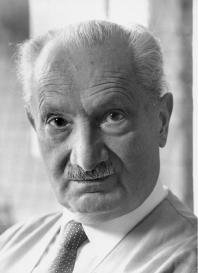
 “If man is to be given meaning, the Existentialists have shown us, it must be here and now; and to think this insight through is to recast the whole tradition of Western thought. The realization that all human truth must not only shine against an enveloping darkness, but that such truth is even shot through with its own darkness may be depressing, and not only to utopians. But it has the virtue of restoring to man his sense of the primal mystery surrounding all things, a sense of mystery from which the glittering world of his technology estranges him, but without which he is not truly human.”
 Gladsome Lights