In the spring of 2018 Father Stephen Freeman wrote on “The Inherent Violence of Modernity,” and at that time his thoughts prompted me to browse definitions of violence. Many of them are along the lines of “causing or intending to cause damage,” but the most succinct was “extreme force.” Father Stephen’s use of the word is based on the idea of us trying to “make it so,” improving society, changing other people, making the world a better place. I offer a few selected paragraphs from his article, and from his replies to comments on it:
“The philosophy that governs our culture is rooted in violence, the ability to make things happen and to control the outcome. It is a deeply factual belief. We can indeed make things happen, and, in a limited way, control their outcome. But we soon discover (and have proven it time and again) that our ability to control is quite limited. Many, many unforeseeable consequences flow from every action.”
“Modernity has as its goal the creation of a better world with no particular reference to God – it is a secular concept. As such, that which constitutes ‘better’ is, or can be, a shifting definition. In Soviet Russia it was one thing, in Nazi Germany another, in Consumer-Capitalist societies yet another still. Indeed, that which is ‘better’ is often the subject of the political sphere. But there is no inherent content to the ‘better,’ nor any inherent limits on the measures taken to achieve it. The pursuit of the better (‘progress’) becomes its own morality.”
 “Keeping the commandments of Christ is not doing nothing. It is, however, the refusal to use violence to force the world into ever-changing imaginary versions of the good.”
“We do not have ‘responsibility as citizens.’ That is the rhetoric of the modern state. We have responsibility to God, to keep His commandments. That might very well exceed anything we think of under citizenship. Frankly, we need to quit thinking like ‘Americans’ and think as Christians. Most people’s idea of engaging politically is nothing more than the cheap, never-ending notion of having opinions and occasionally yapping about them. There is no commandment to have opinions and express them. There is no commandment to take political action. Modernity suggests that the political realm is that actual definition of ‘reality.’ It is where we do things. This is false and makes an idol of the state. The political realm is the place of violence.”
“Do not ask, ‘How can we fix the world?’ Instead, ask, ‘How should Christians live?’ and give the outcome of history back to God.”
What is the answer to “How should Christians live?” At the end of his article Fr. Stephen gives a few ideas, which are very appropriate for Christmastime, as the first of them all is:
“Live as though in the coming of Jesus Christ, the Kingdom of God has been inaugurated into the world and the outcome of history has already been determined.”

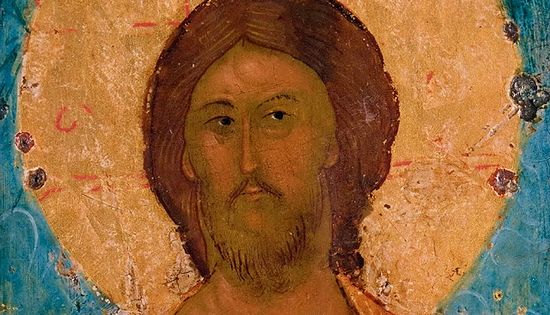
I think my favorite on his short but broadly useful list is: “Love people as the very image of God and resist the temptation to improve them.” I know that each of us has our own unique set of circumstances to deal with, including people who want to change us or who obviously “need improvement” and are not fun to be with. May God give us grace to be thankful for even them, and to love them “as the very image of God.”


 Gladsome Lights