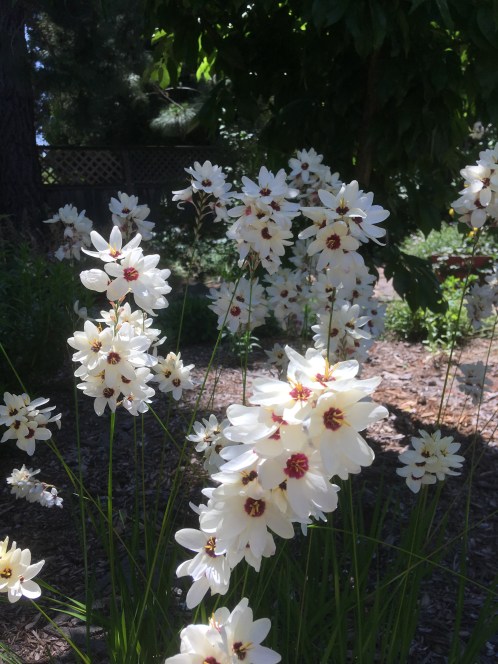
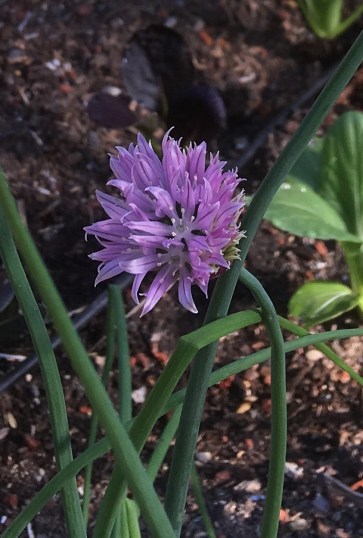
When I had brought flowers into the house this afternoon, I thought to share them, by way of one of those “Wordless Wednesday Saturday” type of posts, because what could one say that’s better than what the flowers themselves are are already communicating? Unless they are communicating to you what a failure at flower-arranging I am…. My excuse is that I have such atypical flowers for arranging, excepting the callas. This is the first time I’ve used acanthus. The purple blooms are chives, and the white that aren’t callas are ixia.
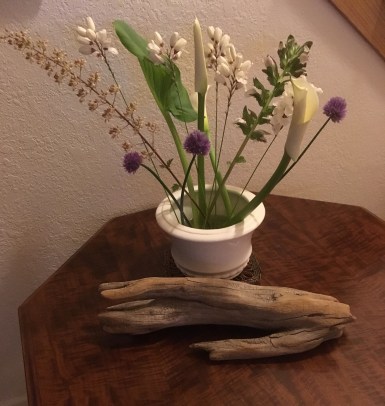
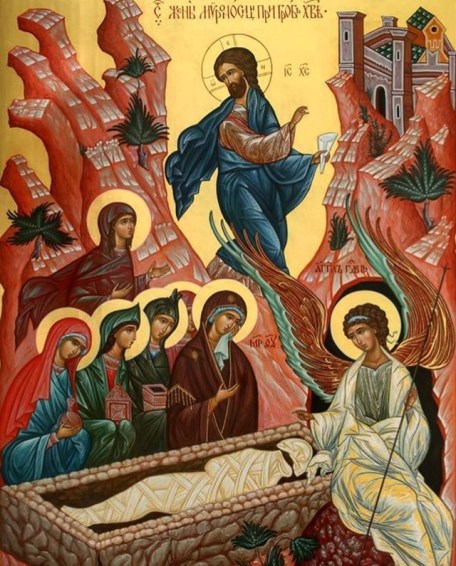
I wouldn’t have written any of those words, if I hadn’t remembered that it’s Myrrhbearers’ Sunday: I always want to express appreciation for my patron saint Joanna who is numbered among the women who came to anoint the Lord’s body. Flower essences were likely used in the ointments that the women brought to the tomb, and flowers are often given to one’s mother around this time, so let my flowers be in her honor, who is one of my mothers in the faith.
The following I found on our parish announcement page:
Joanna the Myrrhbearer was the wife of Chouza (he was the steward-administrator of King Herod Antipas). She is listed as one of the women, along with Susanna, Mary Magdalene, and others, who “had been cured of evil spirits and infirmities” who accompanied Jesus and the Apostles, and “provided for Him from their substance.” (Luke 8:2-3)

In Luke 23:55–24:11, we have the story of how these same women went to the tomb of Christ as Myrrhbearers to finish the job of embalming Jesus’ body, which was hastily begun by Joseph and Nikodemos. They were perplexed when they found the tomb empty except for the grave clothes. An Angel appeared to them and proclaimed the Resurrection of the Lord. They believed and became the first evangelists of the risen Christ, and became “Apostles to the Apostles.”
Although not mentioned by name, Joanna is most likely counted as one of the women who joined the disciples and Mary, the mother of the Lord, in the upper room in prayer. She was among the group of 120 who chose Matthias to fill the vacancy that was left by Judas, as well as being present on the Day of Pentecost.
According to tradition, Joanna recovered the head of St. John the Forerunner after Herodias had disposed of it (Feb. 24). When Herodias had John beheaded, she cast the head out into an unclean place. Joanna took the head and buried it with honor on the Mount of Olives, on Herod’s land. Later, in the reign of Constantine the Great, the head was found.
An ossuary has been discovered in Israel bearing the inscription, “Johanna, granddaughter of Theophilus, the High Priest.” Whether this is the same Joanna as the Myrrhbearer is unknown.
Just as Joanna stood beside the tomb,
So also she stands beside the throne in the age to come.
—Liturgical verse
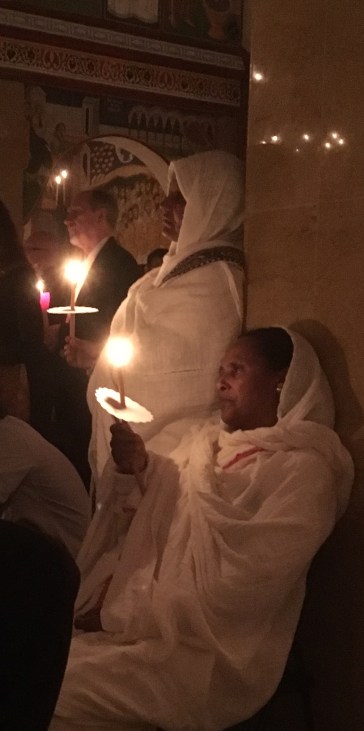
 There is not one word for the way so many of us Orthodox feel when we have come to the end of Lent and Holy Week, and are finally standing in church on Pascha night, exhausted, brain dead, dizzy from sleepiness, feeling a little (or a lot) out of whack from keeping strange hours and eating little. Parents of young children have been dealing with toddlers crying from fatigue and their older siblings longing to go to the day’s special service at church.






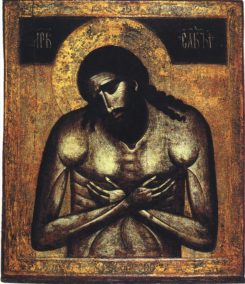 adds, ‘even death on a Cross.’ The point of the ‘even’ is not that the Cross is painful above all pain, but that the Cross is shameful above all shame.”
 Gladsome Lights