For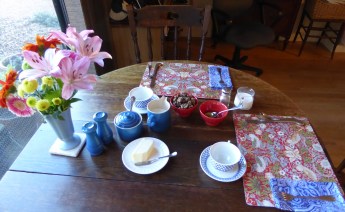 a long time I’d been hoping to keep St. Brigid’s Day with some kitchen activity; I even programmed the idea into my online calendar and every year toward the end of January the e-mail reminder arrived, “If it’s not a fasting day, make Irish food.” As the day came and went year after year, always on the eve of a major feast of the Orthodox Church, there was never time or energy to enact my plan. Until this year.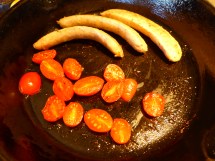
I had invited my goddaughter Sophia for a birthday brunch on February 1st, and when I started planning the menu I realized that we could remember St. Brigid at the same time and have an Irish theme to the food.

St. Brigid’s Oaten Bread would be the center of the spread, and I found many recipes for it online, all identical. I added a few more menu items imitating an “Irish Breakfast,” which I know was not perfectly authentic, but we relished the bread and everything else, warmed by a good fire in the stove and drinking Irish Breakfast tea to boot.
Next year I might incorporate more of the Celtic traditions surrounding St. Brigid, including the fact that February 1st is considered Celtic Spring, and the custom of not bringing snowdrop flowers into the house until that day. From Heather’s comment on my snowdrop post, and from other sources, I learned more about the saint and the season just after my party. I didn’t even think to bring snowdrops into the house on that Celtic spring day, because I had so many flowers left from our house blessing the week before.
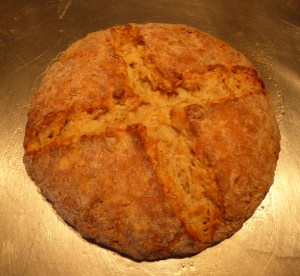
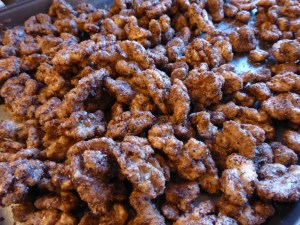 Confession: I actually did alter the bread recipe a bit, partly because I had an egg yolk left over from making these Candied Espresso Walnuts (a food that would have been strange to St. Brigid). I thought she would have thought it natural to use the extra yolk in the bread, because a farm girl like her would not waste it. And she would not blink an eye when she saw me adding an extra tablespoon of butter; I know this because more than one story about her reveals her appreciation of this wonderful food. Sophia and I blessed our Brigid’s bread by spreading extra butter on our thick slices.

The next day after St. Brigid’s we would commemorate the Presentation of Christ in the Temple, which is also called Candlemas because we bless candles. This year our rector mentioned Groundhog Day and its marking of shadows. He noted that because we came to church, we ourselves saw no shadows, only the Light of Christ shining in the world.
I like what Macrina Lewis wrote recently about these days and others through the church year:
…many of our major Christian feasts hearken back with echoes through prior centuries to pre-Christian religious and cultural celebrations, often tied closely to the earth and to the earthly rhythms of human life: birth, death, harvest, preparation, feasting. In the illuminating glory of the sa ints’ lives and the liturgical expression of the church, these feasts, these divine seasons, have been revealed in their fullness, elucidated and offered as a way for each of us to personally participate in their mysteries directly. What was formerly in shadow…has been illumined with the knowledge of faith and the fullness of God’s presence.
Thinking about those earthly rhythms, I have to say that the darkness of January did not get me down this year as it has tended to do in recent years, and I wonder why… Is it because I have so much work to do? Just watching the birds through the window as they explore my new garden must elevate my mood. Certainly being part of a worshiping community, right here in my house, keeps the gloom at the level of something “out there” that we don’t have to partake of; we worked joyfully to spiff up the house and cook a meal together for the occasion of our house blessing last week. The skies have featured rain or wind, which is not the kind of weather that leads to a prohibition of wood fires, and now three of us in one house both appreciate and even build fires almost every day.
I’ve continued to sorrow and to grieve the loss of my husband, but in sharper, briefer episodes than the kind of depression that can come from lack of sunlight. The sadness often comes over me when I’m standing in church, as sitting in my Father’s lap, and He soon comforts me by making me feel all the love and loveliness in His house. Into the darkness of a hurting and wintry world, Jesus Christ shines warm and bright.
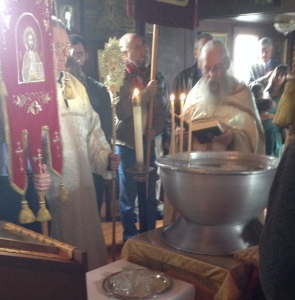
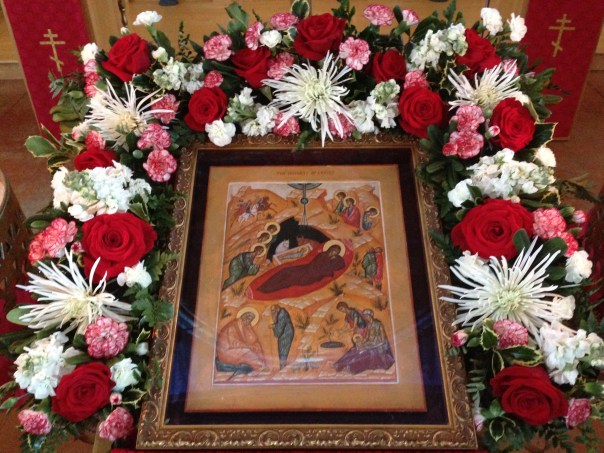
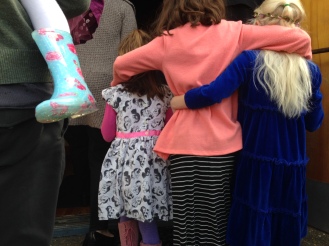 s has recently been well watered by rains that we acknowledge to be gifts of God, so it seemed this week that all of nature was participating in our celebration of the baptism of Christ.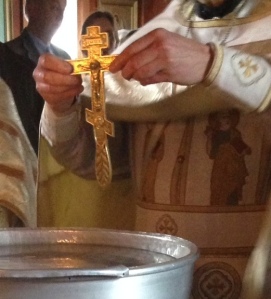
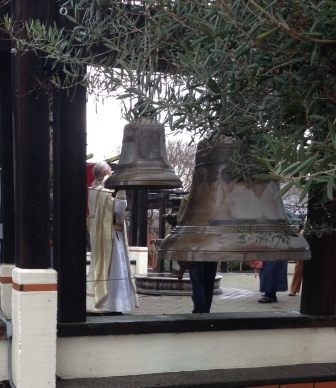
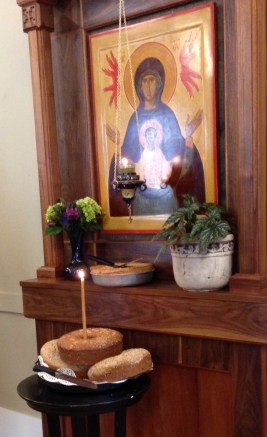 In addition to being one of the twelve great feasts of the church year, today is the day we remember St. Basil the Great, and after Liturgy this morning we gathered in the fellowship hall to eat some St. Basil bread, of which we had four loaves, including one gluten-free. The Greek word for this is Vasilopita, and many traditions have grown up around it over the centuries. I like this telling of the story linking it to St. Basil: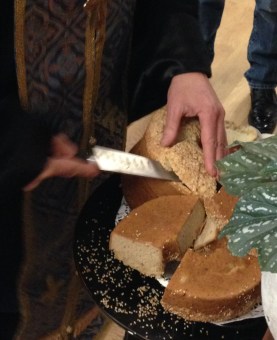
 not what the title of my post refers to. It is a phrase from the hymnography of the Orthodox Church for the commemoration of the Beheading of John the Baptist, which we who use the Gregorian Calendar remember on August 29 every year.
 Gladsome Lights