Category Archives: food and cooking

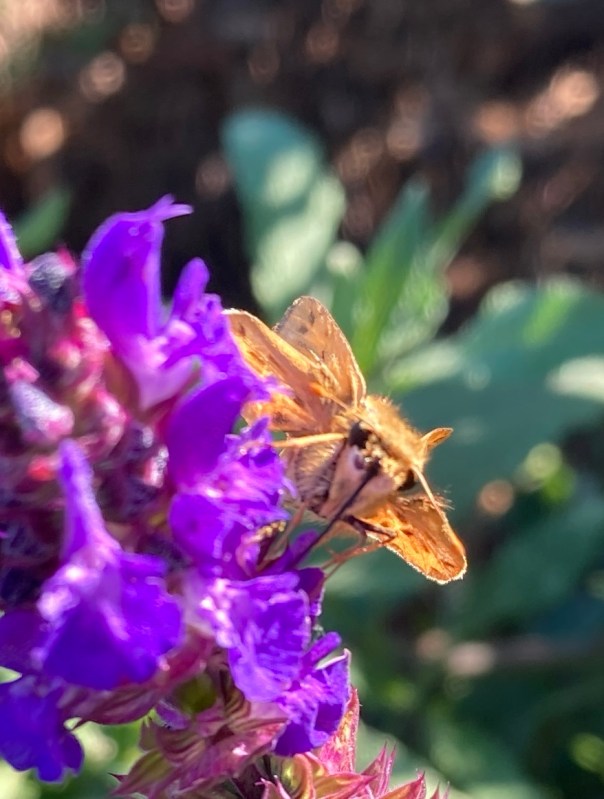
The languid skipper sets an example.

When I was pruning the salvia in front, this skipper was languidly sipping from the same. You can see its proboscis going right down in. The creature was definitely not feeling skippy… I wonder if skippers die in winter? Did it lay eggs somewhere already?

So much is going on in the garden. These irises really should have been divided again — but, already? I’m afraid they will have to wait until next year.


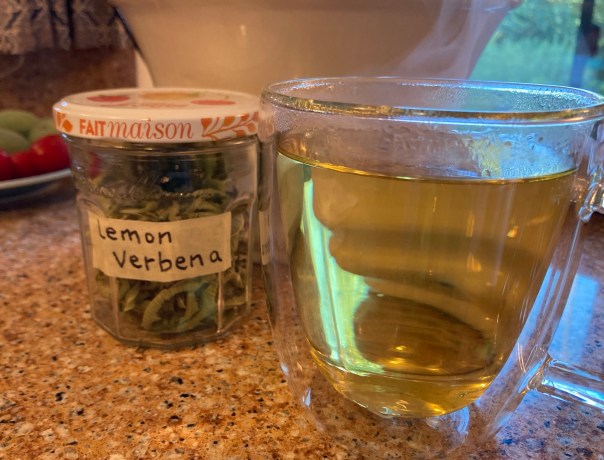
I ended up with so much lemon verbena — what wealth! This is a very nostalgic herb to me, because of when I was in Turkey riding non-air-conditioned buses across Anatolia, and first experienced its delicious scent, though I didn’t know what it was. The bus attendant would walk up and down the aisles every hour or so with a big bottle of something like cologne, and if you held your hands cupped he would sprinkle a tablespoon or so into them. I followed the example of others and quickly splashed it on my face and neck for refreshment. Later, when I returned home, I brought an empty bottle with me and kept it for many years, just so I could take a whiff from time to time.
It was decades before I matched that scent to the lemon verbena plant. I mentioned in the summer how I had made lemon verbena paste, and last week I made lemon verbena simple syrup, trying to use a lot of the leaves before they fall off when the bush goes dormant. Now I wish I had just dried them. Making tea is the obvious thing, but for some reason I never did, though I had dried a few leaves last year and they were sitting on the counter. Last week I made a pot of tea with them and loved it. It’s wonderful just “plain.”

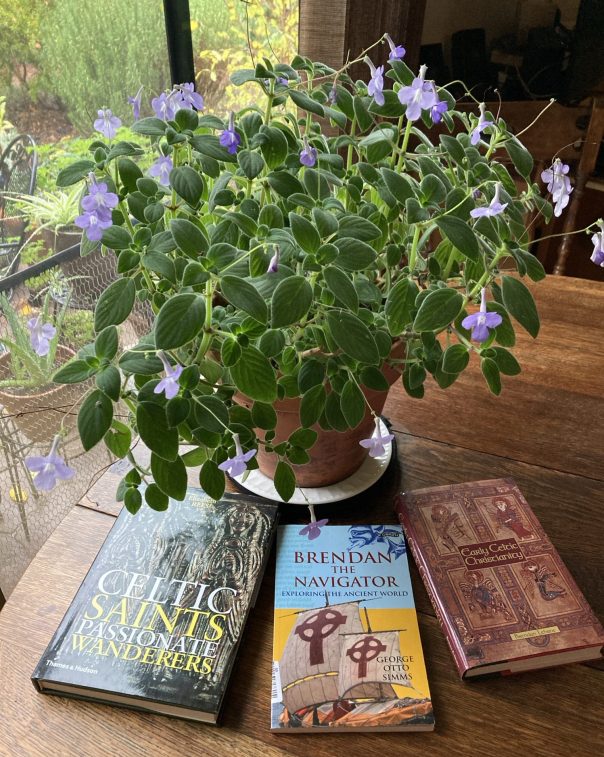
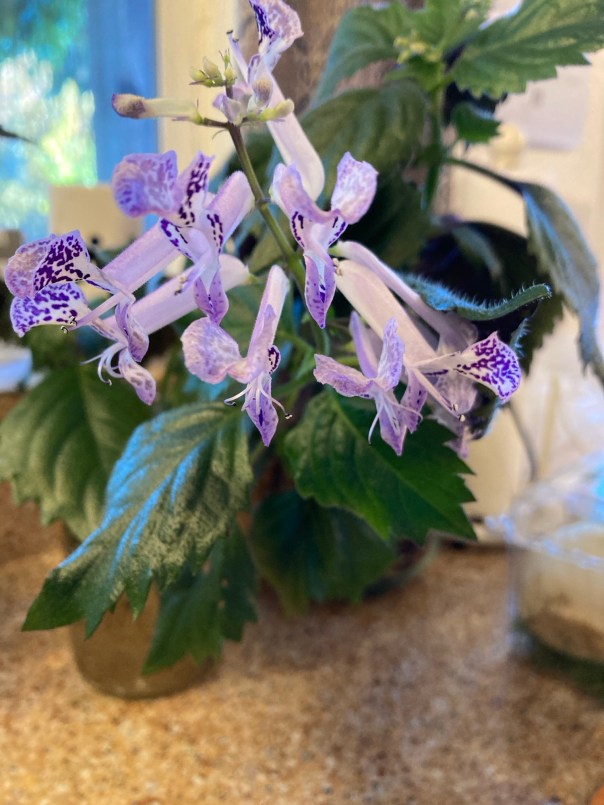
A few months ago my neighbor Kim broke a big stem off a plant on her patio and handed it to me. “Stick this in the ground,” she suggested. Instead, I cut the stem into three parts and put them in water, wherre I noticed they had made a lot of roots pretty quickly. One day I spied this huge flower cluster at the back of the jar by the window. Kim says this is a Plectranthus ecklonii, and her plant never gets blooms like that. I don’t know what I will do with it, but I found out that it is not terribly frost tender.

Plectranthus ecklonii


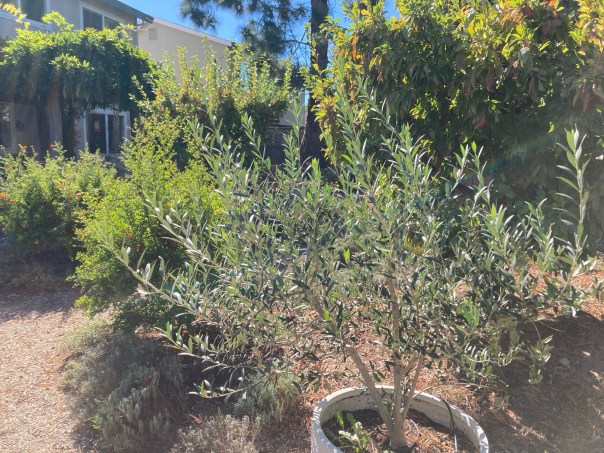
The olive that I repotted with great effort is looking healthy again. I guess my pruning wasn’t too bad, either. I do enjoy pruning, but I’m glad I don’t have to do all of it, or get on ladders anymore for that task. I can just prune the smaller bushes and leave the big ones for my helper.

Recently I did prune all four dwarf pomegranates, in advance of their dormant pruning that will happen later, because my new landscaper consultant told me I should “lift their skirts.” Ahem… is that common parlance in the gardening world? I had never heard the term, but I knew what he meant.

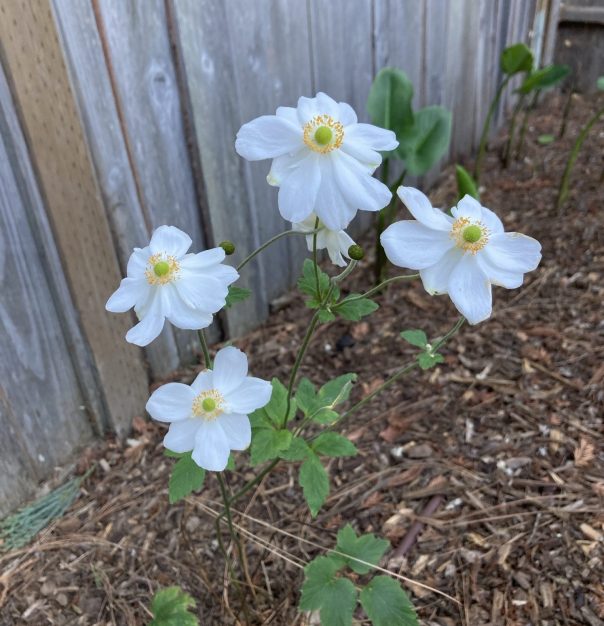
I am thrilled that my Japanese anemones (below) are putting on their best show ever, though they still are not robust — I gave the four of them extra water this year, and they have been getting more sun since the pine tree was thinned. If I feed them a little maybe they will do even better next year.

I have lots more to do before I will feel prepared for winter, but that skipper put me in touch with the reality that I, too, am slowing down. Most likely I won’t get “everything” done. And I guess that will have to be okay!

Apples and apples and a book.

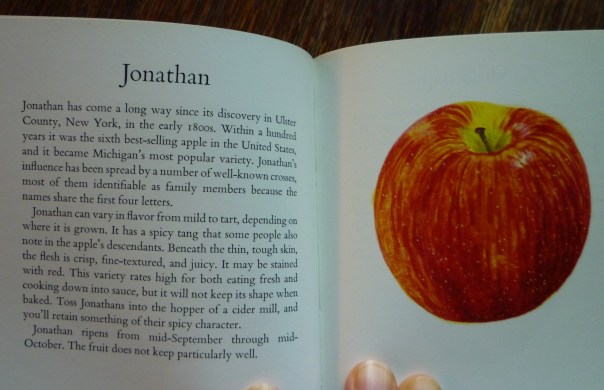
From the book Apples, by Roger Yepsen.

My kitchen and both refrigerators are overflowing with apples right now, as I recently made my annual visit to the apple farm I am so fond of. I’ve made jars and jars of applesauce to put in the freezer, at this point mostly from unpeeled Jonathans, which after it has cooked down and been put into pint jars, makes as pretty and pink a picture as I have ever had a hand in painting. It’s a good time to revisit as well this passage from a favorite novel, which I first shared ten years ago:

             – – – – – – – – – – – – – – – – – – – – – –

Willa Cather’s novel My Ántonia held a special place in the hearts of both my late husband and me, perhaps in our conjugal heart ? by reason of our sharing the story together more than once, and reading it on our own as well. When I’ve read it aloud it’s not uncommon for me to start sobbing at places in the narrative where the pathos hits home.

I was surprised to see recently a review in which the reader did not enjoy Cather’s writing, saying it was dry and lacking emotion. Those qualities might be why I appreciate her skill at capturing the story and drawing us in. Cather gives us the perspective of Jim, and we experience with him as narrator the various levels on which he is in love with our heroine and all that she represents, and he makes us fall in love with her, too.

Our differing response from the reviewer above probably has something to do with what we bring to the story. Though we haven’t lived in Nebraska or known any Bohemians, perhaps we are like Jim (and Willa Cather) in our grieving for the past, for the lifestyle of the pioneers and their farm life, for the good hardworking people we have lost; as I understand it, that was a theme that reappears in many of her works, but she accomplishes it without what might be called “emotional” prose. Mr. Glad and I both have farming in our roots, and our love for nature and the outdoors (and for people) is only encouraged and expanded by reading books like this.
I thought to transcribe some passages from the book on my blog, representative snatches for my own enjoyment and yours, as a way to savor again some moments from my reading experience, and perhaps introduce people who haven’t yet made friends with these characters and their world.

In the novel, there is no question but that Jim must leave the country life and go away to school and to city life. The passage below is from the last part of the book when he returns many years later for a visit, and I appreciate the way it conveys something of Ántonia’s character and also the mood of this season of the year.

At some distance behind the house were an ash grove and two orchards: a cherry orchard, with gooseberry and currant bushes between the rows, and an apple orchard, sheltered by a high hedge from the hot winds. The older children turned back when we reached the hedge, but Jan and Nina and Lucie crept through it by a hole known only to themselves and hid under the low-branching mulberry bushes.

“As we walked through the apple orchard, grown up in tall bluegrass, Ántonia kept stopping to tell me about one tree and another. ‘I love them as if they were people,’ she said, rubbing her hand over the bark. ‘There wasn’t a tree here when we first came. We planted every one, and used to carry water for them, too — after we’d been working in the fields all day. Anton, he was a city man, and he used to get discouraged. But I couldn’t feel so tired that I wouldn’t fret about these trees when there was a dry time. They were on my mind like children. Many a night after he was asleep I’ve got up and come out and carried water to the poor things. And now, you see, we have the good of them. My man worked in the orange groves in Florida, and he knows all about grafting. There ain’t one of our neighbors has an orchard that bears like ours.’

“…The afternoon sun poured down on us through the drying grape leaves. The orchard seemed full of sun, like a cup, and we could smell the ripe apples on the trees. The crabs hung on the branches as thick as beads on a string, purple-red, with a thin silvery glaze over them. Some hens and ducks had crept through the hedge and were pecking at the fallen apples.”

–Willa Cather

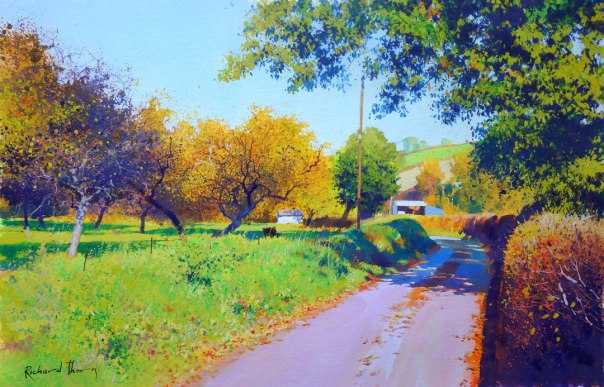
Orchardside by Richard Thorn

Baklava is various – here is one recipe.

Ten years ago, when I was reading The Supper of the Lamb by Robert Farrar Capon, and writing multiple blog posts about that delicious book, I promised to share here the recipe for baklava that our parish uses. The idea came to me when reading Capon’s words on butter and pastry, and I warned my readers not to use his recipe for baklava. Since then I’ve learned more about the many and various ways that people prepare that confection in different cultures, and am no longer closed-minded about it at all. If you have a different recipe you like, I hope you will share it in the comments.

Though I love honey, I prefer baklava without it, because in the examples I have eaten, the honey overpowers the flavors of nuts and butter, and makes a heavy piece of dessert — honey is in fact a heavy and dense food. This version that we learned to make from a long-time member of the parish is somehow “lighter” in flavor, while losing none of the richness that is essential.

BAKLAVA

About 30 pieces

SYRUP:

3/4 cup water
1 1/2 cups sugar
1 tablespoon fresh lemon juice

FILLING:

1 pound walnuts
1/2 cup sugar

PASTRY:

1 pound filo dough, thawed
1 pound unsalted butter, clarified (instructions below).

1. Preheat oven to 350°.

2. Prepare the syrup: Combine water and sugar; bring to a boil and cook over moderately high heat, stirring, until thickened. Stir in lemon juice, cook 3 more minutes and set aside to cool.

2. Grind nuts in a food processor. Transfer to a bowl, add sugar and mix thoroughly.

3. Spread half the filo dough flat on a buttered 9” X 13” jellyroll pan. Cut and piece as necessary. Spread nut-and-sugar mix evenly over dough; then lay the remaining dough over the top.

4. Cut pastry, either into 2” squares, or for traditional diamond-shaped pieces, make lengthwise cuts 1 1/2” apart, and cuts at a 45 degree angle 1 1/2” apart. This will yield diamonds about 4 1/2” long, with sides about 2 1/2” long.

5. Pour 1 cup of the melted butter evenly over the top. Place the pan in the oven and reduce heat to 300°. Bake for 40 minutes, turning the pan after 20 minutes for even browning. Repeat, using remaining butter and baking again for 20 minutes, turning after 10 minutes.

7. Remove pan from oven and immediately pour cooled syrup over the hot pastry. Let stand and cool approximately 24 hours.

Clarified Butter

Melt butter in a heavy saucepan over low heat. After it has melted, some of the milk solids will drop to the bottom of the pan while others will rise as foam. Skim off the foam and pour the clarified butter out of the pan, leaving the milk solids at the bottom, or strain it through a double layer of cheesecloth.

If you are interested in what the book The Supper of the Lamb is about, you can find all the posts in which I wrote anything about it here: Robert Farrar Capon.

(Father) Robert Farrar Capon

From a neglected garden.

In spite of my absence for various reasons, the garden continues to carry on valiantly its business of growing and changing by the hour. I love walking around and picking off a few dead flowers, or noticing seeds forming, even when I can’t give it the more thorough care it needs.

A couple of years ago I managed to transplant one of the vigorous Showy Milkweed plants (above) next to where the Narrow-Leaf Milkweeds grow. You can’t see the latter very well in the background, which is a good thing, because their leaves have mostly had the life sucked out of them by aphids and have turned black. But every spring, they come back stronger than ever.

Tatsoi greens and lobelia

The leafy green Tatsoi really took off in this pot where I stuck it in next to lobelia, and is begging to be thrown into a stir-fry a.s.a.p. Those I set out in the planter boxes are languishing; that soil must need amending.

The dwarf pomegrantes are mostly a fun member of the garden in that for most of the year have flowers, often with hummingbirds drinking from them; or foliage bright and beautiful catching one’s attention in spring and fall; and their darling fruits, that don’t get very large, and in this climate don’t get enough heat for their seeds to develop sweetness. But they are so cute right about now. This one is about an inch and a half in diameter.

Every day I pick figs; the evening of my return from the mountains I gathered two dozen, and yesterday nineteen. Soon I hope to make that Autumn Fig Cake I told you about one time. And the Juliet grape tomato plant is prolific. I eat the tomatoes in the garden and in the kitchen, and took enough with me to the cabin that I could eat a few every day for ten days, and they were always sweet.

I harvested all but one of the little butternut squashes I grew this year, and planted some Sugar Ann snap peas in their place. Ideally those will start bearing about February, if the winter isn’t too cold and if I can keep the snails from devouring the plants between now and then.

My native sneezeweed is of the less showy sort, but it welcomed me when I returned from my mountain retreat with a particularly lovely array of blooms, not plain at all.

No doubt about it, my garden loves me, and forgives my neglect.
It makes me want to do better in the future.