 I’m back from my visit to family and friends in Maryland. Some things went as expected: Cooking and playing games and exploring the woods with the daughters and grandchildren…
 |
| Bed for deer |
We walked along the creek, and then up to the top of the ridge where we flushed out a thundering herd of deer, and saw their resting place.
Many little plants were pushing up through the thick layer of leaves, but most of the trees were just budding. These mystery trees at the top were an exception.
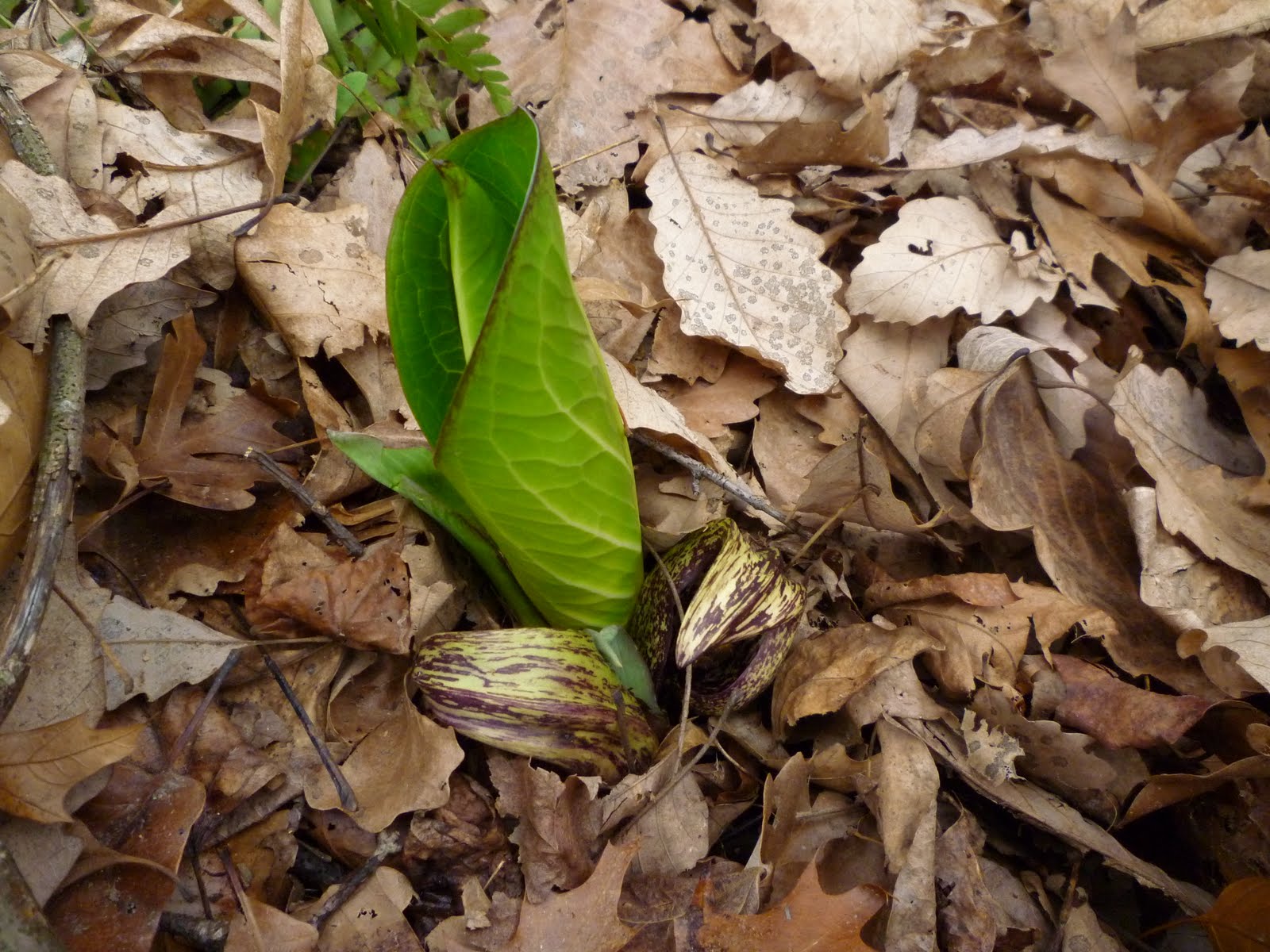 |
| Skunk cabbage coming up |
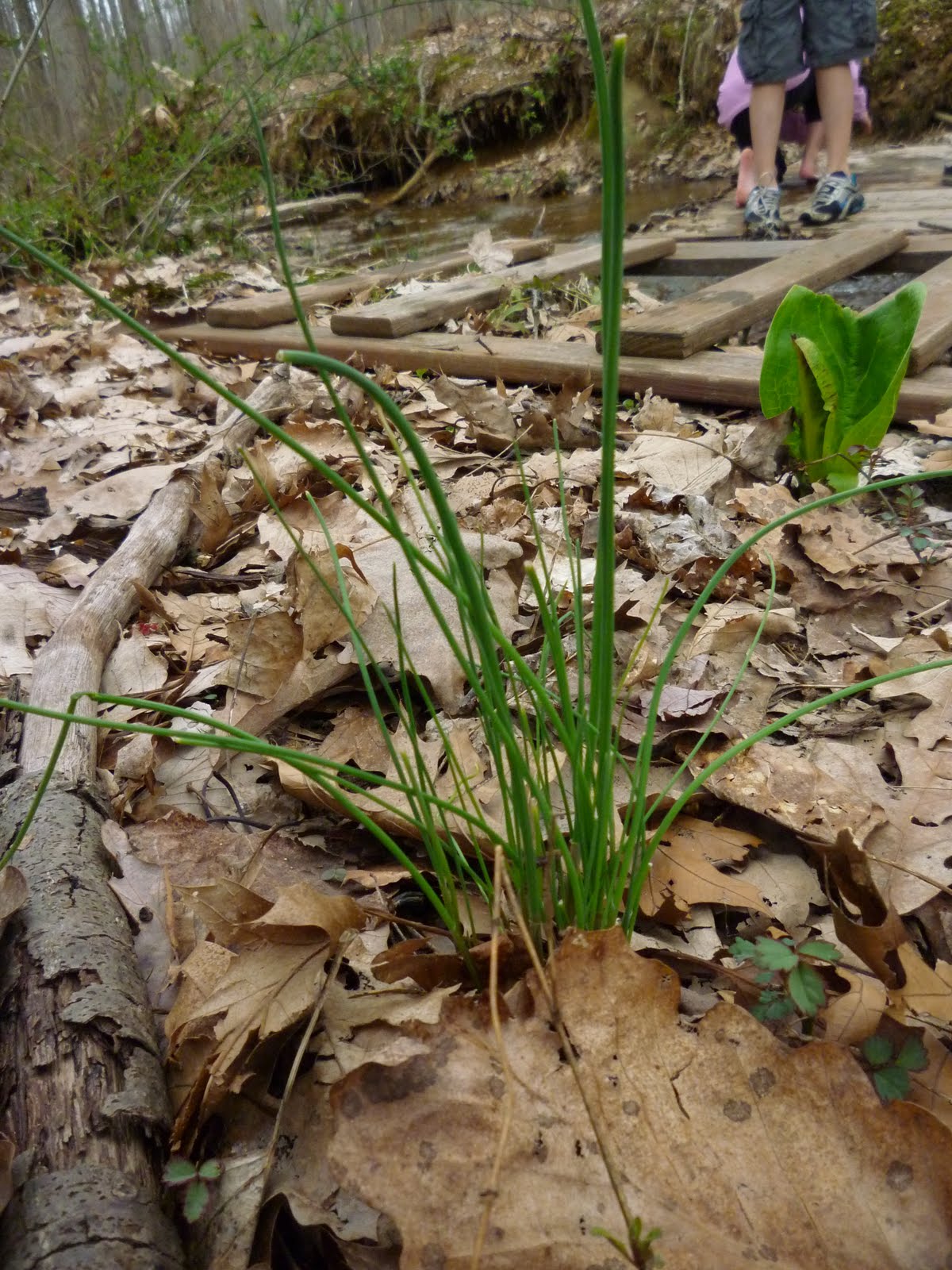 |
| onion grass |
I took walks with Pearl and Kate and had cozy teatimes and visits with their friends: except for the warm day I blogged about, we had to bundle up like this to take our walks. 
Maggie and I embroidered together, and Philosopher read to me many stories of Warrior Cats. Most school days I was able to rouse myself in time to walk them up the hill to the bus stop. The older boys have to get on the bus an hour earlier.
 |
| Rolling out gnocchi |
When Kate came over, we cooked up a storm, including sweet potato gnocchi.
 |
| Me draining gnocchi |
 |
| Maggie spying on whatever was in the oven. |
There were surprises, too: someone’s back injury that made me glad I was around to help out more; meeting a fellow blogger face-to-face; and a rain shower we were unprepared for. Maggie had gone to great lengths packing a picnic to eat with me at Philosopher’s soccer game, and was loaded down with cloths to spread on the ground, her picnic basket, and a bag full of coloring supplies.

None of us had remembered to bring an umbrella, so while we were waiting around for the game, which was canceled in the end, Maggie used the tablecloth for a hood.
The biggest surprise of my trip was on the way home, when I opened my wallet at the Baltimore airport and found that my I.D. and almost all my important cards were not there. I had left them back at Pearl’s in a purse I’d borrowed from her earlier in the week, as I realized eventually. I did get through airport security without them. First, though, I had the dreaded experience of rummaging through my giant suitcase on the sidewalk in plain view of a hundred people because I was sure the missing items were in there. I’m so glad I had packed most everything in one- and two-gallon ziplock bags.
It was a learning experience. Switching from one purse to another will demand a thorough double-checking from now on.
Two whole days of the trip were given to traveling. I got on the bus to the airport at 5:15 a.m. at the beginning of my trip, and it took me a couple of hours before I could get over being homesick that morning. I finally arrived at Pearl’s house about 8:15 at night, on the other side of the continent. It’s always a surprise, if I think about it very much, that I could cover so much territory so….quickly?
I actually enjoyed my time in the air. I was able to really get into the book I am going to start blogging about. On two of the four flights I had a one-seat row to myself, and could look out the window and not need to even say hello to anyone. But the long hours take their toll.
It’s only to be expected, that I am t-i-r-e-d. I know I sound tired. It’s odd that I am already home again, and not surprising that I am feeling the weight of all the work I have to do, in contrast with the easy life of helping with someone else’s housework, walking in the woods, and hugging people I now miss.
Lewis Carroll said, “Begin at the beginning and go on till you come to the end; then stop.” I have come to the end of my Maryland trip, and am at the beginning of a three-week period that includes Pascha — the feast of feasts! In three weeks B. and I are going together, Lord willing, on another trip, to see other family and grandchildren.
I should be revived by then.
Summer Breeze
It was a taste of summer today, and I mostly felt it in the evening, when the warm breeze kept the air balmy, and little girls pedaled their Raleighs up and down the neighborhood streets all in their short skirts. Pearl and I sat on the front step at dusk drinking our tea and enjoying the softness. This all makes me think of long-ago days before I lived in a city with too much coastal influence, where the fog comes in and the thermometer drops well before suppertime even in high summer. It was…I groped through my mind for the right word…transporting.
Tonight there are likely going to be thunderstorms again, and tomorrow the weather will demand sweaters and leggings once more. But it’s been lovely.
Last (late) report on wet spring
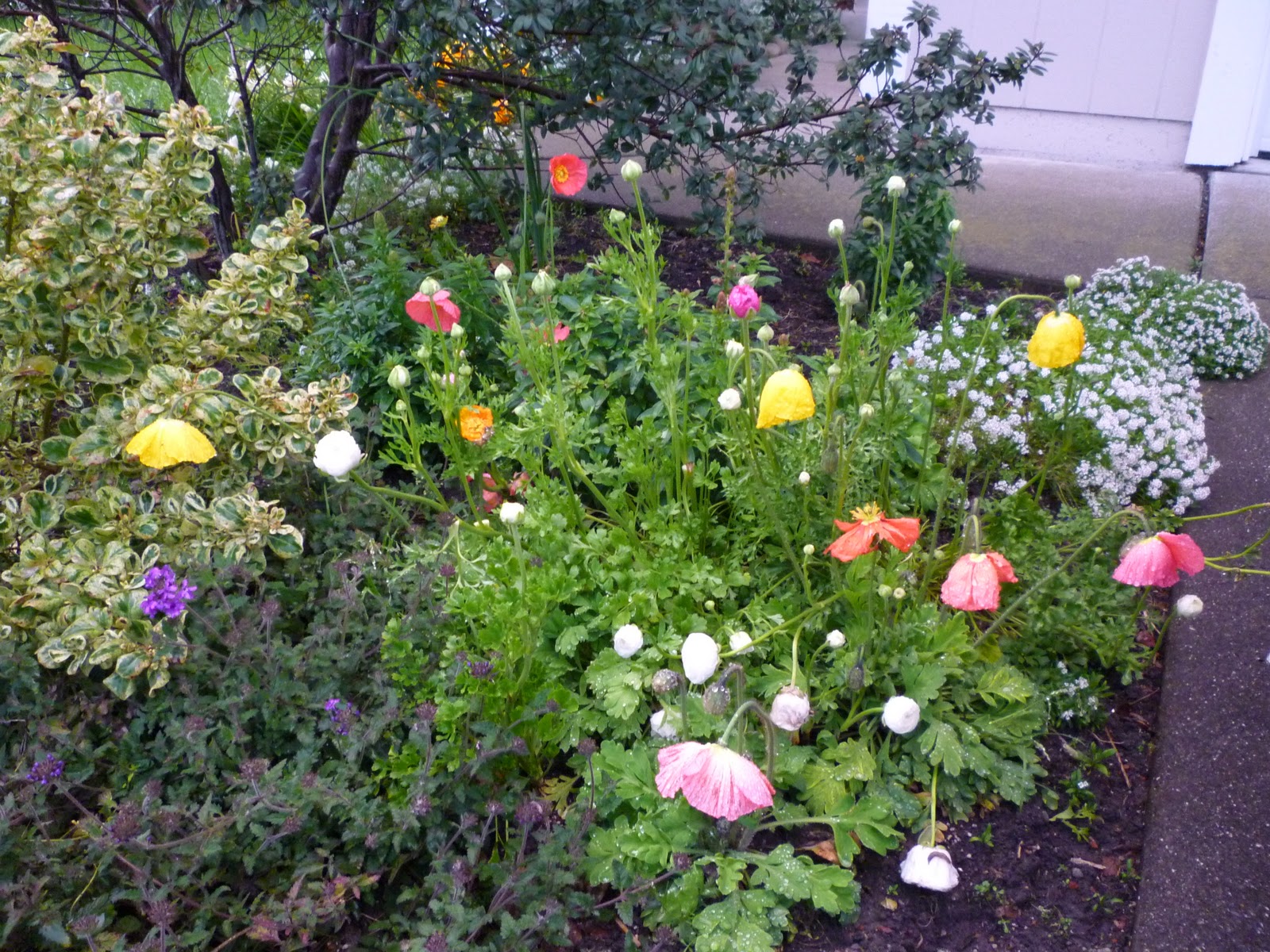
I’m in Maryland as I write, but I just have to post a couple of pictures of the California scened as it was just before my departure day.
It had been so cold that I was able to enjoy a fire in the wood stove on my birthday — a first! and so rainy, that the Iceland poppies and even ranunculus were always drooping their fragile petals under the weight of water.

Maybe this rainbow was a signal of the end of the rainiest season. It’s lucky I was the one driving the car when we saw it so I could make the decision to stop and shoot.

Even in the midst of rain the tulips I’d planted at church last fall seemed better able to hold their heads up. I had forgotten that I’d planted them which made them even more of a joy. They probably will be gone by the time I return, because the weather turned balmy.
Maryland weather also changed since last week. I couldn’t take as many neighborhood walks I was hoping for because we had “wintry mix” of rain, hail, sleet and snow. But on The Lord’s Day it turned, and in spite of thunderstorms last night the temps are in the 70’s today and we went for a long walk.
 But to finish up my report of last month, I want to tell you about our new coffee press. We had an old black Bodum something like this; we’d had it for at least 15 years, but I banged it against the bottom of my new sink and broke the spout one night. B. ran over to Target and found a new one for about $20, and I didn’t complain about the fact that it was red and didn’t really go with my new kitchen. It would be in the cupboard most of the time anyway. A few days later B. broke the spout of the new red one ! and I steered us to a different Target where they had more colors, including orange, which fits in better. And now we will both treat our coffee press like fine china.
Monday is a school day for all the grandchildren here, which gives me some time to finish this blog post. I haven’t yet figured out if I can upload pictures to this computer, but there’s not much time left now before I go home, so if I make a report of my family visit here it will probably have to wait until then.
This modern phenomenon of being able to be in Blogland no matter what other spot on the globe one might occupy is really fun!
Pacific in Pacific Grove
 |
| Seaside paintbrush |
Counting my dear sons’ wives, which I very thankfully do, I now have five daughters. It’s sad to think how I spent several years complaining that I didn’t birth more children; during that time I never anticipated the familial wealth that in-laws can bring.
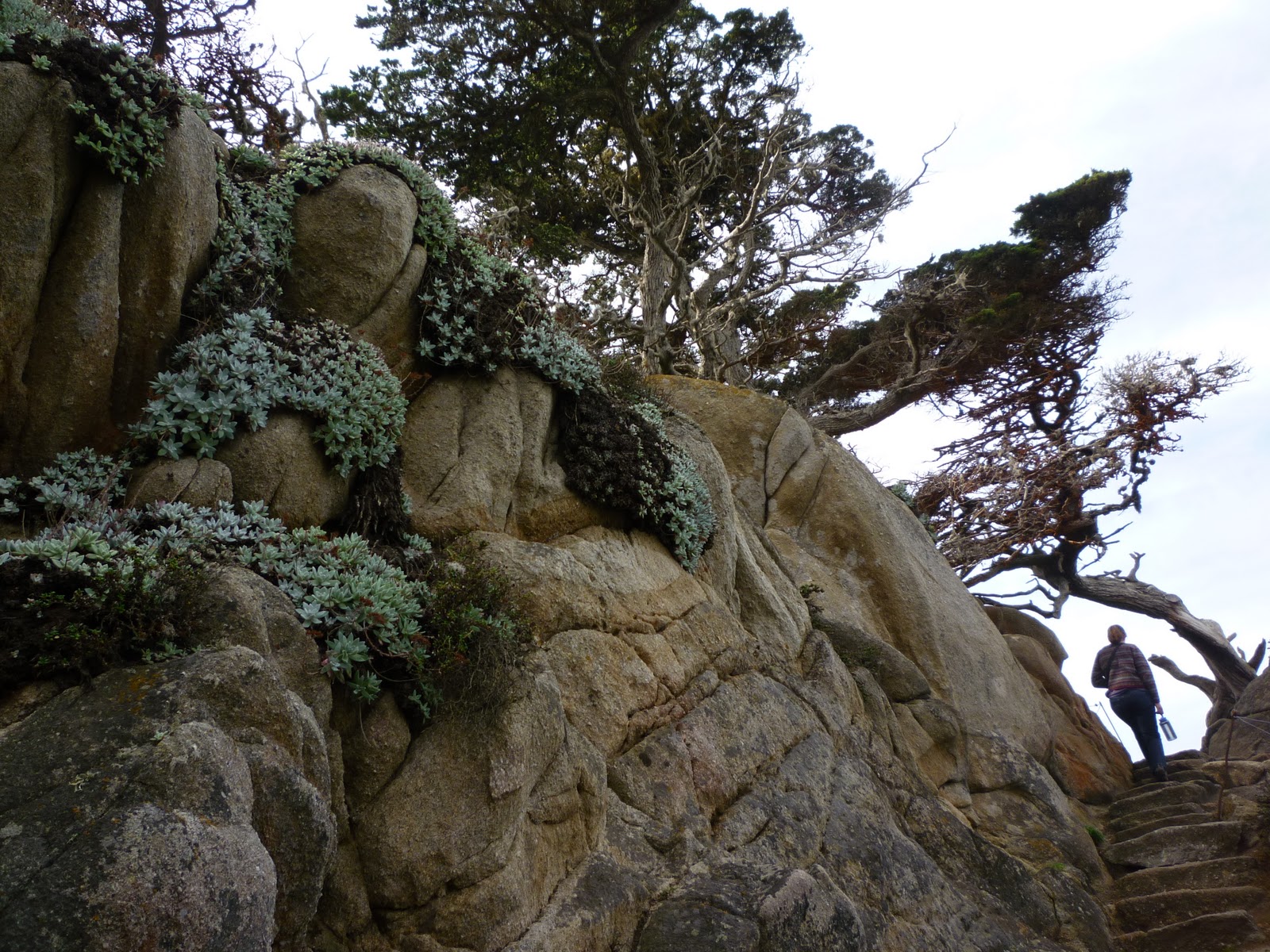 |
| Point Lobos |
In an effort to enjoy our family friendships we women spent a few months planning our first mother-daughter holiday. When continents stretch between, the grandchildren have pressing needs, and the young women pressing schedules, so it’s a tribute to our devotion that we even tried. In the end, only half of us, two daughters and I, were able to get together recently, on California’s Central Coast.
 |
| Seaside daisy |
Pacific Grove was our home base. Every morning I woke with the feel of long-ago visits to my Aunt Margaret, whom I knew mostly in my teens. She lived in Carmel in a cream-colored house with white carpets, under a sky that was often white with fog or overcast, and the mood was so quiet. The sort of quiet that is filled with the sound of surf and the cry of sea gulls.
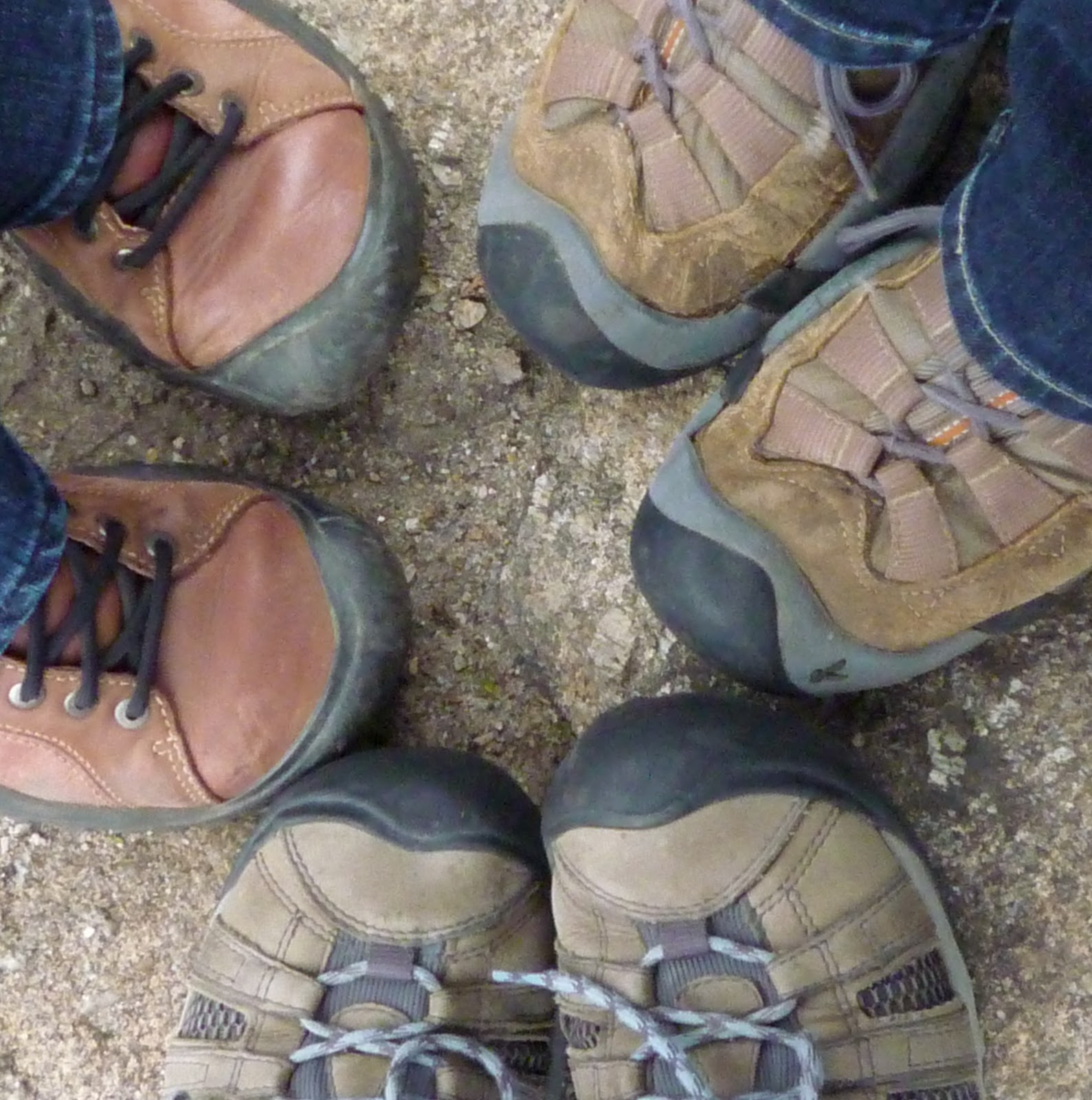
Our gathering of last week was a quiet group, too, in spite of our much talking, which I imagine was still on the low end of charts that might be made of all-women excursions, as we often stood in silent wonderment over our surroundings.
In our Keen boots — really, no one one had coordinated our foot attire, contrary to all appearances — we walked a lot, up and down the hills of Pacific Grove and Monterey and Carmel-by-the-Sea. And we looked at flowers and trees and birds and tried to identify them all.
 |
| Flower is California hedge nettle |
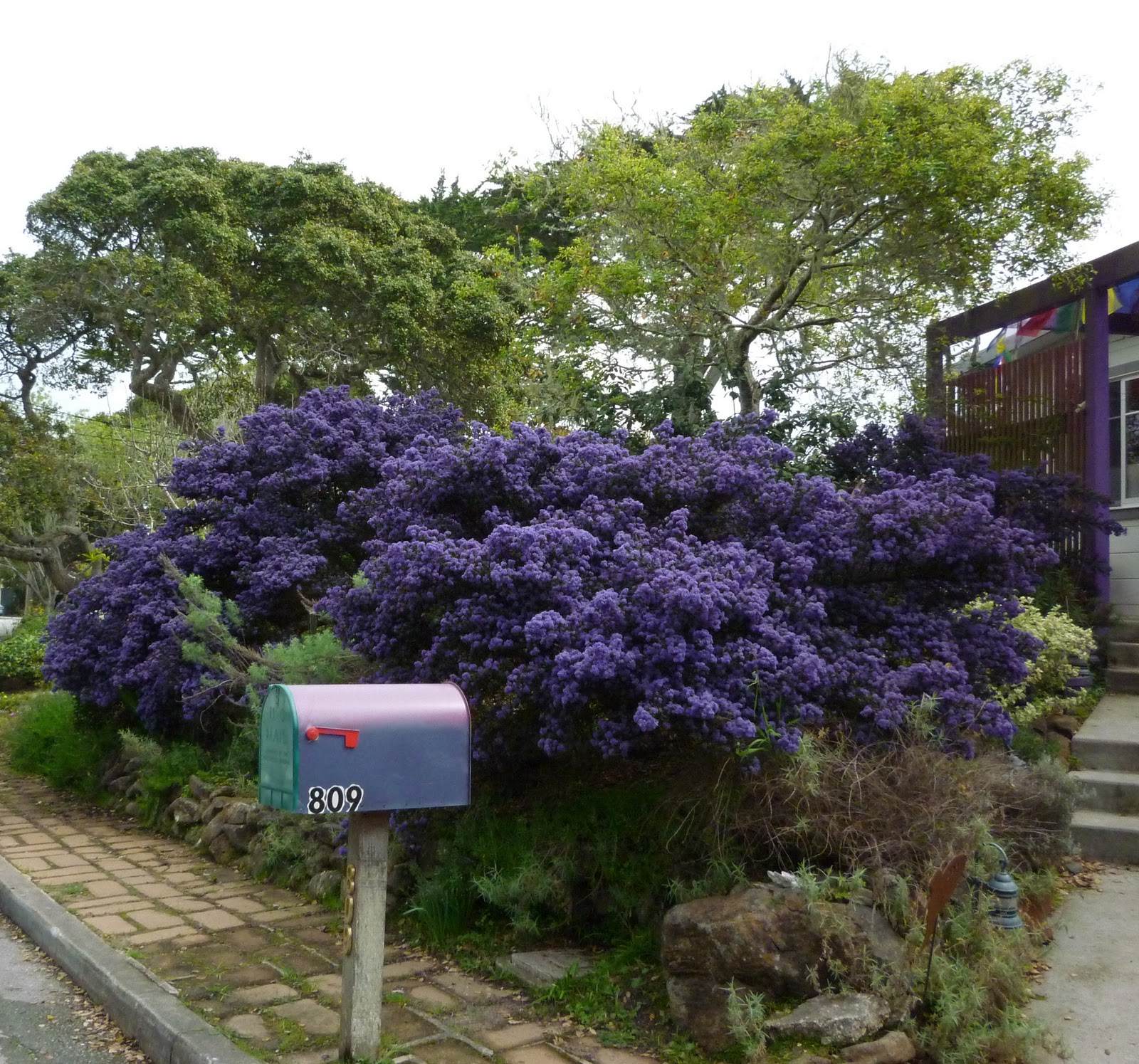 |
| ceanothus in Pacific Grove |
On Point Lobos especially the sweet smell of ceanothus blooms was filling the air, along with the buzzing of bees who were crazy over it. We liked the challenge of photographing busy bees. They liked how the pollen was offering itself to them on vast fields of stamens.
 |
| Carrying great loads of pollen |
 |
| Protea behind Cannery Row |

Behind Cannery Row murals have been painted along the bike path, evoking the culture and history that John Steinbeck depicted in his books. I liked browsing this lane better than the touristy shops which carry, as Joy pointed out, all the same stuff from China that touristy shops all over the nation carry.
Oh, except maybe the otter dolls. I was expending so much mental energy drumming up buyer’s resistance that I didn’t even think about how I could have taken a picture of one. There were three stuffed toy versions of the captivating creatures that we watched lolling and playing in Monterey Bay, and I can’t find one online that is as cute, to post here.
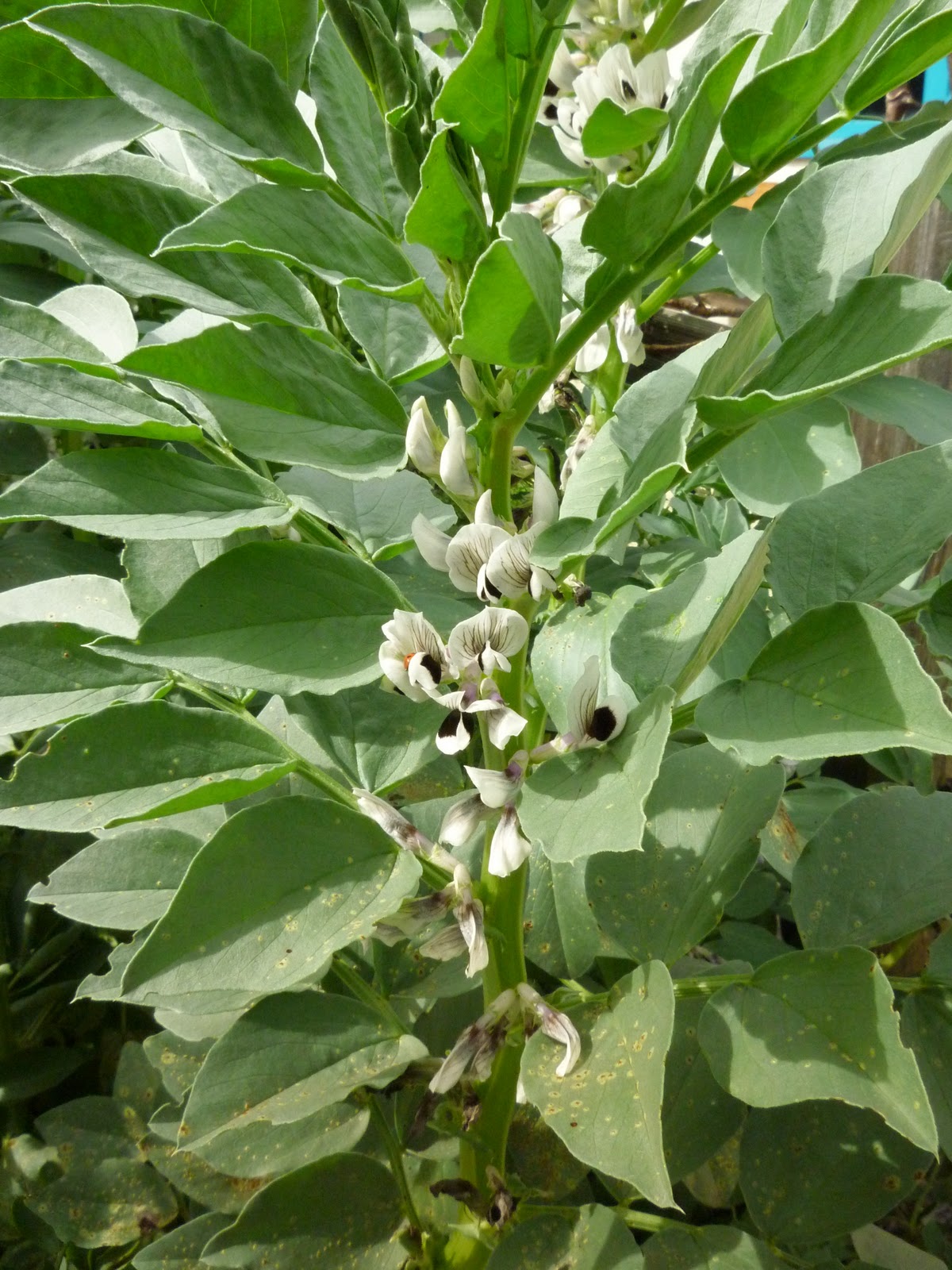 |
| fava plant in bloom |
 |
| Another Protea |
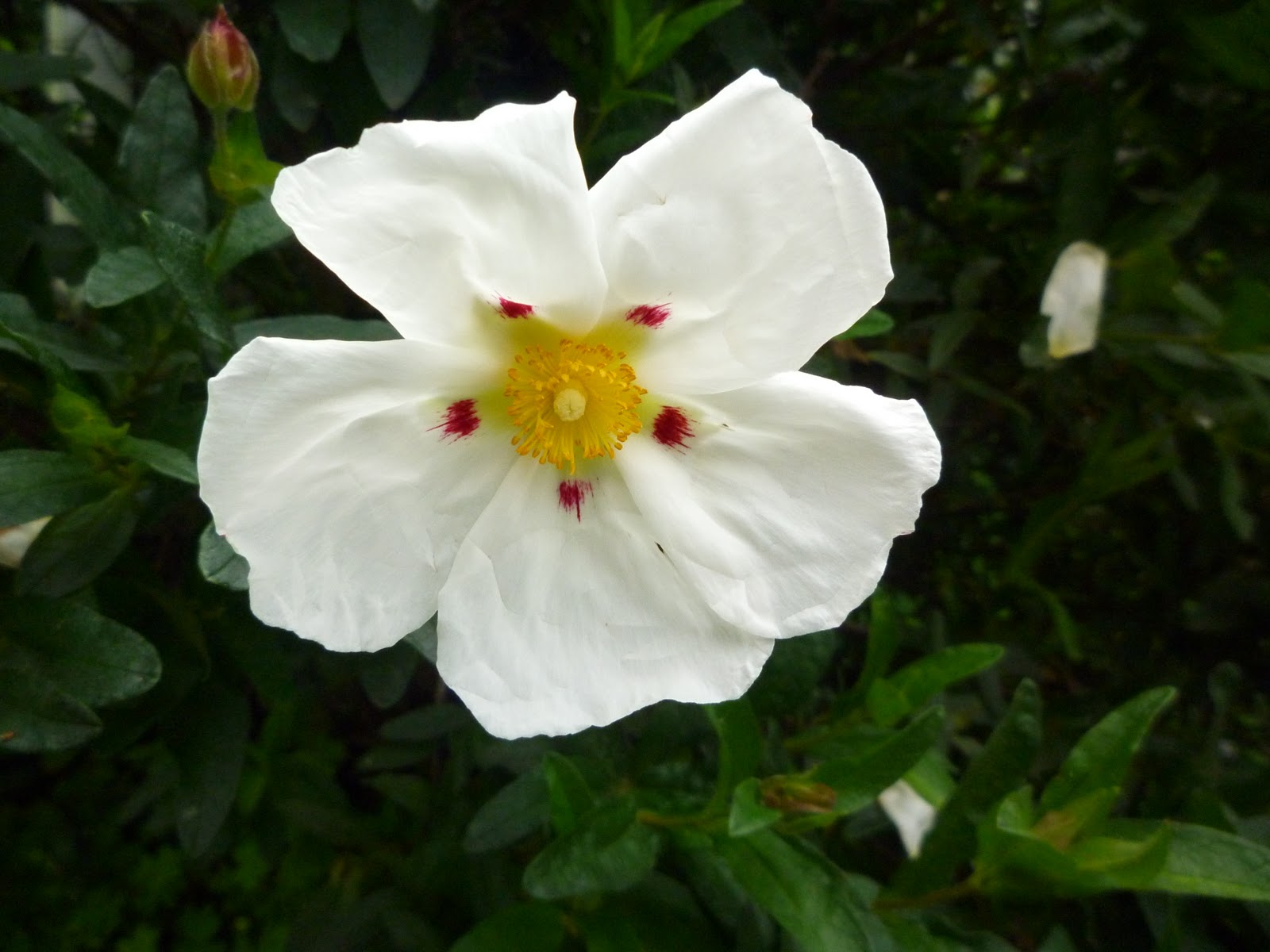 |
| cistus |
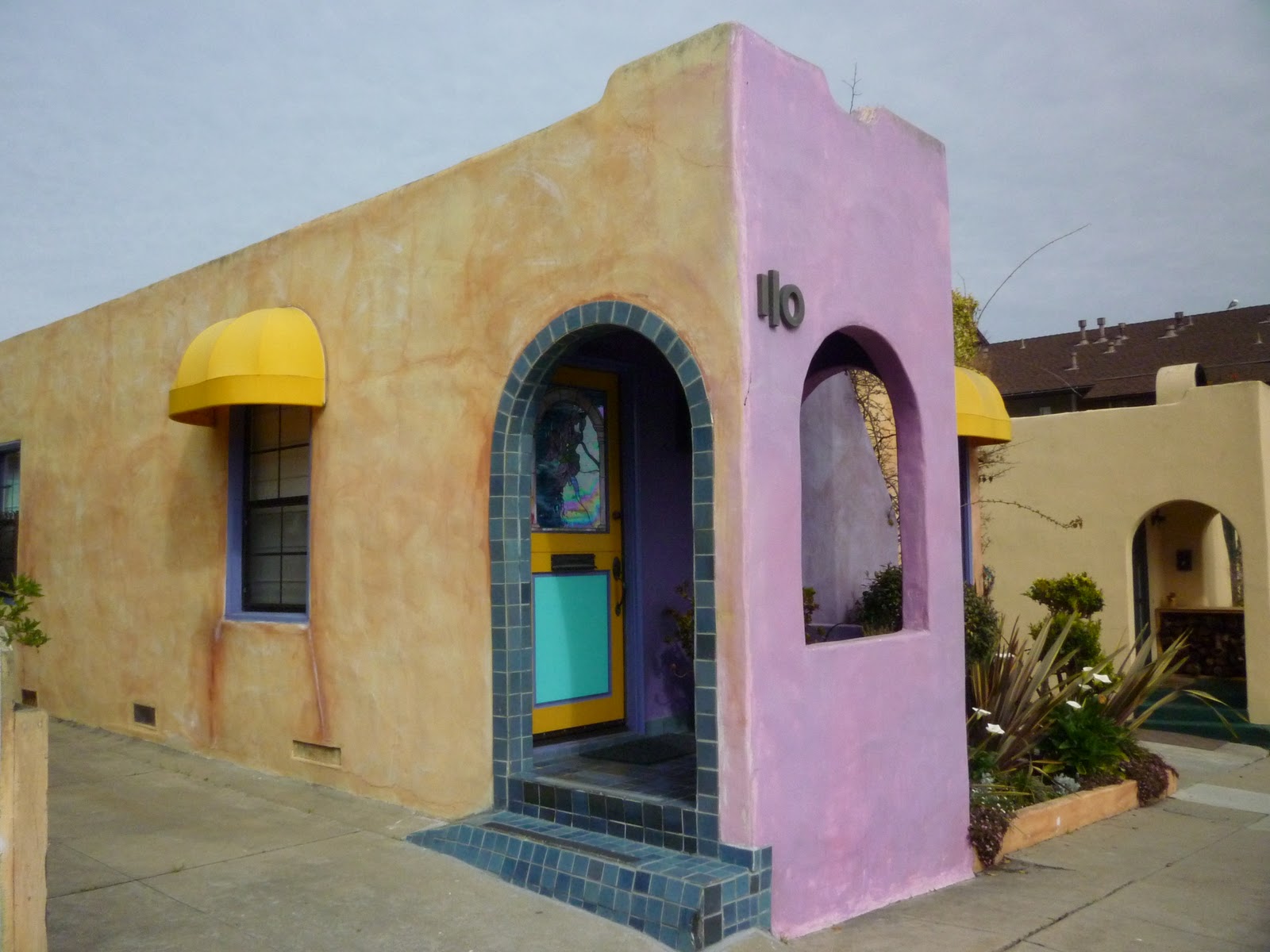 |
| Updated adobe cottage in Pacific Grove |
The weather we experienced was surprisingly mild in spite of frequent short showers of drizzle or light rain — but I might find it difficult to stay long where the sun doesn’t show itself often enough to keep the spirits up.
Flowers seem to glow more vividly under grey skies, though, and that makes up for the drear a little bit. People paint their houses in cheerful colors. And peace and quiet count for a lot.
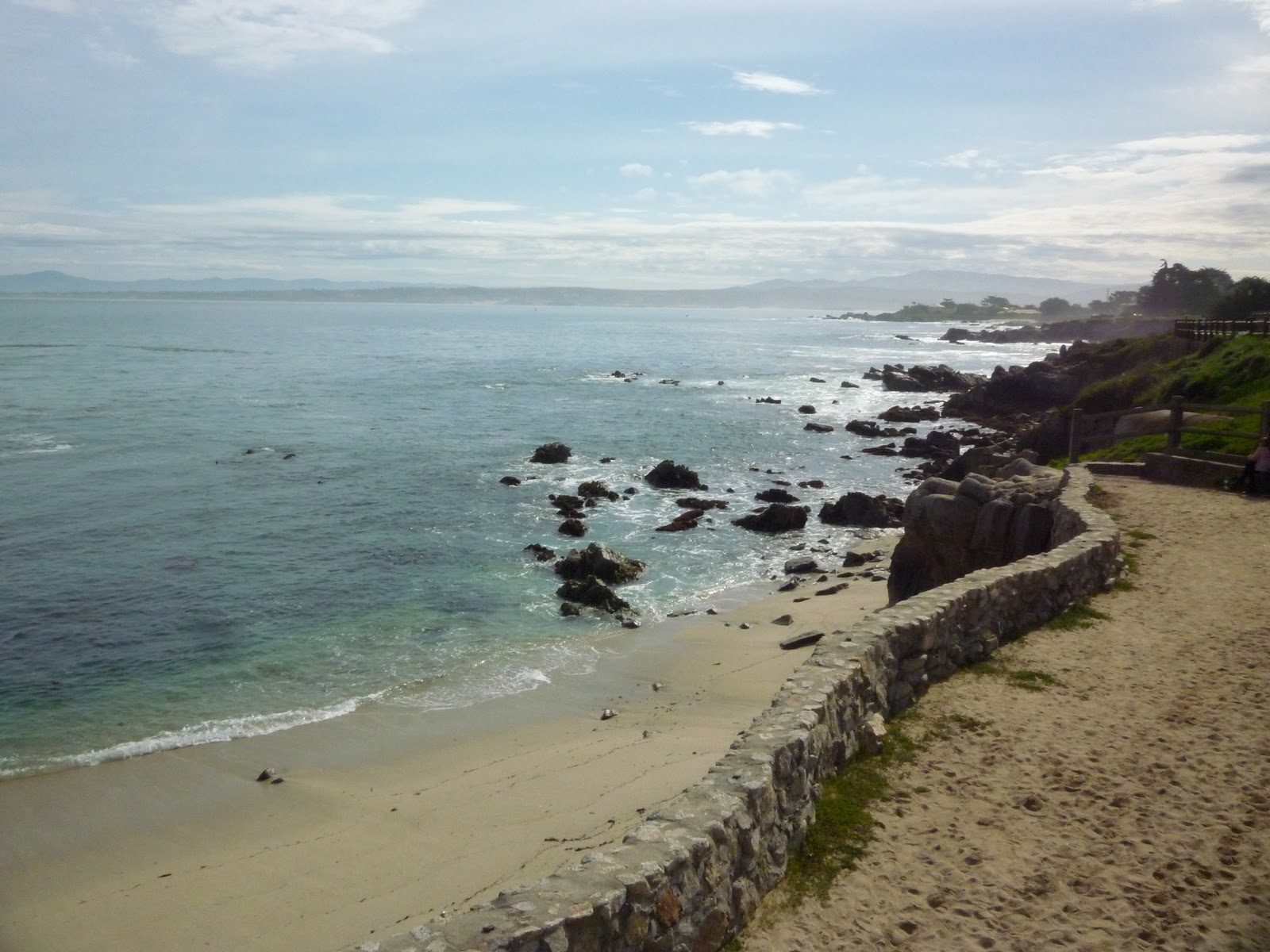
The Pacific Ocean is not always peaceful, but it was fairly calm this week. The tsunami from Japan didn’t make a big wave here. You can’t see them, but two otters are playing in this picture. And peace and serenity and love were all playing some quiet music in our hearts.
 Gladsome Lights

