
Why would a Christian like me want to read a whole book about existentialism? At least a few of my readers are confused about that. I may in the future share more of my gleanings from this book as it helps me understand this modern age that we live in, but now let me just clarify that it is the enlightening presentation by William Barret that I find beautiful, not the anxiety and “spiritual homelessness” of the Europeans whom he includes in the lonely camp of existentialists.
In contrast to their interesting but ultimately unsatisfying way of thinking, Father Stephen Freeman writes about our existence in a non-existentialist way. If I hold to a philosophy, it is this non-philosophy, which is reality, my life in God:
“The modern movement of secular thought has been to move existence into an independent and self-defining realm, relegating God and religion to a specialized interest of those who find themselves religiously minded. This is the death of religion – or rather a religion of death. For as soon as our existence is moved away from God and grounded in something el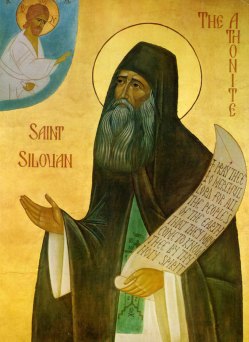 se, God Himself has been abandoned. It is not possible for God to be a lesser concern. Either He is the very ground of our existence or He is no God.”
“As Met. John Zizioulas has famously stated, ‘Being is communion.’ In such a context we are able to move towards authentic existence – a mode of being that is not self-centered nor self-defined, but that is centered in the Other and defined by communion. Sin is removed from its confines of legalism and mere ethics and placed at the very center and character of existence itself. Sin is a movement towards non-being. In contrast, to know God is to love and its greatest test is the love of enemies. As St. Silouan taught: ‘We only know God to the extent that we love our enemies.’”
“Christ is, as He said: the Way, the Truth and the Life. His death and resurrection are the movement of God’s love to rescue humanity from a self-imposed exile from true and authentic existence which is found only in communion with God… It presses the question upon us all: ‘What is the truth of my existence?'”
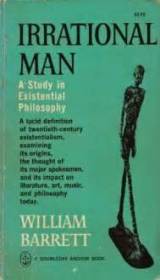
 s highly recommended to me by one of my most philosophical Christian friends. The subtitle is A Study in Existential Philosophy. I bought a paperback copy, but probably was unconsciously put off by the size of the print and the absence of white space on the pages.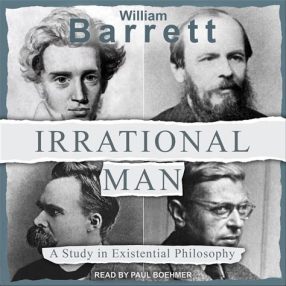
 Five speeches that Aleksandr Solzhenitsyn gave in the U.S. and in Britain in 1975 and 1976 make the book, Warning to the West. Today I sat on a log at the beach and got on with reading this collection that I’d started before Christmas; a while later I sat in my car overlooking the ocean and finished it.
 “There is a German proverb which runs Mut verloren — alles verloren. ‘When courage is lost, all is lost.’ There is another Latin one, according to which loss of reason is the true harbinger of destruction. But what happens to a society in which both these losses — the loss of courage and the loss of reason — intersect? This is the picture which I found the West presents today.”
 n here, it did there, too. I think the air temperature was about 60 degrees, but the water felt colder than ever; it was the first time I felt it to be somewhat uncomfortable right away.
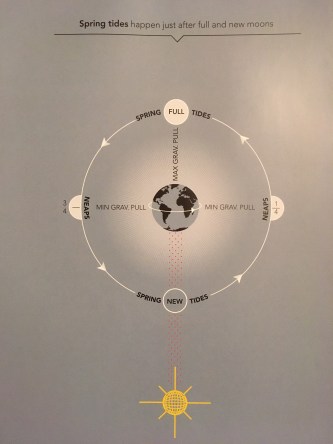
 Today I was thinking about too many things to let the water temperature take over my mind, though I walked in the surf as much as ever. Tears came to my eyes, for joy at being there in the elements, my senses refreshed and my mind having encouraging things from Elder Cleopa to rest on. It was convenient that the elements were fairly gentle, and that the tide had gone out just enough to reveal comfortable sitting rocks at the north end of the beach where no other people were. I sat.


 Gladsome Lights