The breaking of a wave cannot explain the whole sea.
-Vladimir Nabokov
On Sunday I taught my first Zoom church school class, on St. Thomas. That was after tuning in, and trying to tune my spirit, to the streamed Divine Liturgy in the morning. In the later afternoon about twenty of us women met on Zoom to chat for an hour and to chose the next book for those of us who read together. Before sundown, I picked peas.
All day my mind was trying to pull me away from that present moment’s demands, but not totally — because it seem ed to be doing that which is its natural skill, to weave the latest input from that very moment into the grid of experience and memory. I do not at all like the idea of my mind being like a computer, but the concept of fragmented files occurs to me…
Keeping the contents in a cohesive, organized fashion is a challenging project at my age, when the “files” have mushroomed, and my “processor” is trying to save a hundred bits of data every day to the most logical place. I have an astounding human mind, which sees way more connections between all those thoughts and images and stories than a simple machine could ever do. It is constantly clumping and re-clumping and arranging things, all the while thinking in sentences about its strategies.
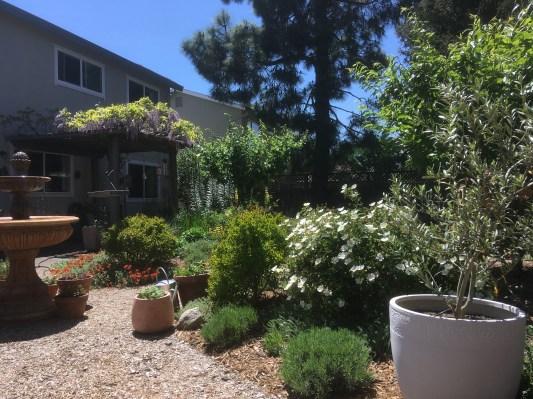
This afternoon my godmother came through the gate to my garden, and we visited across the patio for an hour. I shared a smidgen of the last few days, and how it seemed that about five blog posts were churning in a mass in my head, trying to sort themselves out.
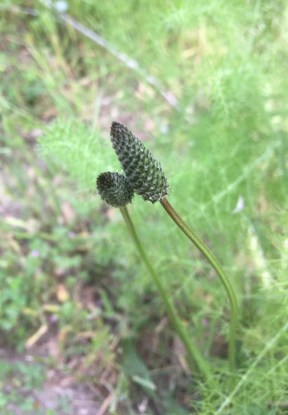 Since she went home, I’ve been halfheartedly applying myself to the task, but there is so much I want to write. It seems hard now, during this world pandemic, to sift through all the noise, or turn one’s back on it, in order to hear communications from reliable and helpful sources. And the Source.
In my attempts today, I came upon the idea of making use of my large store of quotes, many of which are thought provoking on many levels and might come to my aid in keeping at my blog and my writing. Even if some days I can’t write one good and pertinent sentence, I might post a quote that helps at least me, and you can make of it what you will.
It may be that my own mind is like an ocean that is too turbulent for me to see anything clearly in the water, but that’s not why I chose the quote above. It brought to mind all the many statistics and news stories, sermons and anecdotes and directives flowing all around us, by which some people I know are trying to figure out, not just how to behave today, but what is The Meaning of it all.

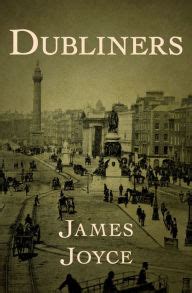 It seems that the literary analysts debate about the symbols and meanings of these fifteen short stories. It took nine years and eighteen submissions to fifteen publishers before the book was finally published in 1914. There were obscenities; there were unflattering references to the king who had not been dead very long; it was anti-Irish. Joyce kept making changes to make the collection more acceptable, and finally, he was successful.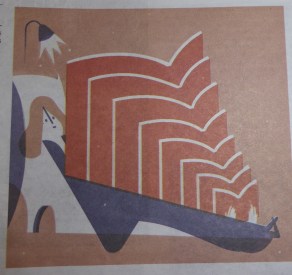
 If only I were better at writing funny stories – I’ve had such good material for them the last couple of weeks! When the “funny” things are happening — i.e., the crazy days when I lose my keys, forget my phone, break a crown on my tooth, spend half the day on a cooking project that turns out barely edible, spend the other half driving back and forth to appointments or making fruitless business calls, and at the end of it all get stood up by my computer guy — my writer’s mind tries weakly to do its usual thing of organizing chaos into sentences, but only in synaptic spasms. And what exactly is humorous about this, anyway…? The exhaustion is total, and I only want to go to bed early.
 Preface: I drafted this post yesterday, not expecting to publish it this soon, but today, the occasion of a statewide election day, I was pained to see public pleas and even poems put forth drawing attention to the needs of “art” and “artists” for money and support. I am all for supporting artists whom I admire, but I am also realizing that in the minds of some professional artists, art has become just another “spiritual practice” to support and be supported by that new religion of modernity, politics. So I decided to share this poem, and my short response, on behalf of all you creative people out there, who may or may not know that you are. Art will never not be, and that is a gift.
 Gladsome Lights