 I was telling Mr. Greenjeans about how An American Childhood by Annie Dillard encouraged me in my writing. He comes from the author’s hometown of Pittsburgh, Pennsylvania, which is the backdrop for her growing-up adventures told from her vividly revealing point of view. I took the book off the shelf to put aside for him, and turned the pages a while, seeing passages I’d marked long ago.
Hers is a unique point of view, of course, as each of us is an unrepeatable individual looking out on our world. Whether it is her perspective that is unusual as well, or only her ability to convey it in words, I don’t know. I do know that few children today have the liberty of youth that Dillard describes as regularly offering periods of time so deep and distraction-free that you can “lose yourself.” In a chapter on her love of books and reading, she tells how she felt:
The actual world is a kind of tedious plane where dwells, and goes to school, the body, the boring body which houses the eyes to read the books and houses the heart the books enflame. The very boring body seems to require an inordinately big, very boring world to keep it up, a world where you have to spend far too much time, have to do time like a prisoner, always looking for a chance to slip away, to escape back home to books, or to escape back home to any concentration–fanciful, mental, or physical–where you can lose your self at last. Although I was hungry all the time, I could not bear to hold still and eat; it was too dull a thing to do, and had no appeal either to courage or to imagination. The blinding sway of their inner lives makes children immoral. They find things good insofar as they are thrilling, insofar as they render them ever more feverish and breathless, ever more limp and senseless on the bed.
-Annie Dillard, in An American Childhood

 s National Poetry Month and now that I take notice, we are nearly at the end of it. That prompts me to finally take this bit out of my files to give you in celebration.
 The telephone conversation is, by its very nature, reactive, not reflective. Immediacy is its prime virtue. The immediacy delivers quick company, instant stimulation; the stimulation is cathartic; catharsis pushes back anxiety; into open space flows the kind of thought generated by electric return.
 My first morning in Bombay, the gears of my mind began spinning round and round like so many rickshaw wheels rolling through the neighborhood, picking up one or two passengers, dropping them off, carrying another rider for several miles before she finally exits, waiting on the corner for another customer to climb in….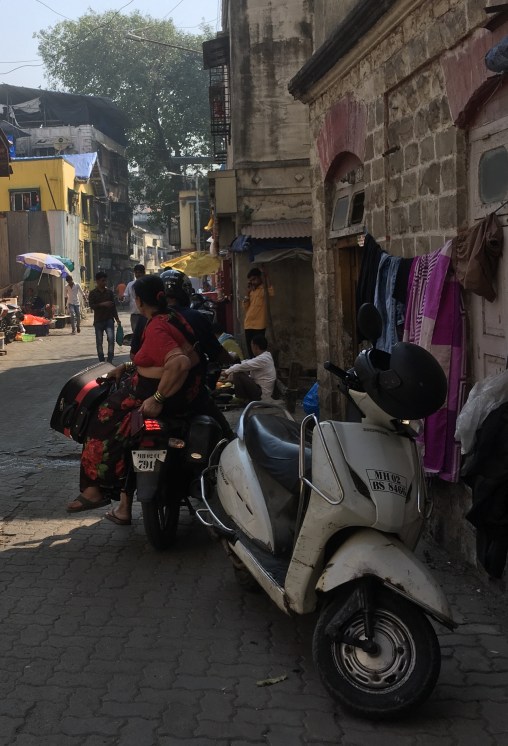
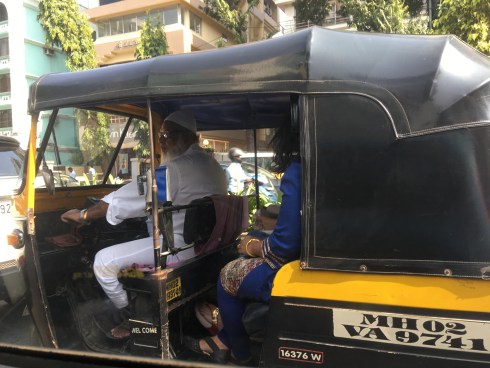 …a little.
 Gladsome Lights