About five this morning three things happened. I woke up in my sister’s house, which lies in the neighborhood of my childhood, along one of the thousand plain, unlined roads that make rectangular grid lines of themselves through the orange groves.
A mockingbird began to run through his upbeat repertoire outside my window. I was surprised at this, because I never heard them as a child. I wondered which local species he was imitating at the coolest moment of the day, 73 degrees. He didn’t sing for long.
About the same time that I saw on the forecast the prediction of 108 degrees today, I heard the whole house fan come on and start blowing all the previous day’s residual hot air out of the attic and all the rooms. In the summer my brother-in-law turns it on as soon as the outdoor temperature becomes cooler than that under the roof. It really lessens the need to use the air conditioner.
But tomorrow morning there will not be enough cooling off to work this system. While I was driving away in my air conditioned Subaru and toward a more coastal destination, the Central Valley was turning into a furnace. Most of the next ten days over 100 and four of them above 110.
As I lingered with my brother’s family over dinner last night, we talked about various people we knew who were leaving California for one reason or another. Somebody’s mother had moved here years before from Missouri but had to go back, because she was always sickly in California. Was it the dust? Everyone around the table agreed that the dust can be oppressive.
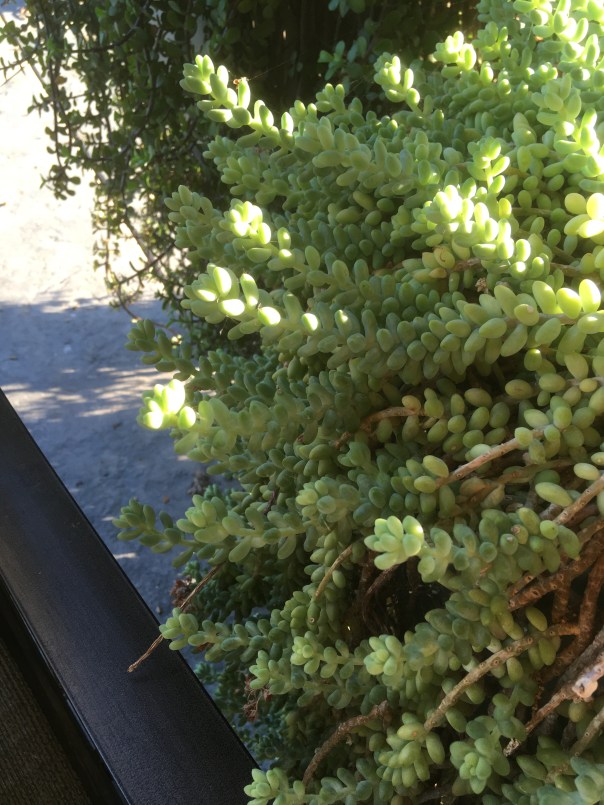
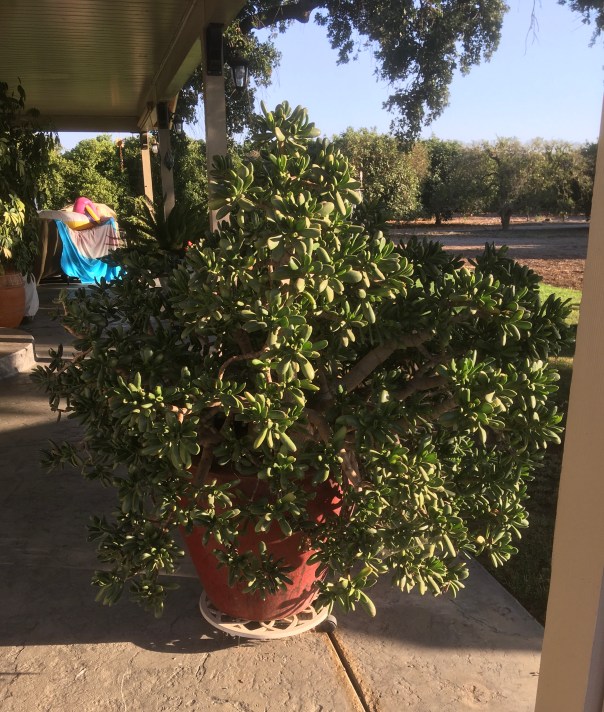


After dinner we went outside where the children ran on the lawn, and I admired the way the succulents thrive at my brother’s place, in the heat, yes, but under the shade and frost protection of the patio roof. Certain plants love the climate, and of course that dust blows off the fields that are in between plantings such as I saw on my drive in: cantaloupes, tomatoes, corn, alfalfa, cotton…. That Valley dust feeds the nation!
It’s also a component of the air of which I breathe deeply when I visit in the warmer seasons, the scent of my childhood. That air is like a caress, and a tonic, an atmosphere to sink into. The late evenings are the loveliest time to sit out, after the sun has gone down and air has lost its oven-like personality. One wants to stay up for hours recovering from the day’s fierceness, and not go inside where the air may be cool, but it’s artificially so.
At the end of today’s drive, I arrived in the southern reaches of the state in a place where the ocean influence is felt morning and evening. Windows and doors are open so that soft breezes can blow through my hosts’ house. I picked up granddaughter Annie at the airport, and this weekend we’ll go to her cousin Pat’s wedding in San Diego.
Today’s photos are all from my brother’s place, which is the house I grew up in. He has made a lot of changes, but it’s all good, and more pleasing every time I visit. Tomorrow, more family to visit, more gardens! Stay tuned…


 My first sewing teacher used to tell me that she found sewing relaxing. I have never become skilled enough that I ever found that to be true for me. Even when I generally derived great satisfaction from sewing
 And now here I am working on yet another blog post, after reading and thinking and perusing this and that… one might think it a pretty inefficient use of my limited time, because I am up against looming deadlines. But, I am finding that these activities are as necessary to my overall well-being as the walking is to my legs and back — sometimes I think they are more so.

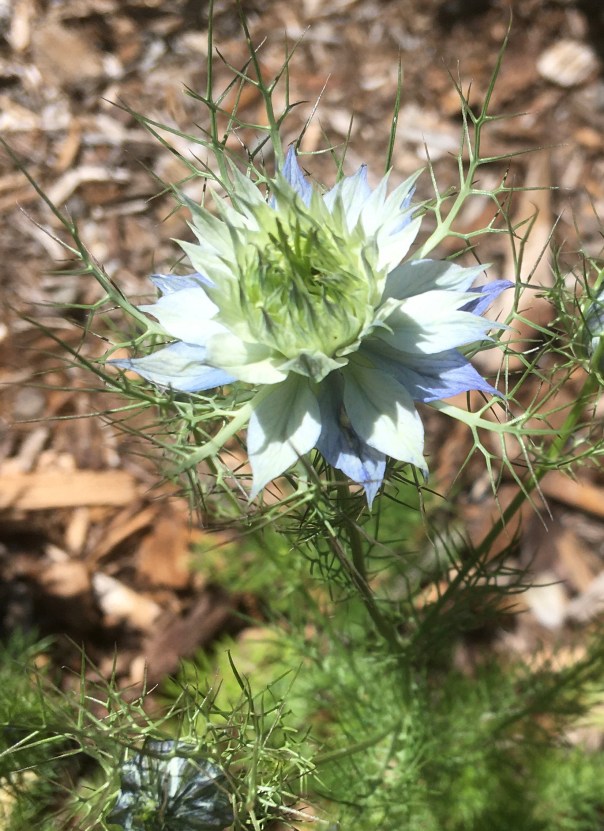
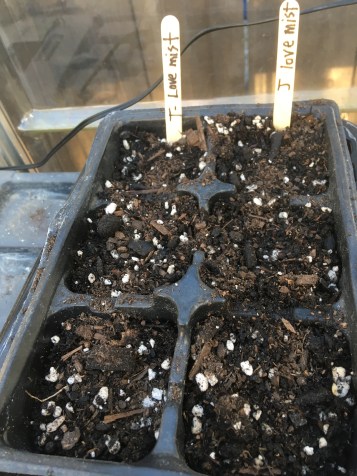 My first Love-in-a-Mist flower bloomed today! This was a Big Event, a project that started off with my longstanding admiration for these flowers, and a desire to grow them myself. It took years, and the donation of seeds from two friends, and then a couple more years, before I got them planted in the greenhouse in the spring. I put them in three different places in the garden, and hope that they will self-sow at least a little and keep themselves going from now on.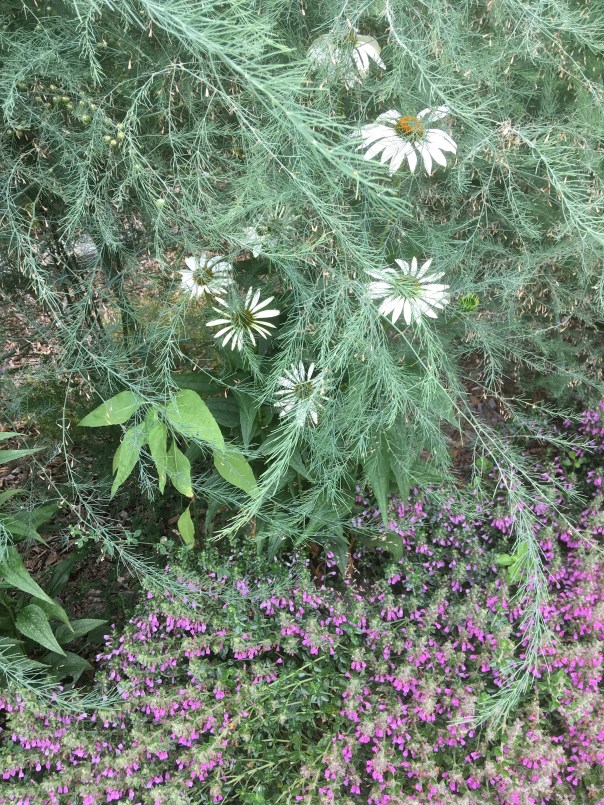
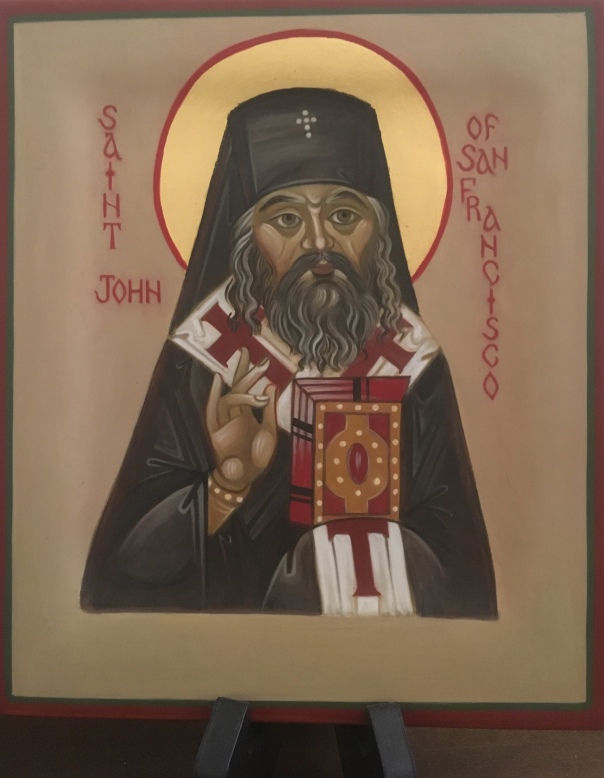
 were coming to power there, he helped 5,000 of these expatriates to emigrate, eventually to the United States. Later still he established the cathedral in San Francisco where his incorrupt relics remain.

 Afterward we needed lunch, so we followed the advice of the candle desk attendant at the cathedral and ate at a Russian restaurant called The Red Tavern that was also in that Richmond District neighborhood. We were the only people there, too, though from the name we half expected when we went through the door to see a group of Bolsheviks plotting in the back corner.
 man only recently from Ukraine was our waitress and we enjoyed talking to her and eating the wonderful food. I didn’t think that I liked Russian food much, but everything I tasted was superb: dark brown bread scented with caraway, fresh cabbage salad with golden raisins and tomatoes; thinly sliced fried potatoes; and barley-mushroom soup with a complex and rich flavor. We all shared some Polish poppy seed dessert that we could tell had marzipan in the filling. We cut the two pieces into two more and ate them off these pretty dishes that the waitress said were their “dessert plates.”


