Tag Archives: G.K. Chesterton

A discipline in pleasure.

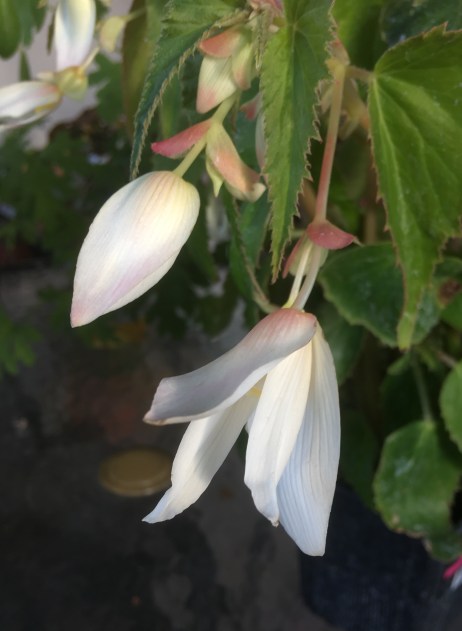
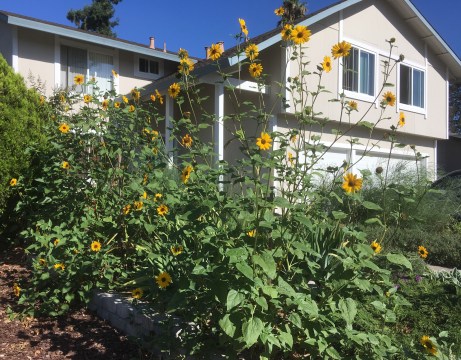
I’m in a good mood, because I cleared the driveway of weeds this morning, and brought sunflowers into the house. My foot feels all better, which had been slightly gimpy merely from wearing sandals instead of boots while gardening last week.

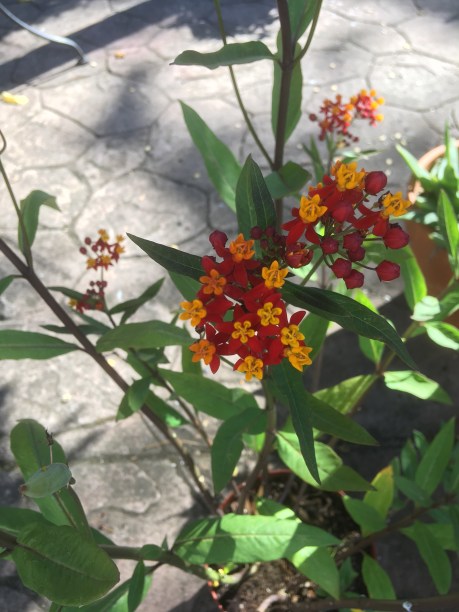
The Monarch caterpillars are thriving on giant leaves of the showy milkweed that I bring to them in their mesh cage almost every day. If they had hatched out on the spindly narrowleaf variety where Mama Monarch had laid the eggs, they’d have run out of food fast. I bought a new tropical milkweed plant when I went shopping for begonias last Sunday, but they don’t seem to care for its leaves. (At the bottom of the page is a milkweed I encountered in the mountains some years ago.)
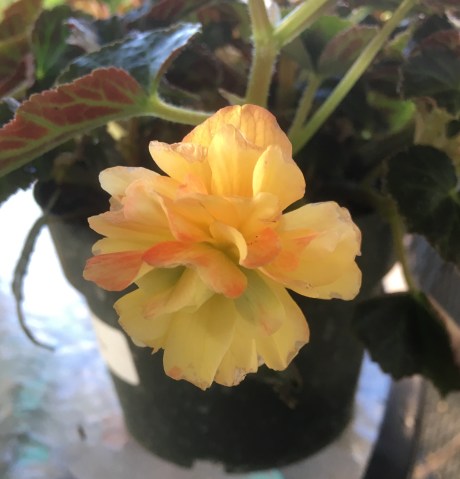
I’ve been too busy to write good sentences about All The Things. I am trying hard to learn to say NO to myself sometimes: “Remember, Dearest Self, you can’t do ALL the things ALL of the time!” Finally after four months, in the middle of which we think the city lost my application, we got the building permit for my remodeling project that I’ve been preparing for over the last year. It’s taking hours and hours to choose paint and cabinets and faucets and mirrors, and more time to watch caterpillars munch, so naturally there have been fewer hours with which to read, write, and cook.

I don’t know how to apply the principle that wise GKC is telling us about in this quote that I thought was simply lovely when I put it in a draft a while back. The word austerity doesn’t seem to fit with the way I behave, though pleasure and gratitude are the world I live in. I’d like to know what you all think about his twist on these qualities of our existence.


Purification and austerity are even more necessary for the appreciation of life and laughter than for anything else. To let no bird fly past unnoticed, to spell patiently the stones and weeds, to have in the mind a storehouse of sunsets, requires a discipline in pleasure, and an education in gratitude.

-G.K. Chesterton — Twelve Types (1903)
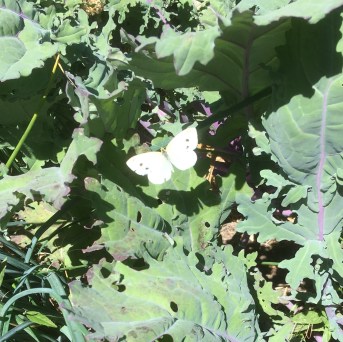


She danced in with a leafy surprise.

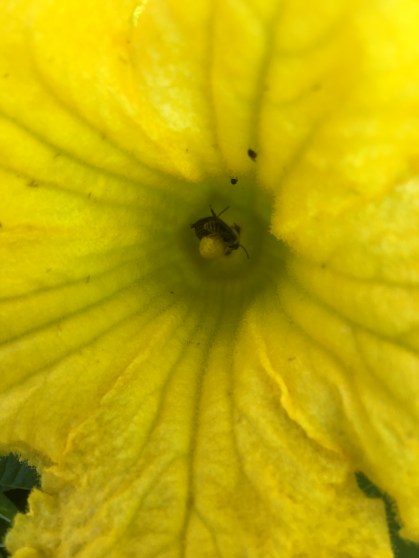
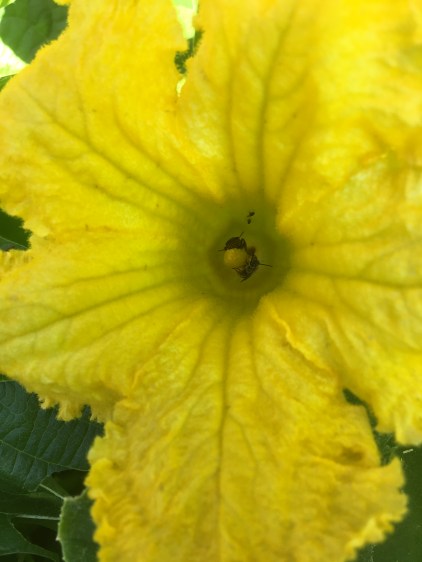
I was following a Cabbage White around the kale patch, when I happened to look into a squash blossom. It was pointing straight up like a cup, and I saw a hoverfly in the bottom, not hovering at that moment, but I assume drinking nectar…? He didn’t move. While I was pointing my camera down there, another hoverfly zipped right in. For a moment they were piled up, but soon arranged themselves one on either side of the cup. Who knows how long they might have sat companionably at their juice bar if a third insect, flying so fast I couldn’t see, hadn’t flown in, and quickly out again; that agitated the fellows and they departed.

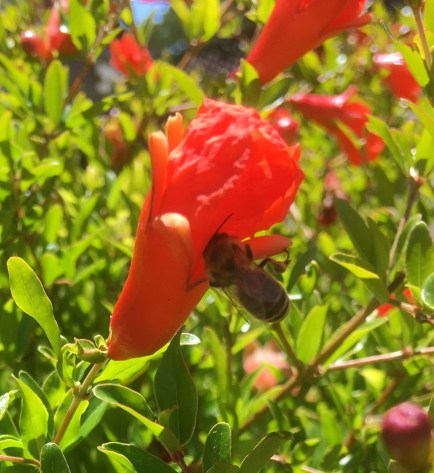
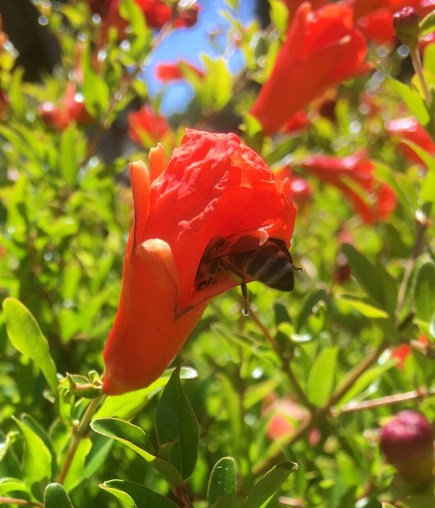
On the same tour of my estate I noticed bees at the dwarf pomegranate bushes. They would buzz around slowly checking out various blooms; I soon realized that they were looking for flowers that were at the right stage of opening, because they have to crawl deep into the narrow cave to get what they want. The flowers don’t seem to be open very long before they start to wilt, and then there is no way to get in.

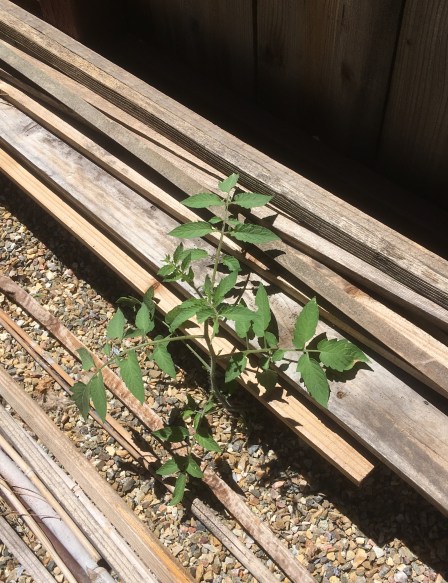
I never believed in Mother Nature before this week, when I found a gift that was so clearly chosen with my particular gardening eccentricities in mind, I thought immediately that she would be the one who left it for me. But — I went back to that quote from Chesterton, following St. Francis of Assisi, who said we should think of Nature more as our little dancing sister,” who delights us into laughter. We have the same Father, we and Nature. Okay then, I’ll say it was my Little Sister who gave it to me: a tomato plant.

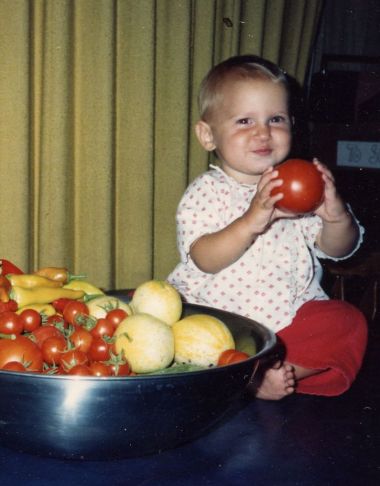
I used to grow the absolute best flavored tomatoes that you could find anywhere. A big part of my method was to dry-farm them, the way the Italian immigrants to California used to do. You water when you plant them, deeply, but then not again all summer. I tweaked that system and usually gave mine a drink every month or so.

But in my new garden, I haven’t found a way to do this, or a place. This year I didn’t plant one tomato, and I gave away all my tomato cages. Recently I saw my neighbor Kim’s tomato “garden” which is all in big pots, and it gave me the idea to try that next summer, and I could put the pots in my nice hot utility yard, on the gravel.

This week I went out to the clothesline and saw a tomato already planted in that very space. I’m thinking it must have a deep root, as it’s not near a water source. I did laugh, I can tell you. Whether or not I get a tomato from this plant, it was a very sweet and thoughtful gift from my little sister, and I take it as a pointed word of encouragement about my idea for next summer’s tomato experiment.

The one wild place…

“Of all modern notions, the worst is this: that domesticity is dull. Inside the home, they say, is dead decorum and routine; outside is adventure and variety. But the truth is that the home is the only place of liberty, the only spot on earth where a man can alter arrangements suddenly, make an experiment or indulge in a whim. The home is not the one tame place in a world of adventure; it is the one wild place in a world of rules and set tasks.” 

― G.K. Chesterton

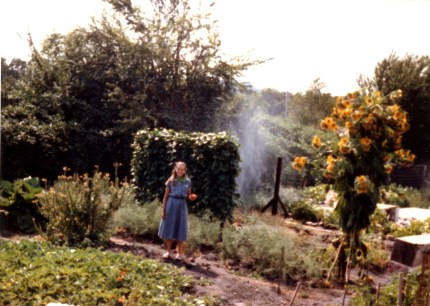
1980’s

Love for an instant.

“It is true enough, of course, that a pungent happiness comes chiefly in certain passing moments; but it is not true that we should think of them as passing. . . To do this is to rationalize happiness, and therefore to destroy it. Happiness is a mystery like religion, and should never be rationalized. . .

“A man may have, for instance, a moment of ecstasy in first love, or a moment of victory in battle. . . The cause which the flag stands for may be foolish and fleeting; the love may be calf-love, and last a week. But the patriot thinks of the flag as eternal; the love thinks of his love as something that cannot end. These moments are filled with eternity; these moments are joyful because they do not seem momentary. . .  Man cannot love mortal things. He can only love immortal things for an instant.”

–G.K. Chesterton in Heretics (1905)

From G.K. Weekly