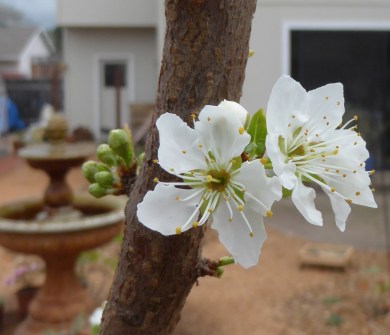
I walked behind my car across the shoulder of the highway, and crunched closer to the whitened meadow to snap a picture. Immediately snow and dirt fell into my shoes as I dropped a foot down through the crust. I didn’t even get a good picture for all that, but I didn’t regret making the effort and taking a chance.
Just breathing in the cold mountain air was making me giddy, and the wet places in my socks soon faded from my consciousness. I love the excitement of being in the mountains in the winter. Even if I do have to take pictures from inside my vehicle.
In telling the story of my trip to western Nevada last week, I’ve exclaimed to many people, “I was in the cloud the whole way — there was not one minute in the whole five hours when I didn’t have to use my wipers, usually at full speed!” But now I realize that that wasn’t exactly true: I had forgotten this two minutes at least, when I was actually able to get out of the car with my camera and not get it wet.
(I wish I could paint some clouds into these first few photos so that the white sky wouldn’t blend seamlessly into the white screen here on my blog!)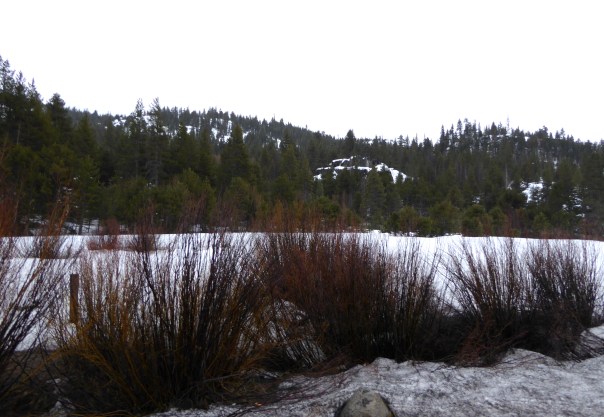
No accidents happened on the freeway in spite of the drenching that slowed traffic for hours; I didn’t see anyone driving recklessly fast. Probably they were all thinking like me: “This is glorious! Think of all the reservoirs filling up! We love the rain, so let’s just enjoy being slowed down a bit because of nature’s gifts.”
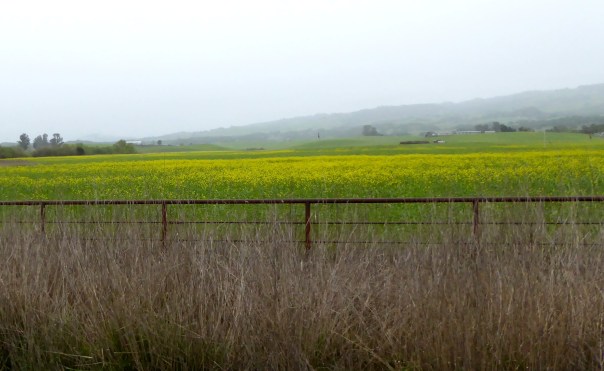
Long before I got close to Nevada, though, my route took me through wine country, whose colors were extra vibrant with the rain falling on them. Every year I try to take pictures of the mustard in the vineyards or pastures, and every year I pretty much fail. The solution to my problem must be a helicopter, hovering at the perfect height above the bloom, from which to view my mustard fields from the most revealing angle.
Or, I need to learn to paint, and then try to find the few minutes between March rainshowers when I could sit near a soggy display and catch the essence on my canvas. I love springtime in the wine country, so in the future I will probably repeat my same old lazy way of engaging with its brilliant contrasts.

While enjoying the scenery I listened to classical music for as long as the station came through. They played Beethoven’s Fifth Symphony, which in my youth was the first classical piece I paid much attention to, because we studied it in Music Appreciation class when I was a college freshman. Now it is so familiar to me that hearing it for those few minutes roused me as though I were listening from the balcony at the symphony. I love Beethoven’s Fifth.
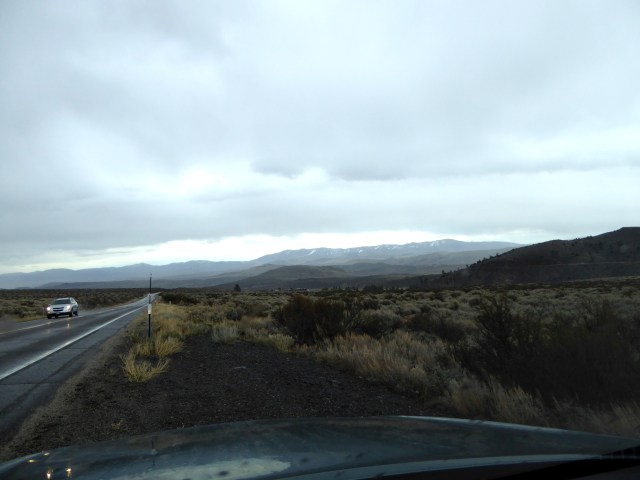
Eventually I did ascend into the forest, where what I think are willows show more color than they will later on when they leaf out. Maybe there are several species of bushes that make these orangey splashes against the snow, or against the desert brownness where they grow in rows along creeks. Anyway, I love how they decorate the landscape.
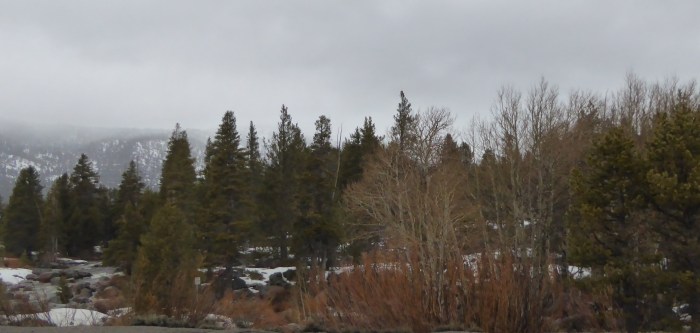
I was headed east, and eventually crossed into Nevada. I’ve written about this part of the arid West before, in 2011 and in 2014. You might like to look at that more recent post to see how beautiful it is in early summer; I was able to stay a few days that time and take lots of pictures. I love the Carson Valley, every season I have been there.

The reason for my foray into the storm was to visit my friends Jacob and Rosemary upon the occasion of their chrismation into the Orthodox Church, and to be Rosemary’s sponsor, or godmother. That was a wondrous thing, but that is not really my story to tell. I love being at their house, full of books and food and comfortable friendship. I love them.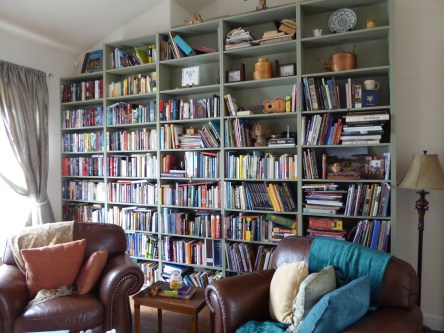
I loved being part of this momentous day, a participant in the sacrament by which they were sealed with the gift of the Holy Spirit, being anointed on cheeks, forehead, hands… Now I am related to Rosemary in a deeper way even than our already sisterly friendship.
After the chrismation service and Divine Liturgy, we came back to the house with more friends and enjoyed the many delicious things that Rosemary had been preparing for a week in advance, including “Gyroll,” and a lemon tart.

I had planned to return home on Monday, but because I’d have had to drive in snow and ice, and take more pictures from my car, I put off my departure one more day. We were all happy to have a few more hours together of relaxing and talking and reading. Jacob makes the best popcorn. I love popcorn.
I even took a walk in a nearly freezing rain, and admired the xeriscapes at that elevation of 5,000 ft. Everyone uses some rock, because it is natural and doesn’t require irrigation, and so many rocks are beautiful. It helps control erosion from the torrents that can flow down through the neighborhood from the higher heights. I love rocks.
I slept incredibly well in my guest quarters, which was interesting because I was in the middle of reading 24/7: Late Capitalism and the Ends of Sleep. It’s about how we are being robbed of our sleep by society’s demands to perform and be constantly responsible. But I was with sensible people and we all affirmed that sleep is good, even while one of us sent an email at 2:00 a.m. and another one checked his (or her?) phone an hour later, thus demonstrating the reality of what the author laments. The Bible commands, “Love not sleep,” but it also says that “He gives His people sleep,” so I feel it is okay to admit that I love sleep, as a gift from the Lord.
Finally the morning came when I would set off on the last leg of my adventure. Truly, anytime you get out of bed in the morning you have to be ready for adventure, but driving alone on strange roads, which may be icy, is upping the suspense of Anything Could Happen.
Jacob and Rosemary live on the east side of Carson Valley, so as I set off down the slope from their house, this was my view, looking across the valley to the range of mountains I would cross on my way back to California. It is the Carson Range, considered a spur of the Sierra Nevada that lie mostly to the west. And this was also the most blue sky I saw in five days: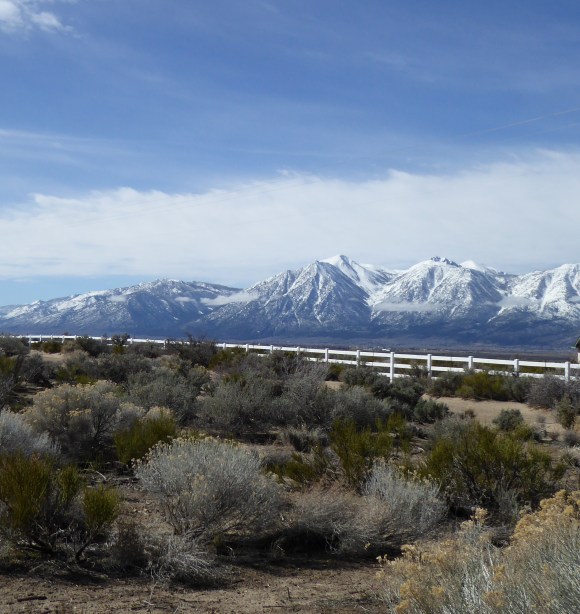
I was fearless, it seemed, eager to climb higher again. I was going home a slightly different way, and interested to see the sights on the Kingsbury Grade, a route I wasn’t familiar with. The weather was supposed to be partly cloudy, with no rain until the afternoon. But plenty of snow had fallen in the night, and I wanted to see it from the freshly plowed highway.
The pastures are green even now, from all the rain, making the high-elevation farms beautiful against the hills. The Carson Range doesn’t get nearly as much rain and snow as the primary ranges of the Sierra Nevada to the west of Lake Tahoe, but recently it got more than a sprinkling.
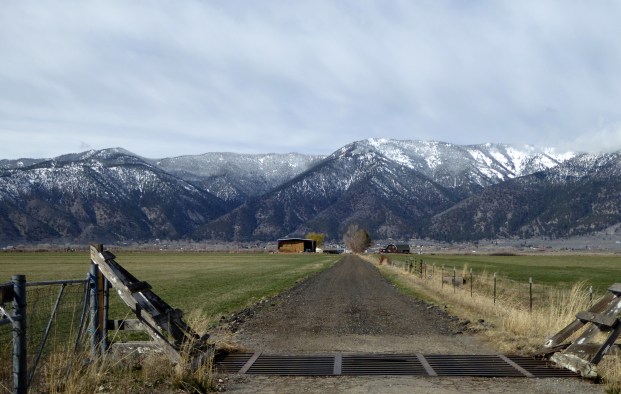
As I looked back from the mountain slope, this was my view of the Carson Valley looking east to the Pine Nut Mountains:
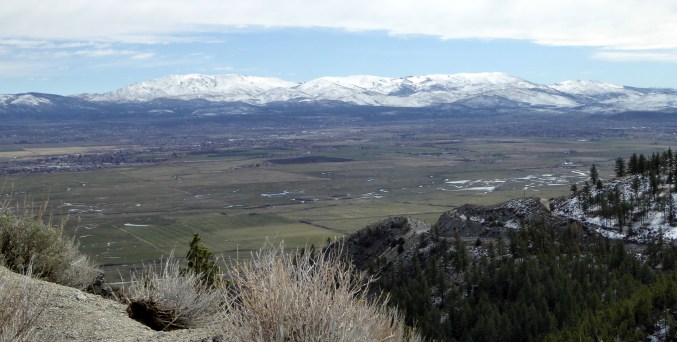
But when I got closer to the top, the valley is barely visible in the distance (my trusty all-wheel-drive Subaru in the foreground.)
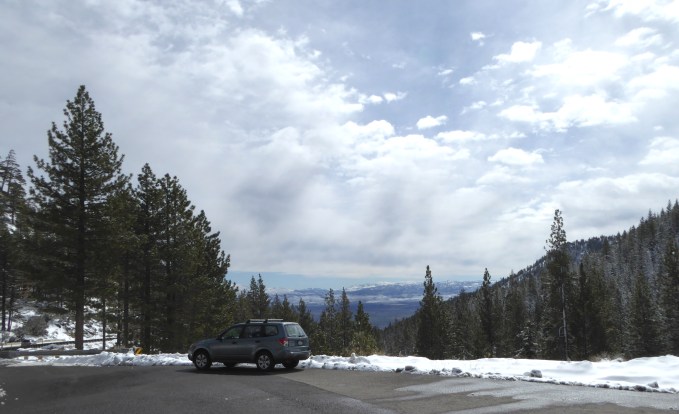
I don’t often experience snow. The last time, I had been with my husband in mountains very near here, and I briefly and bittersweetly remembered that day. But this day I was consumed with loving God’s creation, being thankful for the strange stuff that is snow, delighting in being there. I hadn’t been thinking about this, just doing it. He was my companion on my journey, and that must have been why I wasn’t feeling lonely or having anxiety about traveling solo.

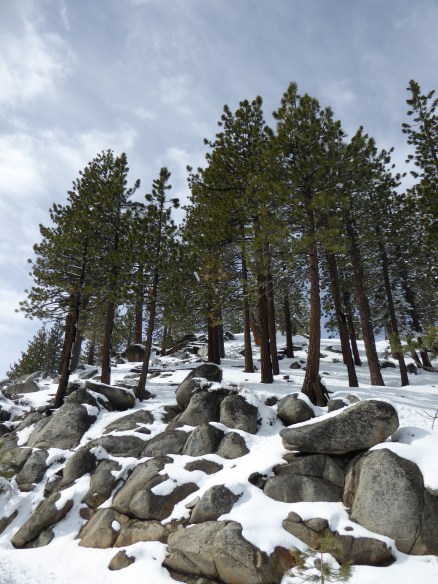
It’s a steep grade, so before long I was at Daggett Summit, elevation 7,334 feet. The trees were loaded with snow up there, much of it having fallen just the day before. Clumps were falling in showers of wet flakes and splashing on my windshield. The temperature was just above freezing.
In another two hours I was out of the mountains and in the Central Valley. I visited with Pearl for an hour, and got home before dark.
It had been such a satisfying expedition. Not the kind of excitement that some people associate with adventure, but plenty of the sort of newness that is a reminder and an expression of Him Who changes not, but whose Life fills every moment.
The unexpected aspect of adventure came in the form of weather developments that made me change my plans. It was kind of my Father to arrange for such a mild and pleasant happening for me to deal with, at this season of my life; He knows I’m not really the adventurous type. It seems that love for my family and friends makes me go forth and travel, and then His love and companionship and the beauty of this world He gave us thrill my soul, more than any wild and perilous sort of adventure could. I love Him.
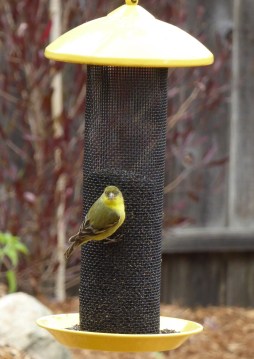 the Tractor Supply and get 25 pounds of Nyjer seed, and I can hardly keep the feeder filled. The goldfinches are all over it!” I had heard about this phenomenon closer to home, too, so before I left town I stopped and bought my own 25-pound bag, as well as a feeder to put it in.


 Early on in our 21 years of homeschooling I found that my style of learning and teaching was suited to doing unit studies. Someone has explained the concept like this: “
 r, as long as we lived in that house, while we ate our meals we could watch the house finches enjoying theirs at the same time.
 of what there is to study and know. All the rest has no substance.